7 Best Treks in Nepal: Difficulty, Days and How to Choose
This guide compares 7 of Nepal’s best treks, from the 9-day Ghorepani Poon Hill (3,210m, from $440) to the 16-day Annapurna Circuit (5,416m, from $643). The right one depends on how much time you have, how you handle altitude, and whether you want a classic route or a quieter one.
None of these seven routes needs technical climbing or mountaineering experience. The challenge is mainly distance, height, terrain and acclimatisation. MountainKick runs all seven as guided treks, and current rules require a licensed guide on Nepal’s main trekking routes.
- Featured treks: 7 popular routes, from Level 2 Moderate to Level 4 Hard
- Regions: Everest, Annapurna, Langtang
- Prices from: $440 to $1,020 per person, at the lowest current group rates
- Duration: 9 to 16 days, or 21 days on the Classical Annapurna Circuit
- Guide: a licensed guide on all MountainKick treks
- Best seasons: autumn and spring, with some route differences
- Best first trek for most beginners: Ghorepani Poon Hill (see our beginner trek guide)
- Best first high-altitude trek: Annapurna Base Camp, if you’re ready for 4,130m
Last updated: October 2026
Nepal is home to 8 of the world’s 14 mountains above 8,000m, and its trails run from warm lowland valleys to glaciated valleys above 5,000m. Every region has its own landscape, culture and character.
This guide covers 7 of the best Nepal treks MountainKick runs, with honest difficulty grades, what each trek is really like on the ground, and how to decide which one fits your trip. If you’ve never trekked before, start with our guide to the best treks in Nepal for beginners.
Which Nepal Trek Is Right for You?
| If you want… | Choose |
|---|---|
| The shortest classic trek with big views | Ghorepani Poon Hill |
| A high ridge walk and close Machhapuchhre views | Mardi Himal |
| Mountains and culture close to Kathmandu | Langtang Valley |
| A base camp without going above 4,500m | Annapurna Base Camp |
| The widest variety of landscapes | Annapurna Circuit |
| The iconic Everest experience | Everest Base Camp |
| Everest scenery with fewer trekkers | Gokyo Lakes |
Down to two or three? Our head-to-head guides go deeper: EBC vs ABC, Poon Hill vs Mardi Himal vs ABC, EBC vs Gokyo, Annapurna Circuit vs ABC and Annapurna Circuit vs EBC.
Nepal Treks at a Glance
| Trek | Days | Highest point | Difficulty | Trail type | From* | Best for |
|---|---|---|---|---|---|---|
| Ghorepani Poon Hill | 9 | 3,210m | Level 2 Moderate | Classic | $440 | First timers, short trips |
| Mardi Himal | 10 | 4,500m | Level 3 Challenging | Alternative | $520 | High ridge views |
| Langtang Valley | 10 | 4,773m (Kyanjin Ri) | Level 3 Challenging | Alternative | $425 | Culture and mountains |
| Annapurna Base Camp | 14 | 4,130m | Level 3 Challenging | Classic | $760 | A base camp at lower altitude |
| Gokyo Lakes | 13 | 5,357m (Gokyo Ri) | Level 4 Hard | Alternative | $1,010 | Quieter Everest scenery |
| Everest Base Camp | 14 | 5,545m (Kala Patthar) | Level 4 Hard | Classic | $1,020 | The iconic Himalayan trek |
| Annapurna Circuit | 16 | 5,416m | Level 4 Hard | Classic | $643 | Variety and a high pass |
*Prices are the lowest current group rates on MountainKick’s trip pages, so they can be lower than the headline price you see there. Solo travellers and smaller groups pay more. Check the trip page for the price for your group size.
Difficulty levels: these grades follow MountainKick’s five-level scale, from Level 1 Easy to Level 5 Expedition. See our Nepal trek difficulty guide for what each level means.
Ghorepani Poon Hill
Level 2 Moderate | Classic | 9 days | From $440

One of the easiest ways to see the big Himalayan peaks. You climb high enough to see Annapurna, Dhaulagiri and Machhapuchhre above the clouds, without spending weeks on the trail. You reach the top of Poon Hill (3,210m) before dawn, and the sunrise there is one of the best views in Nepal for the effort.
The trail climbs the long stone staircase to Ulleri, then passes through rhododendron forest that blooms red and pink in March and April, and through Gurung villages like Ghandruk. Ghorepani is the base for the early climb to the viewpoint. You come down a different way, so the route is a loop rather than an out and back.
At 9 days from Kathmandu, it works on its own or as a shorter Himalayan trip alongside a longer Nepal itinerary. Most walking days are four to five hours, and the longest is five to six, mostly on stone steps and village paths. Because the route stays below 3,210m, altitude is generally less of a concern than on higher treks. It’s our top pick in the best treks for beginners guide.
Mardi Himal
Level 3 Challenging | Alternative | 10 days | From $520

Mardi Himal is a quieter alternative in the Annapurna region, with a high ridge walk and close views of Machhapuchhre. The trail climbs through forest to the open Mardi ridge and on to Mardi Himal Base Camp at about 4,500m, with Annapurna South and Hiunchuli across the valley.
It’s quieter than Poon Hill or the main ABC trail, especially above Badal Danda, though it’s getting busier as more people hear about it.
At 10 days, it sits nicely between a short break and a full trekking trip. Walking days are five to seven hours on steep steps and narrow ridge paths. The route climbs from about 2,100m to 4,500m in three days with no rest day, so it needs good fitness and careful pacing. Your highest night is at High Camp (3,580m), not at base camp. For route detail, see our Mardi Himal trek guide, or compare it in Poon Hill vs Mardi Himal vs ABC.
Langtang Valley
Level 3 Challenging | Alternative | 10 days | From $425

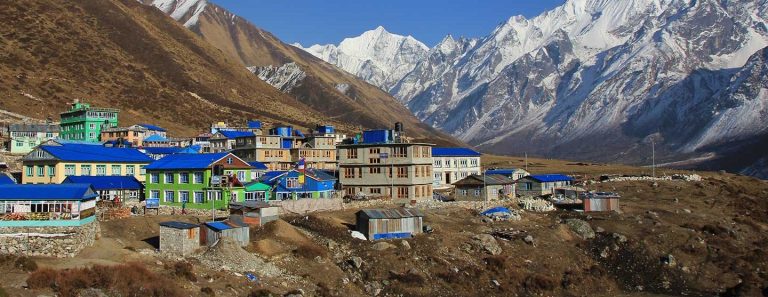
Langtang is Nepal’s closest trekking region to Kathmandu, and probably its most underrated. The valley sits below the Langtang Himal, a chain of peaks above 7,000m along the Tibetan border. Tamang and Tibetan culture is strong here: yak herding, Buddhist monasteries, prayer flags and stone villages that feel quite different from the Khumbu or Annapurna.
The trail ends at Kyanjin Gompa, below the Langtang glacier and known for its yak cheese. From there, the climb to Kyanjin Ri (4,773m) gives you a wide view of Langtang Lirung and the surrounding peaks. A harder optional climb to Tserko Ri reaches about 4,984m.
At 10 days, it’s a strong choice if you want serious mountains without the Everest or Annapurna crowds. The valley was badly hit by the 2015 earthquake, and the villages have rebuilt. Trekking here directly supports the people who live and work in them. For a lower, quieter trek in the same region with village homestays, see the Langtang Tamang Heritage Trek (10 days, 3,165m).
Annapurna Base Camp
Level 3 Challenging | Classic | 14 days | From $760
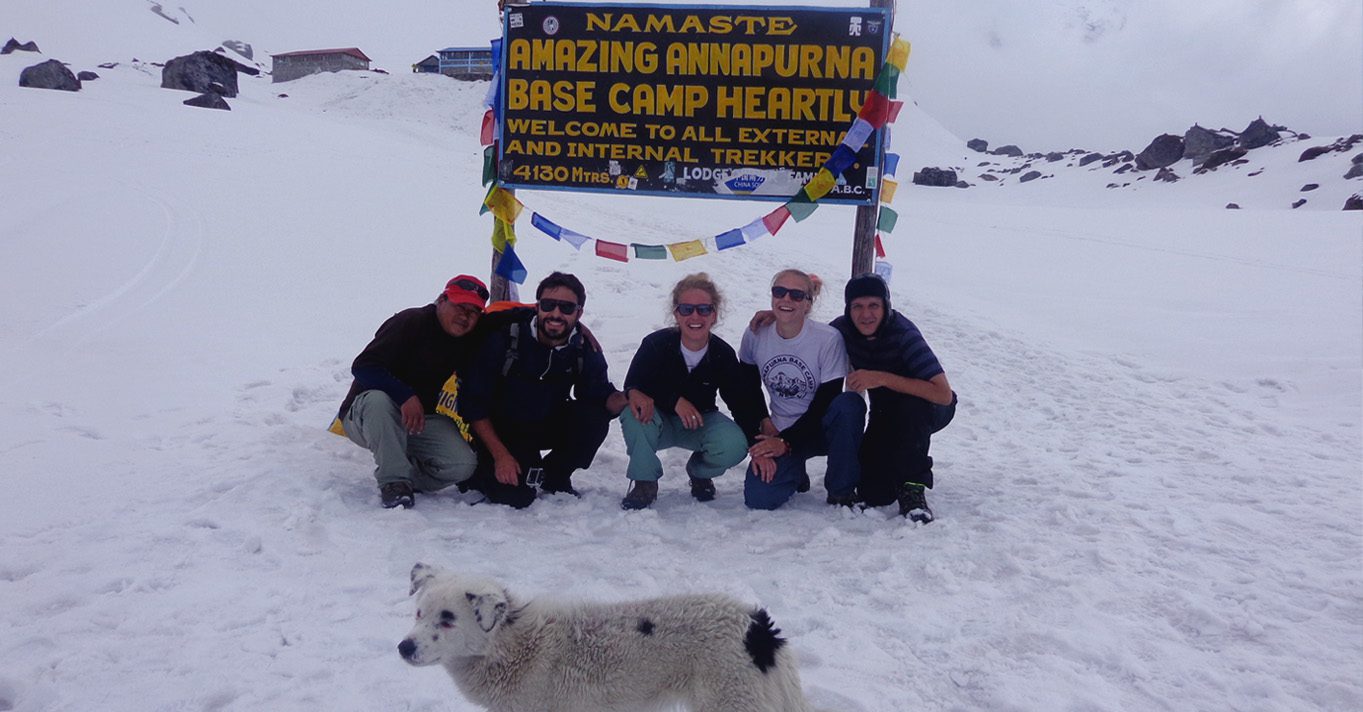
ABC takes you into the Annapurna Sanctuary, a high glacial bowl ringed by peaks above 7,000m. Base camp is at 4,130m, lower than EBC or the Annapurna Circuit’s high point. The approach climbs the Modi Khola gorge, with Annapurna South and Machhapuchhre closing in overhead.
What it lacks in height, it makes up for in scale. At base camp, Annapurna I, Annapurna South, Machhapuchhre and Hiunchuli surround you on every side. You spend the night in the middle of it, which is very different from reaching a viewpoint and turning around.
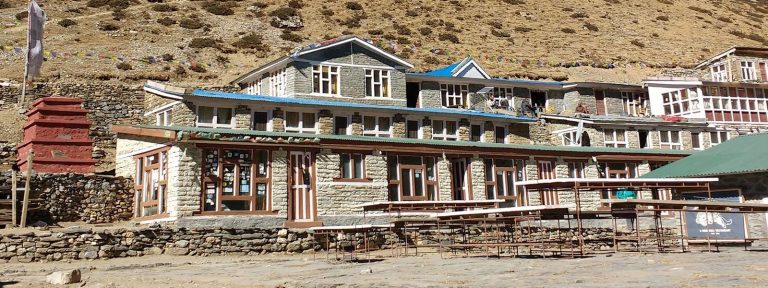
The 14-day route passes through Chhomrong, a large Gurung village with some of the best teahouses on the trail. The altitude is lower than EBC or the Thorong La, but long walking days and steady climbing still need good preparation. There’s no acclimatisation day, so pacing matters. Our standard route also goes over Poon Hill on the way in, so you get that sunrise as well. See our Annapurna Base Camp trek cost guide for the full breakdown, or EBC vs ABC if you’re choosing between the two base camps.
Gokyo Lakes
Level 4 Hard | Alternative | 13 days | From $1,010

The quieter Everest region alternative, and one that often surprises people. The Gokyo route leaves the main EBC trail above Namche and heads up the Gokyo valley, past a chain of turquoise glacial lakes, to the Gokyo Ri viewpoint at 5,357m.
Gokyo Ri gives a different panorama from Kala Patthar. On a clear day you can see Everest, Lhotse, Makalu and Cho Oyu from the same spot, with the Ngozumpa Glacier spread out below. The route stays off the main EBC trail for most of its length, so it’s generally quieter.
If you want both valleys, MountainKick also runs the 17-day EBC via Gokyo Valley, which links them over the Cho La (5,420m), and the longer Everest Three Passes trek.
Everest Base Camp
Level 4 Hard | Classic | 14 days | From $1,020

The best-known trek in the world, and the one most people picture when they think of trekking in Nepal. EBC follows the Khumbu valley from Lukla to Everest Base Camp at 5,364m. The highest point is Kala Patthar at 5,545m, an early morning climb with a clear view of Everest and the Khumbu Glacier below.
The 14-day itinerary has acclimatisation days at Namche Bazaar (3,440m) and Dingboche (4,360m). These aren’t lazy rest days. You do shorter hikes higher up, then come back down to sleep, which is how your body adjusts. Expect several nights above 4,000m, two or three days above 5,000m, cold nights at Lobuche and Gorak Shep, and simple teahouses. Most walking days are five to seven hours.
The trail earns its reputation. Sherpa culture in the Khumbu is fascinating, and the size of the peaks above Namche is a daily reminder of where you are. See our EBC cost guide, our EBC vs Gokyo guide if you’re choosing between the two Khumbu routes, and EBC vs ABC if you’re weighing Everest against Annapurna.
Annapurna Circuit
Level 4 Hard | Classic | 16 days | From $643
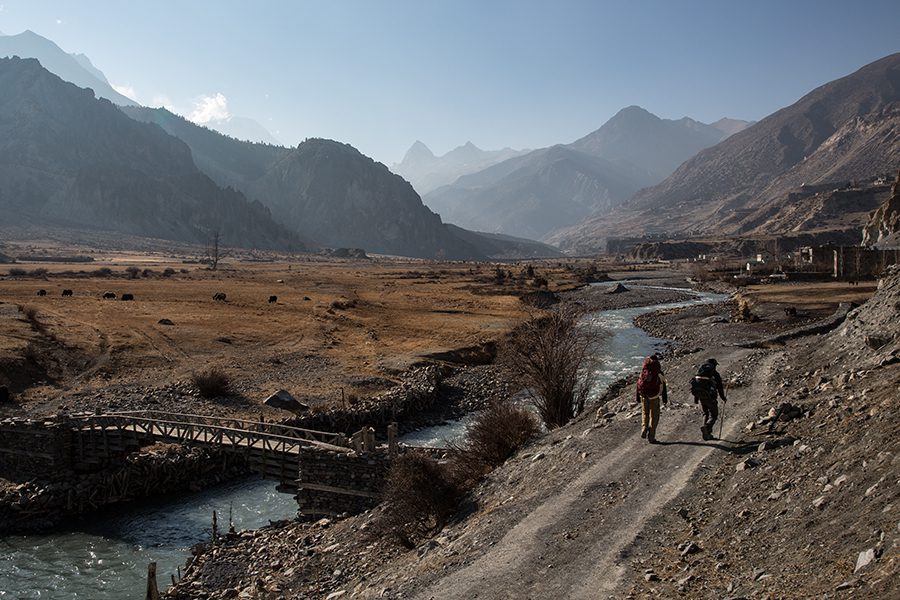
The Annapurna Circuit crosses the Annapurna range from the Marsyangdi valley in the east toward the Kali Gandaki valley in the west, with road transport on some lower sections. You pass through green valleys, pine forest, Gurung and Manangi villages, high dry desert, and Muktinath, a temple sacred to both Hindus and Buddhists.
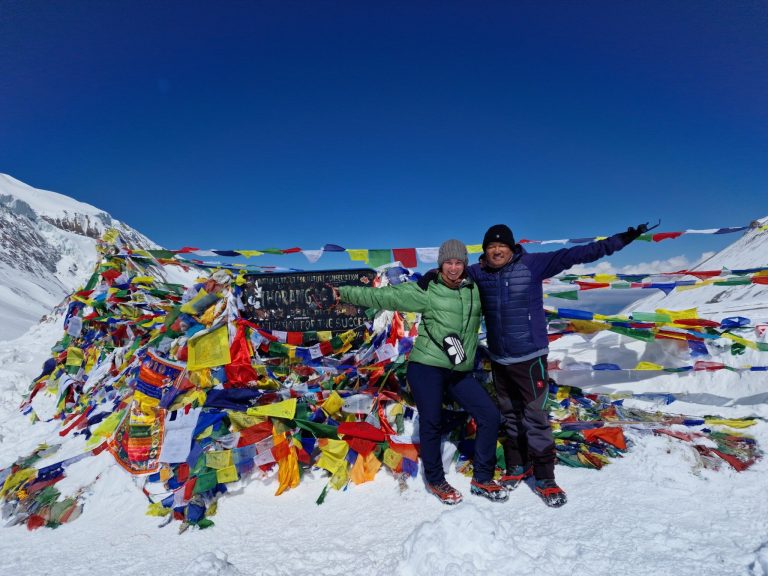
The big day is the Thorong La at 5,416m. You start around 4am, and the crossing can take eight to ten hours, with a steep descent to Muktinath. It isn’t technical, but it’s a serious day at high altitude, so it needs proper acclimatisation. The rest day in Manang is an important part of the itinerary, and many trekkers use it for a hike toward Ice Lake (about 4,600m) or another viewpoint. Most other walking days are five to seven hours.
The standard trek is 16 days. If you want to walk more of the route on foot, the 21-day Annapurna Circuit Classical starts lower down. See our Annapurna Circuit vs EBC guide and our Annapurna Circuit cost guide.
How to Choose the Right Nepal Trek
By time:
- 9 to 10 days: Poon Hill, Mardi Himal or Langtang
- About two weeks: ABC, Gokyo or EBC
- 16 days or more: the Annapurna Circuit
If you’re flying to Lukla, add one or two spare days at the end for weather delays. Our guide to how many days you need for a Nepal trek goes into more detail. First trek ever? Our beginner trek guide covers shorter and lower options too.
By what you want:
- The lowest altitude: Poon Hill
- A short high ridge trek: Mardi Himal
- Culture and mountains close to Kathmandu: Langtang
- A base camp at lower altitude: ABC
- The iconic route: EBC
- Quieter Everest scenery: Gokyo
- The biggest variety: the Annapurna Circuit
By altitude: No high-altitude trek is risk free, but the high point matters. If you’ve never been above 3,000m, Poon Hill is the sensible place to start. If you’re fit, Langtang or ABC are good first high-altitude treks. Mardi Himal is short but climbs to 4,500m quickly, so it suits fit trekkers who are confident on steep ground. EBC, Gokyo and the Circuit all mean several nights above 4,000m, where it’s cold and basic. Be ready for that in your head as well as your legs.
Classic or Alternative? Classic routes are more established, with more trekkers, teahouses and services. Alternative routes are quieter, but facilities and phone signal vary. Neither is better. It depends on whether you want company or quiet.
MountainKick’s guided trekking packages include a licensed guide, plus the permits and accommodation listed on each trip page. Check the trip page for exactly what’s included.
Frequently Asked Questions
Do I need experience to go trekking in Nepal?
No. None of these routes need previous trekking experience or technical climbing skills. Fitness matters more: you should be comfortable walking five to seven hours a day, several days in a row, on uneven ground. Poon Hill is the most forgiving first trek, with Langtang and ABC good next steps for fit beginners. Mardi Himal is short but steep. EBC, Gokyo and the Annapurna Circuit need better fitness and readiness for cold and altitude.
When is the best time to go trekking in Nepal?
October and November are usually the most reliable months, and March to May is the other main season. December to February is cold up high, but often clear and quiet. The monsoon, from June to September, brings rain and cloud on most routes.
What permits do I need for trekking in Nepal?
It depends on the route. Everest and Gokyo treks need a Sagarmatha National Park permit and the Khumbu Pasang Lhamu Rural Municipality permit. TIMS requirements in the Khumbu have varied, and we handle them as part of the permit process. Annapurna routes need the Annapurna Conservation Area Permit and a TIMS card, and Langtang needs a Langtang National Park permit and a TIMS card. Restricted areas like Manaslu and Upper Mustang need extra permits. MountainKick arranges the permits and paperwork for its guided treks.
Is trekking in Nepal safe?
Nepal is a well-established trekking destination, but every route has risks from altitude, weather, terrain and road travel. A licensed guide, a sensible acclimatisation plan, good gear and proper travel insurance reduce many of them.
How fit do I need to be for Nepal trekking?
For Level 2 treks like Poon Hill, regular walking is usually enough. For Level 3 treks like ABC, Langtang and Mardi Himal, you’ll want good fitness and some hiking behind you. For Level 4 treks like EBC, Gokyo and the Annapurna Circuit, build up your walking and cardio fitness before you go. Long walks, hills, stairs and back-to-back walking days are better preparation than the gym alone.
What’s the difference between a Classic and an Alternative trek?
Classic routes are more established, with more trekkers, teahouses and services. Alternative routes are quieter, with more variable facilities. The mountain scenery on Mardi Himal, Langtang and Gokyo is just as impressive as on the classic routes.
Which Nepal trek is best for first timers?
For most beginners, Ghorepani Poon Hill: 9 days, a high point of 3,210m and big Annapurna views at sunrise. Langtang Valley is a good next step if you’re fit. If you want a base camp on your first trip and you’re ready for 4,130m, Annapurna Base Camp is gentler on altitude than EBC. See our full guide to the best treks in Nepal for beginners.
What is the cheapest trek in Nepal?
On this list, Langtang Valley is the cheapest, from $425 per person at the lowest group rate, though check road access first. Ghorepani Poon Hill starts from $440 and Mardi Himal from $520. The Annapurna Circuit, from $643, is strong value for a long high-altitude trek with no domestic flight. EBC costs more mainly because of the flights to Lukla. Solo travellers and smaller groups pay more, so check the trip page for your group size.
Not sure which trek fits you?
Tell us your dates, fitness and what you’d like to see, and we’ll suggest the treks that suit you.
Browse All Nepal Treks → Talk to Our Team →Further Reading
- Best Treks in Nepal for Beginners
- Nepal Trek Difficulty Guide
- Trekking in Nepal: Permits, Costs, Seasons and Planning
- How Many Days Do You Need for a Nepal Trek?
- Everest Base Camp Trek Cost
- Annapurna Circuit Trek Cost
- Annapurna Base Camp Trek Cost
- EBC vs ABC
- Poon Hill vs Mardi Himal vs ABC
- Annapurna Circuit vs EBC
- EBC vs Gokyo
- Short Treks in Nepal
- Altitude Sickness on Nepal Treks
- Travel Insurance for Trekking in Nepal