

Bardiya Jungle Safari
●●●●● 4.9 · 60+ TripAdvisor reviewsFour days in Bardiya National Park, the biggest and wildest park in Nepal's lowlands. Far fewer visitors than Chitwan and the best odds in Nepal of seeing a wild tiger. A full day jeep safari, a jungle walk with two naturalists and a float on the Karnali River.
Friends paying separately still get the group price.
On the Trip
What It Really Looks Like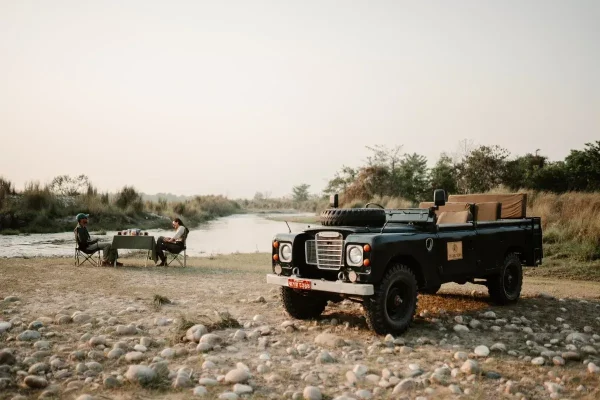
Bardiya Jungle Safari: What to Expect
A whole day deep in the park looking for tiger, rhino, wild elephant and leopard
Follow fresh tracks on foot with two licensed naturalists
Float the river past gharial crocodiles and look for the rare river dolphin
A quiet park in the far west where you often have the jungle to yourself
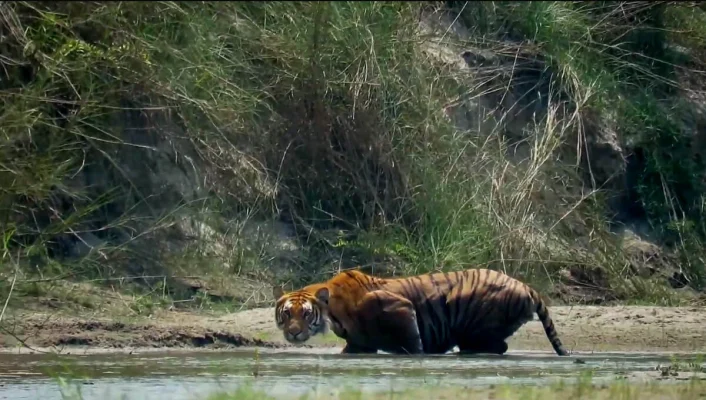
This Bardiya Jungle Safari takes you to the far west of Nepal and one of the wildest parks in South Asia. Bardiya National Park covers about 968 square kilometres of sal forest, tall grassland and river. It gets a small fraction of the visitors that Chitwan does. That quiet is why it has the best odds in Nepal of seeing a wild Bengal tiger.
You fly from Kathmandu to Nepalgunj and drive about three hours to Thakurdwara on the edge of the park. Over the next two days you spend a full day inside the park by jeep, walk the forest with two licensed naturalists and float down the Karnali River. The lodge is simple and close to the jungle. All meals are included while you are there.
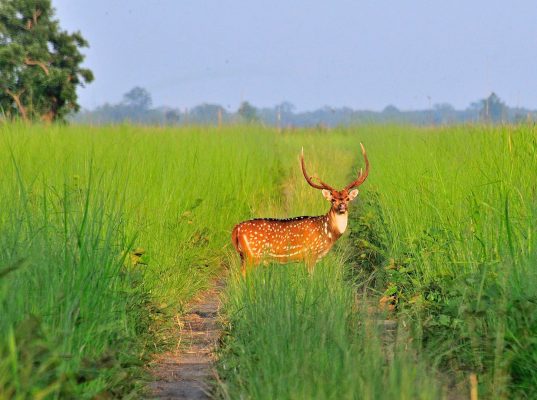
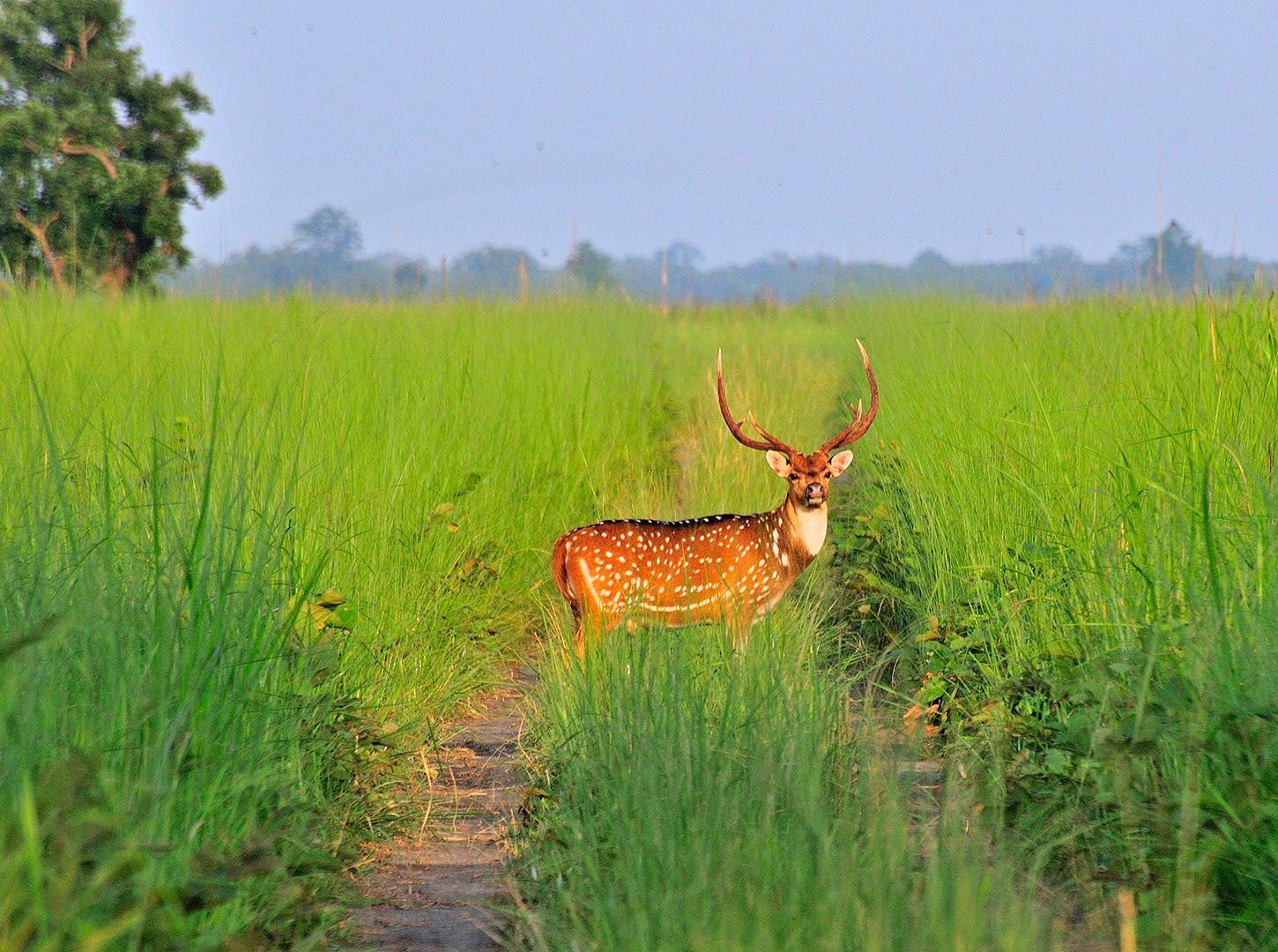
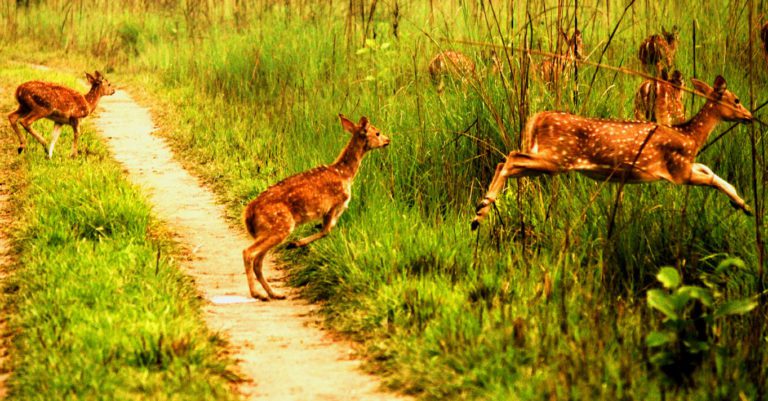
Tigers are never guaranteed, even here. Some guests see one on their first day and some see only tracks. What you will almost certainly see are spotted deer, wild boar, langur monkeys, crocodiles and dozens of birds. Rhino and wild elephants live here too. If tigers are the main reason for your trip, ask us about adding an extra day in the park.
What you will see and do:
- A full day jeep safari deep inside Bardiya National Park
- A guided jungle walk following fresh tracks with two naturalists
- A float on the Karnali River past gharial crocodiles and river birds
- A chance to see the rare Gangetic river dolphin
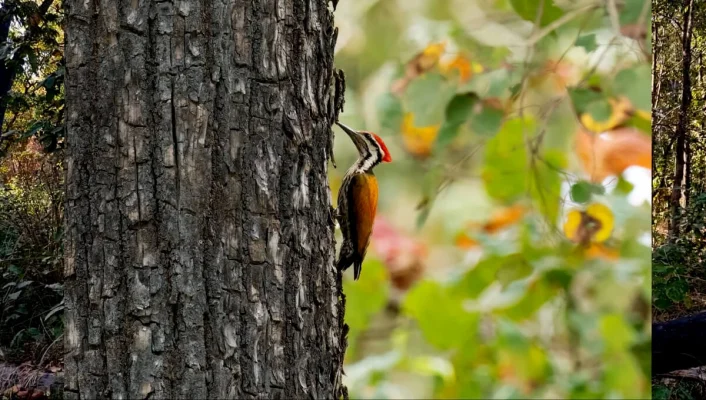
- Birdwatching in a park with more than 400 recorded species
- A Tharu village walk and a Tharu dance in the evening
Short on time or travelling with young kids? The Chitwan National Park Safari is closer to Kathmandu and Pokhara, needs no flight and is best for one-horned rhino.
Day-by-Day Itinerary
Fly to Nepalgunj and Drive to Bardiya
Take the morning flight from Kathmandu to Nepalgunj, about one hour over the hills. Your driver meets you at the airport for the three hour drive west to Thakurdwara on the edge of the park. After lunch at the lodge, walk through a nearby Tharu village with your naturalist. In the evening watch a Tharu dance at the lodge.
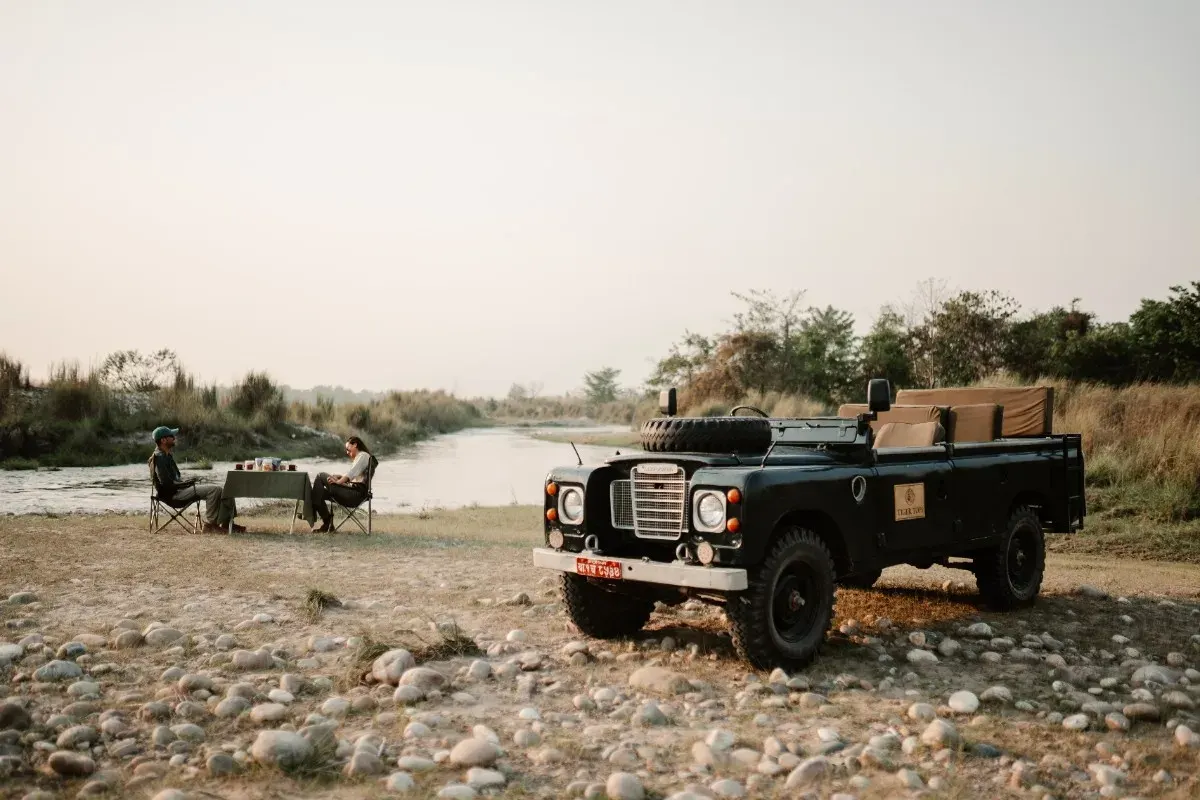
Full Day Jeep Safari
Leave after an early breakfast and spend the whole day in the park by jeep. Your naturalist checks the latest tracks and heads for the river banks and grasslands where tigers come to drink. Lunch is a packed meal in the jungle. Expect long quiet waits at good spots. Back at the lodge before dark.
Jungle Walk and Karnali River
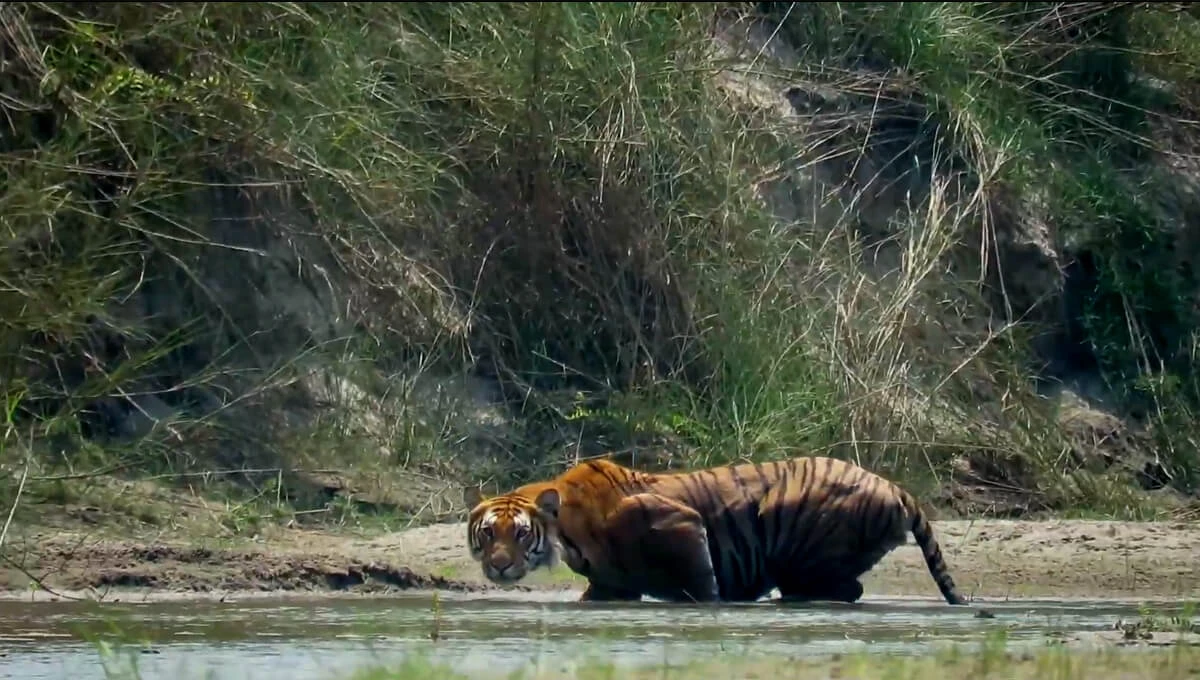
Head into the forest on foot with two licensed naturalists, as the park rules require. Walking is the best way to read fresh tracks and hear alarm calls. After lunch float down the Karnali River and look for gharial crocodiles, river birds and with luck the rare river dolphin. Watch the sun go down over the water before heading back.
Birdwatching and Fly to Kathmandu
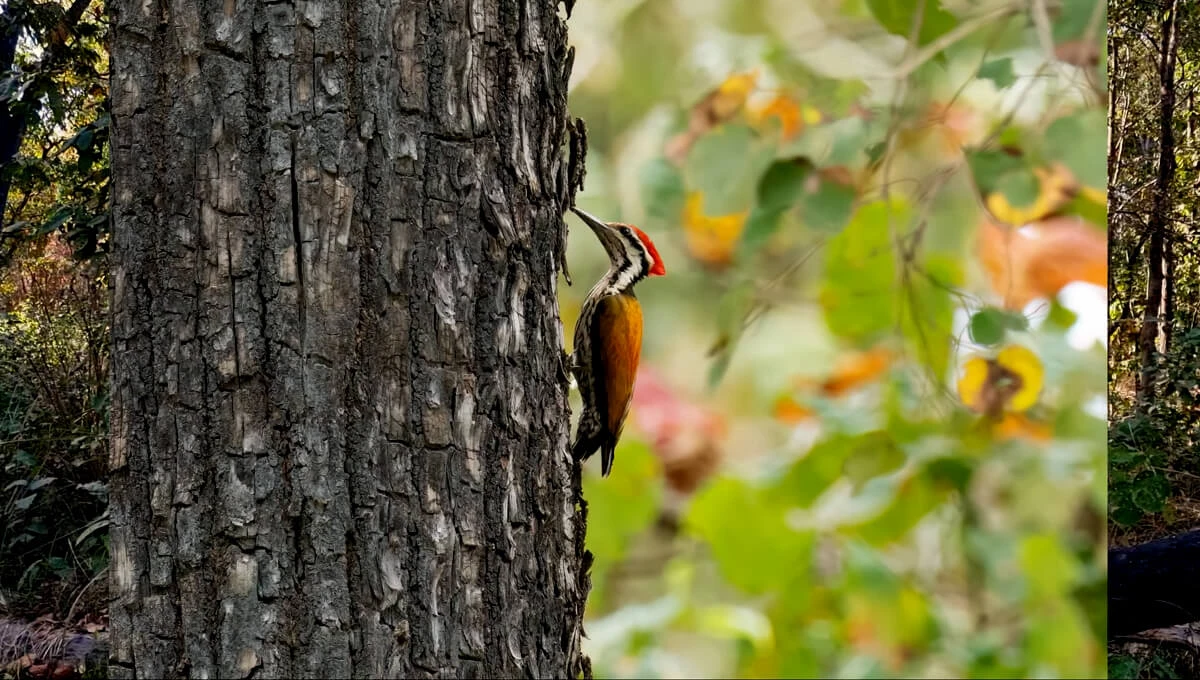
Go out early with your naturalist for a birdwatching walk while the forest is still waking up. Come back for breakfast, then drive back to Nepalgunj for the flight to Kathmandu. You land in the afternoon in time to rest before dinner in Thamel.
Includes & Excludes
-
Return flights Kathmandu to Nepalgunj Economy class, about one hour each way
-
Airport transfers in Kathmandu From your hotel to the domestic airport and back
-
Private car Nepalgunj to Bardiya and back About three hours each way
-
3 nights at a jungle lodge In Thakurdwara on the edge of the park. Twin sharing
-
All meals at the lodge Lunch on Day 1 to breakfast on Day 4, with a packed lunch on safari day
-
Bardiya National Park entry fees All park and conservation fees
-
Full day jeep safari About eight hours in the park
-
Jungle walk with two licensed naturalists As the park rules require
-
Float on the Karnali River Afternoon on Day 3
-
Tharu village walk, cultural show and birdwatching Village walk and dance on Day 1, birdwatching on Day 4
-
Hotel in Kathmandu Before and after the safari. We can book one for you
-
Drinks Soft drinks, beer and bottled water
-
Travel insurance Required. Must cover medical care and evacuation
-
Tips for naturalists and driver Up to you
-
Single room Available on request at extra cost
-
Extra costs from flight delays Nepalgunj flights can be delayed by weather. Travel insurance usually covers this
Add to Your Trip
We Handle the Details
FreeWhere You'll Sleep & What You'll Eat
You stay 3 nights at a jungle lodge in Thakurdwara, the small village at the main entrance to Bardiya National Park. Rooms are simple cottages with a private bathroom, a fan and hot water. Most lodges here are small and family run, set in gardens close to the forest edge.
Electricity can cut out now and then in this part of Nepal, so the lodge has backup power for lights and charging. WiFi is slow or patchy. Your naturalists are local and based near the lodge. Rooms are twin sharing. A single room is available on request.
All meals are included from lunch on Day 1 to breakfast on Day 4. Food is cooked at the lodge and is simple and filling. Expect dal bhat, curries, vegetables from local farms and a few Western dishes. On safari day you get a packed lunch to eat in the park.
Drinks are not included. There are no restaurants or bars nearby, so the lodge is where you eat and relax in the evening.
| Soft drinks and bottled water | $1 to $2 each |
| A beer at the lodge | $4 to $6 |
| Tharu crafts and souvenirs | Budget as you like |
What Our Trekkers Say
“A fantastic wildlife experience”
We chose Bardiya because we wanted something quieter than Chitwan, and it was a great decision. Over several days exploring the park we were lucky enough to see rhinos, deer, monkeys, and plenty of birds, the jungle felt wild and peaceful at the same time. MountainKick organized everything very well…
“A real adventure in the jungle”
As a group of three, we had a wonderful time in Bardiya. The safari felt much more remote than we expected, and we enjoyed both the jeep and walking experiences, seeing wildlife in its natural environment was unforgettable. The MountainKick team were friendly and helpful throughout the trip.
“Amazing wildlife and a peaceful place”
We visited Bardiya after a trekking trip in the mountains and it was the perfect contrast. The park was beautiful and we really enjoyed the slower pace, our guide was very knowledgeable about the animals and helped us spot things we'd have completely missed ourselves. A great experience with MountainKick.
“One of our favourite parts of Nepal”
Our family of four loved the Bardiya safari. We saw rhinos, crocodiles, monkeys, and an incredible number of birds, and the children were fascinated by everything. We also enjoyed meeting local people and learning about life around the park, MountainKick handled the arrangements very smoothly and made it a really…
Frequently Asked Questions
What is the best time to visit Bardiya National Park?
October to May is the safari season. March to May is the best time for tigers. It is hot, the tall grass has been cut and animals come down to the rivers to drink. October and November are pleasant with green forest and clear skies. December and January are foggy and cold in the mornings. From June to September the monsoon brings heavy rain and the park is mostly closed.
Is Bardiya better than Chitwan for wildlife?
For tiger sightings, yes. Bardiya has a lower density of tourists and vehicles, which means the wildlife is less habituated and encounters feel more natural. The park’s forest and grassland mix is well-suited to tiger movement, and sightings are more frequent here per visitor than at Chitwan. For rhinoceros sightings, Chitwan has the higher population. If your priority is tigers, Bardiya is the right choice.
Will I see Gangetic river dolphins?
Maybe. The Gangetic river dolphin lives in the Karnali River but there are only a small number left. They come up to breathe for a second or two, so you need sharp eyes and some luck. Our guests see them on some trips, more often in the cooler months from October to February. Your naturalist knows the deep pools where they are most likely to show.
How do I get to Bardiya?
This trip includes return flights from Kathmandu to Nepalgunj (approximately 1 hour), followed by a 3-hour drive to Thakurdwara. Flying is the practical way to reach western Nepal. The overland route from Kathmandu takes 12 to 16 hours each way.
Is this tour suitable for families with children?
Yes. All activities take place on flat terrain. The jeep safari, canoe ride, and Tharu cultural show work well for families. Children under 5 are not recommended for jungle walks in the park. Let us know the ages of any children when you enquire so we can tailor the activities accordingly.
Is this a good standalone trip or only an add-on to a trek?
Both. Bardiya works well as a standalone wildlife trip, particularly for travellers who want a genuine off-the-beaten-path Nepal experience without a trek. It also pairs well as an extension to any of our Himalayan treks, adding a completely different landscape and activity type to the itinerary.
Can I extend my stay in Bardiya?
Yes. We can arrange additional nights and include extra activities such as community village walks, additional jeep safaris, or longer river trips. Let us know when you enquire and we will include options in your quote.
What should I wear?
Lightweight, neutral-coloured clothing in khaki, olive, or brown is recommended. Avoid bright colours and white in the park. Closed-toe walking shoes with good grip are required for the jungle walk. Bring a warm layer for early mornings between October and March, and a hat and sunscreen for the river canoe in warmer months.
What are my chances of seeing a tiger?
Better than anywhere else in Nepal, but never certain. Bardiya has a healthy tiger population and far fewer jeeps than Chitwan, so animals are less disturbed. Some guests see a tiger on their first day. Others see only fresh tracks after three days. Your odds go up with more time in the park and in the hot months from March to May. If a tiger is your main goal, add an extra day.
Is travel insurance required?
Yes. Travel insurance is compulsory for all park activities including walking safaris. Your policy should cover medical evacuation and emergency repatriation. Medical facilities in Thakurdwara are very basic; the nearest hospital is in Nepalgunj.
Departure Dates & Pricing
No upcoming fixed departures are scheduled at the moment. Contact us to arrange a private departure on dates that suit you.
Your dates, your group, your way
Same route and guides, just your group. Tell us when you'd like to go and how many of you there are, and we'll send you a day by day plan with a price.
- Nothing to pay now
- Plan and price by email
- Confirm with a 20% deposit
"*" indicates required fields
Rather chat? Message us on WhatsApp
-
1
20% deposit: due on booking Secures your place on the departure. The deposit is non-refundable. We also need a copy of your passport.
-
2
80% balance: due on arrival Pay the rest in Kathmandu before the trip starts. Bank transfer, cash, or card (4% card fee).
| Cancel before you arrive | Deposit not refunded, nothing more to pay |
| Cancel after the pre-trip meeting | No refund |
| Date or name change | USD 200 per person |
| MountainKick cancels trip | Full refund or reschedule |
Weather delays and extra days cost extra, so travel insurance is required. We give you documents for any claim.
Read the full terms and conditionsPacking List
Clothing
ⓘ Wear khaki, green or brown in the park. Bright colours and white scare the animals.
Personal items
ⓘ There are no shops near the lodge. Bring what you need from Kathmandu.
Electronics
ⓘ Power can cut out at the lodge. Charge your devices whenever you can.
Travelling in Winter (Dec to Feb)
Leave at home
-
Large suitcase The flight has a weight limit. Leave it at your Kathmandu hotel
-
Bright or white clothes They stand out and scare the animals
-
Strong perfume Draws insects and can carry on the breeze to wildlife
Sleeping bags and down jackets can be rented through us. Trekking poles are best purchased in Thamel. We'll connect you with trusted shops during your pre-trip meeting. We provide a duffel bag for every trekker as part of the package.
Bardiya Jungle Safari
Talk to Kumar and the team before you commit. Ask about pace, hotels, a private group or adding extra days.
Tales from the Himalayas
 Travel
 Best Time to Trek Langtang Valley: Month by Month
Langtang is close to Kathmandu and good for much of the year, but the season changes everything from the views…
 Annapurna Region
 Thorong La Pass: A Guide to the Big Day on the Annapurna Circuit
Thorong La at 5,416m is the highest point of the Annapurna Circuit. Here’s what crossing day is really like, from…
 Everest Region
 Annapurna Circuit Teahouses: What the Rooms Are Really Like
Teahouses on the Annapurna Circuit range from comfortable lodges in Manang to bare rooms at Thorong Phedi. Here’s what to…