Everest Three Passes Trek: Complete Guide, Route & Difficulty
The Everest Three Passes Trek is a challenging 20-day circuit through Nepal’s Khumbu region, crossing Kongma La (5,535m), Cho La (5,420m), and Renjo La (5,360m). The route also includes Everest Base Camp, Kala Patthar (5,545m), and Gokyo Ri (5,357m), making it one of the most complete trekking circuits in the Everest region.
MountainKick’s Three Passes package starts from USD 1,280 per person (group rate, 4–9 travellers).
Everest Three Passes Trek: At a Glance
- Region: Khumbu, Sagarmatha National Park, Nepal
- Duration: 20 days
- Highest point: Kala Patthar, 5,545m / 18,192ft
- Highest pass: Kongma La, 5,535m
- Passes crossed: Kongma La, Cho La, Renjo La
- Difficulty: Very challenging
- Best seasons: March–May, October–November
- Trek start/end: Lukla
- Package: From USD 1,280 per person (group)
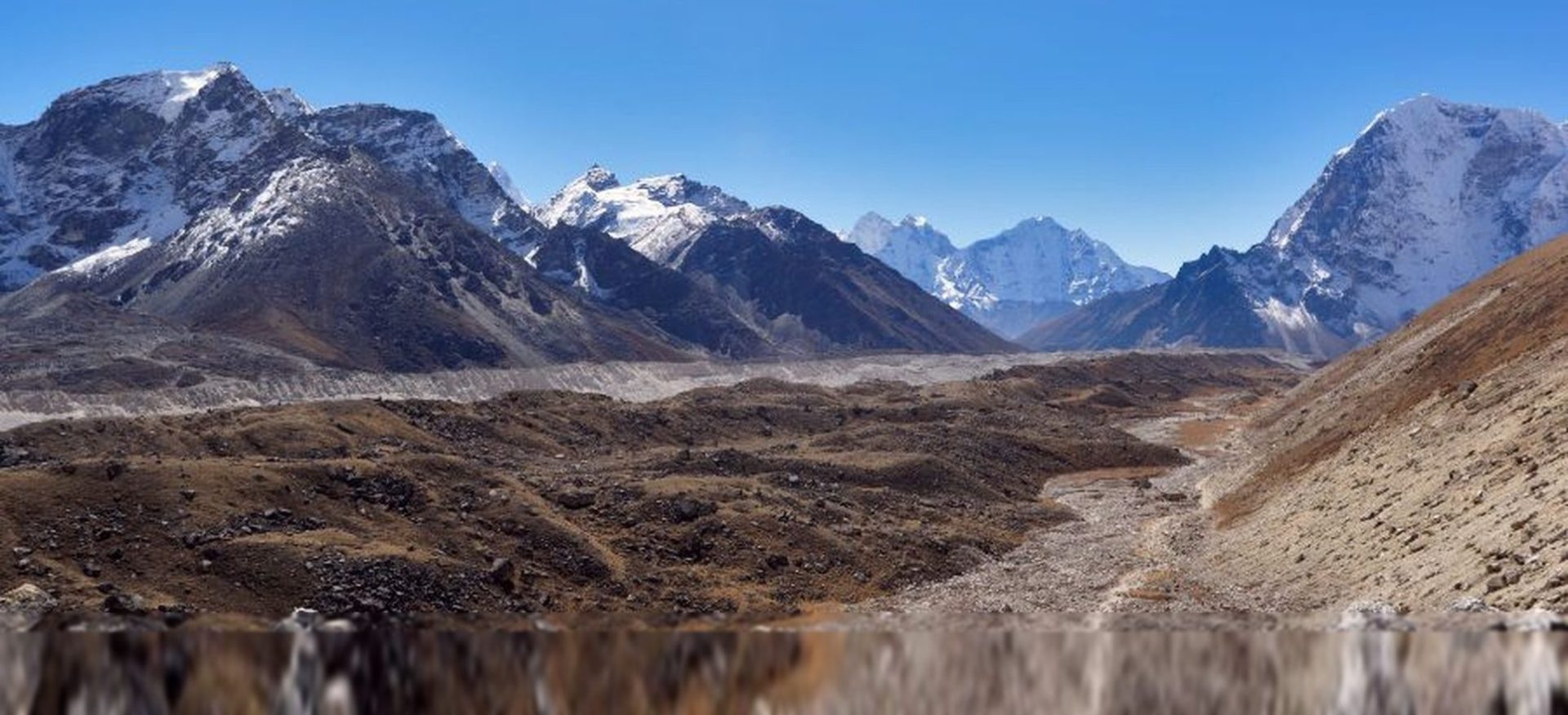
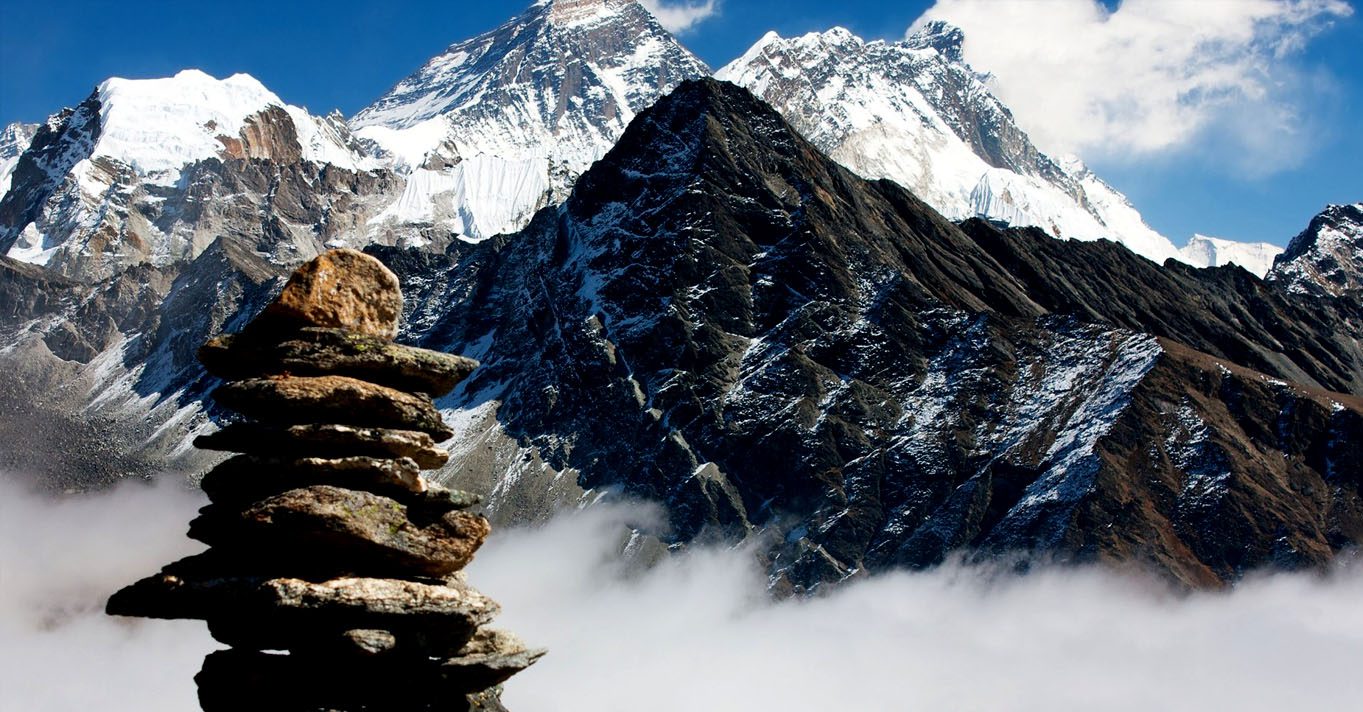
Most trekkers who do Everest Base Camp see one destination: the base camp itself, plus Kala Patthar for the sunrise photo. The Three Passes Trek is a different kind of trip. Instead of walking up and back down the same trail, it loops through several of the major valleys in the Khumbu: the Imja Valley to Kongma La, the Khumbu Glacier to Base Camp, the Gokyo Valley and its turquoise lakes, and the remote Bhote Koshi Valley on the way out over Renjo La.
Few standard Everest-region treks combine Everest Base Camp, Kala Patthar, Gokyo Ri, and all three high passes in one continuous circuit. Planning the trek? See MountainKick’s Everest Three Passes Trek for the full day-by-day itinerary, inclusions, and current price.
Why the Route Runs Anti-Clockwise
MountainKick runs the circuit anti-clockwise over 20 days: gradual altitude gain through the Imja Valley, Kongma La crossed mid-trek once your body has had the most time to adjust, then Everest Base Camp and Kala Patthar before climbing back into the Gokyo Valley for Cho La and finally Renjo La. There are three acclimatisation days on the way, at Namche, Dingboche and Chhukung. For the full day by day plan, see our Everest Three Passes Trek itinerary.
Planning the Everest Three Passes Trek?
Full itinerary, fixed departure dates, and current pricing.
How Difficult Is the Three Passes Trek?
This is one of the most challenging standard teahouse treks in the Everest region. It is not a technical mountaineering expedition, but sustained, demanding high-altitude trekking. Three passes, each above 5,300m, on a route that keeps you above 4,000m for well over half the trip.
For a general sense of how this compares across all MountainKick treks, see our trek difficulty grading guide.
What Makes the Three Passes Trek Difficult?
- High altitude sustained over many consecutive days
- Three passes above 5,300m
- Long trekking days, often 7 to 9 hours on the hardest sections
- Rapidly changing mountain weather
- Snow and ice conditions on the passes, which vary by season and recent weather
- More basic accommodation in remote sections like Dzongla, Thangnak, and Marlung
- Cumulative fatigue over 20 days
- Lukla flight uncertainty affecting the start and end of the trek
MountainKick operates this itinerary anti-clockwise. The advantage is that the route places Kongma La after acclimatisation in Dingboche and Chhukung, before continuing toward Everest Base Camp and the Gokyo Valley.
Prior high-altitude trekking experience is strongly recommended before attempting Three Passes. Completing Everest Base Camp, Gokyo Valley or another trek involving sustained time above 4,000m can provide useful preparation. If this is your first trip above 3,500m, start with one of those routes first. For the fitness side of preparation, see our guide to training for Everest Base Camp.
Everest Three Passes Trek Route: Kongma La, Cho La and Renjo La
1. Kongma La Pass
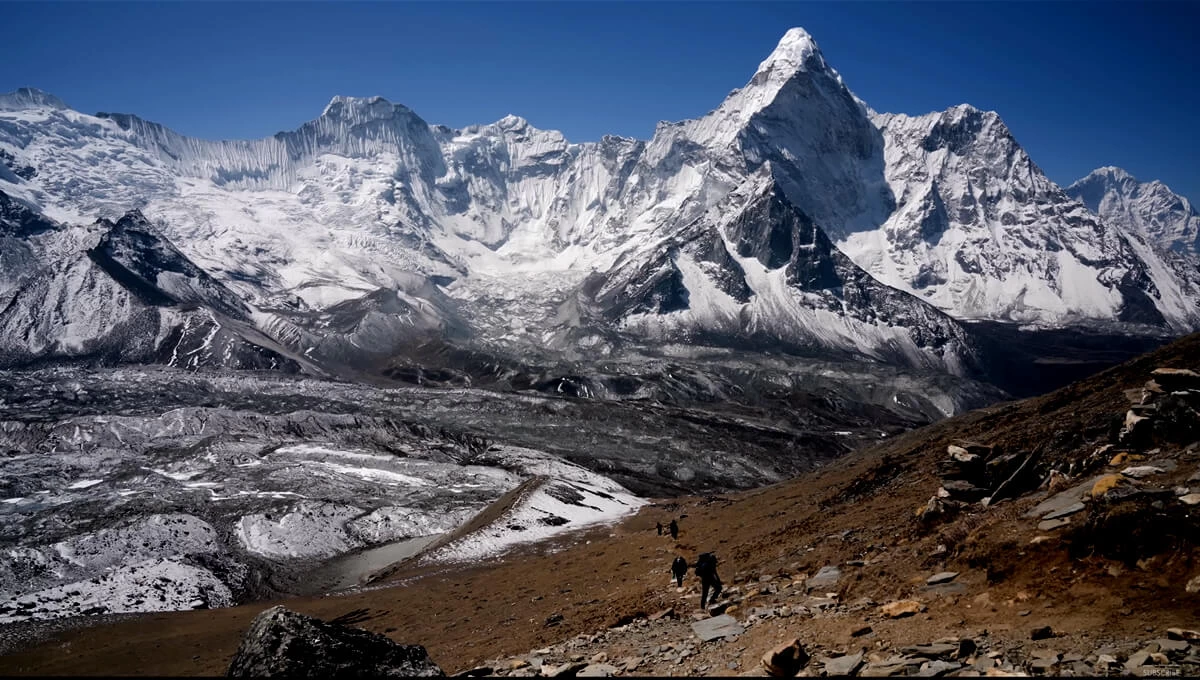
Kongma La (5,535m) comes first, from Chhukung, while you’re best acclimatised from the Dingboche and Chhukung stops. It’s the highest of the three passes, with rocky, uneven terrain and a long descent into the Khumbu Valley toward Lobuche.
2. Everest Base Camp and Kala Patthar
From Lobuche, the route reaches Everest Base Camp via Gorakshep, followed by a pre-dawn climb to Kala Patthar (5,545m), the highest point of the entire trek, for the sunrise view across Everest’s southwest face.
3. Cho La Pass
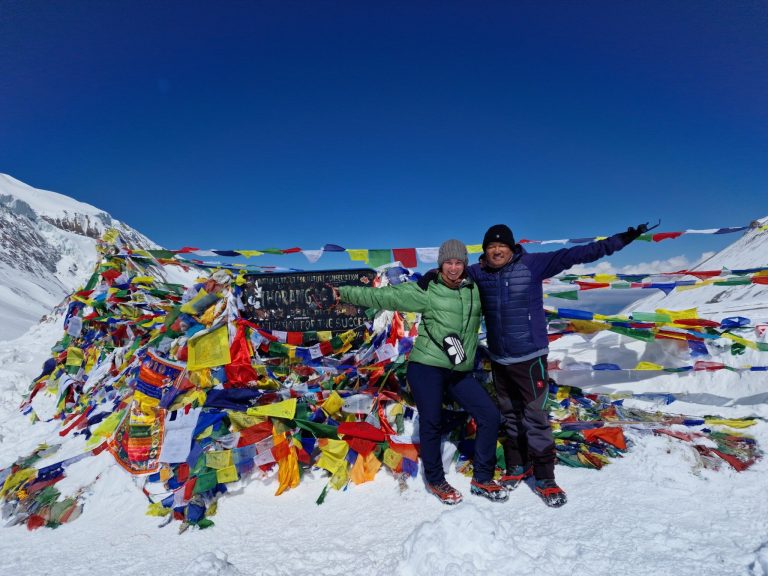
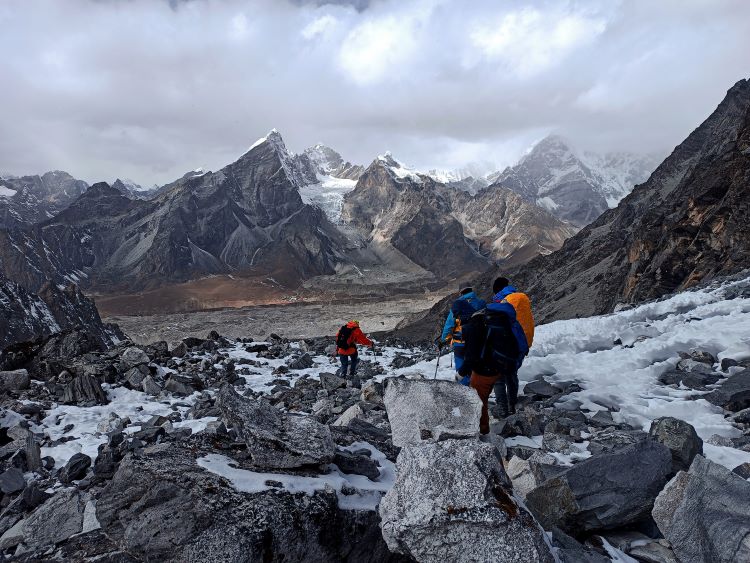
The trail climbs back up via Dzongla to Cho La (5,420m). This is often considered the most technically demanding of the three passes because the route can involve a steep snow or ice section and glacier terrain, depending on conditions. If conditions make the pass unsafe, the guide will assess the situation and adjust the route or itinerary as necessary.
4. Gokyo Valley and Gokyo Ri
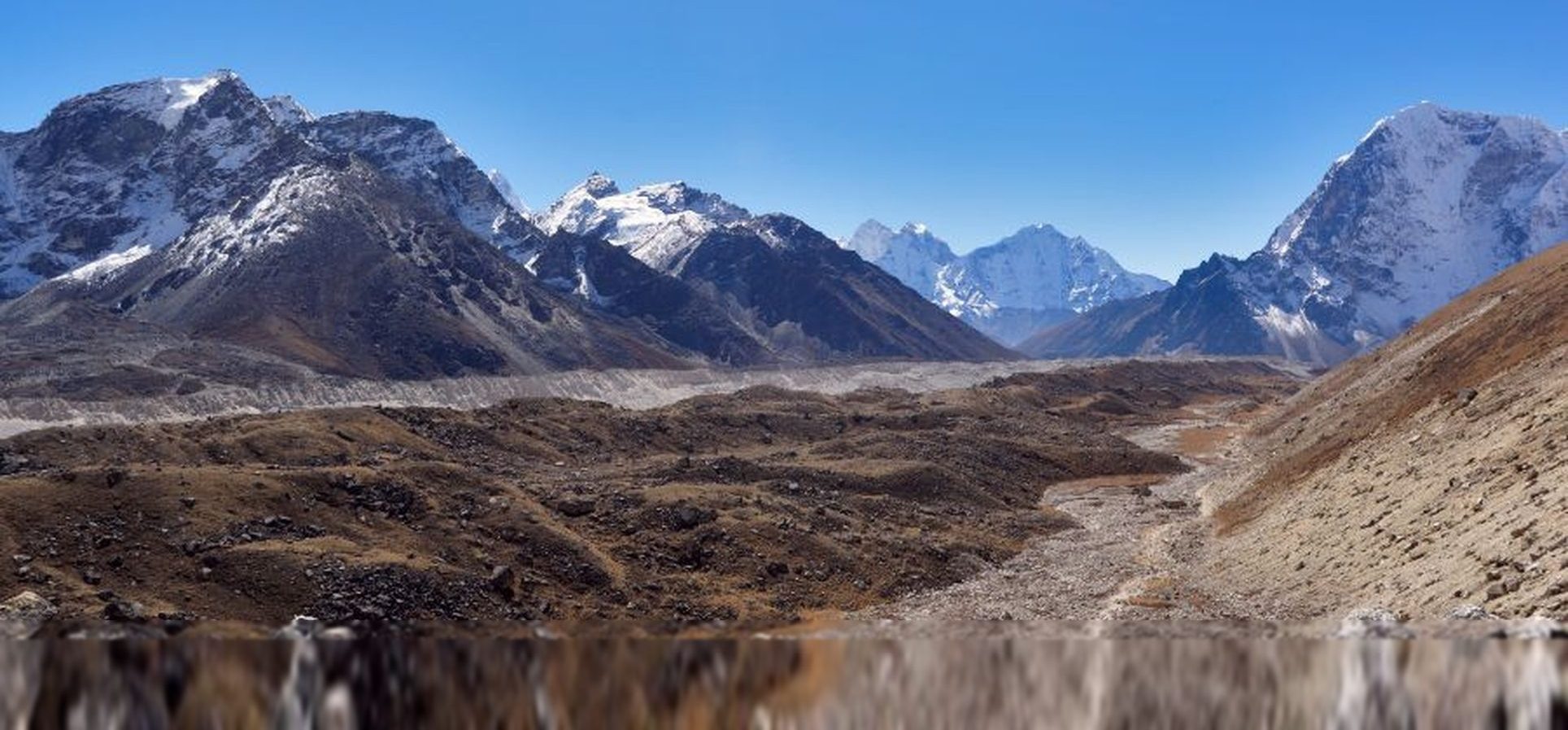
Cho La drops you into the Gokyo Valley, where you get a full day among the turquoise Gokyo Lakes and climb Gokyo Ri (5,357m) for a wide panorama that includes Everest, Lhotse, Makalu, and Cho Oyu.
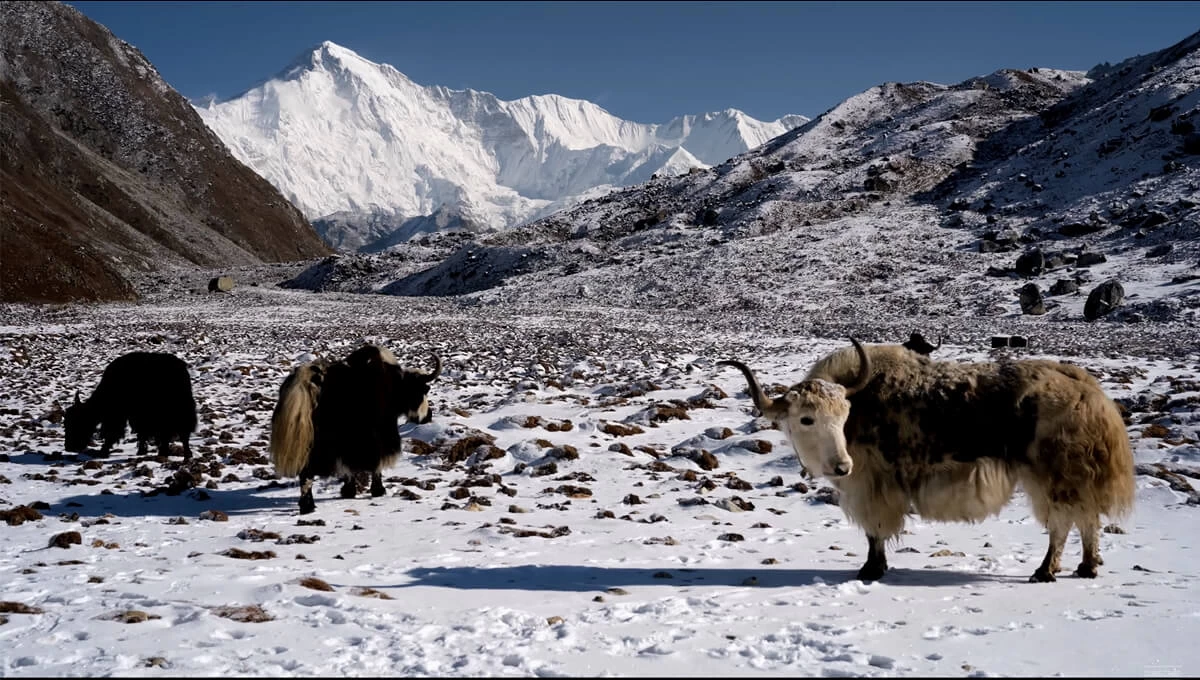
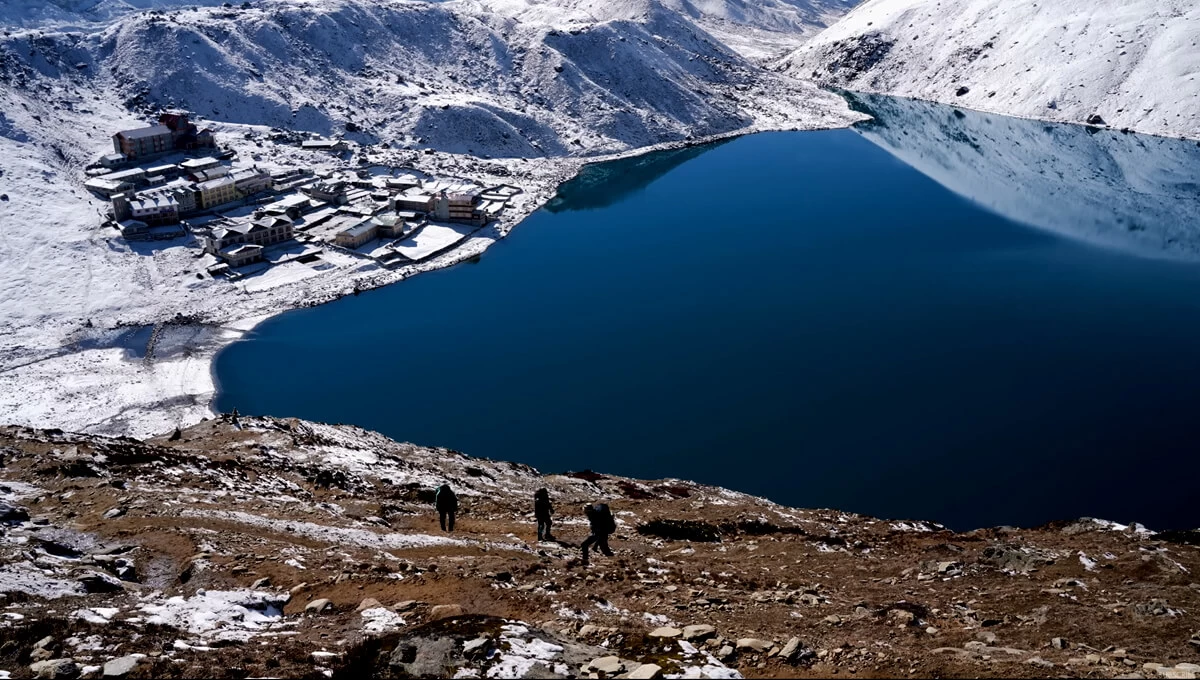
5. Renjo La Pass
The final pass, Renjo La (5,360m), is generally considered the least technically demanding of the three, but it comes near the end of the trek when fatigue is highest. It drops you into the remote Bhote Koshi Valley for the walk out through Marlung and Thame to Namche and Lukla.

For a route combining EBC and Gokyo without crossing all three high passes, see our Everest Base Camp via Gokyo Valley.
Three Passes Trek vs Everest Base Camp
If you’re considering the Three Passes route but aren’t sure you’re ready for three high passes, compare it with our Everest Base Camp Trek.
| Everest Three Passes | Everest Base Camp | |
|---|---|---|
| Duration | 20 days | 14 days |
| High passes | 3 (Kongma La, Cho La, Renjo La) | None |
| Gokyo Valley | Yes | No |
| Difficulty | Very challenging | Moderate to challenging |
| Experience needed | Prior high-altitude trekking recommended | Suitable for many first-time high-altitude trekkers |
| Package (group of 4 to 9) | From $1,280 | From $1,020 |
Three Passes vs EBC via Gokyo
Your EBC via Gokyo trip sits between these two in scope. It gives you the Gokyo Lakes, Gokyo Ri, EBC, and Kala Patthar, but skips Kongma La and Renjo La. Three Passes adds those two passes on top of that same core route.
| Three Passes | EBC via Gokyo | |
|---|---|---|
| Duration | 20 days | 17 days |
| Everest Base Camp | Yes | Yes |
| Kala Patthar | Yes | Yes |
| Gokyo Lakes and Gokyo Ri | Yes | Yes |
| High passes | 3 | 1 (Cho La) |
| Difficulty | Very challenging | Challenging |
| Best for | Experienced trekkers wanting the complete circuit | Trekkers wanting EBC + Gokyo without Kongma La or Renjo La |
Permits for the Three Passes Trek
The Three Passes Trek requires the Sagarmatha National Park Entry Permit and the Khumbu Pasang Lhamu Rural Municipality Entry Permit, plus a licensed guide. The Nepal Tourism Board’s national TIMS list still includes Everest routes, but in practice the Khumbu uses its own local permit and no separate TIMS card is issued or checked. No separate permit is required for Kongma La, Cho La or Renjo La themselves. MountainKick arranges the required permits as part of the package.
Best Time for the Three Passes Trek
October and November are generally the strongest window for the high passes, with the clearest post-monsoon conditions. March through May is another good period, although conditions can still vary at the passes. September can be affected by lingering monsoon conditions, while December brings colder temperatures and greater winter snow risk. Outside the main windows, snow can make Cho La difficult, and both Renjo La and Kongma La become harder to read underfoot.
Tea Houses, Food and Facilities
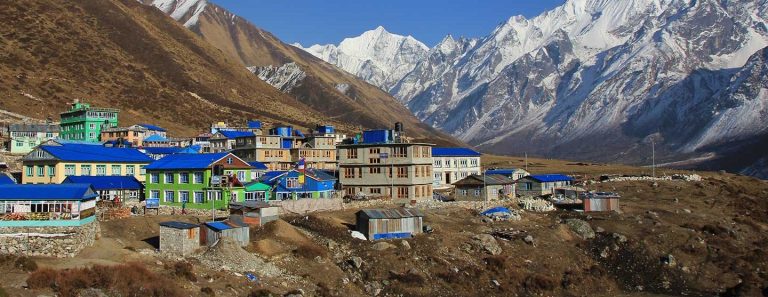
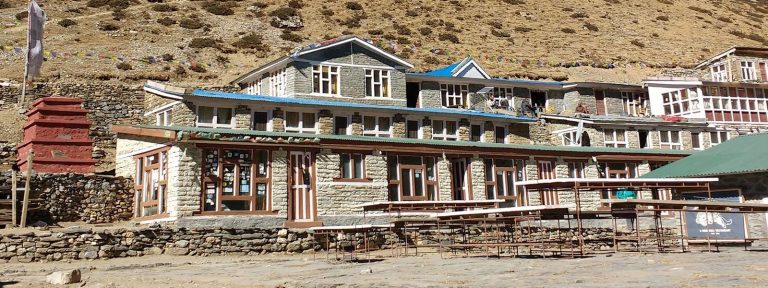
Accommodation is teahouse-style throughout: basic twin rooms, shared bathrooms. Hot showers cost $3–5 where available (Lukla, Namche, Dingboche, Gokyo) and reduce significantly above Lobuche. Gorakshep has the coldest, most basic teahouses on the route. Dzongla and Thangnak are the most remote stops on the circuit. They are basic but functional, with fewer menu options than the main EBC corridor.
Namche Bazaar is the main place to withdraw cash before heading deeper into the circuit, so carry enough cash for the remote sections. A practical food budget is around $35 per day.
Guide Requirements and Safety
A licensed guide is required on this route under Nepal’s current trekking rules. On a route with three high passes and variable snow and ice conditions, having an experienced guide also matters well beyond simple compliance.
Is the Three Passes Trek Right for You?
Frequently Asked Questions
How long does the Everest Three Passes Trek take?
20 days with MountainKick’s itinerary, including a night in Kathmandu at the start and one at the end.
What is the highest point on the Three Passes Trek?
Kala Patthar at 5,545m. The highest pass crossed is Kongma La at 5,535m.
Which is the hardest pass?
Kongma La is the highest of the three. Cho La is often considered the most technically demanding, due to its glacier crossing and variable snow and ice conditions.
Can beginners do the Three Passes Trek?
Not recommended as a first Nepal trek. Prior experience above 4,000m is strongly advised, ideally from a trek like Everest Base Camp.
Is Cho La dangerous?
It involves steep, potentially icy terrain and a short glacier crossing depending on conditions, which is why a licensed guide and proper gear matter. If conditions make the pass unsafe, the guide will assess the situation and adjust the route or itinerary as necessary.
Do you need a guide?
Yes, a licensed guide is required on this route under Nepal’s current trekking rules.
What permits do I need?
The Sagarmatha National Park Entry Permit and the Khumbu Pasang Lhamu Rural Municipality Entry Permit are required. No separate TIMS card is used in the Khumbu. No separate permit is required for Kongma La, Cho La or Renjo La themselves.
Is Three Passes harder than EBC?
Yes. Three Passes involves three crossings above 5,300m and substantially more time at high altitude than the standard EBC route.
How much does it cost?
MountainKick’s package runs from $1,280 to $1,685 per person depending on group size: $1,685 for solo travellers, $1,360 for groups of 2–3, and $1,280 for groups of 4–9. See the trip page for current fixed departure dates and full pricing.