Travel Insurance for Trekking Nepal: What Your Policy Must Cover
Travel insurance is strongly recommended for trekking in Nepal, especially on high altitude routes. The important part is choosing a policy that explicitly covers the altitude of your trek, emergency medical treatment and helicopter evacuation. Everest Base Camp reaches 5,364m, and Kala Patthar reaches 5,545m.
Before buying, check the policy wording for high altitude trekking, emergency evacuation, medical treatment, trip interruption, and exclusions. MountainKick requires trekkers to have insurance that covers high altitude trekking and helicopter evacuation to at least 6,000m.
Nepal Trek Insurance: Key Facts
- Altitude cover: Must explicitly cover the maximum altitude of your trek. MountainKick requires cover to at least 6,000m.
- Helicopter evacuation: Must be explicitly covered. A rescue can cost several thousand dollars.
- Medical treatment: Check that your policy covers emergency medical treatment as well as evacuation.
- Trip disruption: Useful for delays, cancellations and missed connections where your policy provides this cover.
- Policy exclusions: Check altitude limits, trekking exclusions, pre-existing conditions and other restrictions.
- Buy before departure: Some insurers restrict or do not allow new policies once your trip has started.
- Share your policy: Give your guide your policy details and emergency contact information before leaving Kathmandu.

Travel insurance for a Nepal trek is not a box to tick before you fly. It is the decision that determines whether an emergency on the mountain costs you a helicopter ride or costs you a helicopter ride plus your savings. The difference between the two is entirely in the policy details, and most trekkers do not read those details closely enough until after something has gone wrong.
If you are still finalising your route, our Everest Base Camp trek page and EBC cost breakdown are worth a look before you buy a policy. Knowing your route and its altitude is the first step to knowing what your insurance needs to cover.
Why Travel Insurance for Nepal Trekking Is Different
Many trekkers heading to Nepal already have some form of travel cover. The problem is that the policy they have was designed for delayed luggage and cancelled city breaks, not helicopter evacuations from 5,000m in the Khumbu.
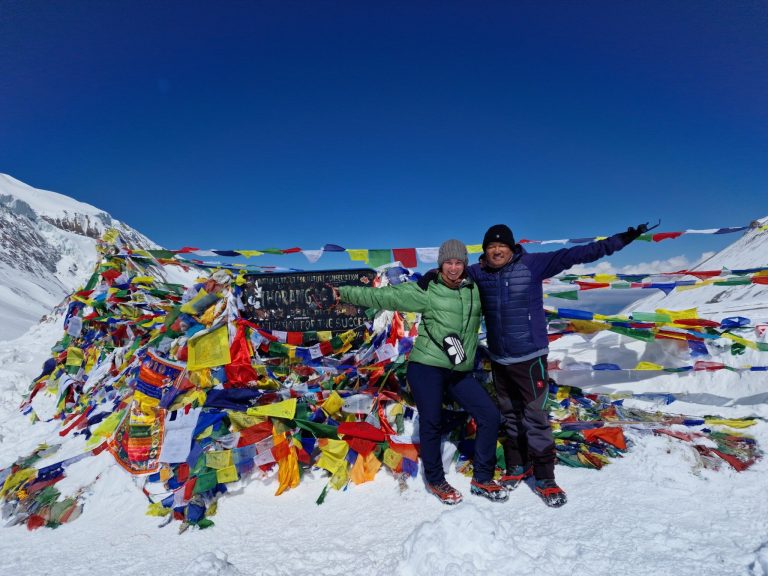
Many standard travel insurance policies place limits on trekking altitude that are well below the altitudes reached on Everest Base Camp (5,364m) or the Thorong La Pass (5,416m) on the Annapurna Circuit. If your policy does not clearly cover the altitude your trek reaches, do not assume you are covered for the highest sections of the route.
What Your Policy Must Cover
High altitude trekking
Check the altitude limit carefully. Travel insurance policies can place different limits on trekking and other activities. A policy that covers ordinary hiking may not cover a trek at the altitude reached by Everest Base Camp or a high pass on the Annapurna Circuit.
For EBC, Kala Patthar reaches 5,545m. The Annapurna Base Camp trek reaches 4,130m, so a policy with a 4,000m trekking limit would not be enough for that route either. MountainKick requires trekkers to have insurance covering high altitude trekking and helicopter evacuation to at least 6,000m. Check the exact wording of your policy before purchasing it.
Emergency helicopter evacuation
Evacuation cover is one of the most important parts of a trekking policy, because a rescue is expensive and it can’t wait. Check whether your insurer needs to approve the rescue before it is arranged, and how payment is handled. In an emergency, your guide and our Kathmandu team help coordinate the response.
How Much Does Helicopter Rescue Cost in Nepal?
There is no fixed price for helicopter evacuation in Nepal. The cost depends on where you are rescued, the aircraft used, the weather, the routing and whether the helicopter is arranged as a rescue or a private charter.
Published operator figures give some idea of the possible cost. Some operators quote around $4,000 to $6,000 for an evacuation from Gorak Shep to Kathmandu. For comparison, a private charter from Pokhara to Annapurna Base Camp can start at around $2,200 before any rescue costs.
These are examples, not standard rescue rates. Your actual evacuation cost can be very different depending on the circumstances.
That is why evacuation cover matters so much. Check that your policy specifically covers high altitude helicopter evacuation in Nepal, and check the maximum amount the insurer will pay.
The helicopter is only part of the potential bill. Medical assessment, hospital treatment, medication and other medical expenses can add a lot to the cost. That is why your policy needs medical cover as well as evacuation.
Who pays on the day
Some policies let the insurer or assistance company arrange payment directly once the rescue is approved. Others may need you to pay first and claim the money back later. Find out which process applies to your policy before you go, because a rescue can’t wait while you work out the payment.
What insurers won’t pay for
Insurers may check whether an evacuation met the policy’s emergency and medical requirements. Being tired, running out of time or simply wanting to leave the trek does not usually count as a covered medical evacuation. Check your policy’s emergency procedure before you go. If a real problem develops, your guide and our Kathmandu team can help document the situation, including symptoms and oxygen readings, for communication with your insurer and assistance company.
Medical treatment in Kathmandu
Evacuation gets you off the mountain, but treatment may continue after you reach Kathmandu. Your policy should cover emergency medical treatment, hospital care, and other eligible medical expenses in addition to evacuation.
Trip disruption and Lukla flight delays
Lukla flights are cancelled and rescheduled regularly. Weather delays in Lukla can last more than a day, and if a delay makes you miss an international connection, you may face rebooking fees and extra accommodation costs. Trip disruption cover protects your onward bookings in that scenario. Read our full Lukla flight delays guide for how to plan around this.
What to Check Before Buying Nepal Trekking Insurance
Before paying for a policy, check these five things:
- Maximum altitude. Make sure the policy covers the highest point of your itinerary. Everest Base Camp is at 5,364m, while Kala Patthar reaches 5,545m.
- Trekking definition. Confirm that your planned trek is covered under the policy’s definition of trekking or hiking.
- Helicopter evacuation. Confirm that emergency helicopter evacuation is covered and understand the insurer’s emergency procedure.
- Medical treatment. Check the amount of emergency medical cover and whether hospital treatment in Nepal is included.
- Exclusions. Read the exclusions carefully. Altitude, alcohol, pre-existing conditions, unattended belongings, and certain adventure activities can have specific restrictions.
How MountainKick Manages Emergencies on the Trail
Every MountainKick trek is led by a licensed guide. Our guides carry a pulse oximeter and first aid supplies on Khumbu treks, and our Kathmandu team remains available throughout the trek.
If a medical problem develops, the guide assesses the situation and communicates with our Kathmandu team so the appropriate assistance can be arranged. This can include contacting the insurer and coordinating evacuation when necessary.
Before departure, we ask trekkers to provide their insurance policy details and emergency contact information. This means the guide and Kathmandu team have the information available if an emergency occurs.

How to Choose Travel Insurance for Nepal Trekking
There is no single travel insurance policy that is best for every trekker. Your nationality, age, trip length, destination, altitude, and existing coverage can all affect what is available. If you are also still deciding between operators, our guide on how to choose a Nepal trekking company covers the questions worth asking before you book.
When comparing policies, look for these points:
- High altitude trekking cover that matches the maximum altitude of your itinerary
- Emergency helicopter evacuation
- Emergency medical treatment and hospital expenses
- Trip cancellation or interruption if you need it
- Coverage for trekking as an activity rather than just general travel
- Clear exclusions for altitude, weather, and adventure activities
- A 24 hour emergency assistance service
Always read the policy wording rather than relying only on the insurer’s summary page.
Travel Insurance Providers to Compare by Region
Insurance availability depends heavily on your country of residence. A policy available to a traveller from the USA may not be available to someone living in Australia, the UK, or India. Even when the same insurance company operates in several countries, the benefits, exclusions, and altitude limits can be different.
The providers below are examples worth comparing. We have an affiliate partnership with Rise & Shield, which means we may earn a small commission if you buy through our link, at no extra cost to you. The others are listed for comparison only. Before purchasing, check the current policy wording for your exact country of residence and confirm the maximum trekking altitude, emergency helicopter evacuation, medical treatment, and exclusions.
| Region | Providers to compare |
|---|---|
| USA | World Nomads, IMG, Faye, Global Rescue |
| Canada | World Nomads, TuGo, Blue Cross, Global Rescue |
| UK | True Traveller, Snowcard, BMC, Campbell Irvine |
| Europe | True Traveller, Allianz, Alpenverein, and local specialist providers |
| Australia | Cover-More, Fast Cover, Allianz, InsureandGo, World Nomads |
| New Zealand | Cover-More, Allianz, Southern Cross, World Nomads |
| India | Bajaj Allianz, ICICI Lombard, Tata AIG |
| Singapore | Income Insurance, Allianz, World Nomads |
| Worldwide | Rise & Shield |
| International rescue | Global Rescue |
Check the provider directly: insurance products and availability change regularly. Always visit the insurer’s official website and read the policy wording for your country of residence before purchasing. A few of the providers mentioned above:
- Rise & Shield: available to travellers of most nationalities, with trekking cover up to 6,500m when you add the right activity pack. Check the add-on and policy wording for your route.
- World Nomads: worth comparing for travellers from many countries. Cover varies by country and plan.
- True Traveller: worth comparing for eligible UK and European travellers.
- IMG: worth comparing for eligible US and Canadian travellers.
- Faye: worth comparing for eligible US travellers.
- TuGo: worth comparing for eligible Canadian travellers.
- Cover-More: worth comparing for eligible Australian and New Zealand travellers.
- InsureandGo: worth comparing for eligible Australian travellers.
- Bajaj Allianz: worth comparing for Indian residents.
- ICICI Lombard: worth comparing for Indian residents.
- Global Rescue: a rescue membership rather than conventional travel insurance. Some trekkers use it alongside travel insurance.
Global Rescue works differently from the other providers in this list. It is a rescue and medical transport membership rather than a conventional travel insurance policy, and many trekkers carry it alongside a standard policy rather than instead of one.
Do Not Choose Insurance by Company Name Alone
The most important thing is not the name of the insurance company. It is the policy you are actually buying.
Two travellers using the same insurance company may have different coverage because they live in different countries or selected different plans.
Before paying, open the full policy wording and check the altitude limit, trekking definition, helicopter evacuation, emergency medical cover, and exclusions. Make sure the policy covers the entire route you plan to trek in Nepal.
Practical Steps Before You Leave
- Buy your policy before your trip starts. Some insurers restrict new policies purchased after travel has already begun.
- Save your policy documents offline on your phone before departure. Mobile data above Namche is patchy. Our guides to Wi-Fi and internet on Nepal trekking trails and NTC vs Ncell can help you plan connectivity in advance.
- Before leaving Kathmandu, share your insurer’s emergency contact number and policy number with your guide
- Write the emergency number down on paper and carry it in your daypack as well. Don’t rely only on your phone
- Tell someone at home your insurer’s name and emergency contact number before you leave
Frequently Asked Questions
Does standard travel insurance cover trekking in Nepal?
It depends on the policy. Check that your insurance specifically covers trekking at the altitude of your route and includes emergency medical treatment and helicopter evacuation. A general travel policy may have exclusions or altitude limits that make it unsuitable for a high altitude trek.
Is helicopter evacuation covered by travel insurance in Nepal?
It depends on the policy. Check that your policy covers emergency evacuation and confirm whether the insurer handles payment directly or requires you to pay first and claim later. If available, direct payment or insurer-arranged payment can make an emergency much easier to manage. Check how your insurer handles evacuation costs before your trek.
What altitude does travel insurance need to cover for EBC?
MountainKick requires insurance covering high altitude trekking and helicopter evacuation to at least 6,000m. Everest Base Camp itself is at 5,364m and Kala Patthar reaches 5,545m, so check the maximum altitude stated in your policy.
Can I buy travel insurance after arriving in Nepal?
Some insurers allow it, but some will not issue new policies once your trip has started. Buy before you fly to avoid arriving in Kathmandu without cover and finding your options limited.
Does credit card travel insurance cover EBC?
Check the fine print carefully before assuming you are covered. It depends on the card and policy. Check the altitude limit, trekking definition, and emergency evacuation cover before relying on credit card insurance for a Nepal trek.
How much does helicopter evacuation cost in Nepal?
There is no fixed price. Some operators quote around $4,000 to $6,000 for an evacuation from Gorak Shep to Kathmandu, and a private charter from Pokhara to Annapurna Base Camp starts around $2,200 before rescue costs. These are examples, not standard rates. Hospital treatment afterwards is extra.
Is travel insurance required to trek in Nepal?
Nepal strongly recommends it, but it isn’t a legal requirement for every trek. MountainKick requires trekkers to have insurance covering high altitude trekking and helicopter evacuation to at least 6,000m. Climbing permits have their own rules, so check the requirements for your specific trip.
What is the best travel insurance for Nepal trekking?
There is no single best policy for every trekker. The right policy depends on your nationality, age, trek, altitude, and coverage requirements. Compare the altitude limit, trekking definition, helicopter evacuation, medical cover, and exclusions before choosing.
Questions about preparing for your first Himalayan trek?
See our Everest Base Camp trek for itinerary and pricing, or get in touch and we will help you prepare properly.
Ask a QuestionFurther Reading
- Everest Base Camp Trek
- Everest Base Camp Trek Cost 2026
- Altitude Sickness on Nepal Treks: Symptoms, Prevention and What to Do
- Nepal Trekking Permits 2026: Costs, Rules and What’s Changed
- Lukla Flight Delays: What Actually Happens and How to Handle It
- Annapurna Base Camp Trek Cost
- Annapurna Circuit Trek Cost 2026
- What Happens If You Cannot Finish a Trek in Nepal?
- Do You Need a Guide to Trek in Nepal?