Solo Female Trekking Nepal: Safety, Guides and What to Expect
Nepal is one of the best countries in the world for solo female trekkers. The main trails are busy, well-serviced, and have been welcoming international trekkers for decades. Since 2023 a licensed guide is legally required on all major routes, which means you are never actually alone on the trail.
MountainKick organises solo female treks as private guided trips with your own itinerary, your own guide (female guide available on request), and private teahouse rooms throughout. ABC solo from USD 1,280. EBC solo from USD 1,440.
Solo Female Trekking Nepal: Quick Facts
- Guide requirement: Licensed guide mandatory on all major routes since April 2023
- Female guides: Available on request, same licensing, same routes
- Accommodation: Private rooms arranged throughout, not paired with other trekkers
- ABC solo price: From USD 1,280 per person (all-inclusive except meals and insurance)
- EBC solo price: From USD 1,440 per person (all-inclusive except meals and insurance)
- Best routes for first-timers: Poon Hill (4 to 5 days) or ABC (10 days)
- Insurance: Must cover helicopter evacuation and high-altitude trekking
- Trip style: Private, your own itinerary, pace, and guide

Last updated: September 2026 | Reading time: 8 min
Nepal is one of the best countries in the world for solo female trekkers. The trails are well-established, the teahouse infrastructure is mature, and Nepal has been welcoming international trekkers for decades. The communities along the main routes are used to foreign visitors and trekking is genuinely woven into the local economy and culture.
That said, there are practical things worth knowing before you go: what the guided trekking requirement means for solo travellers, how accommodation works, what to expect on the trail, and what MountainKick does differently when organising trips for solo female trekkers.
Is Nepal Safe for Solo Female Trekkers?
Nepal has been a trekking destination for over 60 years. The trails that run through the Khumbu, Annapurna, and Langtang regions are not remote wilderness routes. They pass through villages, teahouses, and communities where trekkers are an everyday part of life. The trekking culture is old and well established, and the local attitude toward foreign trekkers is generally welcoming and respectful.
The main trekking routes, EBC, Annapurna Circuit, ABC, Langtang, Gokyo, are all busy, well-trafficked trails with teahouses every few hours of walking. You are never far from other trekkers, guides, or local people. Serious incidents involving female trekkers on these routes are rare.
The practical risks on Nepal’s main trekking routes are the same for everyone: altitude sickness, weather changes, and injury on uneven terrain. These are manageable with good preparation and a competent guide.
The 2023 Guide Requirement and What It Means for Solo Trekkers
Since April 2023, all foreign trekkers in Nepal’s designated trekking areas are legally required to trek with a licensed guide. This includes the Everest, Annapurna, Langtang, and Manaslu regions. Solo independent trekking is no longer permitted. See our Nepal trekking permits guide for the full 2026 rules.
For solo female trekkers, this law has a practical upside worth stating clearly: you are never actually alone on the trail. Your guide is with you every day from the trailhead to the teahouse. They know the route, they know the teahouse owners, and they handle logistics, communication, and any problems that come up. This significantly changes the safety picture compared to solo independent trekking.
MountainKick organises all solo female treks as private guided trips. You have your own guide and, where the route requires, your own porter. You set the pace, you decide the rest stops, and you are not attached to a group itinerary.
Female Guides in Nepal
There are now a significant number of licensed female guides working in Nepal, and MountainKick can arrange a female guide on request with no problem. If having a female guide matters to you for comfort, cultural reasons, or personal preference, let us know when you enquire and we will organise it.
Nepal’s female guides are licensed through the same government system as male guides. They are experienced trekkers who know the routes, speak English, and are trained in altitude sickness response and first aid. On popular routes like EBC and ABC, female guides are a normal part of the trekking landscape.
Accommodation on the Trail
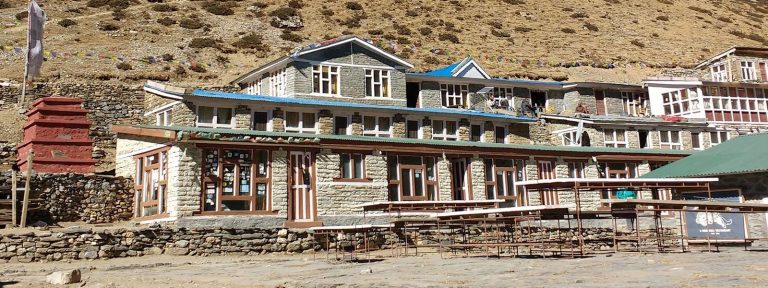
Teahouses on Nepal’s main trekking routes typically offer shared rooms as standard. For solo female trekkers booking with MountainKick, we do not pair you with other trekkers. You get a private room. This is standard practice for our solo female clients and something we organise as part of trip planning, not something you need to negotiate on the trail.
- Simple twin or single rooms with a bed, pillow, and blankets
- Shared bathroom facilities, typically with squat and Western toilets depending on the teahouse and altitude
- Hot showers available at most stops for a small additional charge (USD 2 to 5)
- Rooms are basic but clean, higher-altitude teahouses are simpler than those at lower elevations
- Locks on doors vary, so bringing a small padlock for your bag is sensible
In Pokhara and Kathmandu, MountainKick arranges proper tourist-standard hotel accommodation as part of the package.

Best Routes for Solo Female Trekkers
All of Nepal’s main commercial trekking routes are suitable for solo female trekkers with a guide. The choice comes down to your fitness, available time, and what kind of experience you are looking for.
Annapurna Base Camp (ABC): 10 days
The most popular short high-altitude trek in Nepal and an excellent first choice. The trail passes through rhododendron forests, Gurung villages, and opens into the dramatic Annapurna Sanctuary at 4,130m. The route is well-serviced with good teahouses throughout and the scenery at Base Camp, surrounded by 8,000m peaks on three sides, is exceptional. Maximum altitude is lower than EBC, making it more forgiving for first-time high-altitude trekkers. Package from USD 1,280 solo. See our full ABC cost breakdown.
Everest Base Camp (EBC): 14 days
The most famous trek in the world and one MountainKick’s solo female clients do regularly. The Lukla flight, the Sherpa villages, Namche Bazaar, and standing at 5,364m looking up at the Khumbu Icefall is an experience that stays with you. It requires solid fitness and a proper 14-day itinerary with acclimatisation days. Package from USD 1,440 solo. See our full EBC cost breakdown.
Gokyo Lakes Trek: 14 days
A quieter alternative to EBC in the same Khumbu region. The Gokyo Lakes sit at 4,700 to 5,000m and the view from Gokyo Ri over four 8,000m peaks is arguably better than Kala Patthar. Solo female trekkers looking for something slightly less crowded than the main EBC trail but with comparable scenery choose Gokyo regularly. Can be combined with EBC for a longer Three Passes route. Read our EBC vs Gokyo comparison to decide between the two.
Annapurna Circuit: 14 to 18 days
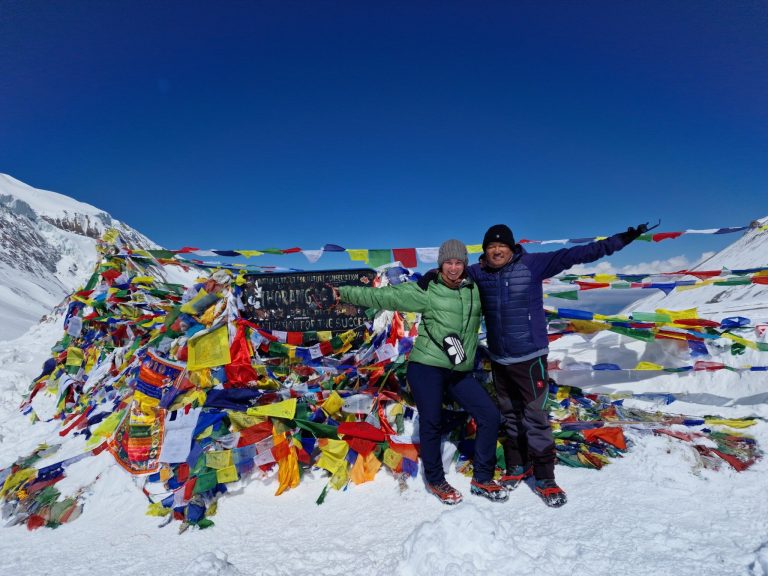
The most diverse trek in Nepal, circling the entire Annapurna massif and crossing the Thorong La Pass at 5,416m. The variety of landscapes and cultures along the route is unmatched. Longer and more demanding than ABC and requires a big day for the Thorong La crossing, but a route solo female trekkers who want a serious multi-week adventure regularly choose. See our Annapurna Circuit cost guide for full pricing.
Poon Hill: 4 to 5 days
The best short introduction to Nepal’s mountains. Accessible, low altitude, and the sunrise view from Poon Hill (3,210m) over the Annapurna and Dhaulagiri ranges is one of the most photographed moments in Himalayan trekking. An excellent option if time is limited or if you want to test altitude before committing to a longer route.

Practical Tips for Solo Female Trekkers in Nepal
What to wear on the trail
Nepal is a conservative country in parts, particularly in rural villages. On the trail itself, standard trekking gear is fine. In villages and teahouses, covering shoulders and knees is respectful and appreciated. Bring a lightweight layer for evenings in teahouses and for time in Kathmandu or Pokhara.
Dealing with attention in Kathmandu and Pokhara
Trekking towns like Thamel in Kathmandu and Lakeside in Pokhara attract persistent touts and tour sellers. Walking with confidence and purpose, avoiding prolonged eye contact with persistent sellers, and not stopping to engage works well. It is annoying rather than threatening. Once you are on the trail, this dynamic largely disappears.
Health and hygiene on the trail
Use purification tablets or a SteriPen rather than buying plastic bottles. Hot showers are available at most teahouses but become less reliable at higher altitudes. Wet wipes are useful for the higher sections. Menstrual products: bring your own supply from home or stock up in Kathmandu. Waste disposal on the trail: carry out what you carry in.
Travel insurance
Non-negotiable for any Nepal trek. Your policy must cover high-altitude trekking and helicopter evacuation. For ABC, coverage to 4,500m minimum. For EBC, to 6,000m. Give your insurance details to your guide before the trek begins. For more on what your policy must include, read our Nepal trekking insurance guide.

How MountainKick Organises Solo Female Treks
MountainKick has organised solo female treks across all of Nepal’s main commercial routes: ABC, EBC, Gokyo, Annapurna Circuit, Poon Hill, and Langtang. Solo female trekkers book with us as private trips, which means:
- Your own licensed guide throughout the trek
- Female guide available on request
- Private rooms at teahouses, not paired with other trekkers
- Your own itinerary and pace, not attached to a group schedule
- Hotel accommodation in Pokhara or Kathmandu included in the package
- All permits and logistics handled before you arrive
Solo private trip pricing is slightly higher than group pricing because the guide and logistics costs are not shared. For a 10-day ABC solo trek, expect to pay around USD 1,280 per person. For EBC solo, from around USD 1,440. These are all-inclusive prices covering guide, permits, accommodation, and transport, not including your meals on the trail, travel insurance, or personal gear.
Ready to plan your solo trek?
Most solo female trekkers who contact us have a few questions before they commit: about safety, routes, and what to expect on the trail. We are happy to answer them before you book anything.
WhatsApp: +977 985 118 2718
or use our enquiry form. We reply within a few hours during business hours (Nepal time, GMT+5:45).

Frequently Asked Questions
Do I need trekking experience to do ABC or EBC solo?
Prior trekking experience helps but is not a strict requirement for ABC or Poon Hill. EBC requires solid fitness and ideally some experience at altitude. The key is honest self-assessment. Your guide will support you on the trail but the physical preparation happens before you arrive. We are happy to discuss your fitness level and recommend the right route before you book.
Can I meet other trekkers on the trail?
Yes, easily. Nepal’s main routes are sociable. Teahouse dining rooms are communal and most trekkers eat together in the evenings. Many solo trekkers end up walking sections of the route with people they have met at teahouses. Having your own guide does not isolate you from other trekkers. It just means you have consistent support and are not relying on strangers for navigation or logistics.
What if I want to extend or change my itinerary on the trail?
Private trips are flexible. If you want an extra rest day, want to add Poon Hill to an ABC route, or want to adjust the pace, your guide can accommodate this. We build some flexibility into the itinerary planning upfront so changes on the trail are straightforward.
Is it culturally appropriate to trek alone as a woman in Nepal?
Yes, completely. Foreign female trekkers are a common and normal part of trekking culture in Nepal. Local teahouse owners and community members along the main routes are used to international trekkers of all kinds. There is no cultural barrier to solo female trekking in Nepal.
Can I request a female guide?
Yes, just let us know when you enquire. MountainKick can arrange a licensed female guide on request. Nepal’s female guides are licensed through the same government system as male guides and are experienced on all the main trekking routes. If a female guide is not immediately available for your specific dates, we will tell you upfront and find a solution.
What is the best trek for a solo female first-timer in Nepal?
Poon Hill (4 to 5 days) or Annapurna Base Camp (10 days) are the most popular first-time choices for solo female trekkers. Both are well-serviced, have excellent teahouse infrastructure, reach good altitude without being extreme, and give a genuine Himalayan experience. If you have more time and fitness, ABC is the stronger experience. If you want to test the waters first, Poon Hill is perfect.
Further Reading
- Annapurna Base Camp Trek Cost 2026: The Complete Breakdown
- Everest Base Camp Trek Cost 2026: The Complete Breakdown
- Annapurna Circuit Trek Cost 2026: Complete Breakdown
- EBC vs Gokyo: Which Trek Is Right for You?
- Mardi Himal Trek: The Annapurna View Most People Never See
- Pikey Peak Trek: Sir Edmund Hillary’s Favourite Everest View
- Nepal Trekking Permits 2026: Costs, Rules and What’s Changed
- Altitude Sickness on Nepal Treks: Symptoms, Prevention and What to Do
- Travel Insurance for Nepal: What Your Policy Must Cover