Luxury Trekking in Nepal: What It Actually Means (2026 Guide)
Most luxury travel looks the same everywhere. Better hotel, better food, smoother transfers, someone handling every detail. Nepal works differently. Once you understand why, the decision about how to trek here becomes a lot clearer.
Luxury trekking in Nepal means better logistics, upgraded accommodation where it exists, a private experienced guide, your own pace, and options like helicopter return. Not five-star hotels in the mountains.
The Everest region has the strongest luxury infrastructure of any trekking route in Nepal. Above 4,000m, comfort becomes relative. What you are really paying for is the removal of uncertainty.
The mountains do not have room service. Above 3,500m on any route in Nepal, the infrastructure is what it is: porter-carried supplies, generator power, cold nights, limited hot water. No amount of money changes the altitude or the weather.
What money does change is everything around the experience. The guide who has walked to Everest Base Camp 200 times instead of 20. The lodge with an attached bathroom and a view of Ama Dablam instead of a shared toilet and a plywood wall. The helicopter that flies you out if your knee gives on day ten. The itinerary built around your pace instead of a group’s lowest common denominator. On a private or luxury Everest Base Camp trek in Nepal, none of those variables are left to chance.
- A warm dining room
- A clean private room with attached bathroom
- A guide who knows exactly what to do
- Logistics handled before you land
- Heated rooms
- Fast wi-fi
- Hotel-level comfort
- Guaranteed weather
Luxury in Nepal is not about adding comfort.
It is about removing friction.
What Luxury Actually Means Here
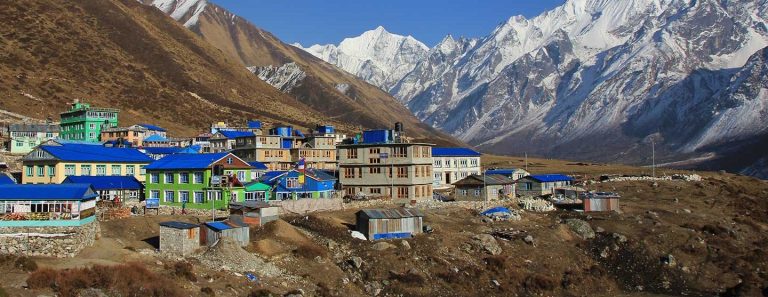
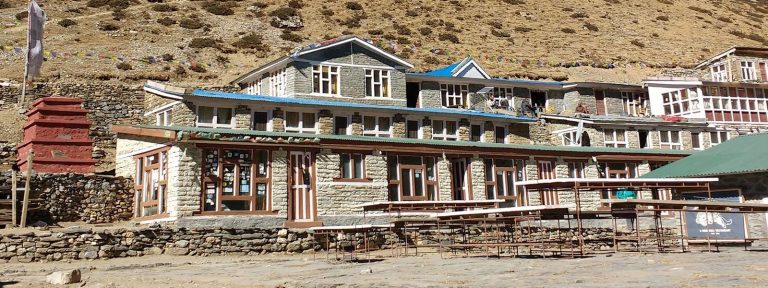
There are no five-star hotels on trekking routes in Nepal. The best available accommodation is upgraded teahouse lodges, primarily in the Everest region. What changes with a luxury or private trek is not the mountain, it is everything around it.
What is real and available on a luxury Nepal trek: a private licensed guide who is yours alone for the entire trip, a dedicated porter carrying your bag, upgraded lodge rooms with attached bathrooms and mountain views where that infrastructure exists, the best available food at each stop, a pace set entirely by you, helicopter options for entry or exit, and someone handling every permit, transfer, and logistics decision before you land in Kathmandu.
What does not exist above 4,000m regardless of what you pay: heated rooms, reliable wi-fi, consistent hot water, restaurant-quality meals, or a guarantee that the weather will cooperate. The higher you go, the more stripped back the environment becomes. That is not a failure of the operator. It is the mountain.
Below 3,500m, genuine comfort upgrades are available and worth having. Above 4,000m, the goal shifts from comfort to confidence: confidence in your guide, your acclimatisation plan, your gear, and your contingency options if something does not go to plan.

Where the Best Accommodation Actually Exists
Everest region — the strongest luxury infrastructure in Nepal
The Khumbu has been hosting trekkers longer than any other region and the lodge network reflects it. On our private Everest Base Camp trek in Nepal, we place clients in the best available accommodation at each stop on the route.


Annapurna region — comfort up to mid-altitude, basic above
The best lodges in the Annapurna region sit in the lower villages. Ghorepani, Ghandruk, and Chhomrong have solid infrastructure with attached bathrooms, hot showers, and genuinely good food. Above Chhomrong heading into the Sanctuary, accommodation becomes progressively more basic. At Annapurna Base Camp itself, everyone is in the same teahouse regardless of what they paid. The luxury is in getting there and back well, not in the room. See what the Annapurna Base Camp trek involves in full.
Remote regions — honest about limitations
Tsum Valley, Upper Mustang, and Dolpo have extraordinary landscapes and almost no luxury infrastructure. What they have is genuine remoteness, cultural depth, and the kind of quiet that the Everest and Annapurna trails no longer deliver. For the right traveler, that is worth more than a hot shower. Our off the beaten path treks guide covers these routes honestly.
The Three Versions of a Luxury Nepal Trek
Private guided trek
The most important upgrade on any Nepal trek is the guide, not the lodge. A private licensed Sherpa guide changes the entire experience. The pace is yours. The rest days are when you need them. The acclimatisation decisions are made by someone who knows exactly what they are looking at when they check your oxygen saturation at 4,500m. Our guides have typically completed the Everest Base Camp route dozens to hundreds of times. Every MountainKick trip can be run as a private booking.
Helicopter option
Nepal has an established helicopter network serving trekking and rescue operations. You can fly into the Khumbu directly to Lukla, Namche, or Pheriche, cutting days off the approach and arriving fresh. You can also fly out from Gorak Shep at the end of the trek instead of walking the multi-day return. MountainKick offers this as an add-on for USD 550 per person. We can arrange helicopter options on any itinerary.


Fully custom itinerary
Some clients want a specific lodge list, a specific acclimatisation schedule, or a combination of treks that does not exist as a standard package. That is what the customise your trip option is for. We have been running treks across Nepal since 2016, including Everest, Annapurna, and remote regions like Tsum Valley. Tell us your dates, your fitness level, and your budget, we will respond within a few hours with a realistic itinerary and honest advice on what is possible.

What You Are Actually Paying For
On a standard group trek, you share a guide with five or seven other people. You walk at the pace of the slowest person. Your rest days are scheduled in advance. If you feel off on day six, the group continues without you or waits for you.
On a private trek, every decision is about you. The guide’s full attention is on your condition, your pace, and your experience. If you want an extra acclimatisation day in Namche because you are not feeling right, you take it. If you want to start at 4am to summit Kala Patthar before the clouds build, that is what happens. If your knee is struggling on the descent and you want to helicopter out from Pheriche, that call gets made without compromise.
Standard group trek
- Shared guide across the group
- Group pace — not yours
- Fixed rest day schedule
- Social atmosphere
- Lower cost per person
Private or luxury trek
- Guide’s full attention on you
- Your pace, your rest days
- Helicopter option if needed
- Every logistic handled in advance
- Full control of the experience
Beyond the guide: permits handled, airport transfers confirmed, lodge bookings secured in advance, weather contingencies planned, emergency contacts established. You land in Kathmandu and the only thing left to manage is your own body on the trail. Check our Nepal trekking packing list and altitude sickness guide — both are worth reading before any Nepal booking regardless of budget.


A Real Day on a Private EBC Trek: Namche Bazaar
This is what a luxury or private Everest Base Camp trek actually looks like in practice. Not the summit, day four in Namche Bazaar, the commercial hub of the Khumbu at 3,440m.
On a group trek, the acclimatisation day follows the same physical schedule — but your guide is managing seven people’s conditions, questions, and pace simultaneously. On a private trek, that entire day belongs to you.
Who This Is Actually For

The Honest Reality
A private guide and an upgraded lodge do not change the altitude. At 5,364m at Everest Base Camp, everyone is working harder to breathe regardless of what they paid to get there. Altitude sickness does not discriminate by budget. Cold nights above 4,000m are cold for everyone. The trail from Gorak Shep to Base Camp is the same trail.
What changes is everything around those facts. The quality of the acclimatisation decisions. The confidence in the logistics. The speed of the response if something goes wrong. The experience of the person walking beside you.
Nepal is not the Swiss Alps. Luxury here is different, and that difference is the point. Read our altitude sickness guide before any booking and make sure your travel insurance covers helicopter evacuation at altitude. Those two things matter more than any lodge upgrade.
Is It Worth Paying for Luxury Trekking in Nepal?
The standard guided group trek is excellent value and the right call for a large proportion of trekkers. The private version is right for a different kind of traveler. Here is the honest comparison:
| Feature | Standard trek | Luxury or private trek |
|---|---|---|
| Guide | Shared with group | Private, yours alone |
| Pace | Group-based | Fully flexible |
| Accommodation | Standard teahouse | Best available at each stop |
| Rest days | Pre-scheduled | Yours to set |
| Flexibility | Low | High |
| Helicopter option | Emergency only | Available on any itinerary |
| Emergency response | Guide managing group | One guide focused on you |
| Cost from | USD 1,160 | Custom quote |
Best Treks for a Private or Luxury Experience
Considering a private or luxury trek in Nepal?
Tell us your dates, your budget, and how you like to travel. We will respond within a few hours with a realistic itinerary and honest advice on what is possible — and what is not.
Browse All Nepal Treks Talk to the TeamFrequently Asked Questions
Is there luxury trekking in Nepal?
Yes, though the definition of luxury changes significantly with altitude. In the Everest region, genuine lodge upgrades exist at Namche Bazaar, Tengboche, Dingboche, and Pheriche. Above 5,000m the accommodation is functional regardless of what you pay. The real luxury upgrade on any Nepal trek is a private experienced guide and a fully managed logistics operation.
Can you do Everest Base Camp in luxury?
Yes. A private or luxury Everest Base Camp trek in Nepal with upgraded lodges and a helicopter return option is a well-established product. MountainKick builds these individually and quotes based on group size and what you want included. Helicopter return from Gorak Shep can be added to any itinerary for USD 550 per person.
Are there 5-star hotels on Nepal treks?
No. There are no five-star hotels on trekking routes in Nepal. The best available lodges can offer deluxe rooms, attached bathrooms, mountain views, hot showers, and good food where the infrastructure allows. Above 4,000m, facilities become much more basic.
How much does a luxury trek in Nepal cost?
A standard group EBC trek runs from USD 1,160 per person. A private or luxury version is quoted individually, based on group size, the lodges you want, and whether you add a helicopter return. The difference is not in the trail — it is in the guide, the upgraded lodges, and the logistics. Contact us for a quote built around your exact dates and requirements.
Is a private guide worth it in Nepal?
Yes. A private guide changes the pace, the acclimatisation decisions, the contingency planning, and the entire quality of the experience. Our guides have typically completed the Everest Base Camp route dozens to hundreds of times. It is one of the most valuable upgrades on any Nepal trek.
What is the difference between a standard and luxury Nepal trek?
On a standard guided trek you share a guide with a group and walk at group pace. On a private or luxury trek, the guide is yours alone, the pace and rest days are yours to set, the accommodation is upgraded to the best available at each stop, and every logistics decision is handled before you arrive. The trail is the same. Everything around it is different.
Further Reading
- Everest Base Camp Trek — 14 Days from USD 1,160
- Mardi Himal Trek Guide: The Annapurna View Most People Never See
- Pikey Peak Trek Nepal: Sir Edmund Hillary’s Favourite Everest View
- 5 Best Short Treks in Nepal (5 to 10 Days) for 2026
- Altitude Sickness on Nepal Treks: Symptoms, Prevention and What to Do
- Travel Insurance for Nepal: What Your Policy Must Cover
- Nepal Trekking Packing List 2026: What You Actually Need