Mardi Himal Trek: The Annapurna View Most People Never See
The Mardi Himal trek takes 10 days from Kathmandu and reaches 4,500m at base camp. MountainKick’s guided package starts from USD 615 per person for 2 to 3 people, including permits, guide, porter, and all accommodation.
It is one of the few Nepal treks where you walk along an exposed high ridge above the cloud line, with Machapuchare (Fishtail) filling the skyline directly ahead. The route opened for teahouse trekking in 2012 and is significantly less crowded than Annapurna Base Camp or Poon Hill.
Mardi Himal Trek: Quick Facts
- Region: Annapurna Conservation Area, Nepal
- Max altitude: 4,500m (14,764 ft) at Mardi Himal Base Camp
- Duration: 10 days from Kathmandu
- Package from: USD 615 per person (2 to 3 people)
- Difficulty: Moderate to challenging. Good fitness required, with one demanding high altitude day
- Best time: September to November and March to May
- Permits: ACAP (NPR 3,000) and TIMS (NPR 2,000), both included in the package
- Crowds: Low, much quieter than ABC or Poon Hill
Most trekkers in the Annapurna region walk through valleys looking up at the mountains. Mardi Himal does something different.
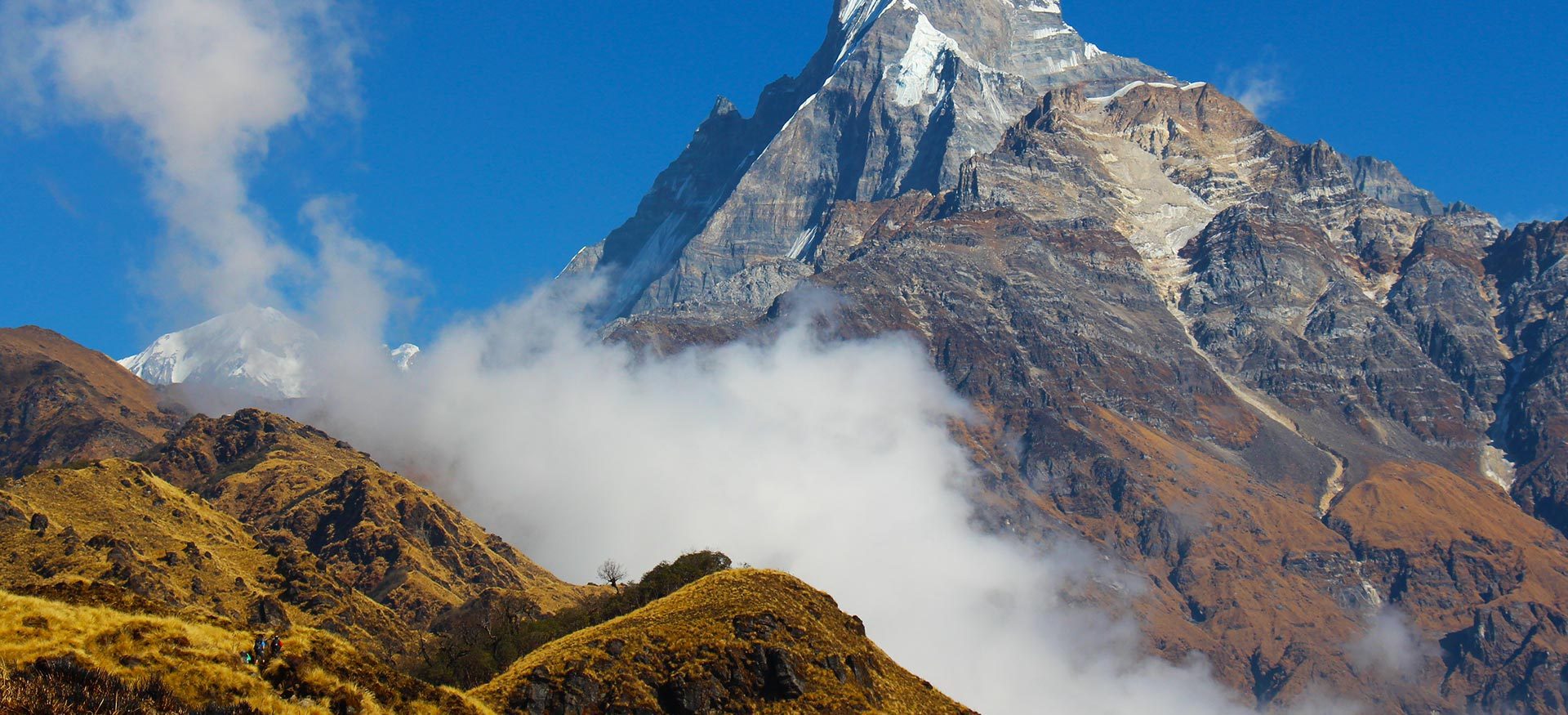
From Low Camp upward, the trail follows a narrow exposed ridge with mountains on both sides, often with clouds below and Machapuchare (Fishtail, 6,993m) directly in front at eye level. It is one of the more unusual walking experiences in Nepal.
The route was only opened for teahouse trekking in 2012. It remains significantly less crowded than Annapurna Base Camp or Ghorepani Poon Hill, reaches 4,500m at base camp, and can be completed in 10 days from Kathmandu including travel.
What Makes Mardi Himal Different From Every Other Annapurna Trek
The Annapurna region has several classic routes. Annapurna Base Camp, the Circuit, Ghorepani Poon Hill, and Mardi Himal. The first three follow river valleys or well-worn paths between villages. Mardi Himal follows a high mountain spine.
From Low Camp (2,970m) to base camp (4,500m), the trail runs along a ridgeline with the Pokhara valley and Modi Khola gorge on one side and the Mardi Himal massif on the other. On clear mornings the trail can sit above the cloud layer, with clouds below and clear sky above. This is a view most Annapurna trekkers rarely get, since valley routes usually sit below the cloud ceiling rather than above it.
The proximity to Machapuchare is the other thing that surprises people. On most Annapurna routes Fishtail sits in the distance. On the Mardi Himal ridge it fills much of the skyline directly ahead, and on clear days you can make out the snow detail on the summit pyramid.
Mardi Himal vs Ghorepani Poon Hill: Which Should You Do?
This is the most common question from first-time Annapurna region trekkers. Both routes start near Pokhara, both are manageable for non-experts, and both deliver Annapurna views. Here is the honest comparison:
| Mardi Himal | Ghorepani Poon Hill | |
|---|---|---|
| Duration | 10 days (MountainKick) | 9 days (MountainKick) |
| Max altitude | 4,500m / 14,764ft | 3,210m / 10,532ft |
| Price (MountainKick, group of 4 to 9) | From USD 520 | From USD 440 |
| Difficulty | Moderate to Challenging | Easy to Moderate |
| Crowds | Low | High, very popular |
| Mountain views | Ridge-level, wide views from above the valley cloud line | Valley and sunrise viewpoint |
| Best for | Higher altitude, ridge experience, photography | First-timers, less altitude, mixed ability groups |
Mardi Himal vs Annapurna Base Camp: Which Is Worth Doing?
The Annapurna Base Camp Trek (from USD 820, 14 days)reaches 4,130m inside the Annapurna Sanctuary, a high bowl surrounded by 8,000m peaks. Mardi Himal Base Camp at 4,500m is actually higher and gives a different perspective. You are on the outer ridge looking across at the sanctuary rather than inside it.
The honest comparison: ABC gives you the dramatic enclosed sanctuary experience with Annapurna I (8,091m) directly above. Mardi Himal gives you the exposed ridge experience with Machapuchare directly in front and a view down over the Pokhara valley. They are genuinely different views rather than one being better than the other.
If you have 10 days, Mardi Himal is the better fit. If you have 14 or more days and want the complete sanctuary experience, ABC is worth the extra time and cost. Both can be done in one Nepal trip if you have 3 or more weeks. See our full Annapurna Base Camp cost breakdown for the full comparison.
The Route: What You Are Actually Walking
The trek itself is about five days of walking from Kande, a short drive from Pokhara, up the ridge to base camp and back down to Pothana. This section describes the trail. For the full day by day plan with hotels and transport, see our Mardi Himal Base Camp Trek itinerary.
Kande to Pittam Deurali (2,100m)
A gentle start. From Kande (1,770m) the trail climbs past the Australian Camp viewpoint and through Pothana village to Pittam Deurali. The first mountain views open up on this stretch. About 5km and 3 to 4 hours.
Through the forest to Low Camp (2,970m)
The day the forest changes. Dense rhododendron and oak cover the first half, then the trees thin out and the trail starts climbing the ridge itself. The first close views of Machapuchare appear above the treeline. About 8km and 6 hours.
Along the ridge to High Camp (3,580m)
This is where Mardi Himal becomes its own trek. Above Low Camp the trail follows the narrow spine of the ridge with views on both sides. Morning cloud usually sits below about 3,000m, so the upper ridge is often in clear air above it. Machapuchare fills the skyline to the north. About 5km and 4 to 5 hours.
High Camp to Mardi Himal Base Camp (4,500m)
The big day starts before dawn, usually around 4:30 to 5:00am. The trail passes the Upper Viewpoint at about 4,200m and continues to base camp at 4,500m. At sunrise Machapuchare (6,993m), Annapurna South (7,219m), Hiunchuli (6,441m), Annapurna III (7,555m) and Gandharva Chuli are all in view. After base camp you return to High Camp and keep descending the same day toward Badal Danda.
The descent to Pothana (1,950m)
The last trekking day drops through forest and farmland from Badal Danda to Pothana, with the Annapurna range still behind you and Gurung villages along the lower trail. About 6 hours of walking, then a jeep back to Pokhara.
Altitude and Difficulty: Honest Assessment
Mardi Himal is rated Moderate to Challenging. It does not require technical climbing, ropes, or crampons in standard trekking seasons, but the summit push day is genuinely demanding. The challenges are:
- Altitude: 4,500m is high enough for altitude sickness to be a real possibility. The itinerary ascends gradually which helps, but anyone concerned about altitude sickness or considering medication such as Diamox should discuss it with a medical professional before the trek. See our altitude sickness guide for prevention and symptoms.
- The ridge exposure: Between Low Camp and High Camp the trail is narrow with steep drops on both sides. In clear conditions this is exhilarating rather than dangerous. In fog it requires careful attention to the path, and your guide will navigate this section in low visibility.
- The descent: Dropping from 4,500m toward Badal Danda and Pothana over two days can be hard on the knees. Trekking poles are strongly recommended for the steeper sections.
- Fitness required: The climbs to Low Camp and High Camp are each up to 6 hours, and the base camp day, with a pre-dawn start and a long descent afterwards, is the hardest of the trek. Cardiovascular fitness matters more than raw strength. Three to four weeks of regular cardio before departure makes a significant difference to how much you enjoy rather than just survive those days.
Best Time to Do the Mardi Himal Trek
Cost: What the MountainKick Package Includes
MountainKick’s Mardi Himal Base Camp Trek pricing depends on group size:
| Group size | Price per person |
|---|---|
| Private (1 person) | USD 945 |
| 2–3 people | USD 615 |
| 4–9 people | USD 520 |
Check the current trip page for the exact rate for your dates and group size before booking. The package includes:
- Hotel accommodation in Kathmandu (3-star, breakfast included)
- Hotel accommodation in Pokhara
- All teahouse accommodation on the trek (twin-sharing)
- Government-licensed English-speaking guide
- Porter service (one per two trekkers)
- Annapurna Conservation Area Permit (ACAP)
- TIMS card
- All transport including Kathmandu to Pokhara, Pokhara to Kande, and Pothana to Pokhara on return
- All government taxes and permit processing fees
- MountainKick duffel bag, sun hat and t-shirt
Meals are not included, same reasoning as all MountainKick packages: appetite changes significantly at altitude and trekkers should pay only for what they actually eat. Budget USD 25 to 35 per day for meals at lower elevations and USD 35 to 45 per day at High Camp and base camp.
Your total trip cost will depend mainly on your international airfare, visa, insurance, and personal spending. The MountainKick package covers accommodation, guide, porter, permits, and scheduled transport, while meals and personal expenses are paid separately. See our Nepal trekking permits guide and travel insurance guide to budget those separately.
What Permits Are Required for the Mardi Himal Trek?
Two permits are required, both arranged and included by MountainKick:
- Annapurna Conservation Area Permit (ACAP) at NPR 3,000, approximately USD 22
- TIMS card at NPR 2,000 for most foreign trekkers, approximately USD 15
No restricted area permit is required for Mardi Himal. A licensed guide is mandatory since 2023. For a full breakdown of all Nepal trekking permits, see our Nepal Trekking Permits 2026 guide.
Accommodation on the Trail
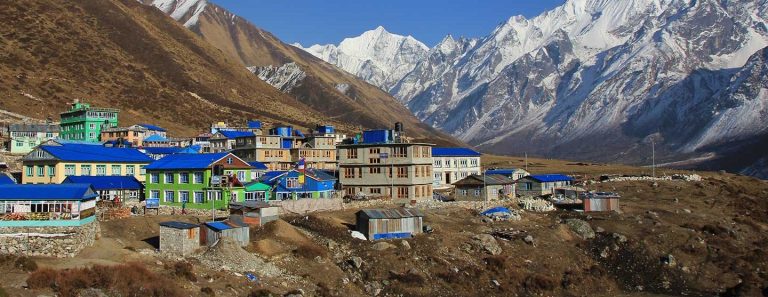
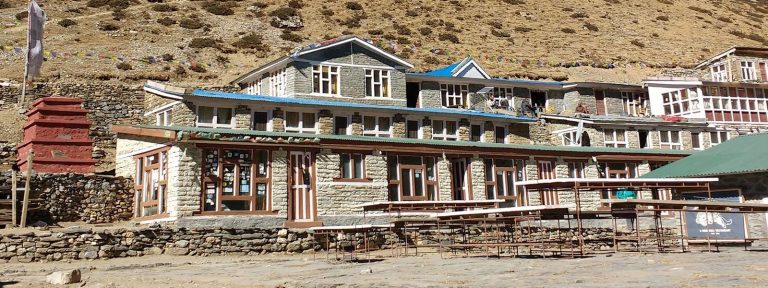
Teahouses on the Mardi Himal route are basic but functional. Pokhara and Pittam Deurali have the most comfortable accommodation with private rooms, hot showers, and WiFi. As you gain altitude the facilities become more basic.
High Camp teahouses are simple wooden structures with shared bathrooms and no hot water. Bring a sleeping bag rated to at least -5C for nights at High Camp and base camp.
The Mardi Himal route has fewer teahouses than the ABC route, which means less crowding at each stop, a genuine advantage over the main Annapurna trails where teahouses fill up in peak season. Booking through MountainKick ensures accommodation is pre-arranged at each stop.
Frequently Asked Questions
How long is the Mardi Himal trek?
10 days from Kathmandu, including travel to and from Pokhara and about five days of walking. MountainKick’s guided package starts from USD 615 per person for 2 to 3 people.
How high does the Mardi Himal trek go?
4,500m (14,764 ft) at Mardi Himal Base Camp. That is higher than Annapurna Base Camp at 4,130m but lower than Everest Base Camp at 5,364m.
How much does the Mardi Himal trek cost?
From USD 520 per person for groups of 4 to 9, USD 615 for 2 to 3 people and USD 945 for a private trek. That includes guide, porter, permits, accommodation and transport. Meals, visa, insurance and international flights are extra. See our Mardi Himal trek cost guide for a full budget.
What is the best time to do the Mardi Himal trek?
October to November and March to April. December to February is possible with warm gear but cold at High Camp. June to August is not recommended, as the ridge is often in cloud and you lose the main view.
Can beginners do the Mardi Himal Trek?
Yes, with reasonable fitness. The trail is rated Moderate to Challenging and requires no technical skills. The altitude at 4,500m and the demanding summit-push day are the main considerations for true beginners. If you want a gentler introduction with lower altitude, the Ghorepani Poon Hill Trek at 3,210m is a better starting point. If you are reasonably fit and want real altitude on your first Himalayan trek, Mardi Himal is achievable.
Is the Mardi Himal Trek easier than Everest Base Camp?
Mardi Himal is considerably easier than EBC. EBC reaches 5,364m over 14 days with multiple high-altitude nights. Mardi Himal reaches 4,500m in 10 days with a more compact itinerary. The ridge exposure on Mardi Himal is different from anything on the EBC route, but the overall altitude demand is lower. If you have done EBC and want something new in the Annapurna region, Mardi Himal is a good option, different enough to feel fresh rather than repetitive.
Can I do Mardi Himal and Poon Hill in the same trip?
Yes, the two routes can be combined in 3 weeks. They share starting infrastructure around Pokhara. Some trekkers do Poon Hill first as a warm-up then Mardi Himal for the high altitude section. Others do Mardi Himal and extend to Ghorepani on the descent. Contact MountainKick for a combined itinerary, we run both routes and can design a circuit that covers both without repeating trail sections.
What is the view from Mardi Himal Base Camp?
At 4,500m on the Mardi Himal ridge on a clear morning: Machapuchare (6,993m) is directly north, close enough to see the snow texture on the summit. Annapurna South (7,219m) and Hiunchuli (6,441m) are to the northwest. Annapurna III (7,555m) and Gandarva Chuli are visible to the northeast. The Pokhara valley is visible far below to the south on clear days. It is a wide mountain panorama at eye level rather than the typical valley-floor looking-up perspective.
Is a guide mandatory for Mardi Himal in 2026?
Yes, Nepal’s mandatory licensed guide rule introduced in 2023 applies to this route. Your MountainKick guide is government-licensed and included in the package price.
How much cash should I carry on the Mardi Himal trek?
Budget around USD 300 to 450 for the trekking section, depending on how much you spend on meals, drinks, WiFi, charging, and showers. Withdraw in Pokhara before the trek starts as ATM access is extremely limited once you’re on the trail. Carry small denomination notes as change is limited at High Camp teahouses.
Further Reading
- Mardi Himal Trek Cost
- Poon Hill vs Mardi Himal vs Annapurna Base Camp
- Annapurna Base Camp Trek Cost 2026: The Complete Breakdown
- Annapurna Circuit Trek Cost 2026: Complete Breakdown
- Annapurna Circuit vs ABC: Which Trek Should You Do?
- Nepal Trekking Permits 2026: Costs, Rules and What’s Changed
- Altitude Sickness on Nepal Treks: Symptoms, Prevention and What to Do
- Travel Insurance for Nepal: What Your Policy Must Cover
- Solo Female Trekking Nepal: Safety, Guides and What to Expect
- 7 Best Treks in Nepal: Difficulty, Days and How to Choose