Annapurna Circuit vs EBC: Which Trek Should You Do?
Two weeks and want the iconic Everest experience? Choose EBC. Three weeks and want the most varied trek in Nepal? Choose the Annapurna Circuit. EBC is more focused and starts from USD 1,160. The Circuit is longer, cheaper from USD 770, crosses a 5,416m pass, and covers dramatically more terrain and culture.
Both are non-technical, both suit fit non-mountaineers, and both require proper acclimatisation. The decision usually comes down to time, budget, and whether you want variety or intensity.
Annapurna Circuit vs EBC: Quick Facts
- Circuit duration: 16 to 21 days
- EBC duration: 14 days
- Circuit highest point: Thorong La Pass at 5,416m
- EBC highest point: Kala Patthar at 5,545m
- Circuit package from: USD 770 per person (MountainKick)
- EBC package from: USD 1,160 per person (MountainKick)
- Circuit start: Road transfer from Kathmandu or Pokhara, no flight needed
- EBC start: Domestic flight to Lukla — weather dependent
- Circuit route style: One way circuit around the Annapurna massif
- EBC route style: Out and back on the same trail
These are two of Nepal’s best known trekking routes, but they offer very different experiences. Both are non-technical, both are accessible to fit non-mountaineers, and both will leave you with memories that take weeks to process. But they are genuinely different trips in almost every respect. The terrain is different, the pace is different, the culture is different, the logistics are different, and so is what you are actually looking at each day.
At a Glance
| Factor | Annapurna Circuit | Everest Base Camp |
|---|---|---|
| Duration | 16 to 21 days | 14 days |
| Highest point | Thorong La Pass at 5,416m | Kala Patthar at 5,545m |
| Trek style | One way circuit around the Annapurna massif | Out and back |
| Start point | Besisahar by road from Kathmandu or Pokhara | Lukla by domestic flight from Kathmandu |
| Landscape variety | Very high — subtropical to high desert | Moderate — Khumbu valley focus |
| Main attraction | Thorong La crossing, Annapurna panorama, cultural diversity | Everest Base Camp, Kala Patthar sunrise, Khumbu Glacier |
| Crowd level | Busy on main route, quieter off it | Busy especially above Namche |
| Price from MountainKick | From USD 770 per person | From USD 1,160 per person |
The Route Difference
The Annapurna Circuit follows the Marsyangdi valley on the east side of the Annapurna massif, crosses Thorong La at 5,416m, and continues down through Muktinath and the Kali Gandaki valley toward Pokhara. The route gives you a strong sense of changing landscapes and cultures, although some lower sections now use road transport rather than continuous walking.
EBC is out and back. You fly into Lukla, trek up the Khumbu valley to Base Camp, and return the same way. The focus is singular from the beginning: everything builds toward Everest Base Camp and Kala Patthar. The Khumbu valley is one of the most dramatic landscapes in Nepal and it rewards close attention over two weeks.
Landscape and Scenery
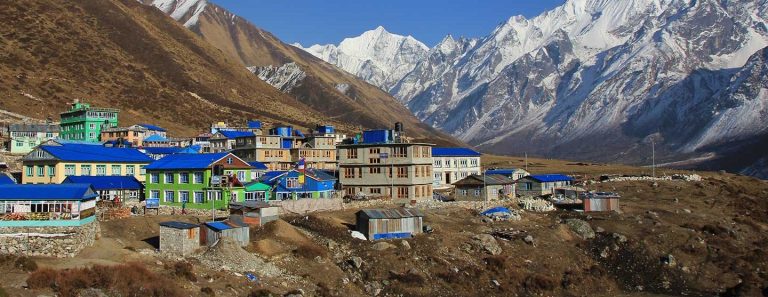
The Circuit covers more terrain types than almost any other trek in Nepal. The lower sections pass through terraced farmland, rhododendron forest, and traditional Gurung and Manangi villages. By Manang at 3,519m you are in a high-altitude Tibetan Buddhist zone that feels completely different from the subtropical valleys two days behind you. Above Manang the trail crosses bare rocky terrain before the Thorong La. After the pass, Muktinath sits on the edge of the Mustang plateau where Hindu and Buddhist traditions meet. The descent through the Kali Gandaki gorge adds yet another register: high desert, wind-sculpted cliffs, and apple orchards in Marpha.
EBC is more focused but no less dramatic within its range. The Khumbu valley climbs steadily from Lukla at 2,860m through rhododendron and pine forest, then opens into high alpine terrain above Namche. The Tengboche Monastery at 3,860m is one of the most atmospheric places in the entire Himalayan arc. Above Dingboche the landscape becomes increasingly glacial and the scale of the peaks shifts from impressive to genuinely overwhelming. The Khumbu Icefall viewed from Kala Patthar, the moraine stretching toward Base Camp, and the south face of Everest filling the upper horizon are images that do not diminish when you try to describe them later.
The High Points
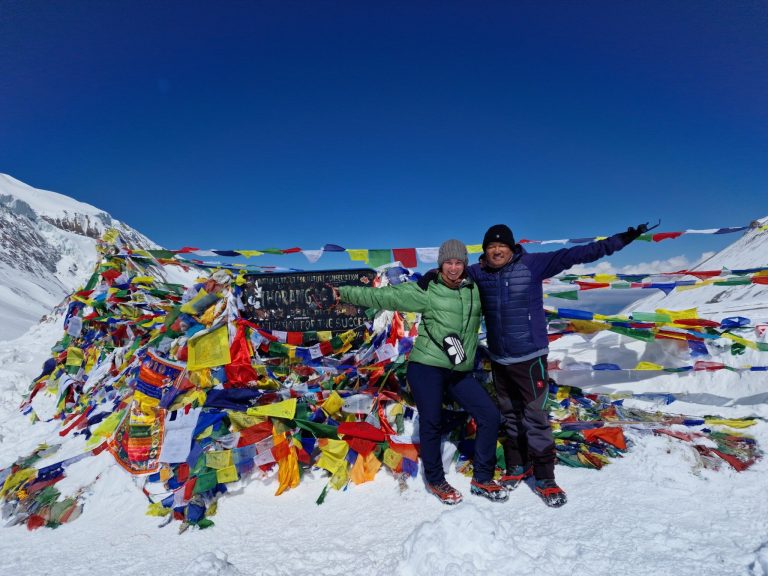
Thorong La at 5,416m is the Circuit’s crux. You cross it on a single long day, typically starting before 5am to avoid afternoon winds. The ascent takes four to six hours. The summit gives views back across the Annapurna range and ahead toward the sacred lakes of Muktinath. The descent drops 1,600m and the combined day can run nine to twelve hours. Arriving underprepared is one of the most common mistakes on the AC.
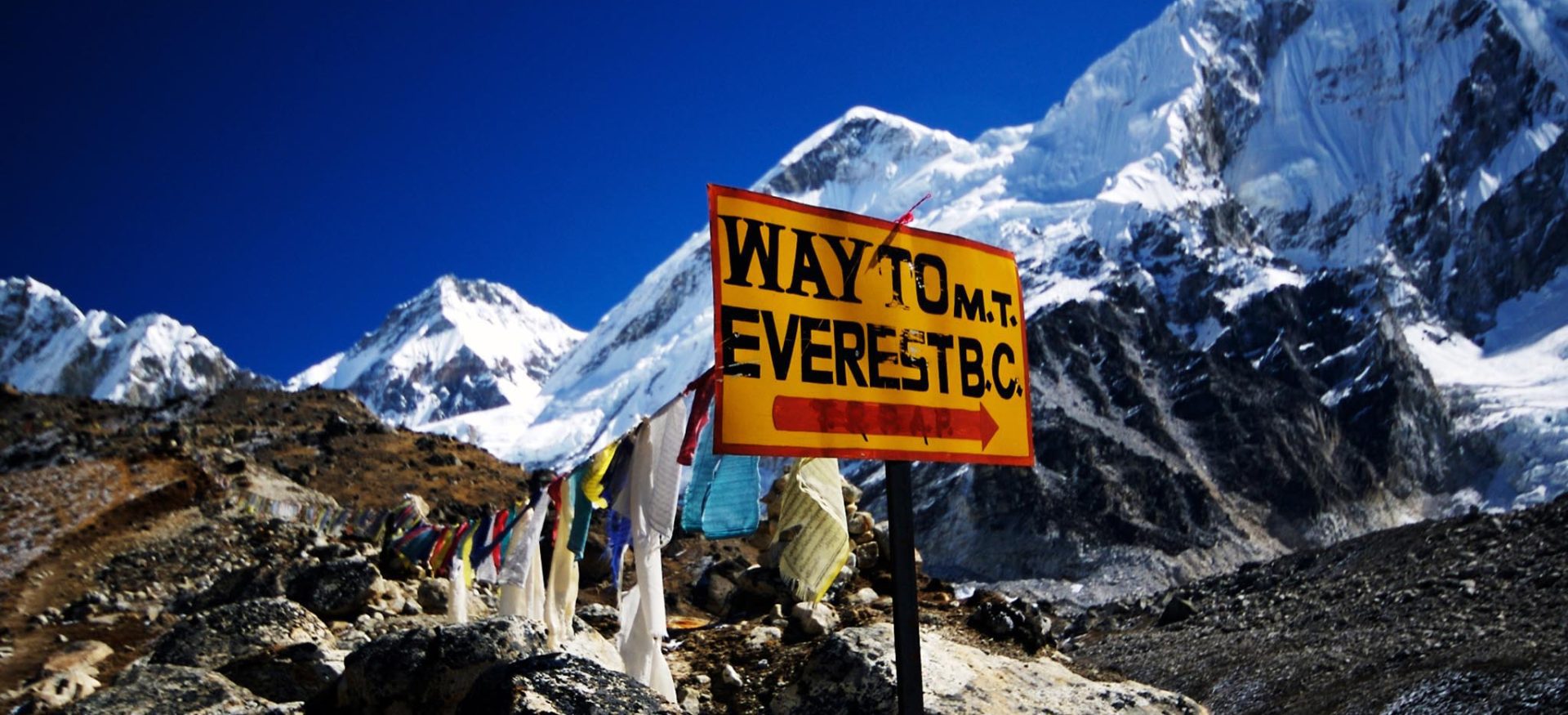
Kala Patthar at 5,545m sits directly above the Khumbu Glacier with Everest framed behind it. Reached in a steep one to two hour push from Gorak Shep, usually before dawn. The sunrise light on Everest from Kala Patthar is the most iconic scene in Nepal trekking. Everest Base Camp itself at 5,364m is the famous staging area for Everest expeditions.
Cost Comparison
The Annapurna Circuit is meaningfully cheaper than EBC. MountainKick’s Annapurna Circuit trek starts from USD 770 per person for groups of two or three, while the Everest Base Camp trek starts from USD 1,160. The two prices reflect different route logistics, accommodation patterns, transport and itinerary structures. See our EBC cost breakdown and Annapurna Circuit cost breakdown for the complete picture.
Permit costs also differ. The Annapurna Circuit requires the Annapurna Conservation Area entry permit, currently NPR 3,000 for foreign visitors, along with the applicable guide and TIMS requirements. EBC requires the Sagarmatha National Park entry permit, the Khumbu Pasang Lhamu Rural Municipality permit and the applicable TIMS requirement. See our Nepal trekking permits guide for the full 2026 breakdown.
Culture and Villages
The cultural depth of the Annapurna Circuit is one of its most underappreciated qualities. In 16 to 21 days you pass through communities representing three distinct traditions: the Hindu and Gurung villages of the lower Marsyangdi valley, the Tibetan Buddhist communities of Manang and the upper circuit, and the Hindu pilgrimage sites around Muktinath. The cultural range is broader than almost any other single route in Nepal.
The Khumbu is Sherpa country, deeply interesting in its own right. Sherpa communities have been the backbone of Himalayan mountaineering since the first expeditions and their relationship with the mountains is unlike that of any other group in Nepal. The monasteries at Tengboche and Pangboche are active religious centres, not tourist sites. But the cultural range of the Khumbu is narrower: two weeks in one valley with one ethnic community rather than moving through multiple distinct cultures.
Acclimatisation and Altitude
Both treks spend significant time above 4,000m and both require proper acclimatisation days. Many itineraries include an acclimatisation day around Manang, with optional hikes such as Ice Lake depending on the route and itinerary.
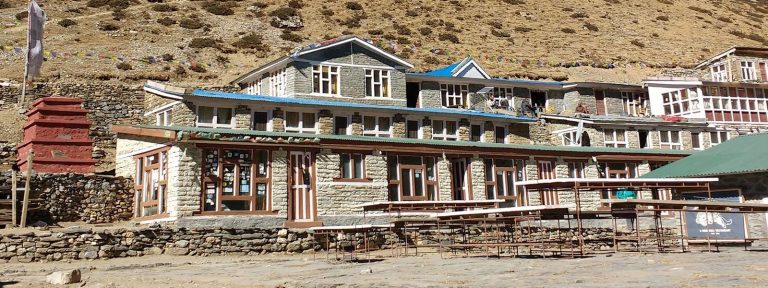
A standard EBC itinerary includes dedicated acclimatisation days around Namche Bazaar and Dingboche. These are not optional. The final section above Lobuche and Gorak Shep is the most demanding part of the trek, with several days spent at very high altitude.
EBC’s highest sleeping altitude of 5,164m at Gorak Shep is higher than the Circuit’s highest sleeping altitude of approximately 4,500m at Thorong High Camp, making EBC slightly more demanding in its final days. Read our altitude sickness guide before either trek.
Fitness and Training
Both treks require good walking fitness. Training with regular uphill walks, stairs, longer hikes and some uneven terrain is useful preparation. The Circuit demands endurance over a longer itinerary, while EBC requires more tolerance for sustained high altitude.
Both routes are non-technical. No ropes, crampons, or mountaineering experience are required for either the Thorong La crossing or the Kala Patthar summit. The only exception is late autumn or early spring conditions on Thorong La, when ice can form on the upper approach and microspikes become useful. If you’re preparing for EBC, see our guide to training for Everest Base Camp for a practical 8 to 12 week plan.
Logistics: Getting There and Getting Around
EBC requires a domestic flight to Lukla. This is weather-dependent and the most common source of uncertainty in an EBC itinerary. A buffer day in Kathmandu before any international connection is not optional. Read our Lukla flight via Ramechhap guide and Lukla flight delays guide for the full picture.
The Circuit starts with a road transfer to Besisahar. Road conditions can affect travel times, but the route does not depend on a flight to reach the trailhead.
Which Trek Should You Choose?
If you have two weeks, EBC is the natural fit. If you have three weeks and want the most varied experience Nepal trekking offers in a single route, the Circuit makes better use of that time. Both are suitable on the same fitness baseline and neither involves technical terrain.
Frequently Asked Questions
Is the Annapurna Circuit harder than EBC?
They are comparable in overall difficulty, but the challenges are different. The Circuit is longer and has the demanding Thorong La crossing. EBC involves more sustained time at very high altitude and reaches 5,545m at Kala Patthar.
Which trek has better mountain views?
Different rather than one being better. EBC gives you close-up views of Everest from Kala Patthar, direct, dramatic, and unlike anything else in Nepal. The Circuit gives extended views of multiple 8,000m peaks across multiple days including Annapurna, Dhaulagiri, Nilgiri, and Manaslu from different angles. If Everest specifically is the goal, EBC wins. For sustained views of multiple Himalayan giants, the Circuit is exceptional.
Can I do both treks in one trip?
Yes. The two regions are not connected by a practical trekking route, so you would normally return to Kathmandu between them. Combining both is possible, but it requires substantially more time than either trek alone. If you have limited time, it is better to choose one and experience it properly.
Which trek is better for first-time trekkers?
Both are popular first-time choices. EBC has simpler logistics with no pass-dependent single-day crux and well-established teahouse infrastructure. With 14 days and no prior high-altitude experience, EBC is a slightly more contained first trip. With three weeks and a desire for cultural variety, the Circuit is equally valid.
Which trek costs more, Annapurna Circuit or EBC?
EBC costs significantly more. MountainKick’s Circuit starts from USD 770 per person while EBC starts from USD 1,160. The two prices reflect different route logistics, accommodation patterns, transport and itinerary structures. See our EBC cost guide and Circuit cost guide for the full breakdown.
What is the best time of year for both treks?
October and November are the best months for both. The post-monsoon window delivers stable weather, clear skies, and dry trails. March and April are the second-best window. The Circuit can be trekked in winter with experienced guidance but the Thorong La crossing becomes significantly more serious in snow conditions. Both routes are not recommended during monsoon months of June through August.
Which trek is more remote?
The Circuit generally feels more varied and quieter in its upper sections, particularly around Manang and the upper Marsyangdi valley. The Khumbu has a well-developed trekking infrastructure with numerous teahouses and regular helicopter access. If remoteness is important to you, the upper Circuit may feel less developed than the main EBC route.
How far in advance should I book?
For peak October and November departures, booking ahead is sensible for both. EBC can be particularly busy at higher settlements such as Lobuche and Gorak Shep, while the Annapurna Circuit generally offers more accommodation flexibility. Your guide or agency can advise on the best booking approach for your dates.
Not sure which one is right for you?
Tell us your available dates, fitness background, and what you are hoping to get from the trek. We will give you an honest recommendation within a few hours.
WhatsApp: +977 985 118 2718
or use our enquiry form.

Further Reading
- Annapurna Circuit Trek Cost 2026: Complete Breakdown
- Everest Base Camp Trek Cost 2026: The Complete Breakdown
- Annapurna Circuit vs ABC: Which Annapurna Trek Should You Do?
- Manaslu Circuit vs Annapurna Circuit: Which Trek Is Right for You?
- Lukla Flight via Ramechhap 2026: The Complete Guide
- Lukla Flight Delays: What Actually Happens and How to Handle It
- Nepal Trekking Permits 2026: Costs, Rules and What’s Changed
- Travel Insurance for Nepal: What Your Policy Must Cover
- Altitude Sickness on Nepal Treks: Symptoms, Prevention and What to Do
- Is the Everest Base Camp Trek Hard? A Straight Answer
- Done EBC? Here’s What to Trek Next in Nepal