Manaslu Circuit vs Annapurna Circuit 2026: Which Trek is Right for You
Annapurna Circuit is usually the better choice for a first major Himalayan trek. Manaslu is the better choice if you want a quieter, more remote route with fewer facilities. Annapurna offers better infrastructure, more flexibility, and a lower starting price from USD 770. MountainKick’s Manaslu Circuit starts from USD 650 per person for groups of 7 to 10, with smaller groups priced higher.
Both routes eventually meet at Dharapani, but they offer very different experiences. Annapurna has more road access and more developed facilities, while Manaslu remains considerably more remote and requires a restricted area permit and licensed guide.
Manaslu Circuit vs Annapurna Circuit: Quick Facts
- Manaslu max altitude: 5,160m at Larkya La Pass
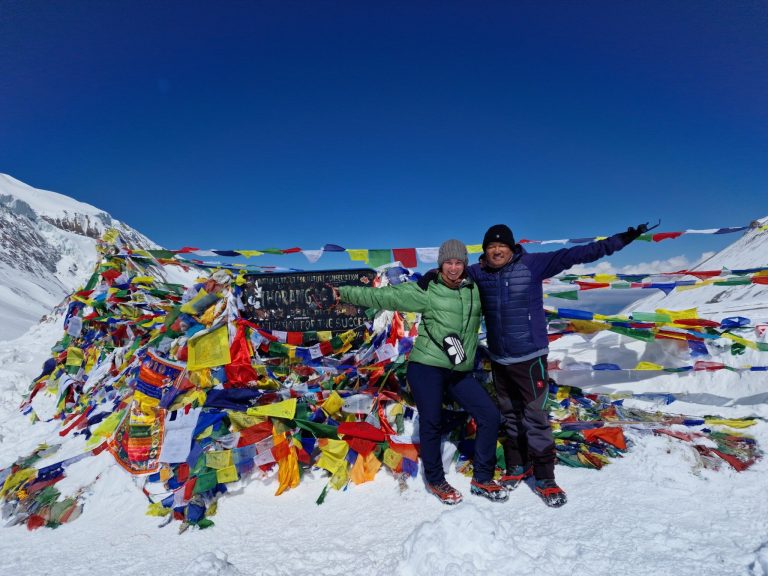
- Annapurna max altitude: 5,416m at Thorong La Pass
- Manaslu duration: 15 days on MountainKick’s standard itinerary
- Annapurna duration: 16 days standard or 21 days Classical
- Manaslu package from: USD 650 per person for groups of 7 to 10
- Annapurna package from: USD 770 per person
- Manaslu permits: Varies by season and days in the restricted area
- Annapurna permits: ACAP and TIMS, with a licensed guide required
- Manaslu road access: Remote trekking route, road access limited mainly to approach and exit sections
- Annapurna road access: Significant road development on lower sections
This is not a post that ends with “both treks are great and it depends on your preference.” That kind of answer wastes your time. By the end of this guide you will know which trek fits who you are and why.
The two treks share a finish point at Dharapani. They cover different terrain, different cultures, and in 2026 they offer fundamentally different experiences on the ground. One has changed significantly in the last decade. The other has not.
The Core Difference in 2026
The Annapurna Circuit is Nepal’s most iconic trekking route. It has also been progressively bisected by jeep roads since the 1980s, and in 2026 the situation is more pronounced than ever. From Besisahar to Manang, and from Muktinath to Tatopani, the trail shares its route with motorable roads carrying dust, supply trucks, and jeep tours. Only the high-altitude core of the circuit between Manang and Muktinath is completely road-free.
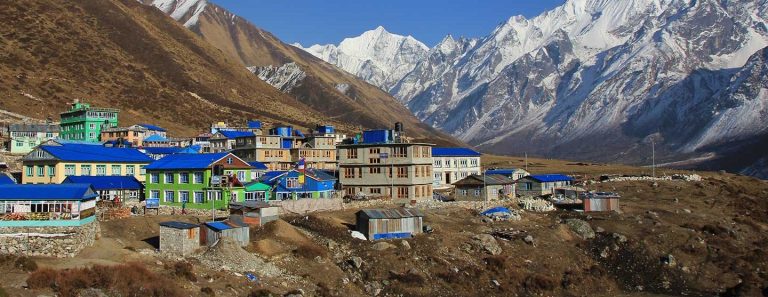
The Manaslu Circuit is a restricted area. Once the trek begins, the route is predominantly on foot, with far less road traffic than the Annapurna Circuit. The trail follows the Budhi Gandaki River gorge through remote Tibetan-influenced villages, crosses the Larkya La Pass at 5,160m, and exits into the Annapurna region at Dharapani. It takes around 15 days on MountainKick’s standard itinerary.
The Annapurna Circuit is still very much worth doing, but in 2026 it requires planning around the road rather than ignoring it, while Manaslu remains a quieter, more remote alternative for trekkers who prioritise that over comfort and flexibility.
The Road Problem on the Annapurna Circuit
Most agency websites still use photos from 2012 and describe a classic wilderness trek with a brief mention that a road exists. The reality in 2026 is different and trekkers who arrive unprepared are often disappointed.
On some lower sections, the road changes the character of the walk. Instead of a quiet mountain trail, you may be sharing the route with jeeps, trucks, and local traffic. Dust can settle on your clothes and gear, and the rhythm of the walk is different from a typical valley trail.
There are ways to manage it. The New Annapurna Trekking Trail (NATT) system has developed marked alternative routes that take you off the road for stretches of the journey. The high route between Pisang and Manang via Ghyaru and Ngawal avoids the valley road entirely and offers better views. Many operators now start the trek at Chame or Dharapani by jeep, skipping the dusty lower sections to concentrate trekking days on the high-altitude core.
The section from Manang to Muktinath, including the Thorong La crossing, is still excellent. The higher section remains the strongest part of the classic circuit and is still the main reason many trekkers choose Annapurna. The road is the bigger issue on the lower sections, and any honest operator should tell you this before you book.
The Manaslu Circuit does not have an equivalent problem once the trek gets underway.
Manaslu Circuit vs Annapurna Circuit: Full Comparison
| Manaslu Circuit | Annapurna Circuit | |
|---|---|---|
| Duration | 15 days (MountainKick standard) | 16 days standard or 21 days Classical |
| Highest point | Larkya La Pass 5,160m | Thorong La Pass 5,416m |
| Trail character | Mostly walking trail after the roadhead | Mix of trekking trail and road sections |
| Road impact | Limited on the trekking sections | Significant on lower sections |
| Crowds | Lower | Higher |
| Infrastructure | Basic to moderate | More developed |
| Wi-Fi availability | Limited above Samagaon | Available most of the route |
| Restricted area | Yes | No |
| Group size | Solo permitted since March 22, 2026; licensed guide required | Licensed guide required |
| Permit cost | Varies by season and length of stay in the restricted area | ACAP and TIMS requirements apply |
| Extension options | Tsum Valley | Tilicho Lake, Nar Phu Valley |
| Physical difficulty | Challenging | Moderate to Challenging |
| Starting price | USD 650 per person (group of 7 to 10) | From USD 770 per person |
Permits: What You Actually Need in 2026
Annapurna Circuit: The trek requires the applicable Annapurna Conservation Area entry permit and TIMS. A licensed guide is mandatory on the route. For current fees and rules across all Nepal treks read our Nepal trekking permits guide for 2026.
Manaslu Circuit: The standard Manaslu Circuit requires three main permits: the Manaslu Restricted Area Permit, the Manaslu Conservation Area Permit (MCAP), and the Annapurna Conservation Area Permit (ACAP) for the section that enters the Annapurna region near Dharapani.
The Restricted Area Permit costs USD 100 for the first seven days during the September to November peak season, then USD 15 per additional day. From December to August, the first seven days cost USD 75, followed by USD 10 per additional day. MCAP and ACAP are also required for the standard Manaslu Circuit.
The restricted area permit must be arranged through a registered trekking agency. Since March 22, 2026, solo trekkers can obtain a Manaslu restricted area permit without a second trekker, but a licensed guide is still mandatory.
Tsum Valley is different. If you add the Tsum Valley extension, additional restricted-area and local permits apply.
Is Manaslu Harder Than the Annapurna Circuit?
Yes, in most respects.
The Larkya La Pass at 5,160m is lower than Thorong La at 5,416m, but the approach to Larkya La is longer and more remote. The Manaslu Circuit has fewer facilities and less flexible access to medical care than Annapurna, so preparation and adequate travel insurance are particularly important.
Several days on Manaslu involve six to eight hours of walking, while Annapurna generally offers more flexibility in how the itinerary is structured. Trail surfaces are rougher in the gorge sections below Jagat. Teahouse availability is more limited and accommodation above Samagaon becomes basic. The logistical margin for error is smaller.
Annapurna is more forgiving. If your knees hurt you can take a jeep from Muktinath to Tatopani. If you are running out of time you can shorten the trek. The infrastructure supports flexible decision-making in a way Manaslu does not.
Neither trek requires technical climbing. Both are high-altitude trekking routes. But Manaslu demands more consistency in fitness, preparation, and resilience over a longer period of days. Read our altitude sickness guide for Nepal trekking before attempting either route.
Teahouse Standards: Comfort vs Authenticity
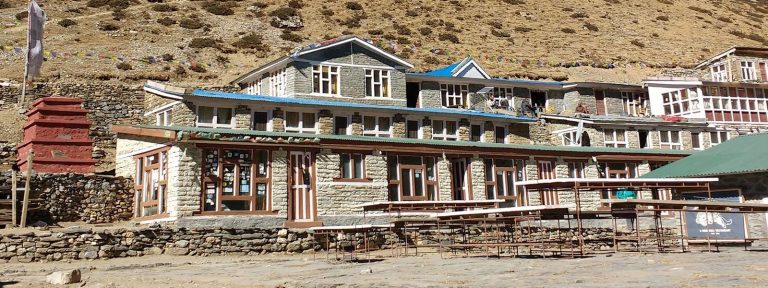
On the Annapurna Circuit, particularly in Manang and Muktinath, teahouses have developed considerably. You will find rooms with attached bathrooms, hot showers, Wi-Fi, coffee, and a wider range of food than most other Nepal treks. The food quality is generally good throughout.
On the Manaslu Circuit, teahouses are simpler. The villages of Lho, Samagaon, and Samdo have decent accommodation by Nepal trekking standards, but do not expect consistent Wi-Fi, hot showers on demand, or menu diversity above 4,000m. Dal bhat is the staple and at higher elevations it is often the only reliable option.
This is not a criticism of Manaslu. It is simply a less developed trekking route than Annapurna. For many trekkers, that quieter and less commercialised atmosphere is exactly what makes Manaslu appealing.
The Extensions That Change Each Trek
Manaslu: Tsum Valley
The Tsum Valley branches off the Manaslu Circuit near Jagat and requires a separate restricted area permit. It can add roughly a week or more depending on the itinerary, taking you into one of the more isolated Buddhist communities in Nepal. Adding Tsum Valley does not just extend the Manaslu Circuit. It changes what kind of journey it is.
Annapurna: Tilicho Lake
At 4,919 metres, Tilicho Lake is one of the highest lakes in the world. The side trip from Manang adds two to three days and crosses a high glacial moraine with views of the entire Annapurna range. What Tilicho does for the Annapurna Circuit is similar to what Kala Patthar does for EBC. It gives you a high point that is yours, separate from the main trail, that most trekkers who rushed through did not take. MountainKick offers the Tilicho Lake and Thorong La Pass Trek as a dedicated itinerary.
The Two Annapurna Circuit Options from MountainKick
MountainKick offers two versions of the Annapurna Circuit and the difference matters.
The 16-day Annapurna Circuit from USD 770 uses strategic vehicle support to bypass the most road-affected lower sections, concentrating your trekking days on the high-altitude core where the route is still excellent. This is the right choice for trekkers with limited time or those doing the circuit for the first time.
The 21-day Annapurna Circuit Classical Trek from USD 827 covers every section on foot, including the Lubra Pass detour between Muktinath and Jomsom, which is not included in many standard itineraries. This is the complete, unshortened walking journey for trekkers who want every kilometre on foot and have three weeks available.
For a full cost breakdown of both options read our Annapurna Circuit trek cost guide for 2026.
Who Should Trek Which Route
Both treks require mandatory travel insurance with helicopter evacuation cover. Read our travel insurance guide for Nepal trekking before you book either route.
2026 Verdict: Which Trek Should You Choose?
- Choose Manaslu if you want far less road traffic than Annapurna, have done EBC or Annapurna before, have around 15 days and a solid fitness base, and value remote Tibetan culture over comfort.
- Choose Annapurna if this is your first or second major Himalayan trek, you want flexibility, comfortable accommodation, reliable Wi-Fi, and have 16 to 21 days available depending on the version.
The one-line answer: Annapurna for your first circuit. Manaslu when you want something quieter and more remote.
Frequently Asked Questions
Is Manaslu harder than the Annapurna Circuit?
Yes. Longer daily hours, rougher trails, more remote sections, and less flexible logistics make Manaslu the more demanding route. Previous high-altitude experience is strongly recommended.
Can I do the Manaslu Circuit solo in 2026?
Yes, but not independently. Since March 2026, Nepal allows solo trekkers to obtain a Manaslu restricted-area permit without a second trekker. A licensed guide is still mandatory and the permit must be arranged through a registered trekking agency.
Has the road ruined the Annapurna Circuit?
Not entirely. The lower sections are significantly affected by jeep roads. The core from Manang to Muktinath remains excellent. Using NATT alternative trails and the high route between Pisang and Manang via Ghyaru and Ngawal avoids the worst of it.
Which trek has better mountain views?
Both are exceptional but different. Annapurna gives you the full massif including Dhaulagiri and Machhapuchhre. Manaslu keeps the eighth highest mountain in the world in view for most of the circuit.
How much do permits cost for each trek in 2026?
Annapurna Circuit: ACAP and TIMS requirements apply. Manaslu Circuit: the Restricted Area Permit costs USD 100 for the first seven days in the September to November peak season (USD 75 from December to August), plus a daily fee after day seven. MCAP and ACAP are also required for the standard Manaslu Circuit. For the full permit breakdown read our Nepal trekking permits guide.
Can I combine both treks?
Yes, both finish at Dharapani. A combined itinerary is possible because the Manaslu Circuit reaches Dharapani, where you can connect with the Annapurna Circuit. Speak with your guide or a doctor about the right acclimatisation plan for combining the two.
Which trek is better for first-time Himalayan trekkers?
Annapurna Circuit. Better infrastructure, more flexible logistics, and easier access to medical facilities make it the right starting point. Complete Annapurna or EBC first, then consider Manaslu for your next trip.
What is the cheapest way to do the Manaslu Circuit?
MountainKick’s Manaslu Circuit package starts at USD 650 per person for groups of 7 to 10. Smaller groups cost more, with the current 2 to 3 person rate at USD 890 and private solo pricing at USD 1,354. Contact MountainKick directly to confirm current departure and booking options for solo trekkers, since the March 2026 permit change and an operator’s own departure policy are two different things. There is no unguided independent option, since the restricted area requires a licensed agency.
Ready to book? Talk directly with our Kathmandu team. We run both circuits and will recommend the right one for your fitness, timeline, and budget honestly.
View Manaslu Circuit View Annapurna CircuitFurther Reading
- Annapurna Circuit Trek Cost 2026: Complete Breakdown
- Annapurna Circuit vs EBC: Which Trek Should You Do?
- Annapurna Circuit vs ABC: Which Annapurna Trek Is Right for You?
- Everest Base Camp Trek Cost 2026: The Complete Breakdown
- Done EBC? Here’s What to Trek Next in Nepal
- Nepal Trekking Permits 2026: Costs, Rules and What’s Changed
- Travel Insurance for Nepal: What Your Policy Must Cover
- Altitude Sickness on Nepal Treks: Symptoms, Prevention and What to Do
- Off the Beaten Path Treks in Nepal: 5 Routes Worth Knowing