Annapurna Base Camp Trek Cost 2026: The Complete Breakdown
The Annapurna Base Camp Trek costs from $760 per person for a group of 4 to 9 with MountainKick in 2026. The price is $820 per person for 2 to 3 trekkers and $1,280 for a private trek. The standard itinerary is 14 days from Kathmandu.
For a shorter trip, the 10-day Annapurna Base Camp Express Trek starts at $465 per person for groups of 4 to 9, $568 for 2 to 3 trekkers and $895 for a private trek.
For a MountainKick Kathmandu to Kathmandu trek, a realistic budget is around $1,100 to $2,300 before international flights and insurance. It depends mainly on your group size, your personal spending and whether you need to buy or rent gear.
Annapurna Base Camp Trek Cost at a Glance
- Region: Annapurna Conservation Area, Nepal
- Max altitude: 4,130m (13,549 ft)
- Standard itinerary: 14 days from Kathmandu
- Express itinerary: 10 days from Kathmandu
- Standard trek: $760 to $1,280 per person depending on group size
- Express trek: $465 to $895 per person depending on group size
- Typical total budget: about $1,100 to $2,300 before flights and insurance
- Difficulty: Challenging. No technical climbing needed
- Best seasons: March to May and September to November
- Permits: ACAP and TIMS, included in the package
- Transport: Kathmandu to Pokhara and trailhead transfers included
- Flights: No internal flights needed, unlike EBC
Last updated: October 2026

The Annapurna Base Camp Trek costs $760 to $1,280 with MountainKick in 2026, depending on group size. A shorter 10-day Express trek starts at $465.
But the package price isn’t your final budget. Food, visa, tips, personal expenses and gear can add to the package price. Insurance is separate and depends on your policy. Here’s what you’ll actually pay.
Annapurna Base Camp Trek Cost Breakdown
The easiest way to understand the cost is to separate the MountainKick package from what you pay yourself.
| Expense | Typical 2026 cost |
|---|---|
| MountainKick standard trek | $760 to $1,280 |
| Food on the trek | $150 to $280 |
| Nepal tourist visa | $30 to $125 |
| Travel insurance | Depends on provider and cover |
| Personal spending on trek | $60 to $130 |
| Tips for guide and porter | $80 to $150+ |
| Gear rental or purchase | $0 to $400+ |
| Extra hotel nights | $20 to $60+ per night |
| Typical total before international flights and insurance | about $1,100 to $2,300 |
| International flights | Varies by departure country |
How Much Does the MountainKick Annapurna Base Camp Trek Cost?
MountainKick’s standard 14-day Annapurna Base Camp Trek is priced by group size:
| Group size | Price per person |
|---|---|
| Private trek | $1,280 |
| 2 to 3 trekkers | $820 |
| 4 to 9 trekkers | $760 |
The package covers a licensed local guide, porter support, teahouse accommodation, both permits and transport from Kathmandu to Pokhara and the trailhead and back. Meals on the trail are not included. For the full list of inclusions and the current itinerary, see the Annapurna Base Camp Trek page.
Annapurna Base Camp Express Trek
If you have less time, MountainKick also offers a 10-day Annapurna Base Camp Express Trek:
| Group size | Price per person |
|---|---|
| Private trek | $895 |
| 2 to 3 trekkers | $568 |
| 4 to 9 trekkers | $465 |
The Express itinerary is a shorter option and shouldn’t be confused with the standard 14-day trek. Prices can change with departure dates and group arrangements, so check the trip page when planning.
View MountainKick’s ABC Trek itinerary and prices →
What Is Included in the MountainKick Package?
Included
- Licensed local trekking guide
- Porter support
- Annapurna Conservation Area Permit (ACAP)
- TIMS card
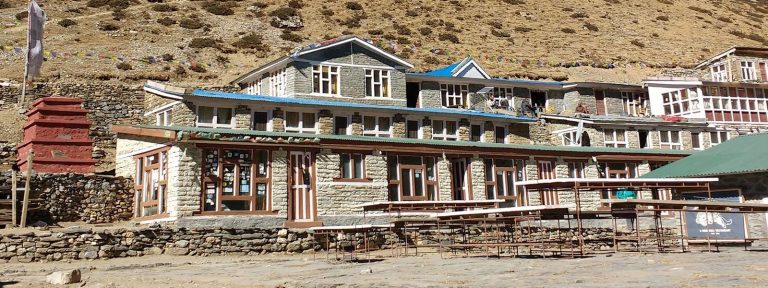
- Teahouse accommodation during the trek
- Transport from Kathmandu to Pokhara and the trailhead, and back
- Government taxes and company service charges
- MountainKick duffel bag
- Pre-trek support and trip coordination
Not included
- Meals on the trail
- Nepal visa
- Travel insurance
- Tips for guide and porter
- Personal trekking gear
- International flights
Annapurna Base Camp vs Annapurna Base Camp Express
MountainKick offers two ways to trek to Annapurna Base Camp:
| Standard ABC | ABC Express | |
|---|---|---|
| Duration | 14 days | 10 days |
| Group of 4 to 9 | $760 | $465 |
| Group of 2 to 3 | $820 | $568 |
| Private (per person) | $1,280 | $895 |
The Express trek suits travellers with less time who want a shorter itinerary. The standard trek gives you more time on the trail and a more relaxed pace. Compare the standard trek and the Express trek to see which schedule fits your plans.
Annapurna Base Camp Trek Permit Cost
Two permits are normally needed for the Annapurna Base Camp route:
- Annapurna Conservation Area Permit (ACAP): NPR 3,000
- TIMS card: NPR 2,000 for most non-SAARC trekkers
That’s NPR 5,000 in total for most non-SAARC trekkers.
Both permits are included in the MountainKick package, so you don’t need to arrange them yourself.
Permit rules and fees can change, so check before your trek. For every Nepal permit in 2026, see our Nepal trekking permits guide.

Do You Need a Guide for Annapurna Base Camp?
Foreign trekkers on routes covered by Nepal’s current guide and TIMS rules need to trek with a licensed guide through a registered trekking agency. The Annapurna Base Camp route falls within the area covered by these rules.
If you book a MountainKick package, your guide is already arranged and included in the price.
Food and Meal Costs on the Annapurna Base Camp Trek
Meals on the trail are not included in the MountainKick package. That’s deliberate. People eat very differently on a trek, and paying as you go lets you control what you spend instead of paying for a fixed meal plan you might not use.
Prices rise with altitude and distance from the road. Most trekkers spend about $15 to $28 a day on meals and drinks. Over the trekking days that comes to roughly $150 to $280.
Typical prices:
- Breakfast: $3 to $6
- Lunch: $4 to $8
- Dinner: $5 to $10
- Tea, coffee and other hot drinks: $1.50 to $3+
Dal bhat is usually the best value on the trail, and most teahouses offer free refills.
Nepal Visa Cost
Most visitors to Nepal need a tourist visa. Current fees:
- 15 days: $30 USD
- 30 days: $50 USD
- 90 days: $125 USD
Choose the visa length based on your whole time in Nepal, not just the trekking days. If you’re staying before or after the trek, you may need a longer visa. The visa is not included in the MountainKick package.
Travel Insurance for Annapurna Base Camp
Travel insurance should be part of your trek budget. MountainKick requires trekkers to have suitable insurance for the trip.
For a high altitude trek like Annapurna Base Camp, check that your policy covers:
- Trekking at the maximum altitude of your itinerary
- Emergency medical treatment
- Emergency evacuation
- Helicopter evacuation where medically necessary
- Trip cancellation or interruption if you need it
Insurance prices depend on your age, nationality, trip length and level of cover, so check the actual policy price rather than relying on one fixed figure.
Don’t choose a policy just because it’s cheapest. Check the altitude and evacuation conditions carefully. For what to look for, read our travel insurance for Nepal trekking guide.
What a rescue from ABC could cost
There’s no fixed price for a helicopter rescue from Annapurna Base Camp. For reference, a private charter from Pokhara to ABC starts around $2,200 before any rescue costs, and a real evacuation usually costs more. That’s why your insurance must cover helicopter evacuation. See our guide to helicopter rescue cover in Nepal for what to check.
For what to do if altitude sickness starts on the trail, read our guide to altitude sickness symptoms, prevention and treatment.
Personal Expenses on the Trek
Even with a trek package, you’ll want some spending money for things that aren’t included:
- Hot showers
- Wi-Fi
- Charging devices
- Bottled or treated water
- Snacks
- Soft drinks and other personal items
A reasonable allowance is about $7 to $15 a day. Bring enough Nepalese rupees for the trail from Pokhara, because there are no reliable ATMs on the route. See our guide to money in Nepal for trekkers for more.
How Much Should You Tip Your Guide and Porter?
Tipping is customary in Nepal’s trekking industry. The amount is up to you and should reflect the service you got.
As a general guide, many trekkers allow around:
- Guide: $12 to $18 per day
- Porter: $7 to $10 per day
For the trekking days, that usually comes to around $80 to $150 or more, depending on the size of your team and the service. For a full breakdown by group size, see our guide to tipping guides and porters in Nepal.

Trekking Gear Costs
Your gear budget can be almost nothing or several hundred dollars, depending on what you already own. If you already have suitable clothing and equipment, you may only need to rent one or two items.
Common rentals in Kathmandu or Pokhara:
- Down jacket
- Sleeping bag suited to the expected temperatures
- Trekking poles
Budget around $50 to $80 for basic rentals. If you’re buying most of your gear from scratch, it can easily reach $200 to $400 or more.
The lower sections through rhododendron forest can be warm and humid, especially in spring, while Base Camp gets cold at night. Plan your layers. MountainKick provides a duffel bag for the trek. For what to rent and what to buy, see our guide to trekking gear rental in Kathmandu.
Other Costs to Budget For
Your final budget may go up if you add extra days or services around the trek. Common extras:
- Extra nights in Kathmandu or Pokhara
- Additional sightseeing
- Extra hotel nights if your plans change
If you’re flying into Nepal for the trek, budget separately for international airfare. Many trekkers also add the Poon Hill (3,210m) sunrise viewpoint as an extension. Check the current itinerary for how this affects the length and price.
Getting to Pokhara
Transport from Kathmandu to Pokhara and on to the trailhead is included in the MountainKick package, so you don’t need to add it to your budget.
If you want to know what the drive is like, our Kathmandu to Nayapul guide covers the road, the time it takes and what to expect.

What Is a Realistic Budget for Annapurna Base Camp?
For most MountainKick trekkers, the total comes to about $1,100 to $2,300 before international flights and insurance.
At the low end, you’re in a group of four or more, you already own your gear and you keep trail spending modest. That’s around $1,100.
At the high end, you’re trekking privately, buying gear and spending more on food and extras along the way. That’s closer to $2,300.
Most people land somewhere in the middle.
Annapurna Base Camp vs Everest Base Camp: Which Is Cheaper?
Annapurna Base Camp is generally cheaper than Everest Base Camp, though the exact difference depends on your package and travel plans.
The main reason is transport. Annapurna Base Camp doesn’t need the Kathmandu to Lukla flight used on the classic Everest Base Camp route. The trekking itinerary is also generally shorter.
MountainKick’s current package prices show the difference:
- Annapurna Base Camp: from $760
- Everest Base Camp: from $1,020
Both depend on group size and the exact itinerary. If you want a high altitude Himalayan trek while keeping costs lower, Annapurna Base Camp is one of the best options.
For a side by side comparison beyond cost, read our Annapurna Circuit vs ABC guide.
Frequently Asked Questions
How much does the Annapurna Base Camp trek cost in 2026?
MountainKick’s standard 14-day trek costs $760 per person for groups of 4 to 9, $820 for groups of 2 to 3 and $1,280 for a private trek. With food, visa, tips and personal spending, most trekkers spend about $1,100 to $2,300 in total before flights and insurance.
How much is the Annapurna Base Camp Express Trek?
The 10-day Express Trek costs $465 per person for groups of 4 to 9, $568 for groups of 2 to 3 and $895 for a private trek.
Can I trek Annapurna Base Camp for under $1,000?
The package can be. MountainKick’s standard trek starts at $760 per person for groups of 4 to 9. But once you add food, visa, tips and personal spending, the full trip usually starts around $1,100.
Are meals included in the ABC trek package?
No. Meals on the trail are paid as you go, so you only pay for what you eat. Most trekkers spend about $15 to $28 a day.
Is Annapurna Base Camp cheaper than Everest Base Camp?
Generally yes. There’s no Kathmandu to Lukla flight and the itinerary is usually shorter.
Are permits included in the MountainKick package?
Yes. The ACAP and TIMS permits are both included.
Do I need travel insurance for Annapurna Base Camp?
MountainKick requires trekkers to have suitable travel insurance, including cover for high altitude trekking and emergency evacuation.
Do I need a guide for Annapurna Base Camp?
Foreign trekkers on routes covered by Nepal’s current guide and TIMS rules need to trek with a licensed guide through a registered trekking agency. MountainKick packages include a licensed local guide.
Ready to plan your Annapurna Base Camp trek?
MountainKick is a locally run Nepal trekking company based in Kathmandu. We arrange the Annapurna Base Camp trek for private travellers and small groups. See the current itinerary and price, or contact us for a private departure or a custom itinerary. WhatsApp: +977 985 118 2718, or use our enquiry form.
View ABC Trek itinerary Customise your tripFurther Reading
- Annapurna Circuit vs Annapurna Base Camp
- Everest Base Camp Trek Cost 2026
- Annapurna Circuit Trek Cost 2026
- Travel Insurance for Trekking in Nepal
- Nepal Trekking Permits 2026
- Altitude Sickness in Nepal
- Trekking in Nepal: The Complete Guide
- Mardi Himal Trek Guide
- Langtang vs Annapurna Base Camp
- Kathmandu to Nayapul
- How Much to Tip Guides and Porters in Nepal
- Trekking Gear Rental in Kathmandu