Langtang Valley vs Annapurna Base Camp: Which Trek Should You Do?
Choose Langtang if you have 7 to 10 days, want fewer crowds, and are interested in Tamang culture alongside the mountain scenery. Choose Annapurna Base Camp if you want to stand inside a high glacial amphitheatre and have 10 to 14 days available.
Both are challenging on MountainKick’s trekking scale but are non-technical and can suit fit first-time trekkers with proper preparation. Langtang is the lower-priced option, closer to Kathmandu, and requires no domestic flight. ABC is higher at the overnight stop (4,130m vs 3,870m), more dramatic at the destination, and better known internationally.
| Langtang Valley | Annapurna Base Camp | |
|---|---|---|
| Duration | 7 to 10 days | 10 to 14 days |
| Difficulty | Challenging | Challenging |
| Highest point | 4,773m (Kyanjin Ri); optional 4,984m (Tserko Ri) | 4,130m (Annapurna Base Camp) |
| Highest overnight | 3,870m (Kyanjin Gompa) | 4,130m (Base Camp) |
| Route style | Out and back — single valley | Out and back — gorge to sanctuary |
| Package from | USD 510 | USD 820 |
| Domestic flight | Not required | Not required |
| Crowd level | Low | Moderate to high |
| Cultural focus | Tamang and Tibetan Buddhist | Gurung villages |
| Permits | Langtang National Park + TIMS | ACAP + TIMS |
| Best season | Oct to Nov, Mar to May | Oct to Nov, Mar to May |
Langtang and Annapurna Base Camp are two popular choices for trekkers looking for a Himalayan trek without a high pass crossing or technical climbing. They are both accessible from Kathmandu without a Lukla-style flight, but the experience is quite different in character, cost and what they actually deliver on the ground.
This guide goes through the practical differences one by one so you can make a clear decision. If you are also considering the Annapurna Circuit or EBC, the 7-trek comparison guide covers all the main routes side by side. For the full Nepal planning picture, see the Nepal trekking planning guide.

Langtang Valley — What to Expect
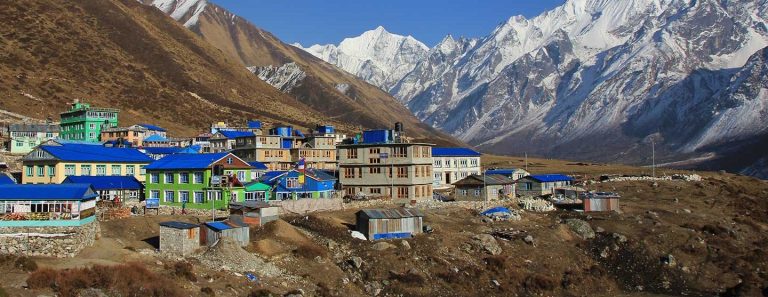
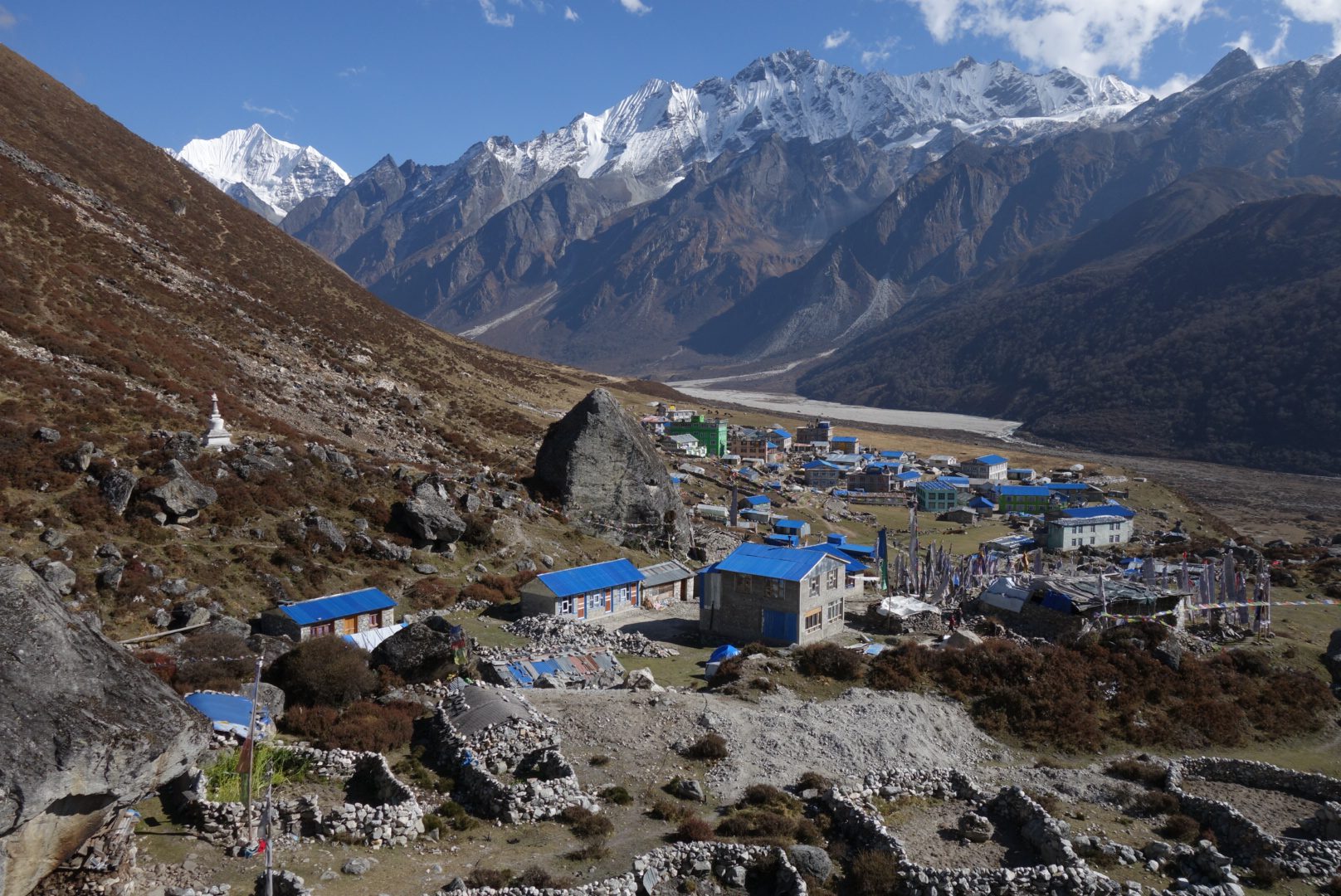
The Langtang Valley trek starts from Syabrubesi (1,460m), a small town 7 to 8 hours north of Kathmandu by road. The trail follows the Langtang Khola river through dense rhododendron and oak forest before opening into a wide high alpine valley at around 3,000m. The overnight destination is Kyanjin Gompa (3,870m), a centuries-old monastery settlement at the foot of the Langtang glacier, surrounded by peaks over 7,000m forming the border with Tibet.
From Kyanjin Gompa, most trekkers hike to Kyanjin Ri at 4,773m for wide views across Langtang Lirung, the glaciers and the surrounding peaks. Stronger trekkers can choose the harder Tserko Ri hike at around 4,984m, which requires an earlier start and a longer summit day.
The cultural character of Langtang is distinct. The Tamang people who live in the valley have strong Tibetan Buddhist traditions — yak herding, ancient monasteries, prayer wheels, and a way of life that feels genuinely intact rather than adapted for trekking tourism. The 2015 earthquake devastated parts of the valley, particularly Langtang Village, which has been rebuilt. The rebuilt village has a different physical character but the community and culture remain.
Langtang generally sees fewer trekkers than the main Annapurna routes, particularly away from the lower sections. You will share the trail with other trekkers in peak season, but nothing like the foot traffic on the ABC or EBC routes.
Package from: USD 510 | View full itinerary and dates →
Full cost breakdown: Langtang Valley trek cost 2026 →
Day by day itinerary: Langtang Valley trek itinerary →
Annapurna Base Camp — What to Expect
The Annapurna Base Camp trek starts near Pokhara and follows the Modi Khola river through a progressively narrowing gorge into the Annapurna Sanctuary — a high glacial basin completely enclosed by peaks above 6,000m. The destination is Annapurna Base Camp at 4,130m, where Annapurna I (8,091m), Annapurna South, Machapuchare (6,993m) and Hiunchuli surround you on every side.
The approach builds through terraced lowlands and Gurung villages — Ghandruk and Chhomrong are both worth time — into rhododendron and bamboo forest, then the narrow upper gorge where the trail squeezes between steep valley walls before the sudden dramatic opening into the Sanctuary. That transition from enclosed gorge to open mountain basin is one of the genuinely great moments in Nepal trekking.
Most ABC itineraries include Poon Hill (3,210m), either at the start or on the return. The sunrise view from Poon Hill over Annapurna, Dhaulagiri and Machhapuchhre is one of the most photographed moments in Himalayan trekking and adds only a day or two to the overall route.
ABC is more popular than Langtang and the trail shows it. The main teahouses at Chhomrong, Deurali and Annapurna Base Camp fill up quickly in peak season (October and April). The infrastructure is well developed — good food, reliable Wi-Fi at lower elevations, and plenty of company on the trail if that is what you are looking for.
Package from: USD 820 | View full ABC itinerary and dates →
Comparing Annapurna routes? See Annapurna Circuit vs ABC →
Scenery Comparison
Both routes deliver genuine Himalayan scenery. The difference is in how it is delivered.
Langtang is a valley trek. The peaks reveal themselves gradually as you climb north, and the payoff at Kyanjin Gompa is a wide alpine landscape with the Langtang glacier in the foreground and a wall of 7,000m peaks behind it. For a higher summit experience, stronger trekkers can add Tserko Ri at around 4,984m. The summit gives a broad panorama across the Langtang range and toward the Tibetan border peaks. The scale is vast and the setting feels remote.
ABC is about the destination. The Annapurna Sanctuary is one of the most enclosed and dramatic mountain settings in the world. Standing at 4,130m completely surrounded by an unbroken ring of peaks above 6,000m and 7,000m is an experience that is difficult to replicate anywhere else. The approach through the gorge makes the arrival all the more powerful — you earn it step by step through a narrowing canyon before the walls open and the full Sanctuary reveals itself.
If you want a wide alpine valley with glacier views and a strong high-altitude viewpoint: Langtang. If you want to stand inside the mountains rather than look at them from a distance: ABC.
Difficulty and Fitness
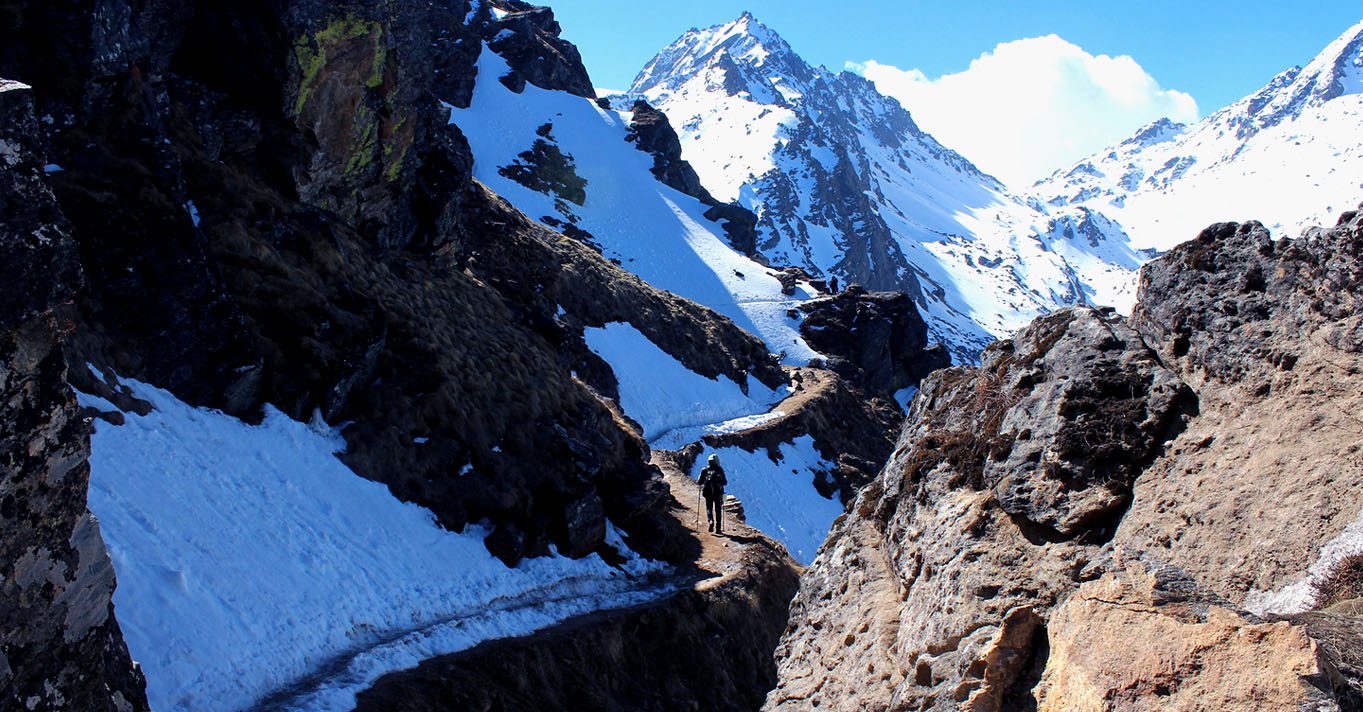
Both treks are rated Challenging on MountainKick’s scale. Neither involves technical climbing or a high pass crossing, but both involve long days, steep sections and significant altitude gain. The physical demands are broadly similar: 4 to 7 hours of walking per day on steep mountain trails, over consecutive days.
| Langtang | ABC | |
|---|---|---|
| Daily walking | 4 to 7 hours | 4 to 7 hours |
| Hardest day (standard route) | Kyanjin Ri day hike, 4 to 5 hrs at 4,773m | Himalaya Hotel to ABC, 7 to 8 hrs |
| Optional harder section | Tserko Ri, around 4,984m | — |
| High pass crossing | No | No |
| Technical climbing | No | No |
| Trail surface | Stone steps, forest paths, rocky upper section | Stone steps, gorge trail, occasional snow above 3,500m |
| Recommended fitness | Comfortable hiking 5 to 6 hrs at home | Comfortable hiking 5 to 6 hrs at home |
Langtang has a lower highest overnight point at Kyanjin Gompa, while ABC requires an overnight at 4,130m. Langtang can reach a higher altitude on optional day hikes, with Kyanjin Ri at 4,773m and Tserko Ri at around 4,984m. For altitude planning, the elevation where you sleep is an important consideration, not just the highest point reached during a day hike. Both routes include acclimatisation time and all MountainKick guides carry pulse oximeters. Read the altitude sickness guide before either trek.
Altitude Comparison
Altitude is often a deciding factor for first-time high-altitude trekkers. Here is how the two routes compare:
| Altitude Marker | Langtang | ABC |
|---|---|---|
| Highest overnight | 3,870m (Kyanjin Gompa) | 4,130m (Annapurna Base Camp) |
| Highest point | 4,773m (Kyanjin Ri) | 4,130m (Annapurna Base Camp) |
| Optional higher summit | 4,984m (Tserko Ri) | — |
ABC sleeps higher. Langtang reaches higher on optional day hikes. For someone particularly altitude-sensitive, the elevation where you sleep matters more than a brief summit reached during the day. For a full guide on managing altitude on either route, see the altitude sickness guide.
Cost Comparison
The package prices are noticeably different. Langtang is currently the lower-priced MountainKick option and also takes fewer days.
| Cost Item | Langtang | ABC |
|---|---|---|
| MountainKick package from | USD 510 | USD 820 |
| Domestic flight required | No | No |
| Trek meals | USD 25 to 40/day | USD 25 to 40/day |
| Main permit | Langtang National Park | ACAP |
| TIMS | Required | Required |
| Typical duration | 10 days | 14 days |
ABC costs more because the standard itinerary is longer and includes travel through Pokhara, additional hotel nights and more trekking days. For detailed figures, see the Langtang Valley Trek Cost 2026 and Annapurna Base Camp Trek Cost 2026 guides.
Crowds and Trail Experience
This is one of the clearest differences between the two routes.
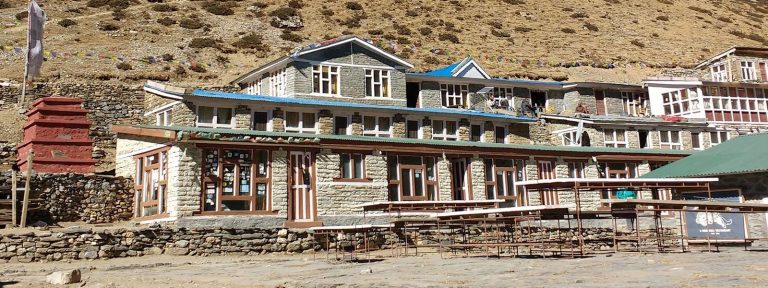
Langtang generally sees fewer trekkers than the main Annapurna routes, particularly away from the lower sections. It does not feature prominently in most international trekking media. In peak season (October and November) you will encounter other trekking groups, but the trail above Lama Hotel feels remote compared to the main Annapurna or Everest corridors. Teahouses are smaller and more basic, particularly above 3,000m, but the trade-off is a more personal experience — you get to know the teahouse owners and your guide has your full attention.
ABC is busier, particularly in October and April. The lower sections through Ghandruk and Chhomrong are well-trodden and the main teahouses fill quickly during peak weeks. The Base Camp itself can be crowded on good weather mornings. The infrastructure is more developed — better food variety, more reliable Wi-Fi, larger teahouses — which suits trekkers who want comfort alongside the mountain experience.
If you want solitude and a less commercialised experience: Langtang. If you want good infrastructure, more company on the trail, and the Poon Hill addition: ABC.
Culture and Villages
Both routes pass through genuinely interesting cultural landscapes, but the character is different.
Langtang is Tamang and Tibetan Buddhist territory. The Tamang people have inhabited this valley for centuries and the Tibetan influence — in architecture, religion, dress and daily life — is strong. Kyanjin Gompa itself dates back several centuries and the monks still in residence give the settlement a living spiritual character rather than a museum quality. The yak herding culture above 3,500m is one of the more intact traditional livelihoods you will encounter on any Nepal trek.
ABC passes through Gurung villages — Ghandruk is the most significant, a large and well-preserved village with a strong community identity and a small museum worth an hour of your time. The Gurung people have a long connection with the Gurkha military tradition. The cultural experience is different: Gurung villages are generally more connected to Pokhara and see more trekkers, while Langtang has a more remote valley setting.

Which Trek Is Right for You
Choose Langtang if:
- You have 7 to 10 days and want the full experience in that window
- You want fewer crowds and a more remote feel on the trail
- Tamang culture and Tibetan Buddhist influence interest you
- You want to avoid any domestic flight logistics
- You want the lower-priced MountainKick package and a shorter overall itinerary
- You want the option of a higher summit day without making it part of the standard itinerary
- This is your first Nepal trek and you want to avoid the most popular corridors
Choose Annapurna Base Camp if:
- You want to stand inside a mountain amphitheatre rather than look at peaks from a distance
- The Poon Hill sunrise view is on your list
- You have 10 to 14 days and want a longer trail experience
- You prefer better-developed teahouse infrastructure on the trail
- You want company on the trail and the social atmosphere of a popular route
- You want to spend time in Pokhara before or after the trek
If none of these points land clearly on one side, the honest answer is that you will not be disappointed by either. Both routes are excellent. The main practical filter is time: 7 to 10 days points to Langtang, 10 to 14 days gives you room for the full ABC experience including Poon Hill.
Still deciding? The Annapurna Circuit vs ABC comparison and the Poon Hill vs Mardi Himal comparison cover the other common decision points for this region. For a full overview of all major routes, see the 7-trek comparison guide.
Book Your Trek with MountainKick
MountainKick runs both the Langtang Valley trek and the Annapurna Base Camp trek as fully guided packages from Kathmandu, with permits, accommodation and transport included according to the itinerary. We are happy to help you decide between routes before you commit.
Tell us your dates, fitness level and what kind of experience you are after and we will give you a straight recommendation. The fastest way to reach us is via WhatsApp at +977 985 118 2718, or through our enquiry form.
Frequently Asked Questions
Is Langtang harder than Annapurna Base Camp?
Both are rated Challenging on MountainKick’s scale. Neither involves technical climbing or a high pass crossing, but both have long walking days, steep sections and significant altitude gain. Langtang’s optional Tserko Ri hike reaches around 4,984m, higher than ABC’s maximum altitude of 4,130m, but ABC’s overnight altitude of 4,130m is higher than Langtang’s highest overnight at Kyanjin Gompa (3,870m).
Which trek is cheaper — Langtang or ABC?
Langtang starts from USD 510 and ABC from USD 820 on the current MountainKick packages. Langtang is also shorter, so it generally costs less overall in meals and personal expenses. Neither route requires a domestic flight. See the Langtang cost breakdown for full figures.
Which trek has better mountain views — Langtang or ABC?
Different rather than better. Langtang gives you wide alpine panoramas from Kyanjin Gompa and a broad viewpoint from Kyanjin Ri or, for stronger trekkers, the higher Tserko Ri. ABC puts you inside an enclosed glacial basin surrounded by Annapurna I, Machapuchare and Hiunchuli on all sides. The ABC Sanctuary arrival is one of the more dramatic moments in Nepal trekking.
Which trek is better for first-timers?
Both can suit fit first-time trekkers, although MountainKick rates both routes as Challenging. Langtang has a lower overnight altitude and fewer crowds, which some find less stressful on a first trip. ABC has better-developed teahouse infrastructure and more trekkers on the trail, which some first-timers prefer for the reassurance of company. Both work well with good baseline fitness and a proper acclimatisation day built in.
Can I do both Langtang and ABC in one trip?
Yes, with 3 to 4 weeks in Nepal. The most logical sequence is Langtang first (closer to Kathmandu, shorter), then travel to Pokhara for ABC. The two regions are separate and require different permits but there is no logistical conflict. Many trekkers combine one of the shorter Annapurna routes — Poon Hill or Mardi Himal — with Langtang in a 2 to 3 week trip. Talk to the MountainKick team about combining routes on a custom itinerary.
Which trek is less crowded?
Langtang is significantly less crowded than ABC. It sees a fraction of the foot traffic of the main Annapurna routes. If solitude on the trail is a priority, Langtang is the clearer choice.
Do I need a domestic flight for either trek?
No. Neither trek requires a domestic flight. Langtang starts from Syabrubesi, reached by road from Kathmandu in 7 to 8 hours. ABC starts near Pokhara, reached from Kathmandu by road or a short domestic flight. Neither requires the Lukla-style domestic flight that adds cost and weather risk to EBC. MountainKick includes the road transfers in both packages.
Further Reading
- Langtang Valley Trek: Book and Check Dates
- Annapurna Base Camp Trek: Book and Check Dates
- Langtang Valley Trek Cost 2026: Complete Breakdown
- Annapurna Base Camp Trek Cost 2026: The Complete Breakdown
- Langtang Valley Trek Itinerary: Day by Day Guide
- Annapurna Circuit vs ABC: Which Trek Should You Do?
- Poon Hill vs Mardi Himal: Which Short Trek Wins?
- Nepal Trekking: 7 Best Treks Compared by Difficulty
- Altitude Sickness on Nepal Treks: Symptoms, Prevention and What to Do