Langtang Valley Trek Itinerary: Day by Day Guide (2026)
The standard Langtang Valley trek takes 10 days from Kathmandu and reaches Kyanjin Gompa at 3,798m. The highest standard viewpoint is Kyanjin Ri at 4,773m, while the harder Tserko Ri hike reaches about 4,984m. The route follows the Langtang Valley from Syabrubesi to Kyanjin Gompa and returns by the same trail. No technical climbing is required.
Most trekking days involve around 5 to 6 hours of walking, with shorter days around Kyanjin Gompa. Teahouse accommodation is available throughout the main route. A shorter 7-day itinerary is also possible for trekkers with limited time.
- 📅Duration: 10 days (7-day option available)
- 🏔️Max altitude: 4,773m standard route (Kyanjin Ri); 4,984m optional Tserko Ri
- 🥾Daily walking: 4 to 7 hours
- 💪Difficulty: Challenging on MountainKick’s current trek scale
- 🏕️Accommodation: Teahouses throughout
- 🚗Access: Road transfer from Kathmandu — no flight
- 📋Permits: Langtang National Park entry permit + TIMS, arranged through a registered trekking agency
- 💰Cost: Full cost breakdown →
The Langtang Valley is one of those routes that trekkers who have done it tend to rate higher than the more famous names. It is one of the closest major high-altitude trekking routes to Kathmandu, the cultural depth is genuine — strong Tamang and Tibetan Buddhist influence throughout — and the mountain scenery around Kyanjin Gompa is impressive, while the route generally sees fewer trekkers than the main Everest and Annapurna trails.
This page gives you the full day by day breakdown: walking times, elevations, what the trail is like at each stage, and what to expect at every overnight stop. If you want to know what it costs, see the Langtang Valley trek cost breakdown. If you are still comparing routes, the 7-trek comparison guide has Langtang alongside EBC, ABC and the Annapurna Circuit.

Route Overview
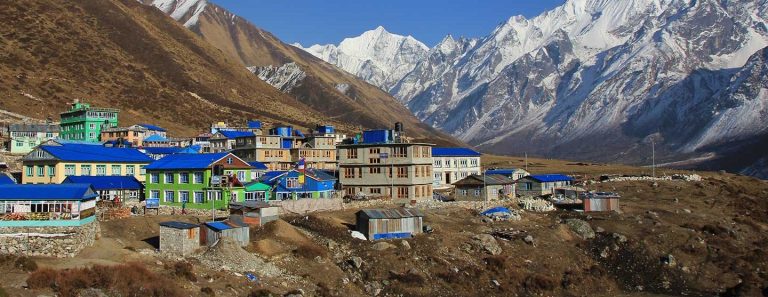
The Langtang Valley trek follows the Langtang Khola river north from Syabrubesi (1,460m) through dense rhododendron and oak forest, past traditional Tamang villages, into the high alpine valley and up to Kyanjin Gompa (3,798m) — a monastery settlement at the foot of the Langtang glacier. From Kyanjin, most trekkers hike up to Kyanjin Ri (4,773m) for a wide view of the Langtang Lirung massif, Ganesh Himal and the peaks forming the Tibetan border. Stronger trekkers with suitable weather and conditions can attempt the higher and more demanding Tserko Ri (about 4,984m) instead.
The route is an out-and-back. You walk the same valley in both directions, which sounds repetitive but rarely feels it — the light and perspective change completely between ascent and descent, and you notice things on the way down that the uphill effort made you miss.
The trailhead at Syabrubesi is reached by a 7 to 8 hour road transfer from Kathmandu. No domestic flight is required. The trailhead is reached by road from Kathmandu, so you don’t have to plan around Lukla flight schedules.
| Day | Route | Altitude | Walking Time |
|---|---|---|---|
| Day 1 | Arrival in Kathmandu | 1,400m | — |
| Day 2 | Kathmandu to Syabrubesi | 1,460m | 7 to 8 hrs drive |
| Day 3 | Syabrubesi to Lama Hotel | 2,380m | 5 to 6 hrs |
| Day 4 | Lama Hotel to Langtang Village | 3,430m | 5 to 6 hrs |
| Day 5 | Langtang Village to Kyanjin Gompa | 3,798m | 3 to 4 hrs |
| Day 6 | Kyanjin Gompa — acclimatisation, optional Kyanjin Ri or Tserko Ri | 3,798m to 4,773m / 4,984m | Optional 3 to 7 hrs |
| Day 7 | Kyanjin Gompa to Lama Hotel | 2,380m | 5 to 6 hrs |
| Day 8 | Lama Hotel to Syabrubesi | 1,460m | 4 to 5 hrs |
| Day 9 | Syabrubesi to Kathmandu | 1,400m | 7 to 8 hrs drive |
| Day 10 | Departure from Kathmandu | 1,400m | Free day |
Day by Day Itinerary
Day 1: Arrival in Kathmandu
Arrive in Kathmandu and transfer to your hotel. Your MountainKick guide meets you for a briefing on the route, a gear check and permit collection. The rest of the day is free — many trekkers use it to explore Thamel or rest before the drive to Syabrubesi the following morning.
Overnight: Kathmandu | Altitude: 1,400m
Day 2: Kathmandu to Syabrubesi (1,460m)
The drive to Syabrubesi takes 7 to 8 hours by private vehicle via Trishuli Bazaar and Dhunche, where you pass through the Langtang National Park entry gate and permits are checked. The road follows the Trishuli River for much of the journey before climbing into the hills. Arrive in Syabrubesi in the late afternoon, check in to your teahouse, and get an early night before the first trekking day.
Overnight: Syabrubesi | Altitude: 1,460m | Meals: Dinner at teahouse
Day 3: Syabrubesi to Lama Hotel (2,380m)
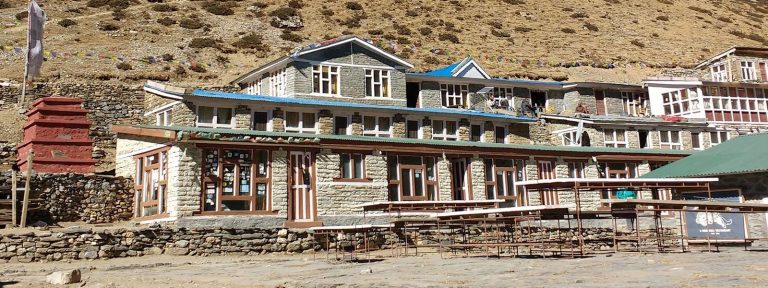
The first day on the trail. You cross the Bhote Koshi river on a suspension bridge and begin climbing through dense forest — rhododendron, oak and bamboo — along the north bank of the Langtang Khola. The trail gains around 920m over 5 to 6 hours of steady walking. Lama Hotel is a small teahouse settlement in the forest where most trekkers stop for the night. The name is misleading — it is a cluster of teahouses rather than a single establishment. Settle in early and drink plenty of water. You are approaching altitude now.
Overnight: Lama Hotel | Altitude: 2,380m | Walking time: 5 to 6 hours
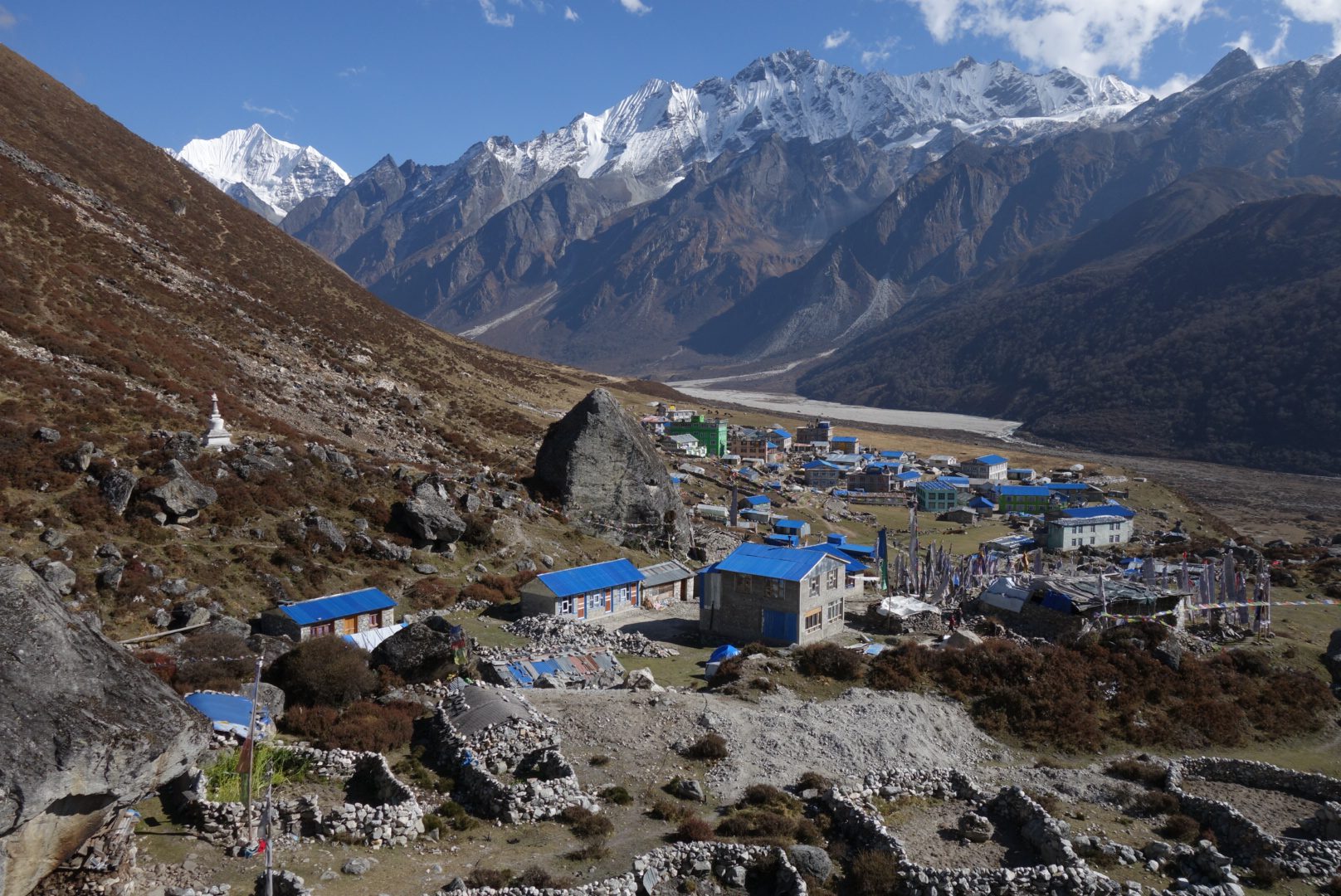
Day 4: Lama Hotel to Langtang Village (3,430m)
The forest opens up as you climb and the valley begins to widen. You pass through the small settlements of Ghoda Tabela (3,030m) — a former army post, now a checkpoint — and Thangshyap before reaching Langtang Village. The original village was almost entirely destroyed in the 2015 earthquake and has been rebuilt. The rebuilt village has a different character from the old one but the setting is extraordinary: a wide alpine meadow surrounded by peaks above 6,000m, with yaks grazing and prayer flags everywhere. This is your first real taste of Tamang culture on the route.
Overnight: Langtang Village | Altitude: 3,430m | Walking time: 5 to 6 hours
Day 5: Langtang Village to Kyanjin Gompa (3,798m)
A shorter day by design. The altitude gain from Day 4 to Day 5 is modest — around 370m — and the walking time is just 3 to 4 hours. This is intentional. Arriving at Kyanjin Gompa early gives your body time to begin adjusting to 3,798m before the exploration and optional summit hike on Day 6. The trail follows the valley floor past the cheese factory at Mundu and the village of Sindum before reaching Kyanjin. Spend the afternoon exploring the monastery, which dates back several centuries, and watching the yak herders bring animals in from the high pastures. The views from the gompa across to Langtang Lirung (7,227m) are exceptional in the late afternoon light.
Overnight: Kyanjin Gompa | Altitude: 3,798m | Walking time: 3 to 4 hours
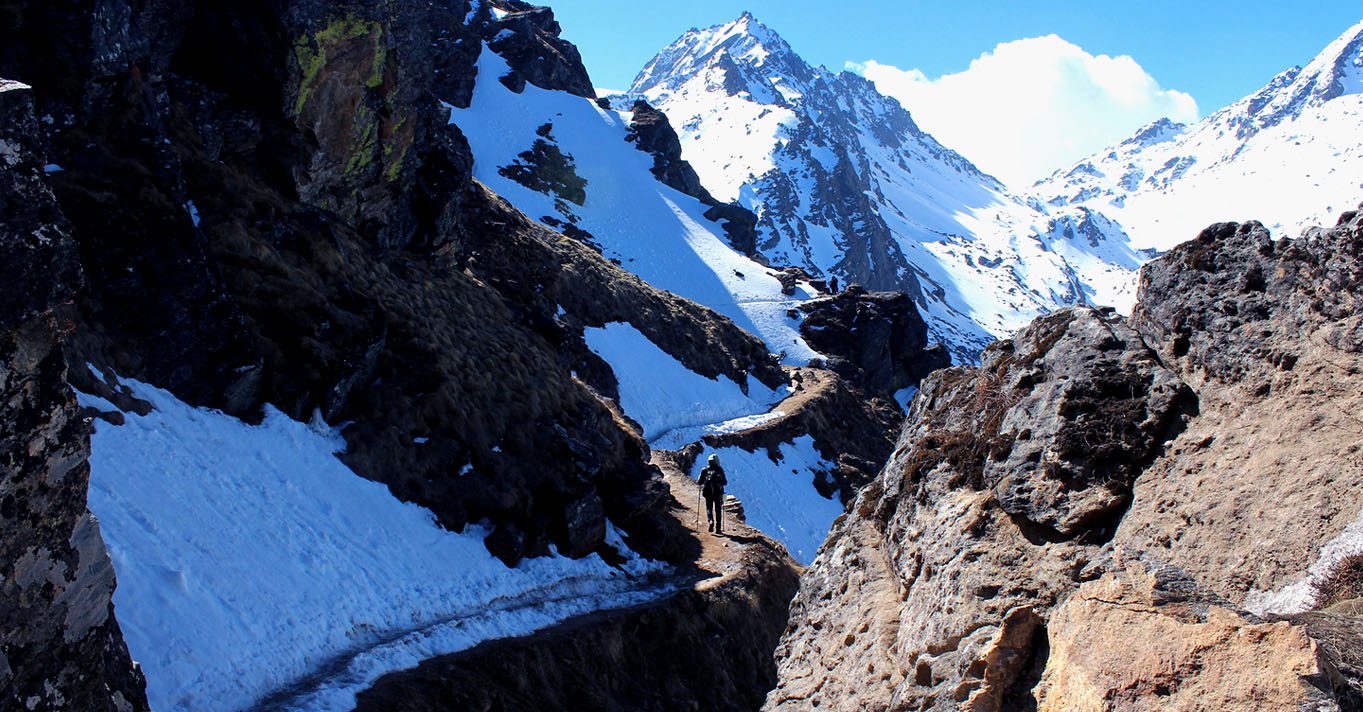
Day 6: Kyanjin Gompa — Kyanjin Ri or Tserko Ri (3,798m to 4,773m / 4,984m)
Day 6 is an acclimatisation and exploration day at Kyanjin Gompa. Spending an extra night here gives you more time to adjust to 3,798m before attempting a higher viewpoint. Your guide can recommend Kyanjin Ri, the glacier area or a shorter walk depending on weather and how you are feeling. A common acclimatisation principle is to gain altitude gradually and, where practical, climb higher during the day before returning to a lower sleeping altitude — this day is built around that idea.
For many trekkers, Kyanjin Ri at 4,773m is the preferred viewpoint, taking 3 to 4 hours return with good views north across the glacier and into Tibet. Stronger trekkers with suitable weather and conditions can attempt Tserko Ri at about 4,984m instead. Most groups attempting Tserko Ri start before dawn to reach the summit for sunrise and to avoid afternoon cloud that can close in above 4,500m; the round trip takes 6 to 7 hours on a steep, rocky trail with some scrambling over loose rock and snow in early season. Tserko Ri is the more demanding option and should not be treated as a compulsory part of the itinerary — your guide will assess conditions and your response to altitude before deciding whether to attempt it.
On a clear day from either viewpoint, Langtang Lirung (7,227m), Gangchenpo (6,387m), Naya Kanga (5,844m) and peaks along the Tibetan border are visible, with Annapurna and Manaslu sometimes visible to the west from Tserko Ri. The view from the top is one of the highlights of the route.
Overnight: Kyanjin Gompa | Altitude: up to 4,773m or 4,984m, return to 3,798m | Walking time: Optional 3 to 7 hours
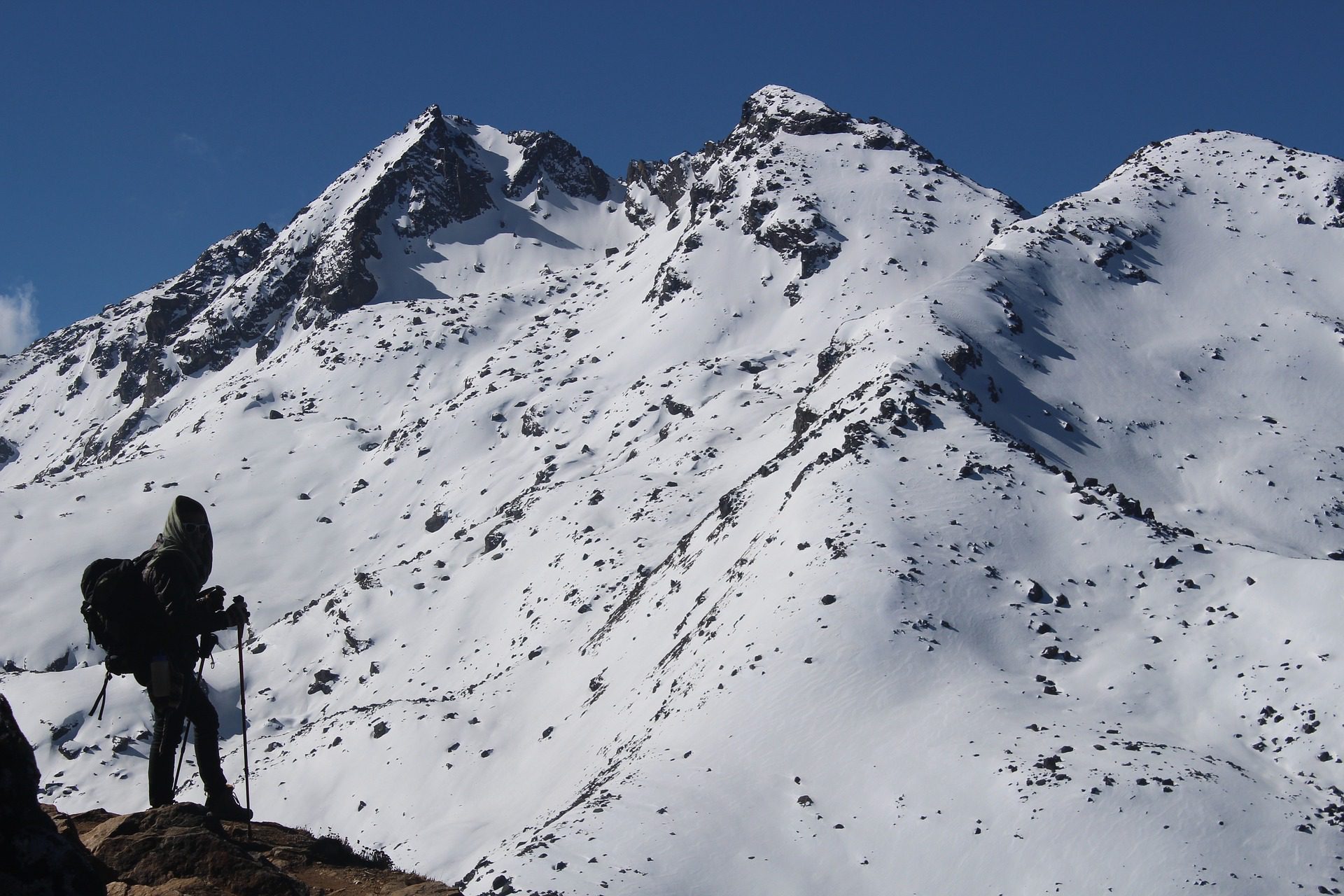
Day 7: Kyanjin Gompa to Lama Hotel (2,380m)
The long descent day. You retrace the valley trail from Kyanjin back to Lama Hotel, losing around 1,400m of altitude over 5 to 6 hours of walking. The descent is harder on the knees than the ascent — trekking poles help significantly on this section. The forest feels different on the way down. The urgency of reaching altitude is gone and you notice details — birds, wildflowers, the sound of the river — that the uphill grind made easy to miss. Most trekkers find they arrive in Lama Hotel feeling genuinely good: the physical effort is behind them and the valley is beautiful from any direction.
Overnight: Lama Hotel | Altitude: 2,380m | Walking time: 5 to 6 hours
Day 8: Lama Hotel to Syabrubesi (1,460m)
The final day on the trail. A steady 4 to 5 hour descent through forest back to Syabrubesi, retracing the route from Day 3.
Overnight: Syabrubesi | Altitude: 1,460m | Walking time: 4 to 5 hours
Day 9: Syabrubesi to Kathmandu
The road transfer back to Kathmandu departs Syabrubesi in the morning and arrives in the city in the evening. Farewell dinner with your guide that evening.
Overnight: Kathmandu | Altitude: 1,400m | Walking time: 7 to 8 hrs drive
Day 10: Departure from Kathmandu
A buffer day built into the itinerary for recovery, shopping in Thamel, or sightseeing in the Kathmandu Valley if your flight timing allows. Boudhanath Stupa and Swayambhunath are both within easy reach and worth the visit after 8 days in the mountains. Departure transfers arranged by MountainKick as needed.

Difficulty and Fitness
The Langtang Valley trek is physically demanding but non-technical. MountainKick currently rates it as Challenging on our trek scale. You do not need previous high-altitude trekking experience, but you should be comfortable walking 5 to 7 hours a day on uneven terrain over several consecutive days.
What that means in practice: the trail involves sustained uphill on stone steps and forest paths, and the optional Kyanjin Ri or Tserko Ri day is a genuine physical effort above 4,700m. None of it requires ropes, crampons or technical climbing.
The most common reason trekkers struggle on Langtang is not fitness — it is altitude. Arriving at 3,798m is a significant jump for anyone who has not been above 3,000m before. The acclimatisation day on Day 6 is in the itinerary for exactly this reason. Do not skip it regardless of how good you feel.
If you’re deciding between Langtang and Annapurna Base Camp, see our Langtang vs Annapurna Base Camp comparison. If you are comparing difficulty levels across routes, see the full trek difficulty comparison. For specific altitude sickness prevention advice, read the altitude sickness guide before you leave home.
Altitude and Acclimatisation
The itinerary allows time for acclimatisation before the higher viewpoint hikes. You gain elevation gradually over the first three trekking days, spend two nights at Kyanjin Gompa (3,798m) before the optional summit hike, and descend quickly afterwards.
| Overnight Stop | Altitude | Altitude Gain from Previous Night |
|---|---|---|
| Syabrubesi | 1,460m | Starting point |
| Lama Hotel | 2,380m | +920m |
| Langtang Village | 3,430m | +1,050m |
| Kyanjin Gompa (night 1) | 3,798m | +368m |
| Kyanjin Gompa (night 2) | 3,798m | Acclimatisation — no gain |
| Kyanjin Ri (day hike, optional) | 4,773m | Day hike — return to 3,798m |
| Tserko Ri (day hike, optional, harder) | ~4,984m | Day hike — return to 3,798m |
A common acclimatisation principle is to gain altitude gradually and, where practical, climb higher during the day before returning to a lower sleeping altitude. The itinerary is built around this. If you feel strong on Day 6 and want to attempt Tserko Ri, talk to your guide — not the other way around. More trekkers get into trouble by going too fast than by going too slowly.
Best Time to Do the Langtang Valley Trek
October and November are the best months for this route. Post-monsoon skies are clear, the valley views are sharp and the trail is in good condition after the summer rains. Temperatures at Kyanjin Gompa drop to around -5°C at night in November but daytime walking is comfortable.
March and April are the second-best window. Rhododendron forests are in bloom below 3,000m and the days are long. Snow conditions on the upper sections vary from year to year, so access to Kyanjin Ri or Tserko Ri should always be assessed locally.
December to February is possible for experienced cold-weather trekkers. The valley above Lama Hotel can be snow-covered and temperatures at Kyanjin can fall to -15°C at night. Tserko Ri may not be safely accessible in January. The trail is generally much quieter in winter, although accommodation and trail conditions can be more limited.
June to September — the monsoon season — brings heavy rain, wet lower trails and more frequent leeches, and poor visibility. Most trekkers avoid this window. For a full seasonal breakdown covering all Nepal treks, see the Nepal trekking planning guide.
7-Day Option
A shorter version of the Langtang trek is available for trekkers with limited time. It reduces the time available for acclimatisation and usually does not include Tserko Ri. It is better suited to trekkers who already have experience walking at altitude.
| Day | Route | Altitude |
|---|---|---|
| Day 1 | Kathmandu to Syabrubesi | 1,460m |
| Day 2 | Syabrubesi to Lama Hotel | 2,380m |
| Day 3 | Lama Hotel to Langtang Village | 3,430m |
| Day 4 | Langtang Village to Kyanjin Gompa and optional Kyanjin Ri hike | 3,798m to 4,773m |
| Day 5 | Kyanjin Gompa to Lama Hotel | 2,380m |
| Day 6 | Lama Hotel to Syabrubesi to Kathmandu | 1,400m |
| Day 7 | Kathmandu — rest day and departure | 1,400m |
The 7-day version is better suited to trekkers who have previous high-altitude experience and are confident at 3,800m without a full acclimatisation day. If this is your first trek above 3,000m, the 10-day itinerary is the safer and more rewarding choice. Talk to the team about which version suits your schedule and experience level. If you are considering other short routes, see our guide to the best short treks in Nepal.
Book the Langtang Valley Trek with MountainKick
MountainKick is a Kathmandu-based trekking company registered with NTB and TAAN. Our local guides know the Langtang Valley and its trails well. Every package includes the full itinerary above, all permits, the Kathmandu to Syabrubesi road transfer, teahouse accommodation and a licensed guide throughout.
We are happy to answer questions about fitness, timing, the 7-day vs 10-day option or anything else before you commit. The fastest way to reach us is via WhatsApp at +977 985 118 2718, or through our enquiry form.
View Langtang Valley trek and check dates →
Send us a message →
Frequently Asked Questions
How many days is the Langtang Valley trek?
The standard itinerary is 10 days from Kathmandu, including arrival, road transfers and a departure day at the end. Trekking days on the trail are around 6, plus a Day 6 exploration and optional summit day at Kyanjin Gompa. A 7-day option is available for trekkers with limited time.
How difficult is the Langtang Valley trek?
MountainKick currently rates it Challenging. No technical climbing is required and previous high-altitude experience is not essential, but you should be comfortable walking 5 to 7 hours a day on uneven terrain over consecutive days. The optional Kyanjin Ri or Tserko Ri day is the most demanding section. The main challenge for most trekkers is altitude, not fitness. The acclimatisation day at Kyanjin Gompa is essential and should not be skipped.
What is the highest point on the Langtang Valley trek?
The highest standard viewpoint on the MountainKick itinerary is Kyanjin Ri at 4,773m. A harder optional hike to Tserko Ri reaches about 4,984m. The highest overnight stop is Kyanjin Gompa at 3,798m.
Do I need previous trekking experience for Langtang?
No previous trekking experience is required, but good baseline fitness is important. If you can walk 5 to 6 hours on consecutive days at home, you have the physical foundation for this route. If this is your first high-altitude trek, the 10-day version with the full acclimatisation day is strongly recommended over the 7-day option.
Is there a flight needed for the Langtang trek?
No domestic flight is required. The trek begins at Syabrubesi, which is reached by a 7 to 8 hour private road transfer from Kathmandu. This is included in the MountainKick package. There are no Lukla-style flight delays to plan around on this route.
What is the best season for the Langtang Valley trek?
October and November are generally the best months, followed by March, April and May. December to February is possible but cold at altitude. Avoid June to September due to monsoon rain and poor visibility on the trail. For a full guide to Nepal trekking seasons, see the Nepal trekking planning guide.
How much does the Langtang Valley trek cost?
MountainKick’s Langtang Valley trek currently starts from USD 510, depending on departure and group arrangement. For the full breakdown of trek costs, meals, permits, insurance and other expenses, see our Langtang Valley trek cost guide.
Further Reading
- Langtang Valley Trek: Book and Check Dates
- Langtang Valley Trek Cost 2026: Complete Breakdown
- Langtang vs Annapurna Base Camp: Which Trek Should You Do?
- 5 Best Short Treks in Nepal for 2026
- Nepal Trekking: 7 Best Treks Compared by Difficulty
- Altitude Sickness on Nepal Treks: Symptoms, Prevention and What to Do
- Travel Insurance for Trekking Nepal: What Your Policy Must Cover
- Nepal Trekking Packing List 2026