Langtang Valley Trek Difficulty: How Hard Is It Really?
The Langtang Valley trek is a challenging but non-technical trek that most fit people can do with some training. You walk 3 to 7 hours a day for 6 days and sleep as high as Kyanjin Gompa at 3,870m. From there you can hike to Kyanjin Ri at 4,773m, or Tserko Ri at 4,984m if you want a harder day.
There’s no high pass. What makes Langtang hard is how fast it climbs. You gain over 2,000m in your first three days on the trail, and the second day alone climbs more than 1,000m. The long walk back down is tough on your knees too.
- Our grade: Level 3 of 5, Challenging
- Highest point: Kyanjin Ri, 4,773m (optional Tserko Ri, 4,984m)
- Highest night: Kyanjin Gompa, 3,870m
- Trekking days: 6 on our 10-day trek
- Walking time: usually 3 to 7 hours a day
- Hardest climb: Lama Hotel to Langtang village, about 1,050m in a day
- Longest day: Kyanjin Gompa back to Lama Hotel, about 21km
- Acclimatisation: a hiking day at Kyanjin Gompa
- Technical climbing: none
- Experience needed: none, but train for about two months
- Getting there: a long, rough drive from Kathmandu
Last updated: October 2026
In this guide
How Hard Is the Langtang Valley Trek?
We grade our Langtang Valley Trek as Level 3: Challenging on our Nepal trek difficulty scale. That means steady trekking days and altitude up to about 5,000m. It suits regular walkers with solid fitness.
You don’t need climbing skills or Himalayan experience. Langtang is shorter than most big treks and there’s no pass to cross. But it climbs quickly, and that’s what catches people out.
What Makes Langtang Hard
It climbs fast. You start low in the forest and sleep at 3,870m just three nights later. The day from Lama Hotel to Langtang village climbs about 1,050m, the biggest single gain on the trek.
The altitude. Kyanjin Gompa sits at 3,870m, and the optional peak hikes go well above 4,500m. Altitude sickness is most likely between Lama Hotel and Langtang village.
The long way down. On the way back you walk from Kyanjin Gompa to Lama Hotel in one day. That’s about 21km and nearly 1,500m of descent. It’s the longest day of the trek and hard on the knees.
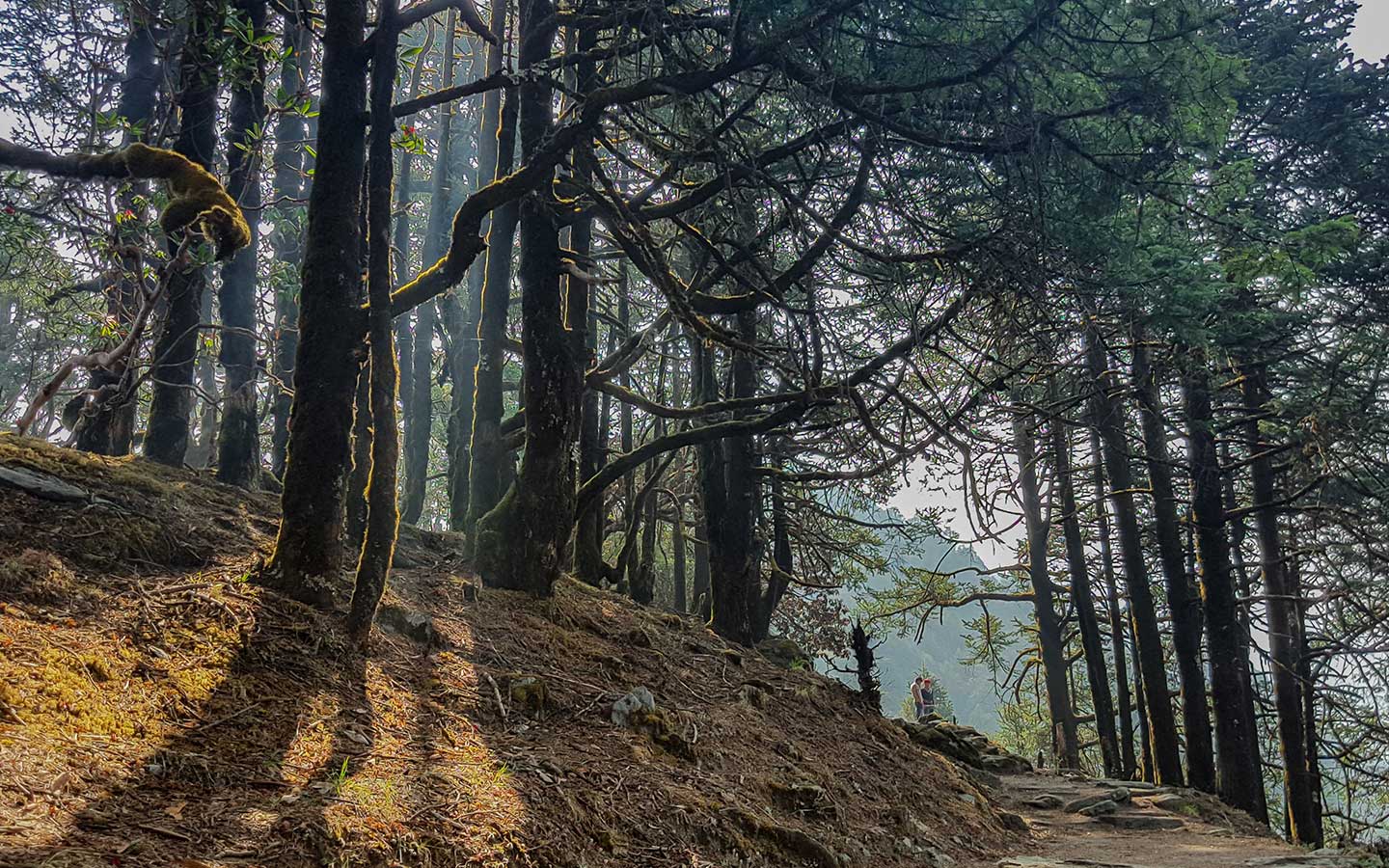
Rough terrain. The lower trail follows the Langtang Khola through forest, with stone steps, roots and loose rock. Higher up, the valley opens out and the walking gets easier, but the air gets thinner.
The drive. Getting to the trailhead takes most of a day on a rough mountain road. Since the 2026 floods, the road has reopened but is rougher than before, and the trek now starts a little higher up, around Syabru, instead of Syabrubesi. The exact start may change as the road improves, so check our Langtang Valley Trek page for the current plan.
How Hard Each Day Feels
| Day | Route | Walking time | Ends at | How it feels |
|---|---|---|---|---|
| 3 | Trailhead to Lama Hotel | 5 to 6 hrs | 2,380m | Steady climb through forest by the river |
| 4 | Lama Hotel to Langtang village | 5 to 6 hrs | 3,430m | Hard. The biggest climb, about 1,050m |
| 5 | Langtang village to Kyanjin Gompa | 3 to 4 hrs | 3,870m | Short but slow, you’ll feel the altitude |
| 6 | Kyanjin Ri hike and back | 4 to 5 hrs | 3,870m | Steep climb to 4,773m |
| 7 | Kyanjin Gompa to Lama Hotel | 6 to 7 hrs | 2,380m | Longest day, about 21km, mostly downhill |
| 8 | Lama Hotel to the road | 4 to 5 hrs | Drive out next day | Downhill on tired legs |
For the full plan, see our Langtang Valley trek itinerary.
The Hardest Days
Day 4: Lama Hotel to Langtang village. It’s 5 to 6 hours with about 1,050m of climbing, out of the forest and into the open upper valley. This is where most people first feel the altitude. Go slow.
Day 7: Kyanjin Gompa to Lama Hotel. It’s mostly downhill but long, about 21km and 6 to 7 hours. Your legs will feel it by the end. Trekking poles help a lot.
The optional Tserko Ri climb. If you choose Tserko Ri (4,984m) instead of Kyanjin Ri on your hiking day, expect a pre-dawn start and 6 to 7 hours on steep, rocky ground. It’s the hardest day on offer. Only do it if you feel strong and well acclimatised.
Altitude on the Langtang Trek
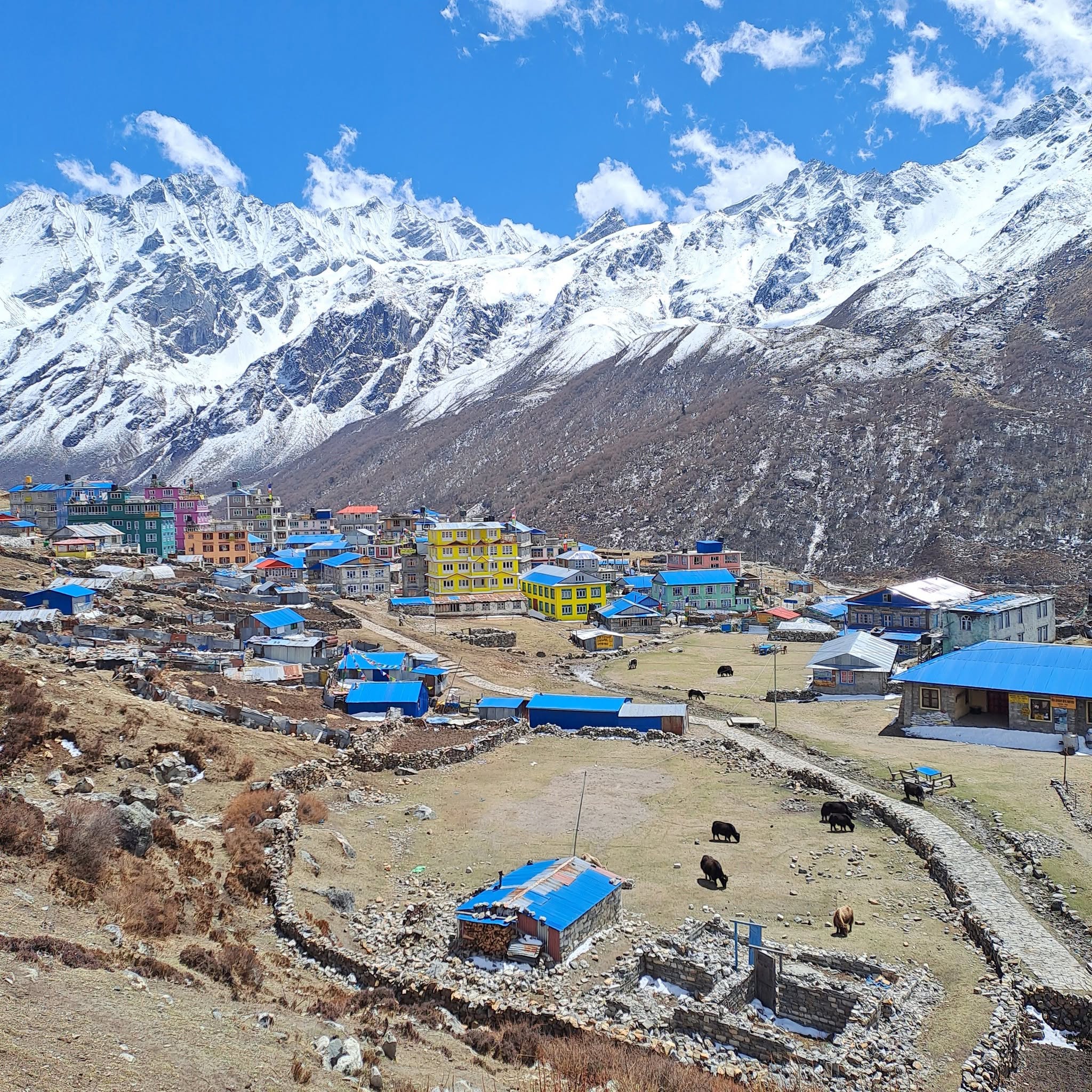
Langtang’s highest night is at 3,870m. That’s lower than Annapurna Base Camp (4,130m) and much lower than Everest Base Camp. But the quick climb from the forest means you still need to take altitude seriously.
Watch for headache, nausea, dizziness, unusual tiredness and poor sleep, and tell your guide straight away. Your guide carries an oximeter and knows the signs. Going down is the most reliable treatment. If symptoms get worse, descend straight away.
The hiking day at Kyanjin Gompa helps you adjust. You climb high and come back down to sleep, so don’t spend it resting. If you’re thinking about Diamox, talk to your doctor before you travel. See our guide to altitude sickness on Nepal treks.
Langtang Compared With Other Treks
| Trek | Highest point | Highest night | Our grade |
|---|---|---|---|
| Ghorepani Poon Hill | 3,210m | 2,860m | Moderate |
| Langtang Valley | 4,773m (Kyanjin Ri) | 3,870m | Level 3: Challenging |
| Mardi Himal | 4,500m (Base Camp) | 3,580m (High Camp) | Level 3: Challenging |
| Annapurna Base Camp | 4,130m | 4,130m | Level 3: Challenging |
| Everest Base Camp | 5,545m (Kala Patthar) | 5,164m | Level 4: Hard |
Langtang’s highest night is lower than ABC’s, but its day hikes go higher. It’s quieter than Everest and Annapurna, and it’s the closest big trek to Kathmandu, with no flight needed. See our guide to Langtang vs Annapurna Base Camp.
Can Beginners Do the Langtang Trek?
Yes. You don’t need any Himalayan experience. Many first-time trekkers choose Langtang, especially if they want a quieter trail close to Kathmandu.
You’ll find it easier if you walk regularly, are happy on uneven ground and can handle several long days in a row. Talk to us first if you have knee problems, because of the long descent, or any heart or lung condition. See our guide to the best treks in Nepal for beginners.
How to Train for Langtang
Start about two months before you go.
- Hills and stairs: for the steady climbs and the big Day 4 gain.
- Downhills: walk down steep hills or stairs to prepare for the long descent on Day 7.
- Cardio, 3 to 4 times a week: uphill walking, cycling, running or swimming.
- Practice hikes: a few 5 to 6 hour hikes with a light daypack, ideally on back-to-back days.
Our guide on how to train for Everest Base Camp has a fuller plan that works for Langtang too.
Difficulty by Season
- Autumn and spring (late September to November, March to May): the best seasons, with mostly dry trails and the easiest conditions.
- Winter (December to February): cold at Kyanjin Gompa, snow possible higher up, and some teahouses close. Possible, but harder.
- Monsoon (June to August): not recommended. Wet trails, leeches and landslide risk on the road and lower trail. See our guide to trekking in Nepal in the monsoon.
Road conditions also change through the year. We check the road and the trailhead before every departure.
How to Make Langtang Easier
- Use a porter. Our trek includes one porter for every two trekkers, so you only carry a daypack.
- Bring trekking poles. They take a lot of strain off your knees on the long descent.
- Go slow on Day 4. It’s the biggest climb, and pacing yourself helps with the altitude.
- Choose Kyanjin Ri over Tserko Ri if you’re unsure. You still get great views for much less effort.
- Only add Gosainkunda if you want more. It makes the trek longer and harder. See our Langtang, Gosainkunda and Helambu Trek.
For prices and what to budget, see our Langtang Valley trek cost guide.
Frequently Asked Questions
How difficult is the Langtang Valley trek?
Challenging, but doable for most fit people. It’s Level 3 of 5 on our scale. There’s no technical climbing and no high pass.
What is the hardest day on the Langtang trek?
The climb from Lama Hotel to Langtang village, with about 1,050m of gain. The optional Tserko Ri hike is harder still.
Is Langtang harder than Annapurna Base Camp?
They’re similar. ABC’s highest night is higher, at 4,130m, but Langtang climbs faster and its day hikes go higher, to 4,773m or more.
Can beginners do the Langtang Valley trek?
Yes. You don’t need trekking experience, but you should train for about two months.
Will I get altitude sickness on the Langtang trek?
Some people do, mostly between Lama Hotel and Langtang village. Walk slowly and tell your guide straight away if you feel unwell.
Is Kyanjin Ri or Tserko Ri harder?
Tserko Ri is much harder. It’s higher, at 4,984m, with a pre-dawn start and 6 to 7 hours on steep, rocky ground. Kyanjin Ri is the easier and more popular choice.
Where does the Langtang trek start now?
A little higher than before, around Syabru. It used to start at Syabrubesi. Since the 2026 floods the start point has moved up, and it may change again as the road improves. Check our trip page for the current plan.