Trekking in Nepal as a Mental Reset: What Actually Happens to You in the Mountains (2026)
Most people do not come to Nepal looking for a mental reset. It happens anyway. Usually somewhere between the third and fifth day, when the noise drops and something quieter replaces it.
Trekking in Nepal reduces stress, disrupts screen dependency, and forces a physical and mental slowdown that most wellness retreats cannot replicate. The benefits come from daily walking, altitude, simple food, and the absence of the usual inputs. Nothing is designed or scheduled. Most trekkers notice a real shift by day four or five.
This is not a wellness article about yoga or juice cleanses. It is an honest account of what actually happens to a person, physically and mentally, when they spend 7 to 14 days walking in the Himalayas.
Most people who book a Nepal trek are not trying to fix themselves. They want to see Everest. They want a physical challenge. They want to say they did it. The mental reset is a side effect, and that is exactly why it works.
There is a whole industry built around intentional wellness: retreats, programmes, apps, structured silence. Nepal trekking is none of those things. It is uncomfortable, unpredictable, and occasionally cold in ways you did not plan for. And somewhere inside that discomfort, usually around day four, something genuinely shifts. This guide explains what that shift is, why it happens, and which trails deliver it most effectively. If you want to browse trips first, the trip search tool covers the full range by duration and budget.
What “Reset” Actually Means on a Nepal Trek
Not spas. Not silence retreats. Not scheduled breathwork at sunrise.
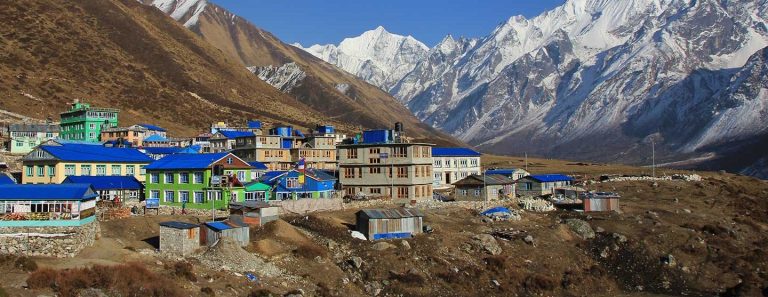
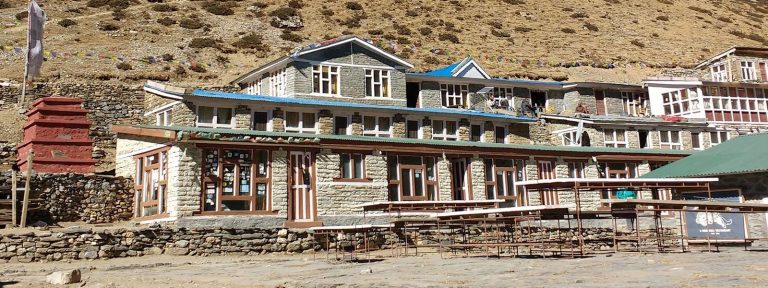
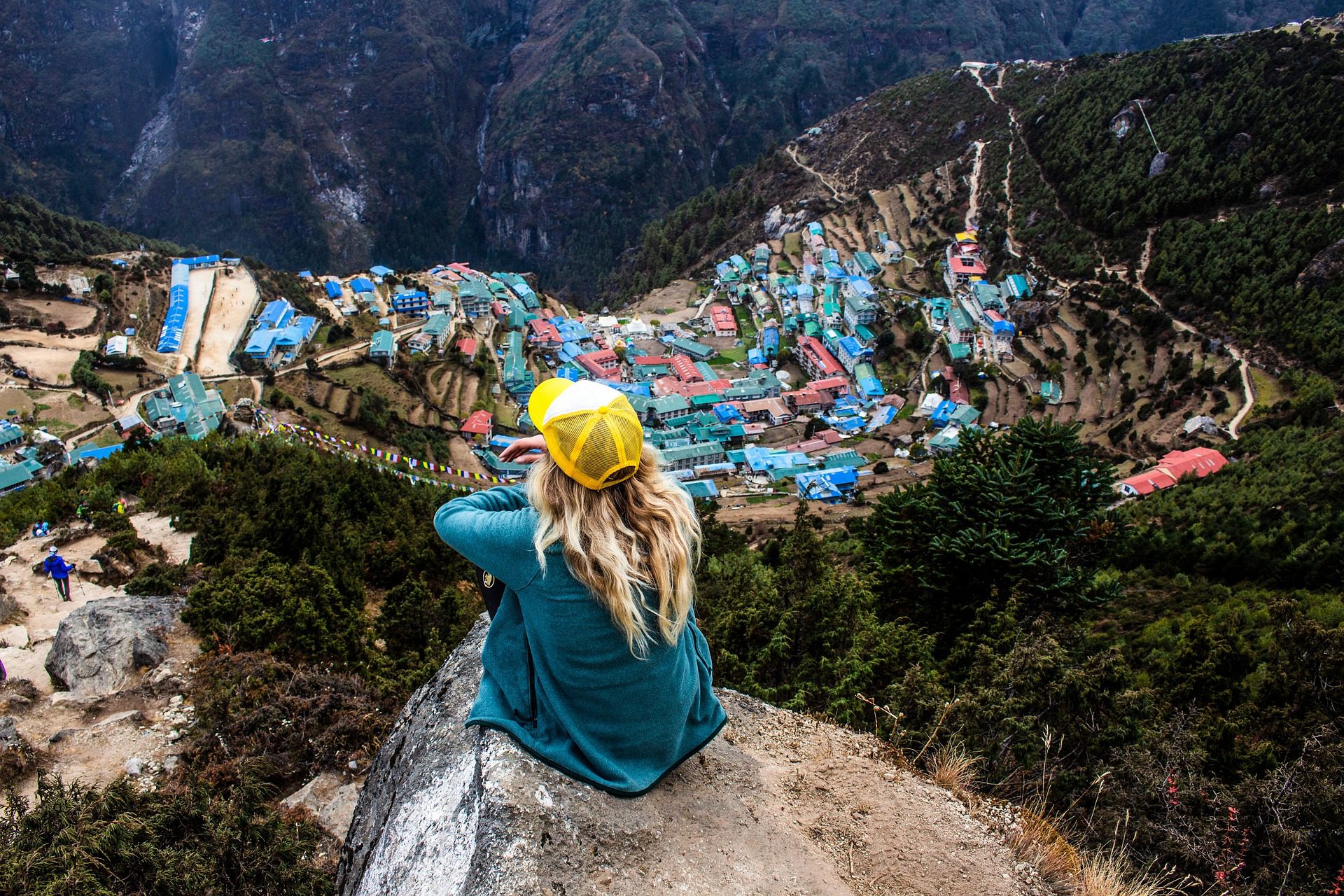
The ingredients are far more ordinary than that. You walk 5 to 6 hours a day on uneven terrain. You eat dal bhat and noodle soup. You sleep in a teahouse with thin walls and a 9pm bedtime because there is nothing else to do. Above 3,000m on most trails, phone signal disappears. The wi-fi, where it exists, is slow enough to stop you caring. Your charging cable matters more than your inbox.
By the second morning, you are already operating on a different schedule. One set by light and altitude and the pace of your feet rather than by notifications. That is not a minor adjustment. For most people arriving from a full-time professional life, it is a complete removal of the inputs their nervous system has been processing constantly for months.
The altitude plays a specific role. At 3,000m and above, your body works measurably harder at rest. Your resting heart rate rises. Sleep, especially in the first few nights at altitude, is lighter and more interrupted. This is not comfortable. But it forces your body into a different relationship with effort and rest, one that most people have not experienced since childhood. You are genuinely tired in the evening. Not stressed-and-wired tired. Physically tired, from using your body all day. It turns out to be a different thing entirely.
- 5 to 6 hours of daily walking on mountain terrain
- Limited or no phone signal above 3,000m on most trails
- Simple, repetitive food that resets appetite signals
- Early sleep and natural wake cycles set by daylight
- Dramatically reduced external input across every channel
The Daily Arc: What Actually Happens Over 7 to 14 Days
This is the part no wellness blog writes about honestly. The shift does not happen on day one. The first two days are often the most uncomfortable, and not because of the trail.
The Withdrawal Phase
Your mind tries to keep doing what it always does. You reach for your phone and there is no signal. You think about emails you cannot send. The silence feels loud. Some people find this irritating. That irritation is data. It tells you exactly how much bandwidth your normal life was consuming.
The Discomfort Peak
Your legs hurt. The altitude is noticeable. You are not sleeping as well as you expected. The trail is harder than the photos suggested. This is when the mental noise gets loudest, because there is nothing to distract you from it. This is also when proper acclimatisation matters most — if you are feeling more than the usual tiredness, read our guide to altitude sickness before you travel. Experienced trekkers recognise day four as the hinge point. Push through it and everything changes.
The Shift
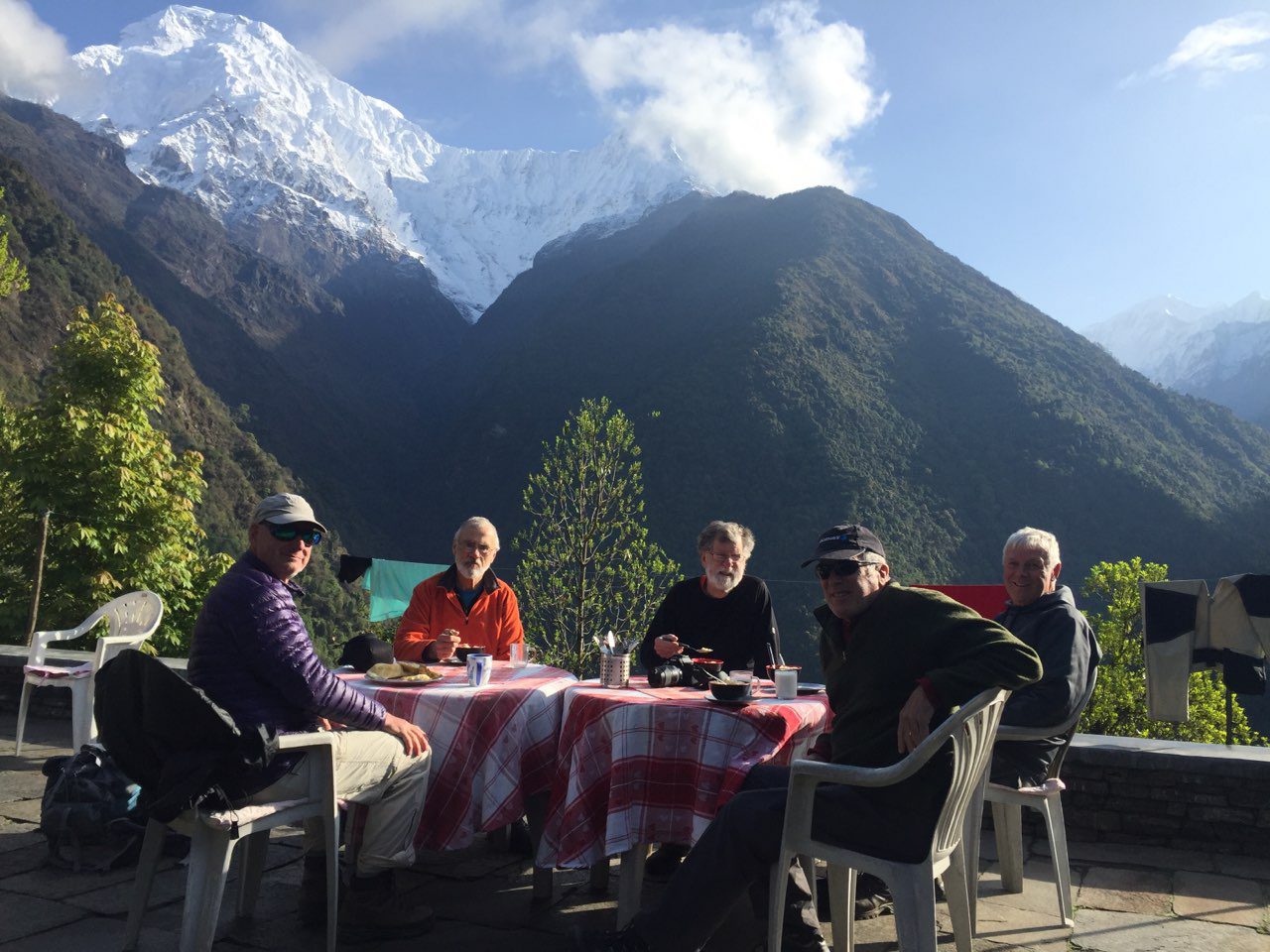
Appetite sharpens. Sleep deepens. Conversations at dinner last longer. You start noticing things: the colour of the light on the ridge at 6am, the sound of a river below the trail, the weight of nothing in your hands. The mental loop that runs constantly in your normal life goes quiet. You are not trying to relax anymore. You just are.
This is the point most trekkers remember. And the reason many of them come back.
This arc, withdrawal then discomfort then clarity, is not unique to Nepal. But the Himalayas accelerate it. The altitude, the physical demand, the complete removal of screen input, and the scale of the landscape work together in a way that a long walk in a national park near home does not replicate. There is something about being genuinely small in a genuinely large space that the mind responds to in ways that are difficult to engineer by other means.

Why Trekking Works Better Than a Retreat
A yoga retreat is passive. You arrive, someone else designs your schedule, and you follow it. The environment is controlled, the food is curated, the outcomes are implied. It can be excellent. But it requires a kind of surrender that not everyone finds natural, and the reset, when it happens, is often fragile. The world comes back hard the moment you land.
Trekking is cumulative. Every day you earn the distance. The terrain does not accommodate your pace. Your pace accommodates the terrain. There is no facilitator, no programme, no schedule telling you when to feel something. What happens, happens because your body and mind did the work to get there.
Wellness Retreat
- Structured and scheduled
- Passive — someone else designs the experience
- Controlled environment
- Reset is curated and contained
- Can feel fragile on re-entry
Nepal Trek
- Unstructured — the trail sets the pace
- Active — you earn every metre
- Genuinely unpredictable
- Reset comes from within, not from design
- Tends to stick longer after you return
The research on nature and mental health is consistent. Time in natural environments reduces cortisol, lowers rumination, and improves attention. What the research does not fully capture is the compounding effect of seven or more consecutive days: the way the benefit builds rather than fades. A single day in a park is restorative. Ten days in the Himalayas at altitude, walking six hours a day, is a different category of experience entirely.
The Digital Detox That Happens Without Trying
Nobody markets Nepal trekking as a digital detox. It just is one, because above 3,000m on most trails, the infrastructure does not support anything else.
What changes above 3,000m
The phone becomes a camera. That is it. You are not checking it for validation or distraction. You are using it to record something in front of you that you want to remember. The shift in how you relate to the device is subtle but real, and most trekkers notice it somewhere around day three without being able to name exactly what changed.
What has changed is this: the device stopped being the most interesting thing in the environment. The mountain is more interesting. The trail is more interesting. The conversation at dinner is more interesting. When that reordering happens, the compulsive checking stops. Not through willpower, but through irrelevance.
The Physical Benefits That Produce the Mental Ones
The mental shift does not happen in isolation. It rides on the back of what the body is doing, and the body is doing a lot. Most trekkers burn between 3,000 and 4,500 calories per day on the trail depending on terrain and altitude, which is roughly double a typical office day. That level of physical output produces effects that are hard to replicate by other means.
The Part Nobody Writes About: Coming Back
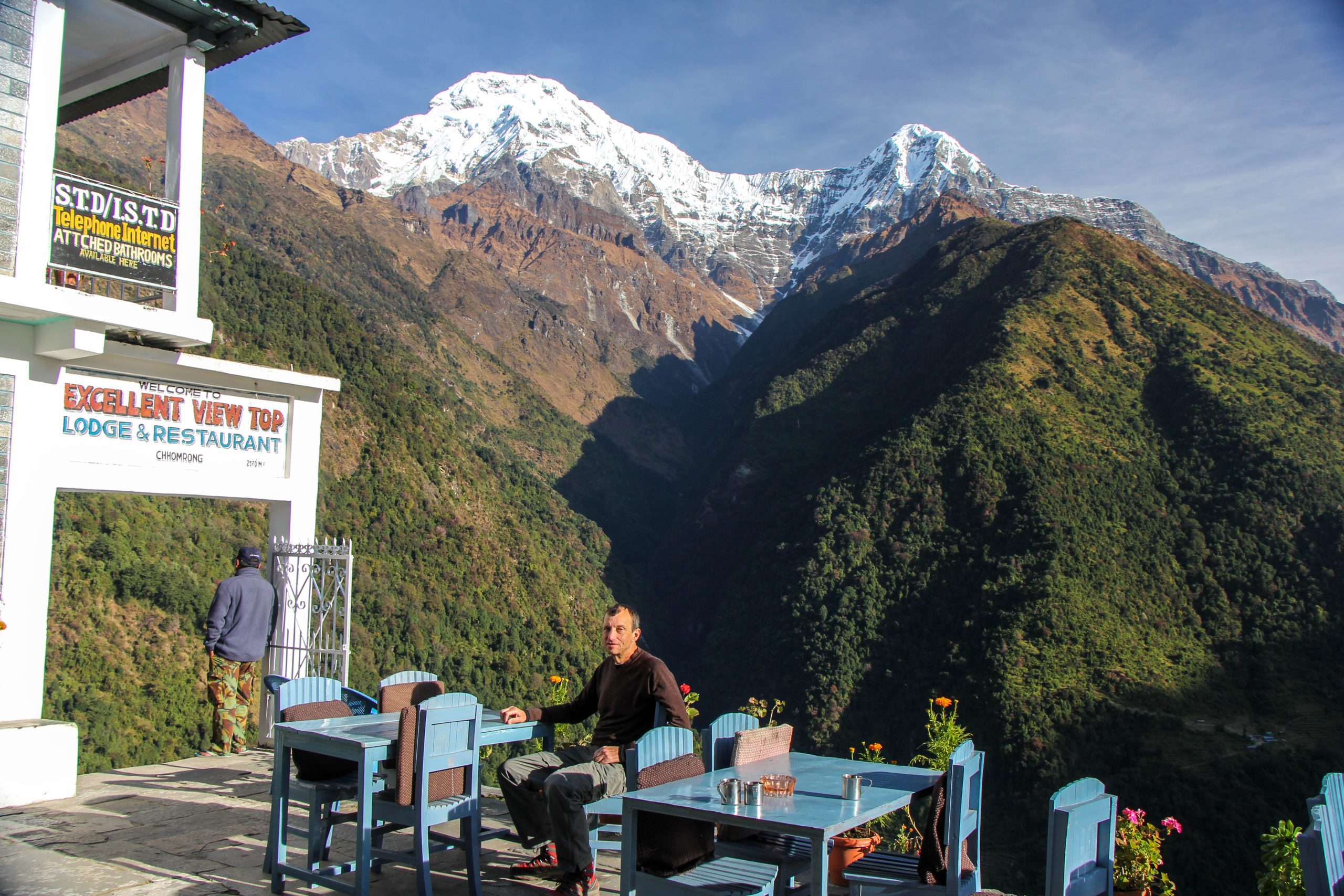
The last morning on the trail is its own kind of experience. You know the drive back to Kathmandu starts today. The airport is tomorrow. Your inbox is filling. The mountain that was in front of you yesterday is already behind you.
Most trekkers land home with two or three weeks of something different in them. A lower threshold for quiet. A higher tolerance for discomfort. A residual sense of proportion that makes the small stresses feel temporarily small. That window closes. Life reasserts itself. But the memory of what quiet felt like stays accessible in a way it was not before, and for many trekkers, that is enough to make them start planning the next one.
If you are weighing up whether to commit 14 days to Everest Base Camp or work within a tighter window, our guide to the best short treks in Nepal is built specifically for people with real annual leave constraints.
Which Trek for Which Kind of Reset
Not all treks produce the same experience. The terrain, altitude, crowd level, and cultural environment all shape what happens mentally. Here is how we match them to different people and needs.
Is It for Everyone? An Honest Answer
No. And pretending otherwise would be the most damaging thing this article could do.
Nepal trekking is physically demanding. The teahouses are not hotels. The food is good but not varied. The cold at altitude is real. Even in October and March, nights above 3,000m require a sleeping bag rated to at least -5 degrees and layers you actually packed. There will be days when the trail is harder than expected and the weather is worse than the photos suggested.
Before you book, be honest with yourself about a few things:
- Can you walk 5 to 6 hours a day on uneven terrain for 7 to 10 consecutive days?
- Are you comfortable with thin walls, shared bathrooms, and no room service?
- Do you have 6 to 8 weeks before departure to build some base fitness?
- Have you read about altitude sickness and what it means for your pace on the trail?
- Does your travel insurance cover helicopter evacuation at altitude?
If the honest answer to most of those is yes, you are probably ready. The mental reset does not require extreme fitness. It requires showing up consistently over several days. That is a different bar than most people assume from the outside, and it is lower than it sounds.
For gear specifics, the Nepal trekking packing list covers everything you actually need, and more importantly, what you do not.
Ready to plan your reset?
Our team in Kathmandu, Australia, the USA, and Europe can help you match the right trek to your dates, fitness level, and what you are actually looking for. No pitch, no pressure, just practical advice from people who have walked these trails.
Browse All Nepal Treks Talk to the TeamFrequently Asked Questions
Is trekking in Nepal good for mental health?
Yes, and the evidence is consistent. Sustained time in natural environments reduces cortisol, lowers rumination, and improves attentional capacity. Nepal trekking compounds these effects through altitude, physical demand, digital disconnection, and consecutive days away from the inputs that drive chronic stress. Most trekkers report a measurable improvement in mood and mental clarity by day five. The effect is not permanent, but it is real.
Can a Nepal trek help with burnout?
It can contribute significantly, though it is not a cure. Burnout has structural causes that a trek does not remove. What it does provide is a genuine break from the environment that is producing the burnout, enough distance to gain perspective, and a reset of sleep, appetite, and physical rhythm that tends to make the return more manageable. Many people find that decisions they could not make before the trek become clearer on the trail. Whether they act on them is up to them.
Is Nepal good for a digital detox?
Structurally, yes. Above 3,000m on most trails, mobile signal is absent and wi-fi is slow enough to be effectively useless. The detox happens without willpower because the environment does not support the habit. By day three most trekkers have stopped reaching for their phone and started using it exclusively as a camera. That shift tends to persist for a few weeks after returning home.
Do I need to be fit to benefit mentally from trekking?
You need enough fitness to reach day five without being in constant pain. Below that threshold, the experience is dominated by physical struggle rather than mental space. Six to eight weeks of consistent cardio preparation makes a significant difference, not because the trail requires peak fitness, but because comfortable physical effort is what frees the mind to do the rest. If you are unsure about your fitness level, the short treks guide covers the entry-level options honestly.
What is the best short trek in Nepal for a mental reset?
For solitude and the deepest disconnection: Pikey Peak or Langtang Valley. For the ridge experience that produces the most reliable day-five shift: Mardi Himal. For a first-time trekker testing the waters: Ghorepani Poon Hill. All four fit inside 10 days from Kathmandu. The full comparison is in the short treks guide.
How long does the mental benefit last after a Nepal trek?
Most trekkers report two to four weeks of noticeably lower baseline stress after returning. The sleep improvements tend to fade first as normal schedules reassert. The perspective, the sense of proportion around everyday stresses, tends to last longer, particularly for trekkers who crossed the day-four threshold and experienced the shift properly. Annual trekkers consistently describe the effect as cumulative across multiple trips.
Further Reading
- 5 Best Short Treks in Nepal (5 to 10 Days) for 2026
- Mardi Himal Trek: The Annapurna View Most People Never See
- Pikey Peak Trek: Sir Edmund Hillary’s Favourite Everest View
- Off the Beaten Path Treks in Nepal: 5 Routes Worth Knowing
- Altitude Sickness on Nepal Treks: Symptoms, Prevention and What to Do
- Travel Insurance for Nepal: What Your Policy Must Cover
- Nepal Trekking Packing List 2026: What You Actually Need