EBC vs Gokyo: Which Trek Is Right for You?
First time in the Khumbu? Choose EBC for the iconic Everest experience. Done EBC before or want fewer crowds? Choose Gokyo for the lakes, the wider panorama, and a noticeably quieter trail.
Both start from Lukla, both are non-technical, and both reach above 5,300m. They split after Namche and from that point deliver genuinely different experiences. EBC starts from USD 1,020. Gokyo starts from USD 1,010. The full Three Passes itinerary crosses Renjo La, Cho La and Kongma La and can combine both routes in roughly 18 to 20 days depending on the itinerary.
EBC vs Gokyo: Quick Facts
- EBC duration: 14 days Lukla to Lukla
- Gokyo duration: 12 to 14 days Lukla to Lukla
- EBC highest point: Kala Patthar at 5,545m
- Gokyo highest point: Gokyo Ri at 5,357m
- EBC package from: USD 1,020 per person (MountainKick)
- Gokyo package from: USD 1,275 per person (MountainKick)
- EBC crowd level: High in October, November, and April
- Gokyo crowd level: Generally quieter, especially after the routes split above Namche
- Combined route: EBC via Gokyo Three Passes — roughly 18 to 20 days
- Both treks: Same permits, same Lukla flight logistics, non-technical
Both treks start from Lukla, both climb into the Khumbu, and both top out above 5,300m. On a map they look almost identical for the first five days. But from Namche they split, and the experience from that point is genuinely different. This is not a case where one trek is clearly better and the other is second best. They appeal to different people for different reasons, and the right answer depends on what you actually want from three weeks in the Himalayas.
EBC vs Gokyo: At a Glance
| Factor | EBC Trek | Gokyo Trek |
|---|---|---|
| Duration | 14 days Lukla to Lukla | 12 to 14 days Lukla to Lukla |
| Highest point | Kala Patthar at 5,545m | Gokyo Ri at 5,357m |
| Main draw | Everest Base Camp and Kala Patthar views | Gokyo Lakes and 360-degree Gokyo Ri panorama |
| Crowd level | High in peak season | Generally quieter |
| Technical difficulty | Non-technical, high effort | Non-technical, similar effort |
| Can be combined | Yes — via Three Passes route | Yes — same combination applies |
| Price from MountainKick | From USD 1,020 per person | From USD 1,275 per person |
The Route Difference
Both treks follow the same path from Lukla to Namche Bazaar — through Phakding, across the Dudh Koshi River on suspension bridges, arriving in Namche after two days. This section is identical regardless of which trek you choose.
After Namche the routes split completely. The EBC route continues east up the main Khumbu valley through Tengboche, Dingboche, Lobuche, and Gorak Shep to Base Camp, with Kala Patthar as the summit point. The objective is clear from day one: you are heading toward Everest.
The Gokyo route branches northwest from Namche into the Dudh Koshi valley, passing through Dole, Machhermo, and a quieter series of villages before reaching the Gokyo Lakes at around 4,750m. The route feels less driven by a single destination and more like a journey through a less-visited corner of the Khumbu. Gokyo Ri is the high point, reached on a steep morning climb from the Gokyo village teahouses.
Views: Kala Patthar vs Gokyo Ri
Kala Patthar at 5,545m sits directly above the Khumbu Glacier with an unobstructed view of Everest’s south face. The Khumbu Icefall is visible below, the Base Camp moraine stretches out in front, and on a clear morning the summit pyramid of Everest is lit in the first light with nothing between you and it. It is the most famous Everest viewpoint in Nepal and the reputation is earned. What it does not give you is width. You are close to Everest but the surrounding peaks are behind and beside you rather than arranged in a panorama below.
Gokyo Ri at 5,357m gives something different. From the summit you can see Everest, Lhotse, Makalu, Cho Oyu, and the full sweep of the Ngozumpa Glacier 800 metres below you. The Ngozumpa is the largest glacier in Nepal and the scale of it from Gokyo Ri is genuinely striking. The Gokyo Lakes are visible beneath you, turquoise against the grey moraine. Trekkers who have done both routes tend to split on which view is better, but many are surprised to find Gokyo Ri matches or exceeds Kala Patthar. The difference is close-up drama on EBC versus wide-angle scale on Gokyo.
Crowds and Trail Experience
The EBC trail above Namche is one of the busiest trekking routes in the world during peak season. In October and November, the trail between Namche and Tengboche carries heavy trekker traffic, and teahouses in the upper villages can fill up during the busiest weeks. The trail can feel congested on peak days.
Gokyo is generally quieter than the main EBC trail, especially after the routes split above Namche. The landscape feels more remote even though the altitude and terrain are comparable. If the idea of sharing the trail with large guided groups bothers you, Gokyo is the better fit.
Both treks share the Lukla to Namche section, which sees the combined traffic of every Khumbu-bound trekker regardless of destination. The crowd difference only becomes pronounced after the Namche split.
Cost Comparison
MountainKick’s EBC trek starts from USD 1,020 per person, and the Gokyo Valley trek starts from USD 1,275. Gokyo is priced slightly higher on MountainKick because the route and logistics differ from the standard EBC itinerary.
Both packages include Lukla flights, permits, a licensed guide, porter, and teahouse accommodation throughout. Both require the Sagarmatha National Park entry permit and the Khumbu Pasang Lhamu Rural Municipality permit — no meaningful permit cost difference between the two. See our Nepal trekking permits guide for the full 2026 breakdown.
Food and extras can cost more at higher elevations on either route. Prices vary by teahouse and season. See our EBC cost guide for the full EBC cost breakdown.
Acclimatisation and Altitude
Both routes include acclimatisation rest days and neither is safe to rush. On the EBC route, standard acclimatisation includes a rest day in Namche Bazaar at 3,440m on day four and a second day in Dingboche at 4,360m around day eight or nine. These are not optional.
The two routes have different altitude profiles. Gokyo reaches Gokyo at around 4,750m, while the EBC route continues to higher overnight elevations near Gorak Shep. Both require proper acclimatisation and neither should be rushed.
Altitude sickness symptoms to watch on either route include persistent headache, nausea, loss of appetite, fatigue beyond what the day’s walking explains, and dizziness. Do not ascend if symptoms are present. Descend immediately if symptoms worsen. Read our altitude sickness guide before either trek.
The Gokyo Lakes
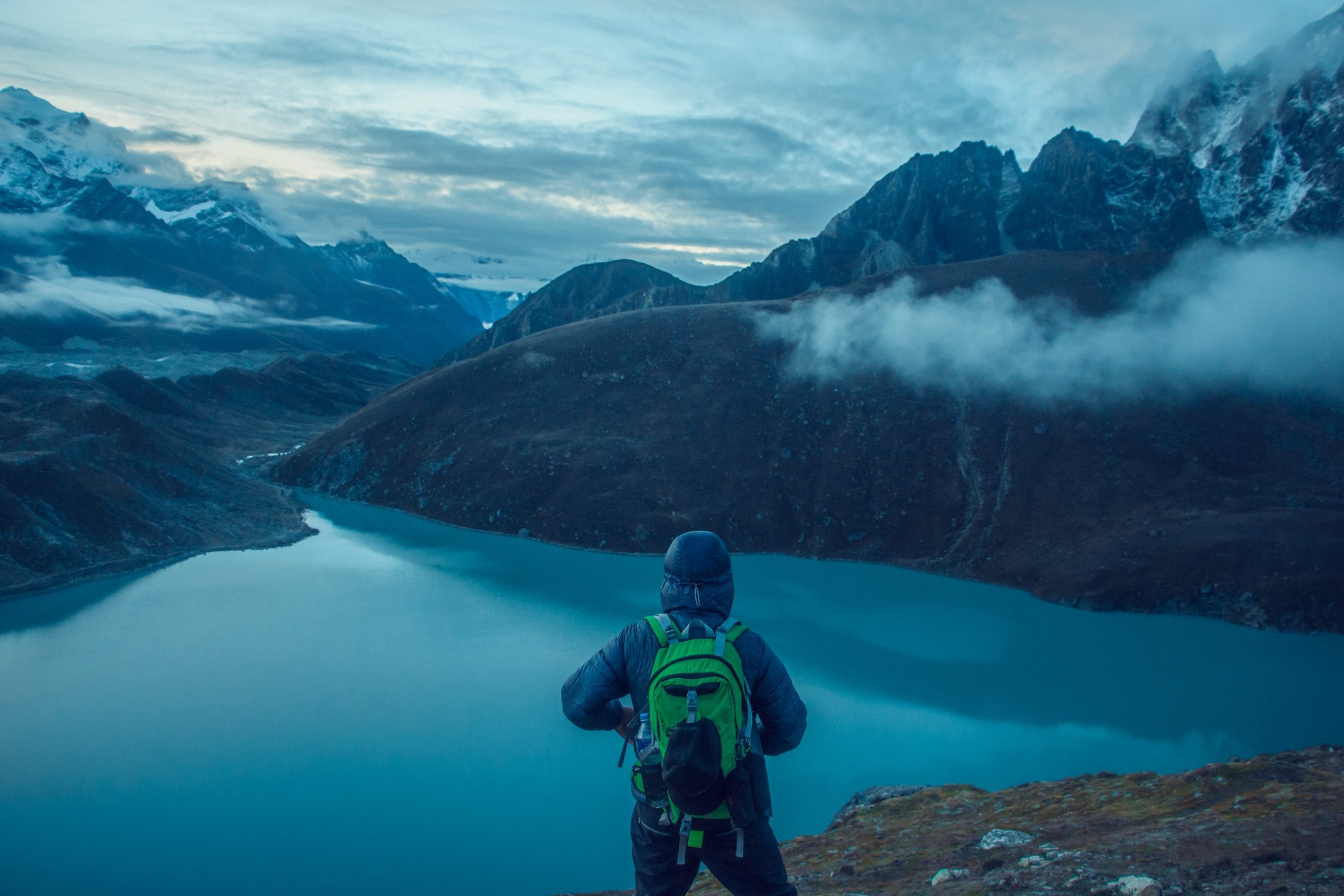
The Gokyo route passes through a series of glacial lakes on the approach to the village: Longponga, Taujung, Dudh Pokhari, Thonak, and Ngozumpa. The lakes sit at around 4,700 to 4,800m with the Ngozumpa Glacier as a backdrop and the surrounding peaks reflected in the water on still mornings.
EBC has no equivalent. The Khumbu Glacier is visually dramatic but it is rock and ice rather than open water, and you approach it at the end of the trek rather than as a feature of the middle days. If landscape variety through the trek matters to you, Gokyo has a clear advantage here.
Combining Both: EBC via Gokyo Three Passes
The most complete Khumbu experience is the EBC via Gokyo route, which links both valleys by crossing two or three high passes. The full Three Passes itinerary crosses Renjo La at 5,360m, Cho La at 5,420m, and Kongma La at 5,535m, and can combine Gokyo with EBC in roughly 18 to 20 days depending on the itinerary. It is best suited to trekkers who have done at least one prior high-altitude trek.
The Cho La crossing is the most demanding section. At 5,420m with a glaciated upper approach, it requires an early start and the descent on the far side is steep and can be icy. It is not technical in the mountaineering sense but it is a serious day. Most trekkers who do the combined route consider it the best version of the Khumbu experience available.
Which Trek Should You Choose?
Either way, you are not choosing between a good trek and a better one. You are choosing between two genuinely different experiences that happen to share the same starting point and the same extraordinary setting. If you have done EBC and are wondering what to do next, read our guide on what to trek after Everest Base Camp.
Frequently Asked Questions
Is EBC harder than Gokyo?
They are comparable in overall difficulty. EBC spends more consecutive days above 4,500m and the section from Lobuche to Gorak Shep is exposed and cold. Gokyo Ri involves a steep ascent on summit day from a lower starting point. EBC has a slight edge in total elevation gain and time at extreme altitude, but not enough to be the deciding factor for most trekkers. If you’re preparing for EBC, see our guide to training for Everest Base Camp for a practical 8 to 12 week plan.
Which trek has better views, EBC or Gokyo?
Different in character rather than one being superior. Kala Patthar gives a close-up view of Everest’s south face unlike anything else in Nepal. Gokyo Ri gives a wider panorama including Everest, Cho Oyu, Lhotse, Makalu, and the full Ngozumpa Glacier. Trekkers who have done both split fairly evenly. For the defining Everest close-up, EBC. For wide-angle scale across multiple giants, Gokyo.
Can I do both EBC and Gokyo in one trip?
Yes, via the EBC via Gokyo Three Passes route. It links both valleys by crossing Renjo La, Cho La, and Kongma La, and takes roughly 18 to 20 days depending on the itinerary. Best suited to trekkers with prior high-altitude experience. The views and terrain variety make it the most complete Khumbu experience available.
Which trek is less crowded?
Gokyo is generally quieter than EBC above Namche. During peak October and November, the EBC trail sees heavier traffic and teahouses in the upper villages can fill up during the busiest weeks. The Gokyo valley sees noticeably less traffic. If avoiding crowds is a priority, Gokyo is the better choice.
Is Gokyo better for acclimatisation?
The two routes have different altitude profiles. Gokyo reaches Gokyo village at around 4,750m, while the EBC route continues to higher overnight elevations near Gorak Shep at 5,164m. Both require proper acclimatisation and neither should be rushed, but the difference in overnight altitude is worth knowing if you have a history of altitude sensitivity.
Which trek is better for photography?
Gokyo offers more compositional variety throughout. Turquoise lakes, the Ngozumpa Glacier from above, the wide panorama from Gokyo Ri, and quieter village scenes. EBC offers the most iconic single photograph in Nepal trekking — Everest from Kala Patthar at sunrise. For variety through the trek choose Gokyo. For that one defining shot choose EBC.
How much does the Gokyo trek cost compared to EBC?
Gokyo is priced higher on MountainKick. The Gokyo Valley trek starts from USD 1,275 per person and EBC starts from USD 1,020. Both are all-inclusive packages covering Lukla flights, permits, guide, porter, and teahouse accommodation. Gokyo is priced higher because the route and logistics differ from the standard EBC itinerary.
What is the best time of year for both treks?
October and November are the most reliable months for both routes. The post-monsoon window delivers clear skies, stable weather, and dry trails. March and April are the second-best window. Both routes are difficult during monsoon months of June through August and cold but possible in winter from December through February for experienced trekkers prepared for extreme temperatures.
Not sure which one is right for you?
Tell us your experience level, available time, and what matters most to you. We will give you an honest recommendation within a few hours.
WhatsApp: +977 985 118 2718
or use our enquiry form.
Further Reading
- Everest Base Camp Trek Cost 2026: The Complete Breakdown
- Annapurna Circuit vs EBC: Which Trek Should You Do?
- Done EBC? Here is What to Trek Next in Nepal
- Pikey Peak Trek: Sir Edmund Hillary’s Favourite Everest View
- Lukla Flight via Ramechhap 2026: The Complete Guide
- Lukla Flight Delays: What Actually Happens and How to Handle It
- Nepal Trekking Permits 2026: Costs, Rules and What’s Changed
- Travel Insurance for Nepal: What Your Policy Must Cover
- Altitude Sickness on Nepal Treks: Symptoms, Prevention and What to Do