Quick answer: Choose Poon Hill for your first Himalayan trek, lower altitude, strong trail infrastructure, and a sunrise panorama that earns its reputation. Choose Mardi Himal if you want higher altitude (4,500m), a route that walks above the clouds rather than through the valleys below them, and a generally quieter trail. Both are worth doing. They suit very different trekkers.
Most articles on this topic hedge until the answer disappears. The honest version is more specific: the choice between Poon Hill and Mardi Himal comes down to three things, how much altitude you want, whether solitude or infrastructure matters more to you, and what kind of mountain view you are actually after. Knowing those three things makes this decision straightforward.
We guide both routes regularly from Pokhara. Here is how they actually differ on the trail.
Poon Hill vs Mardi Himal Trek: At a Glance
| Ghorepani Poon Hill | Mardi Himal Base Camp | |
|---|---|---|
| Duration | 9 days | 10 days |
| Max altitude | 3,210m / 10,535ft | 4,500m / 14,764ft |
| Price (MountainKick) | From $440* | From $520* |
| Difficulty | Easy to moderate | Moderate to challenging |
| Crowds | High, very popular | Generally quieter |
| Mountain views | Wide sunrise panorama | Ridge-level, above the clouds |
| Fishtail (Machapuchare) | Distant backdrop | Dominant presence on the upper ridge |
| Trail character | Forest, stone stairs, villages | Forest, then exposed alpine ridge |
| Cultural highlights | Gurung villages, rhododendron forest | Gurung villages, high meadows |
| Best season | Autumn and spring | Autumn and spring |
| Best for | First-timers, families, mixed groups | Fit trekkers, photographers, repeat visitors |
*Lowest group rate (4 to 9 people). Groups of 2 to 3 pay $550 for Poon Hill and $615 for Mardi Himal. Solo rates are higher.
Poon Hill: What the Trek Is Really Like

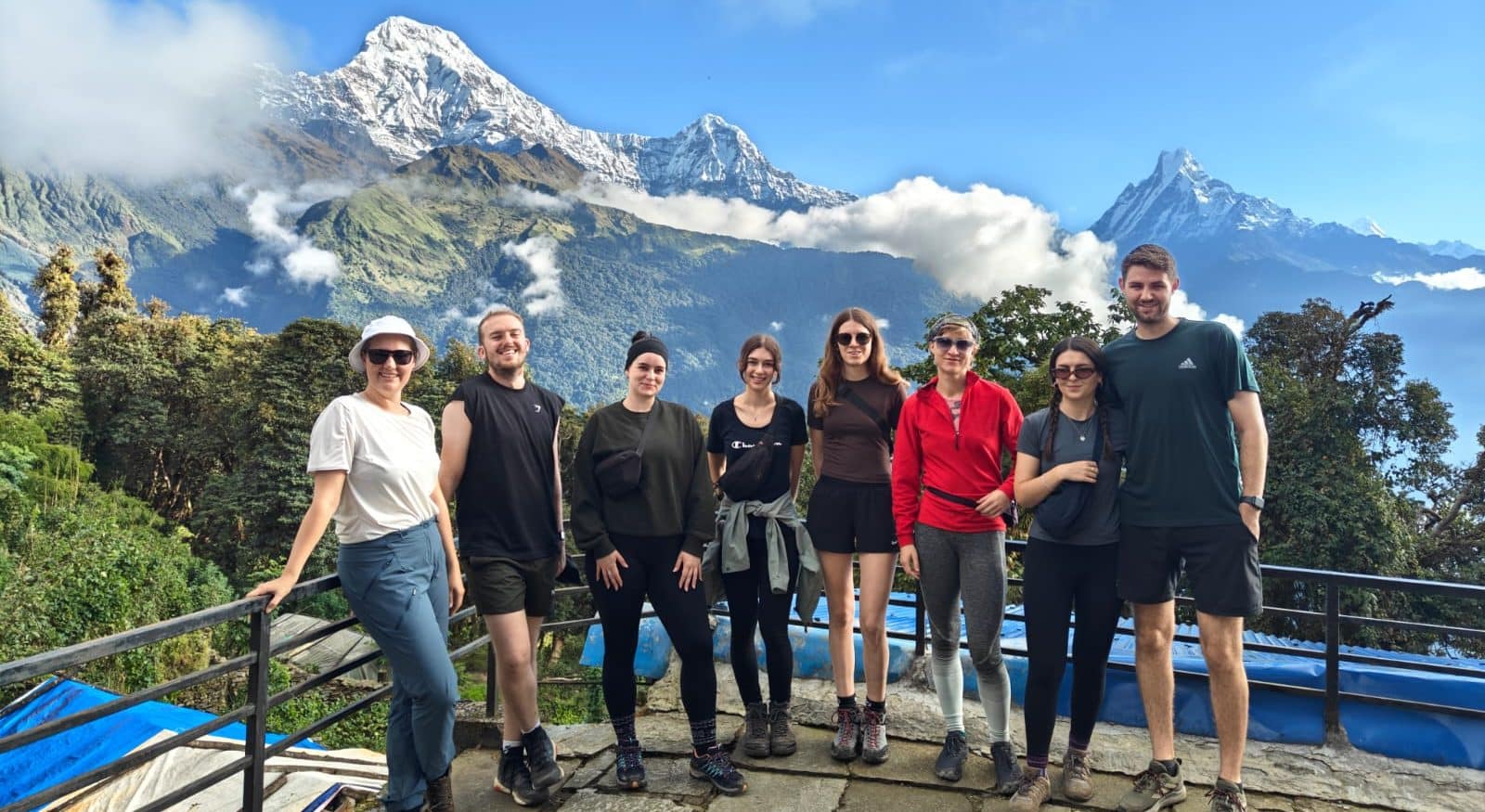
The Ghorepani Poon Hill Trek has been one of Nepal’s best-known short treks for decades, and it has earned that position genuinely. The 4:30am climb to the 3,210m viewpoint delivers a 360-degree spread of Dhaulagiri (8,167m), Annapurna South, and Machapuchare catching the first light of the day. On a clear October or November morning, the colour on those peaks is something photographs consistently fail to capture.
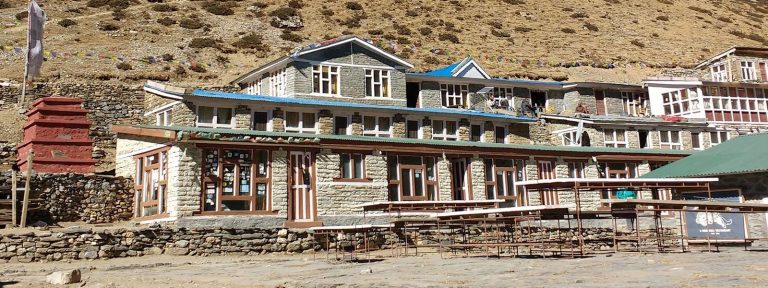
Getting there takes you through thick rhododendron forest, deep red and pink from March through May, and past traditional Gurung villages including Ulleri, Ghorepani, and Ghandruk, where the teahouses have been feeding trekkers for generations. The climb to Ulleri on day two is the physically demanding section, a sustained stone staircase that slows most people the first time. After that the trail settles into a manageable daily rhythm.
At 3,210m, Poon Hill is considerably lower than high-altitude routes such as Mardi Himal, EBC and the Annapurna Circuit. Altitude problems are generally less of a concern, although anyone can experience altitude-related symptoms. Daily hiking runs four to six hours at a pace most fit people find comfortable. There is nothing technical, no exposure, no scrambling. The trail is clear, well-staffed, and logical from start to finish. For a first Himalayan trek, that combination of genuine mountain scenery and manageable conditions is hard to beat.
The honest trade-off is the crowds. During peak season the viewpoint at sunrise fills with trekkers, the teahouses at Ghorepani book up fast, and the trail to Ulleri is a continuous procession. That does not ruin the trek, but if you arrive expecting a quiet mountain experience, the reality will surprise you.
Mardi Himal: What the Trek Is Really Like
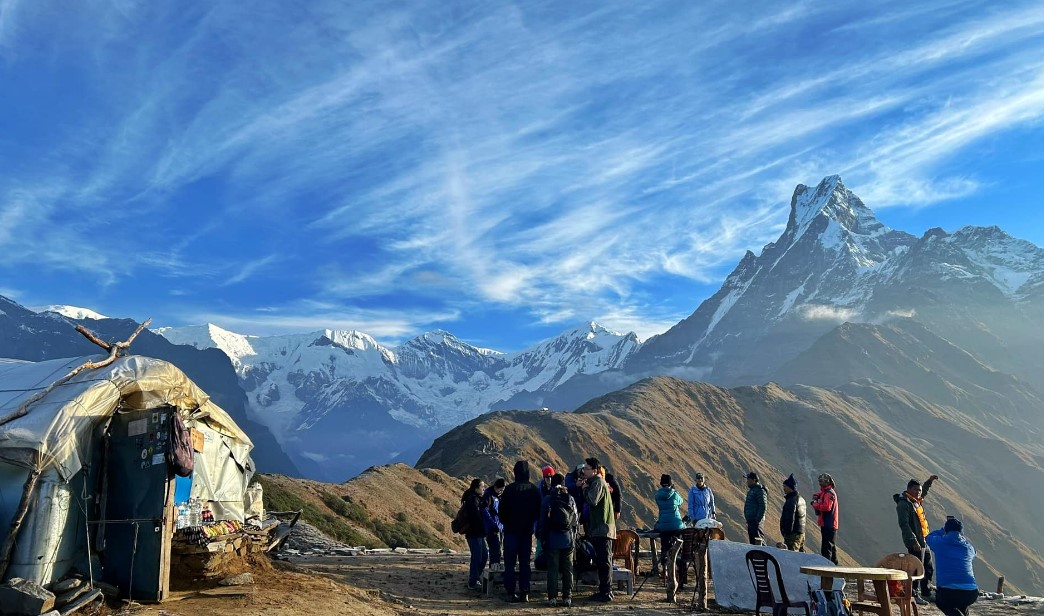
The Mardi Himal route developed much later than the classic Annapurna trails, and many trekkers outside Nepal have still never heard of it. That remains its defining quality and its biggest advantage.
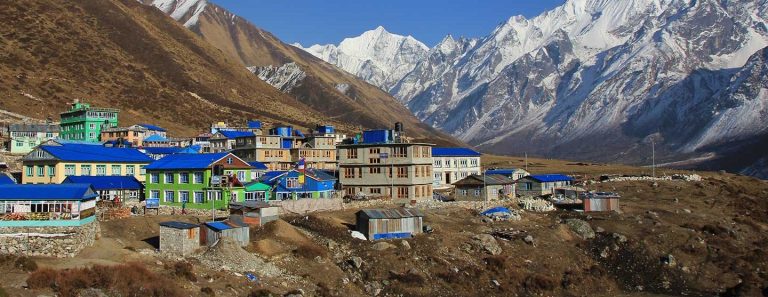
The first two days from Kande feel similar to Poon Hill in character: forest trails through Australian Camp and Pothana with steady altitude gain. Then the route reaches Low Camp at 2,970m and the nature of the trek shifts. From Low Camp upward, the trail runs along a narrow alpine ridgeline with the Modi Khola valley falling away on one side and the Mardi Himal massif rising on the other. On clear mornings you are walking above the cloud layer, not below it. That single difference in perspective, being on top of the weather rather than inside it, is something no valley route in the Annapurna region can offer.
Machapuchare (Fishtail, 6,993m) becomes a dominant presence on the upper ridge, with much closer views than you get from Poon Hill. The route gives you an unusually close perspective of Machapuchare compared with the classic Poon Hill approach. It has never been climbed and remains one of the most striking peaks in the Himalayas partly because of that.
The push to Mardi Himal Base Camp at around 4,500m starts early in the morning from High Camp. The round trip takes four to five hours. The terrain above the treeline is rocky, the gradient is steep, and the altitude is genuinely felt. In return you get a wide mountain panorama and a much quieter experience than on Poon Hill.
For a deeper look at the day-by-day route, read our full Mardi Himal trek guide.
Difficulty: The Honest Comparison
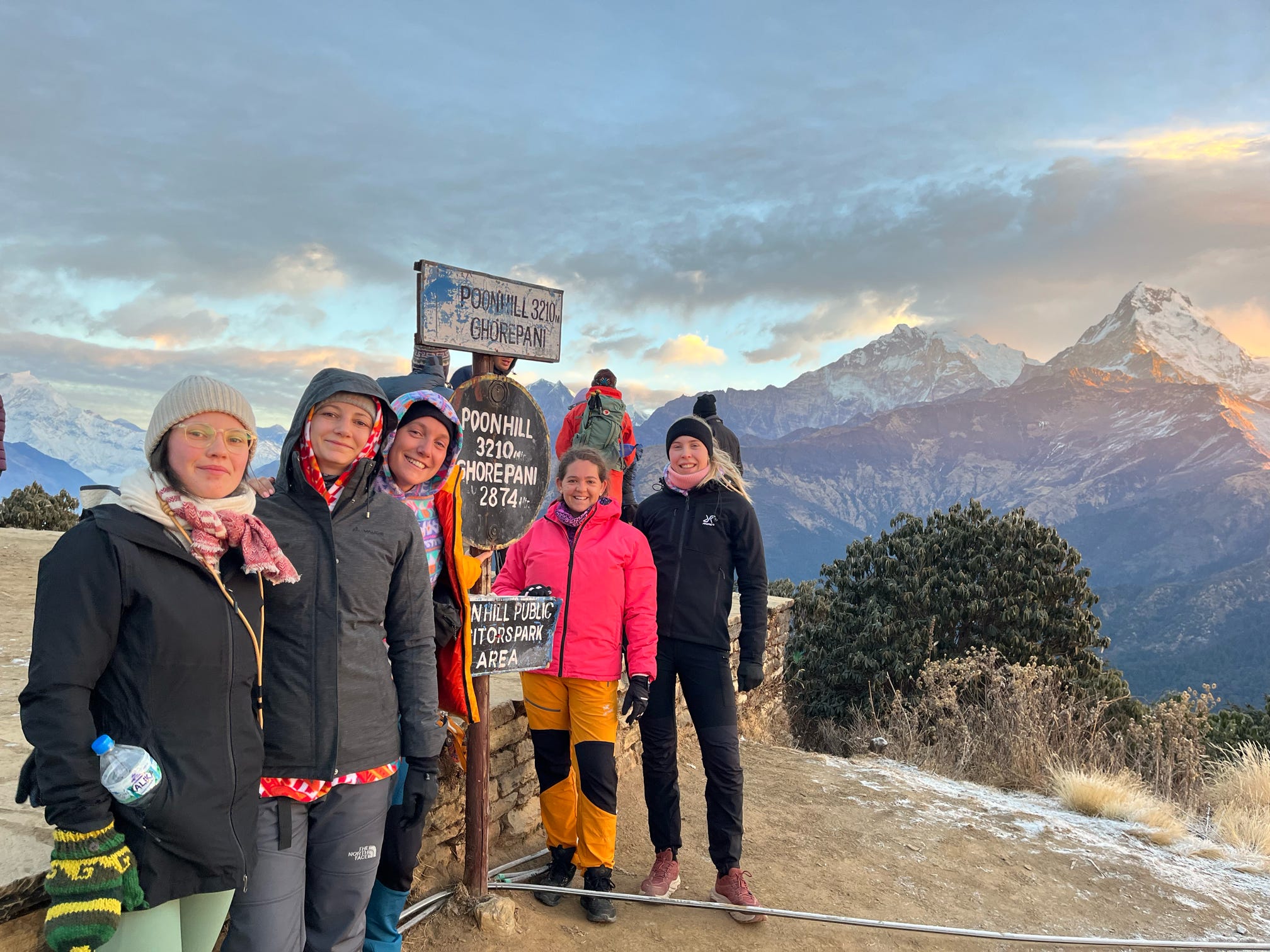
Poon Hill is rated easy to moderate. The Ulleri staircase on day two is the hardest moment, a sustained climb that tires most people out on the first encounter. The rest of the trail is well-graded and consistent, with daily distances between eight and twelve kilometres. The maximum altitude of 3,210m makes altitude a much smaller concern than on higher Himalayan treks.
Mardi Himal is rated moderate to challenging, and the difference from Poon Hill is concentrated in two places: the ridge above Low Camp, where the trail narrows and becomes more exposed, and the summit push above High Camp, which is steep, rocky, and above 4,000m. The first two days of Mardi Himal are not significantly harder than Poon Hill. But from day four onward the effort increases, and summit day requires genuine physical output.
The gap between the two high points is 1,290 metres. That is a meaningful number in terms of how your body responds at altitude and how hard the final day feels. Neither route uses technical gear or requires prior high-altitude experience. But arriving for Mardi Himal without any fitness preparation is a different proposition from arriving for Poon Hill the same way.
Cost: What the Price Difference Actually Means
The MountainKick Ghorepani Poon Hill Trek starts from $440 per person for groups of 4 to 9 ($550 for 2 to 3 people), covering permits, guide, porter, and teahouse accommodation. The Mardi Himal Base Camp Trek starts from $520 for groups of 4 to 9 ($615 for 2 to 3 people) with the same inclusions. For the full breakdown, see our Mardi Himal trek cost guide.
The difference of around $65 to $80 reflects the different itineraries and logistics of the two treks. Mardi Himal involves an additional day, higher-altitude accommodation and a more demanding upper-route itinerary. The more useful comparison is what each route gives you.
Poon Hill gives you more time around established villages and rhododendron forest, while Mardi Himal puts more emphasis on the high ridge and mountain views.
Which Trek Should You Book?
Choose Poon Hill if:
- This is your first multi-day Himalayan trek
- You are trekking with mixed fitness levels or older participants
- Altitude above 3,500m is a concern
- You are travelling with children or a mixed-ability family group
- You want the spring rhododendron bloom (March to May)
- You are pairing the trek with Pokhara or Chitwan
Choose Mardi Himal if:
- You are a fit trekker who wants genuine altitude
- You have already done Poon Hill
- Solitude matters more to you than trail infrastructure
- You are a photographer after dramatic ridgeline compositions
- You want a closer perspective of Fishtail Mountain than the classic Poon Hill approach offers
- You want a route that most people back home have not heard of
If you are genuinely unsure, start with Poon Hill. It is the right entry point and it will not disappoint. If you come back to Nepal, Mardi Himal will be waiting.
If you have already done Poon Hill, or if you are coming specifically for higher altitude and a quieter trail, Mardi Himal is the more natural choice.
Looking at the wider picture of what is available in Nepal? Our guide to Nepal’s best treks and off the beaten path routes cover the full range at different durations and difficulty levels.
Frequently Asked Questions
Is Mardi Himal harder than Poon Hill?
Yes. Mardi Himal reaches around 4,500m and includes a steep upper section and an early morning push from High Camp, while Poon Hill reaches 3,210m and has a more established trail. Both are non-technical treks, but Mardi Himal demands better fitness and greater tolerance for altitude.
Which trek has better views, Poon Hill or Mardi Himal?
They offer different views rather than one being objectively better. Poon Hill delivers a wide sunrise panorama of Dhaulagiri, Annapurna South, and Fishtail from a fixed viewpoint. Mardi Himal puts you on a moving ridgeline with Machapuchare as a dominant presence for much of the upper route, and the entire Annapurna range visible from near base camp. Breadth versus proximity and immersion.
Is Poon Hill too crowded?
During peak season in October and November the sunrise viewpoint is genuinely busy and the teahouses at Ghorepani book up quickly. The trail to Ulleri sees steady traffic throughout the day. It is still a worthwhile trek. But if crowds are a dealbreaker, Mardi Himal is generally quieter on every section of the route.
Can beginners do Mardi Himal?
Yes, with preparation. Someone who exercises regularly and has done multi-day hiking before will complete it without serious difficulty. Poon Hill remains the better starting point for absolute first-timers or anyone with altitude concerns. Mardi Himal rewards trekkers who arrive physically ready for it.
What permits do you need for each trek?
Both treks require an Annapurna Conservation Area Permit (ACAP), a licensed guide and TIMS under the current rules. Current fees and requirements are listed in our Nepal trekking permits guide.
Can you do both Poon Hill and Mardi Himal in one trip?
Yes. Both routes are accessed from the Pokhara area and can be combined in one Nepal trip. The exact duration depends on whether you link the routes directly or return to Pokhara between them. If you have about two weeks or more, MountainKick can build a combined itinerary around your preferred pace.
Book Your Trek
Not sure which one fits your trip? Get in touch with the MountainKick team and we will give you a straight answer based on your fitness, timeline, and what you want to take home from Nepal.