What Happens If You Cannot Finish a Trek in Nepal?
If you cannot finish a trek in Nepal, you do not simply have to keep going. Depending on the situation, you may turn around, descend to a lower altitude, rest for a day, change the itinerary or leave the trek early. If you are seriously ill or injured, your guide can arrange the appropriate help and evacuation when necessary. What happens next depends on where you are, why you need to stop and the conditions on the trail.
- First step: tell your guide as soon as possible
- Common responses: rest, slow down, descend, adjust the itinerary or leave the trek early
- Serious cases: guide can arrange medical help or evacuation
- Refunds: not automatic, depends on booking terms and services already used
- Travel insurance: should cover your specific trekking altitude and emergency evacuation
- MountainKick: runs private treks and staffs fixed departures to handle changes without disrupting the group
- What Happens If You Realise You Cannot Continue?
- What If You Are Too Tired to Continue?
- What If You Get Sick During the Trek?
- What If You Get Injured?
- What If Altitude Becomes a Problem?
- What If Weather Stops the Trek?
- Can You Leave the Trek Early?
- What Happens to Your Trekking Group?
- What About Your Accommodation and Unused Trek Days?
- What About Travel Insurance?
- When Is a Helicopter Evacuation Needed?
- What If You Simply Change Your Mind?
- MountainKick’s Approach
- FAQs
Most trekkers finish their planned route. But mountain trekking does not always go exactly according to plan. Fatigue, illness, altitude, injury and weather can all change an itinerary.
The important thing is to deal with the problem early rather than trying to push through it.
What Happens If You Realise You Cannot Continue?
The first thing to do is tell your guide.
On a guided trek, your guide can look at the situation and help decide what makes sense. Sometimes the answer is simply to slow down or take a rest day. In other situations, descending is the safest option.
You may not need to abandon the entire trek immediately.
For example, if you are struggling at a high altitude, descending to a lower village can give your body a chance to recover. If you feel better later, your itinerary may be adjusted depending on the route and available time.
What If You Are Too Tired to Continue?
Long trekking days can be tiring even when you are otherwise healthy.
If you are exhausted, your guide may recommend shortening the walking day or stopping at the next suitable village rather than continuing for several more hours.
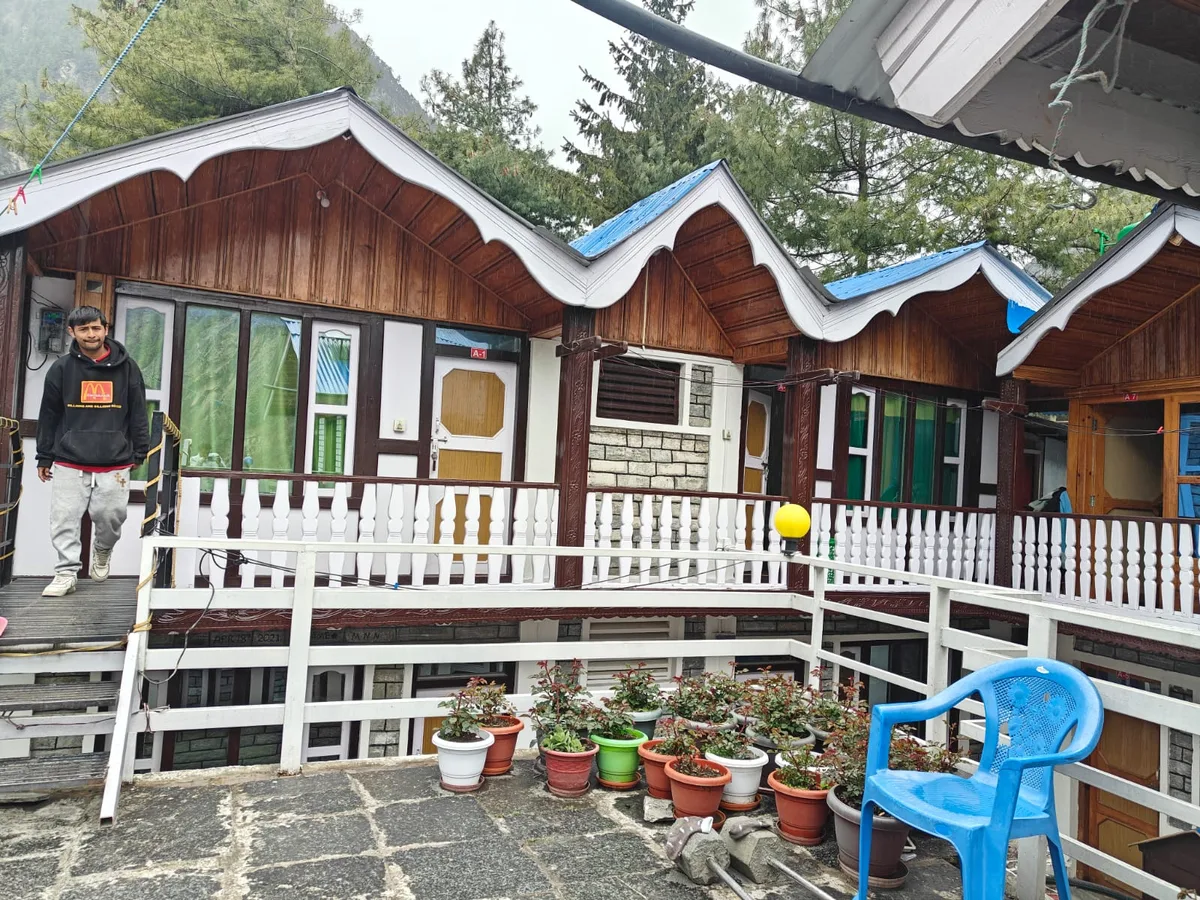
On some routes there are several villages and teahouses along the trail. On others, accommodation is more limited, so the options depend on exactly where you are.
This is one reason your guide needs to know how you are feeling before a problem becomes serious.
What If You Get Sick During the Trek?
Feeling unwell at altitude should not be ignored.
Your guide will consider your symptoms and the altitude you are at. Depending on the situation, the plan may involve resting, monitoring your condition or descending to a lower elevation.
Altitude-related problems can become serious, so continuing higher simply because it is part of the original itinerary is not always appropriate.
The same applies to other illnesses. If you are vomiting, severely dehydrated or unable to walk normally, tell your guide rather than trying to hide it.
What If You Get Injured?
A minor injury does not necessarily mean the trek has to end immediately.
Your guide can assess the situation and help arrange the next step. Depending on the location and severity, that could mean resting, walking back with assistance, using local transport where available or descending to a road-access point.
A more serious injury may require medical assistance or evacuation.
What If Altitude Becomes a Problem?
Altitude is one of the main reasons a trekker may need to change plans.
If you develop symptoms that concern your guide, the normal response is not to continue climbing simply to stay on schedule. Descending is often the important first step.
This can mean missing part of the planned itinerary. That is frustrating, but finishing every scheduled day is less important than dealing with a potentially serious altitude problem.
For high-altitude treks such as Everest Base Camp, Annapurna Circuit and Manaslu, your guide monitors the group and can help make decisions as conditions change.
What If Weather Stops the Trek?
Weather can also change your plans.
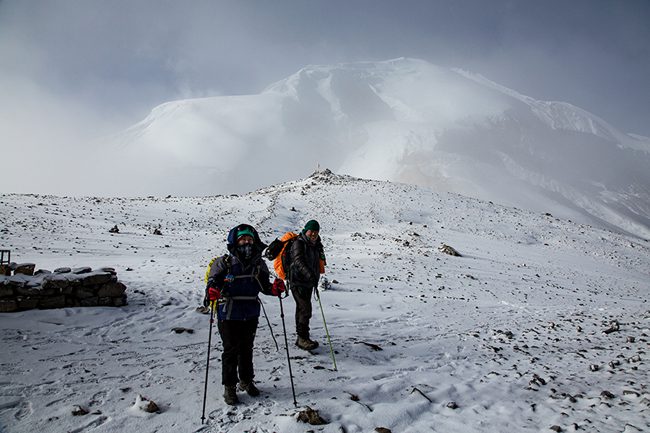
Snow, heavy rain, poor visibility or difficult trail conditions can make a planned section of a trek unsuitable.
In that situation, your guide and local team may need to change the route or wait for conditions to improve. On some treks, this can mean staying an extra night in a village. On others, you may need to turn around or use a different route.
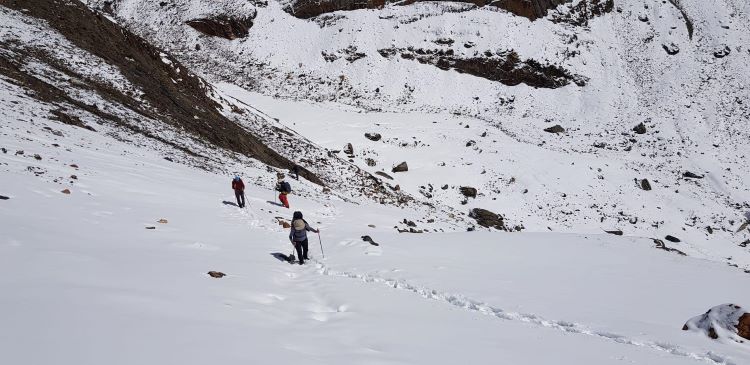
High mountain passes are particularly dependent on current conditions. A route that was straightforward a few days earlier may not be suitable after heavy snowfall.
Can You Leave the Trek Early?
Yes.
If you decide that you no longer want to continue, tell your guide or trekking company as soon as possible.
The practical options depend on your location. Some trekking routes have road access at several points, while remote sections may require several hours or days of walking before reaching a road or transport point.
On routes such as the Annapurna Circuit, there are multiple road-access points. On remote high-altitude sections of routes such as Manaslu or Everest, leaving the trail can be more complicated.
What Happens to Your Trekking Group?
If you are travelling with other people, the rest of the group may continue while you descend.
Your guide will help coordinate this based on the situation and the type of trip you booked. Sometimes the whole group changes its plan. In other cases, one trekker needs to leave while the others continue.
This is one advantage of a private trek. The itinerary can often be adjusted around the needs of the group rather than following a fixed departure schedule.
What About Your Accommodation and Unused Trek Days?
This depends on the circumstances and the terms of your booking.
If you leave a trek early, accommodation, transport and other services that were already booked may not always be refundable. Weather-related changes, voluntary early departure, illness and emergency situations can all be treated differently.
Do not assume that unused trekking days automatically mean you receive a refund.
If you are travelling with MountainKick, we can explain what can be changed based on your particular itinerary and situation.
What About Travel Insurance?
Travel insurance is important for high-altitude trekking because medical treatment and emergency evacuation can be expensive.
Your policy should specifically cover trekking at the altitude of your planned route and emergency helicopter evacuation where required.
Do not assume that a standard travel insurance policy automatically covers every Nepal trek.
Before travelling, check the policy wording carefully, including the maximum trekking altitude, emergency evacuation and medical treatment.
For more information, see our Nepal trekking travel insurance guide.
When Is a Helicopter Evacuation Needed?
A helicopter evacuation is not the normal solution whenever someone is tired or decides they do not want to continue.
It is generally considered when there is a genuine medical or emergency need and evacuation by other means is not appropriate or practical.
The decision depends on the person’s condition, location, weather, access and the medical or emergency situation.
If you are experiencing a serious medical problem at altitude, tell your guide immediately.
What If You Simply Change Your Mind?
You can decide not to continue a trek.
You should tell your guide as early as possible so the team can work out the safest and most practical way to leave the route.
There is no shame in turning around. Mountain trekking is not a test of how much suffering you can tolerate.
Sometimes the sensible decision is simply to stop.
MountainKick’s Approach
We run private treks, and situations are handled with flexibility rather than a fixed script.
On fixed departures, we carry enough staff, guides, porters and assistant guides, to manage a situation without disrupting the rest of the group, and itineraries can be extended by a day or more if needed.
Our guides are licensed and wilderness-trained, and carry a basic first aid kit. On the trail, they generally have access to networked SIM cards and wifi where available, which keeps them in contact with our Kathmandu office if a situation needs to be escalated.
The goal is not to force someone to complete an itinerary at any cost. It is to make a sensible decision based on the trekker, the trail and the conditions.
FAQs
Can I turn around if I cannot finish my trek in Nepal?
Yes. Depending on where you are and the conditions, you may be able to turn around, descend to a lower village or leave the trek early.
What happens if I get sick on a Nepal trek?
Tell your guide as soon as possible. Depending on the symptoms and location, you may rest, descend to a lower altitude or seek medical assistance. Serious cases may require evacuation.
What happens if I cannot finish Everest Base Camp?
If you cannot continue toward Everest Base Camp, your guide can help arrange a descent and adjust the itinerary where possible. The practical options depend on where you are on the route and why you need to stop.
Can I leave a Nepal trek early?
Yes. The options depend on the trekking route and your location. Some routes have road access at several points, while remote sections require more time to reach transport.
Will I get a refund if I leave my trek early?
Not necessarily. Refunds depend on the booking terms and which services have already been used or booked. Illness, weather, voluntary early departure and other circumstances may be handled differently.
Does travel insurance cover leaving a trek early?
Not automatically. Insurance policies have different rules and exclusions. Check whether your policy covers the specific reason you need to leave, as well as medical treatment and emergency evacuation where applicable.
Can I get a helicopter if I cannot finish my trek?
A helicopter is not normally used simply because a trekker is tired or wants to stop. Evacuation is generally considered when there is a genuine medical or emergency need and other options are not suitable.