Do You Need a Guide to Trek in Nepal? Current Rules Explained
For most major Himalayan trekking routes in Nepal, foreign trekkers need a licensed guide arranged through a registered trekking agency. But the permits you need depend on the route. The Everest region uses its own local Trek-Card alongside the national park permit, restricted areas need special permits, and other routes still use TIMS.
Since 22 March 2026, a solo trekker can get a restricted area permit without a second person, but a licensed guide is still required.
- Guide rule: in effect since 31 March 2023 on most major trekking routes
- Regions covered: Everest, Annapurna, Langtang, Manaslu, Kanchenjunga and other major trekking areas
- TIMS: still used on many routes, issued through a registered agency as an e-card. NPR 2,000 for most foreign trekkers. The Khumbu uses its own Trek-Card instead.
- Restricted areas: need special permits, arranged through a registered trekking agency, with a licensed guide
- Solo permits: allowed in restricted areas since 22 March 2026, still with a guide
- Short hikes: routes outside the protected trekking areas can have different rules
Last checked: 4 October 2026

Why You Still Find Conflicting Information About Trekking Rules
Nepal’s trekking rules have changed several times in recent years, and a lot of what you’ll find online describes an older version.
- 2023: from 31 March 2023, the Nepal Tourism Board’s revised TIMS provision required trekkers on listed routes to have a licensed guide and an agency-issued TIMS card.
- 2026: from 22 March 2026, restricted area permits no longer need a minimum of two trekkers.
- Older articles and forum posts still describe independent trekking that was allowed before 2023.
- Older official pages can also contain earlier versions of the rules.
- Local permits, like the Khumbu Trek-Card, run alongside the national system.
- Requirements depend on the route, not just the region.
So the safest approach is to check the current rules for the specific trek you’re planning, rather than relying on one older page or someone else’s trip report.
TIMS and Trekking Permits Are Not the Same Thing
A lot of the confusion comes from mixing these up. A trek can need several of them at once.
| Requirement | What it is | Who handles it |
|---|---|---|
| Licensed guide | A government-licensed trekking guide who goes with you | Registered trekking agency |
| TIMS card | Trekker registration and information system | Registered agency, through the NTB system |
| National park or conservation area permit | Entry permit for a protected area, like ACAP or Sagarmatha National Park | The relevant park or conservation authority |
| Local entry permit | Entry fee for a local area, like the Khumbu Trek-Card | The local authority |
| Restricted area permit | Permission to enter a designated restricted area, like Manaslu or Upper Mustang | Department of Immigration, through a registered agency |
For permit fees by trek, see our Nepal trekking permits guide.
Why Official Information Can Still Conflict
Nepal’s trekking permits aren’t run from one single system any more. The Nepal Tourism Board still publishes a national TIMS route list, but protected areas and local governments also run their own entry permits.
The Khumbu is the clearest example. The NTB’s TIMS page still lists Everest and Gokyo routes under TIMS, while the Khumbu Pasang Lhamu Rural Municipality runs its own Trek-Card for international visitors. On the ground in the Khumbu, the Trek-Card and the national park permit are used rather than a separate TIMS card.
So an older article can be wrong, but so can a page that just copies the national TIMS list without checking the local system. The important question isn’t only “Do I need TIMS?” It’s “What documents are actually checked on my route?”
What You Actually Need Depends on the Region
The guide rule covers most major routes, but the permits vary a lot by region. This is what’s needed on MountainKick treks under our current permit processing:
| Region | Permits on MountainKick treks | Licensed guide |
|---|---|---|
| Everest and Gokyo (Khumbu) | Sagarmatha National Park permit and Khumbu municipality Trek-Card. No separate TIMS card. | Required |
| Annapurna (Circuit, ABC, Poon Hill, Mardi Himal) | ACAP and TIMS | Required |
| Langtang | Langtang National Park permit and TIMS | Required |
| Manaslu | Restricted area permit, MCAP and ACAP. No separate TIMS card. | Required |
| Tsum Valley | Restricted area permit and MCAP. No separate TIMS card. | Required |
| Upper Mustang | Restricted area permit and ACAP. No separate TIMS card. | Required |
| Nar Phu with Annapurna Circuit | Restricted area permit, ACAP and TIMS | Required |
Rules can change, so we confirm the exact documents for your route before departure. For fees, see our Nepal trekking permits guide.
Everest (Khumbu). The Khumbu Pasang Lhamu Rural Municipality runs its own Trek-Card system, issued at its information centres in Lukla, alongside the Sagarmatha National Park entry permit. A separate TIMS card isn’t part of the Khumbu permit process MountainKick uses. The NTB’s national TIMS page still lists Everest routes under its TIMS provision, which is one reason conflicting information remains online. See our Everest Base Camp Trek and Gokyo Valley Trek.
Annapurna. Routes including the Annapurna Circuit, the Nar Phu and Annapurna Circuit route, Poon Hill and ABC, Khopra and Mardi Himal need a licensed guide, ACAP and TIMS. See our Annapurna Circuit Trek and Annapurna Base Camp Trek.
Manaslu, Tsum Valley, Upper Mustang, Dolpo and Nar Phu. These routes enter designated restricted areas, so they need a restricted area permit as well as their protected area permits. The permit is issued through a registered trekking agency and requires a licensed guide. See our Manaslu Circuit Trek.
Langtang. Langtang, Langtang Gosaikunda, Tamang Heritage and other routes in the region need a licensed guide, the Langtang National Park permit and TIMS. See our Langtang Valley Trek.
Other regions. Routes in Kanchenjunga, Makalu Barun, Rolwaling, Helambu, Dhaulagiri, Dolpo, Humla and other protected trekking areas also need a licensed guide, along with their own protected area or restricted area permits.
Short hikes outside these areas. Not every walk in Nepal has the same rules. Day hikes around the Kathmandu Valley or other areas outside the protected trekking system can have different requirements.

What Changed in 2026: Solo Restricted Area Permits
Previously, restricted area permits generally needed at least two trekkers on the permit. From 22 March 2026, an individual foreign trekker can get a restricted area permit without finding a second trekker.
But this does not mean solo unguided trekking is allowed in restricted areas. The permit is still issued through a registered trekking agency, and you still need a licensed guide.
- Solo trekker: yes, you can now be the only trekker on the permit.
- Solo permit: yes, the two-trekker minimum is gone.
- Solo without a guide: no, the guide requirement remains.
- Arranging the permit yourself: no, it still goes through a registered agency.
This applies to restricted areas including Manaslu, Tsum Valley, Upper Mustang, Dolpo and Nar Phu.

What You Actually Risk
If you trek a route that needs a guide and permits without meeting those requirements, you can run into problems at checkpoints, or have to sort out the documents before you continue. The exact procedure depends on the route and the local authority.
If you’re relying on travel insurance, check whether your policy requires you to follow local trekking rules, including using a licensed guide and having the right permits. See our Nepal trekking insurance guide.
What a Guide Actually Adds
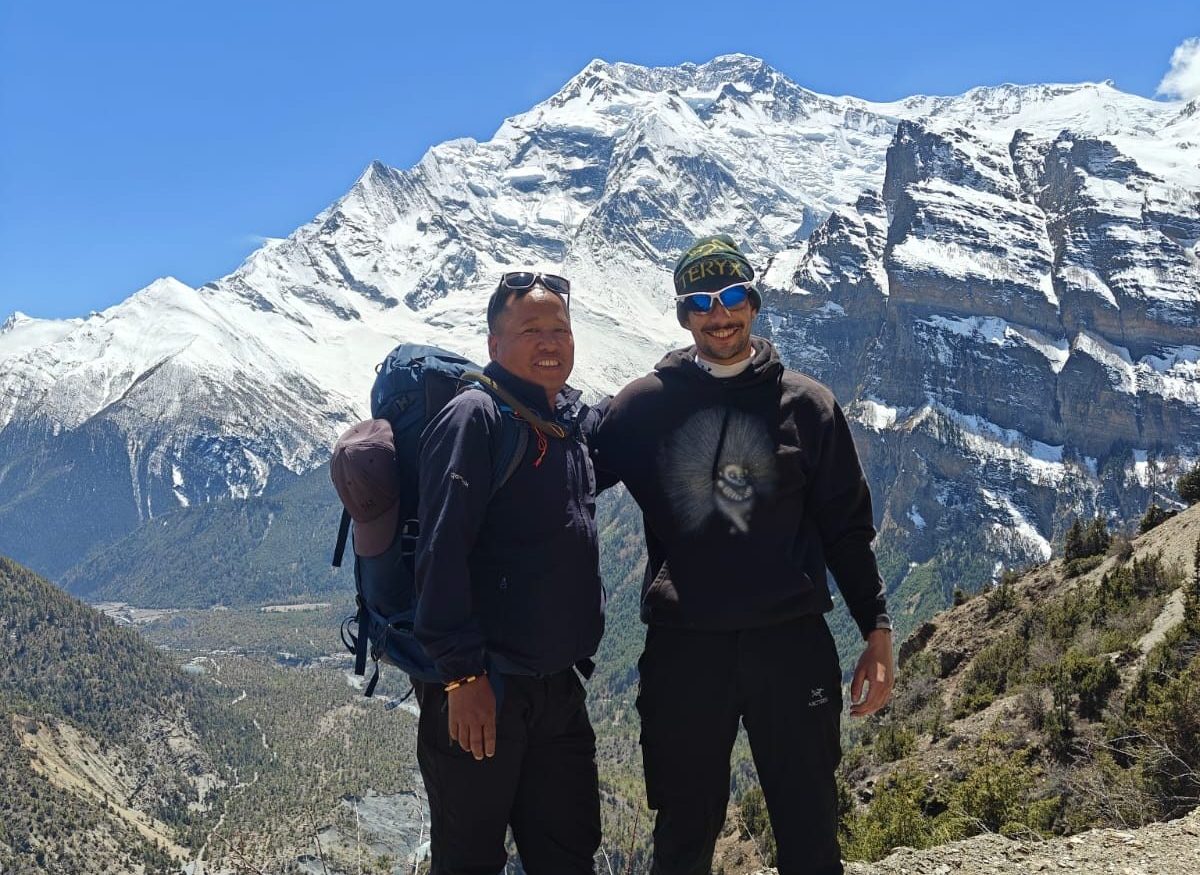
For routes covered by the rule, the more useful question is what separates a good guide from someone who just meets the minimum. A guide who knows the route reads the weather and trail conditions, sorts out small problems with teahouses before they grow, and changes the plan to fit how you’re actually doing on day 6, not just what the printed itinerary says.
On a high altitude trek, a guide is also watching how you’re coping with the altitude, how quickly you’re gaining height, and whether the day’s plan still makes sense. See our guide to whether the Everest Base Camp trek is hard, and our guide to choosing a trekking company for what to look for beyond a licence.
That’s the difference between ticking a box and having someone genuinely useful beside you for two weeks at altitude.

Frequently Asked Questions
Do you need a guide to trek in Nepal?
For most major trekking routes, yes. A licensed guide arranged through a registered agency is required on most major Himalayan routes. The exact permits depend on the route, so check the rules for the trek you’re planning.
Can you trek Everest Base Camp without a guide?
No. A licensed guide is required. For permits, you need the Sagarmatha National Park permit and the Khumbu municipality Trek-Card. A separate TIMS card isn’t part of the current Khumbu process, although the NTB’s national list still includes EBC.
Can you trek to Gokyo without a guide?
No. Gokyo needs a licensed guide and uses the same permits as Everest Base Camp: the Sagarmatha National Park permit and the Khumbu Trek-Card.
Can you trek Annapurna without a guide?
Not on the main Annapurna routes. These include the Annapurna Circuit, Nar Phu and Annapurna Circuit, Poon Hill and ABC, Khopra and Mardi Himal. They need a licensed guide, ACAP and TIMS.
Do you need a guide for the Manaslu Circuit?
Yes. Manaslu is a restricted area, so it needs a restricted area permit arranged through a registered agency, with a licensed guide.
Do you need a guide for Upper Mustang?
Yes. Upper Mustang is a restricted area needing a special permit. The permit is arranged through a registered agency, and the trek must have a licensed guide.
Is a TIMS card still required in Nepal?
It depends on the route. Nepal’s national TIMS provision still lists many trekking routes, but some regions now use their own local or protected area permits. The Khumbu, for example, uses its own Trek-Card alongside the Sagarmatha National Park permit rather than a separate TIMS card. Annapurna and Langtang treks still use TIMS, which costs NPR 2,000 for most foreign nationals. Always check the requirements for your exact route.
Can I get a restricted area permit as a solo trekker?
Yes, since 22 March 2026. The two-trekker minimum was removed, but the permit still goes through a registered agency, and a licensed guide is still required.
Can you trek anywhere in Nepal without a guide?
Some short hikes, yes. Short hikes and routes outside the protected trekking areas have different rules. But the major Himalayan routes need a licensed guide. Always check the specific route, rather than assuming a rule for one trek applies to another.
Not sure what your route needs?
Tell us which trek you’re planning and we’ll give you a straight answer on guides, permits and TIMS. Every MountainKick trek includes a licensed guide and all required permits. WhatsApp: +977 985 118 2718.
Ask us about your route → Browse Nepal treks →Official sources: Nepal Tourism Board TIMS provision, the Khumbu Pasang Lhamu Rural Municipality Trek-Card information, and the Department of Immigration’s restricted area permit information.