Annapurna Marathon: The Complete Guide for Runners

The Annapurna Marathon starts at Annapurna Base Camp at 4,130m, descends 2,100 metres over 42.195km through rhododendron forests and Gurung villages, and finishes in Ghandruk at 2,012m. It’s one of a small number of marathons in the world where the start point is above most mountain summits in Europe and the scenery competes with the race itself for your attention.
This guide covers the course, the 2026 event dates, what to expect at altitude, how to prepare, and how to combine the race with a Nepal trek.
The Course

The Annapurna Marathon is a point-to-point course running from Annapurna Base Camp (4,130m / 13,550ft) down to Ghandruk village (2,012m / 6,600ft). The net descent is approximately 2,100m over 42.195km, which sounds straightforward but involves a mix of stone staircase sections, ridge trails, forest paths, and suspension bridge crossings — not a simple downhill road run.
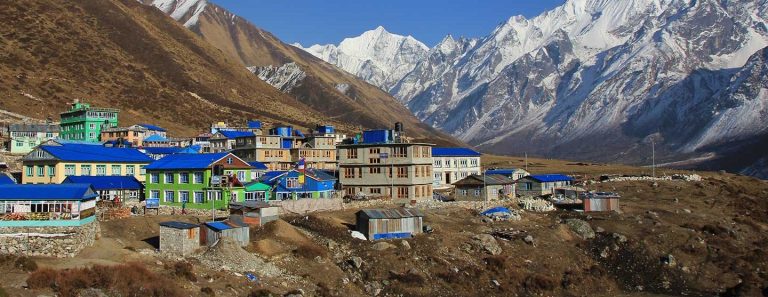
The first section from Base Camp follows the standard ABC trek trail through the Annapurna Sanctuary. You’re surrounded by Annapurna I (8,091m), Machapuchare (6,993m), and Hiunchuli (6,441m) at the start — on a clear morning it’s one of the more striking race starting environments anywhere. The trail descends through Deurali, Bamboo, and Chomrong before the final stretch into Ghandruk.
Key things to know about the course:
- The first 10km from Base Camp involves the steepest technical descent — take it conservatively, especially at altitude
- Stone staircases in the lower sections are hard on quads if you’ve gone out too fast
- Suspension bridges are single-file and can create bottlenecks in larger fields
- Weather can change fast above 3,500m — conditions at the start can be very different from conditions at the finish
- The course is entirely on established trekking trails, not road
Finish: Ghandruk — 2,012m / 6,600ft
Distance: 42.195km (full marathon)
Net descent: ~2,100m
Terrain: Mountain trail, stone staircases, forest paths, suspension bridges
Cutoff time: Varies by edition — check official registration
2026 Event Dates and Registration

The Annapurna Marathon typically runs in late May or early June, timed for the pre-monsoon window when visibility in the Annapurna Sanctuary is at its clearest before the summer rains arrive. The 2025 edition was held on June 3rd.
For confirmed 2026 dates and registration: Check the official Annapurna Marathon website directly as dates are confirmed several months before the event. Registration typically opens in January–February and sells out well in advance due to limited field size.
Most packages include accommodation throughout the race period, meals, guide support, and transport to and from the start. Entry fees and package costs typically range from $2,000–$3,500 depending on the operator and inclusions. This covers the race itself plus a complete logistics package for a remote high-altitude event — not just a race bib.
Prerequisites to check: Most editions require proof of previous marathon completion and may require a medical certificate. Altitude experience is strongly recommended but not always mandatory. Check the official requirements when registering.
Running at Altitude — What Actually Changes
Running at 4,000m+ is a fundamentally different physiological experience from sea-level racing, regardless of your fitness level. Understanding what changes helps you pace correctly and stay safe.
Reduced oxygen availability
At 4,130m, there is roughly 60% of the oxygen available compared to sea level. Your cardiovascular system works significantly harder to deliver the same oxygen to working muscles. Heart rate is elevated at the same perceived effort. Paces that feel easy at sea level feel hard at altitude — sometimes dramatically so.
Acclimatisation takes time
Your body begins adapting to altitude within the first 24–48 hours but meaningful acclimatisation takes 7–10 days minimum. Arriving in Nepal the day before the race is not adequate preparation. Most experienced high-altitude runners arrive at least 10 days before the start and spend several days at intermediate altitude (Pokhara at 822m, then trekking to ABC at 4,130m) before race day.
Altitude sickness is a real risk
Acute Mountain Sickness (AMS) can affect anyone regardless of fitness level. Symptoms include persistent headache, nausea, dizziness, and difficulty sleeping. If symptoms worsen rather than improve with rest, descent is the only reliable treatment. Know the symptoms and have a clear plan with your support team before race day.
Pacing strategy changes completely
Go out slower than feels necessary. Most runners who struggle in high-altitude races do so because they run the first section at their sea-level effort. The descent from ABC is also technically demanding — aggressive downhill running on technical trail at altitude with fatigued legs is where most DNFs happen.
Training and Preparation

Preparing for the Annapurna Marathon requires a different training emphasis than a road marathon. The key differences:
Trail running is essential
If you only run on roads, start incorporating trail running into your training at least 16 weeks out. The technical footing on the Annapurna course — uneven rock, stone staircases, rooted paths — requires different muscle engagement and balance than road running. Ankle stability and proprioception are critical.
Downhill running needs specific training
The Annapurna Marathon is predominantly downhill. Downhill running is hard on quadriceps in a way that flat or uphill running is not. Include regular downhill intervals in training. Hiking or running down sustained descents is the best preparation. If you arrive at the race with undertrained quads, the lower stone staircase sections will be very uncomfortable.
Cardiovascular base over speed
High-altitude racing rewards aerobic base more than raw speed. Prioritise time on feet and sustained effort over interval work. Back-to-back long run weekends (two consecutive days of 2–3 hour runs) build the muscular endurance needed for technical mountain terrain.
Strength work matters
Single-leg exercises — step-ups, Bulgarian split squats, single-leg deadlifts — build the unilateral strength needed for technical descents. Core stability work reduces fatigue on uneven ground. Calf and ankle strengthening reduces injury risk on rocky trails.
Minimum recommended preparation: At least one completed marathon, 4–6 months of consistent trail running, and a 16-week structured training block before the event. Previous experience above 3,500m is a significant advantage.
Gear and Kit
The Annapurna Marathon is a mountain race, not a road race. What you carry and wear matters more than it does at sea level.
Shoes
Trail running shoes with good grip are mandatory. The course includes wet rocks, rooted forest paths, and stone staircases. Road running shoes are inadequate. Hoka Speedgoat, Salomon Speedcross, and Altra Lone Peak are popular choices among Himalayan runners — all offer a mix of cushioning and grip suited to long technical descents.
Layering
Start conditions at Base Camp (4,130m) can be well below freezing at dawn, while finish conditions in Ghandruk can be warm. A light packable insulated layer for the start, a long-sleeve base, and waterproof shell that fits in a race vest is the standard setup. Do not start in just a t-shirt.
Race vest or pack
Carry water, emergency nutrition, your insulated layer, a basic first aid kit, and an emergency space blanket. Most editions have checkpoint support but remote mountain races can have gaps. A 5–8L race vest is standard.
Poles
Trekking or trail running poles are worth considering for the descent sections, particularly if your quadriceps are undertrained for downhill. They reduce leg loading significantly on long technical descents. Check the race rules — some editions restrict or allow poles.
Combining the Annapurna Marathon with a Nepal Trek

Most international runners treat the Annapurna Marathon as part of a broader Nepal trip rather than a standalone race. The most natural combinations:
Annapurna Base Camp trek + Marathon
The race course follows the standard ABC trekking route in reverse. Doing the ABC trek in the week before the race serves as both acclimatisation and course familiarisation. You arrive at Base Camp knowing every section of the descent you’re about to run. This is the most logical preparation itinerary and the one most experienced participants use.
Everest Base Camp trek + Annapurna Marathon
A longer Nepal trip combining EBC (14 days) with the Annapurna Marathon. EBC in April–May provides excellent high-altitude acclimatisation for the June marathon. Requires 4–5 weeks total in Nepal but is a serious Himalayan running and trekking combination.
Post-marathon Pokhara recovery
Ghandruk is 2–3 hours from Pokhara. Most runners spend 2–3 days in Pokhara after the race before flying home or continuing their Nepal trip. Pokhara is Nepal’s second city with excellent food, lakeside accommodation, and paragliding if you want one more adventure before leaving.
MountainKick can arrange the trekking components around your marathon dates — ABC trek, acclimatisation itinerary, Pokhara accommodation, and onward transport. Get in touch with your race dates and we’ll build the logistics around you.
Other High-Altitude Races in Nepal

Tenzing-Hillary Everest Marathon — starts at Everest Base Camp (5,364m), the highest marathon start in the world. Held annually in late May to coincide with the anniversary of the first Everest summit (May 29, 1953). A significantly more demanding altitude challenge than the Annapurna Marathon — appropriate for experienced high-altitude runners only.
Manaslu Trail Race — a multi-stage trail race circumnavigating Manaslu (8,163m), the world’s eighth highest peak. Held in November. Several days of running through remote Himalayan terrain in a restricted area that sees very few visitors. One of the most remote and logistically complex race events in Nepal.
Mustang Trail Race — runs through the Upper Mustang plateau, a restricted Tibetan-influenced region in northern Nepal. The landscape is unlike anywhere else in Nepal — arid, high plateau terrain with ancient cave monasteries and dramatic cliffs. Held in October.

WhatsApp: +977 985 118 2718
or use our enquiry form.