Thorong La Pass: A Guide to the Big Day on the Annapurna Circuit
Thorong La is the highest point of the Annapurna Circuit, at 5,416m. Most trekkers cross from east to west, leaving Thorong Phedi (4,450m) around 4am. It takes about 4 to 5 hours to reach the top, then 3 to 5 hours to walk about 1,600m down to Muktinath. Plan for a day of 8 to 10 hours, or more if you are slow or the weather is bad.
It is not technical. There are no ropes and no climbing. What makes it hard is the altitude, the cold early start and the long, steep descent. Cross between March and May or September and November, and only after acclimatising properly in Manang.
- Height: 5,416m
- Start point: Thorong Phedi (4,450m) or High Camp (about 4,850m)
- Start time: around 4am from Phedi
- Up to the pass: about 4 to 5 hours from Phedi, 2.5 to 3 hours from High Camp
- Down to Muktinath: about 3 to 5 hours, around 1,600m of descent
- Whole day: 8 to 10 hours or more, about 16km
- Best months: March to May and September to November
- Last updated: October 2026
In This Guide
Where Is Thorong La?
Thorong La links the Manang valley on the east side with Muktinath and the Kali Gandaki valley on the west. It sits roughly halfway round the Annapurna Circuit, and every day of the trek before it builds up to this one.
Which Direction Do You Cross?
Almost everyone crosses from east to west, Manang to Muktinath. The climb is spread over several days from Manang, with a night at Yak Kharka and a night at Thorong Phedi, so your body has time to adjust.
Going the other way means climbing about 1,600m in one day from Muktinath. That is too much for most people’s acclimatisation, so it is rarely done.
What Crossing Day Is Like
3.30am to 4am: wake up and start. A quick breakfast of porridge or bread and a hot drink, then you walk by headtorch. It is dark and very cold, often well below freezing.
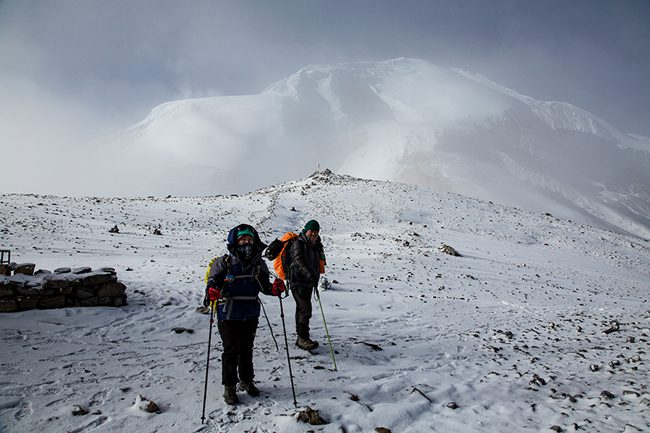
Phedi to High Camp, about 1 hour. A steep zigzag climb of about 400m, the steepest part of the morning. Go slowly.
High Camp to the pass, 2.5 to 3 hours. After High Camp the trail climbs more gently but keeps going, with several false tops marked by prayer flags. The air is thin, so you walk slowly and stop often. In busy seasons a small tea shop may be open on the way up, but do not count on it. Carry your own water and snacks.
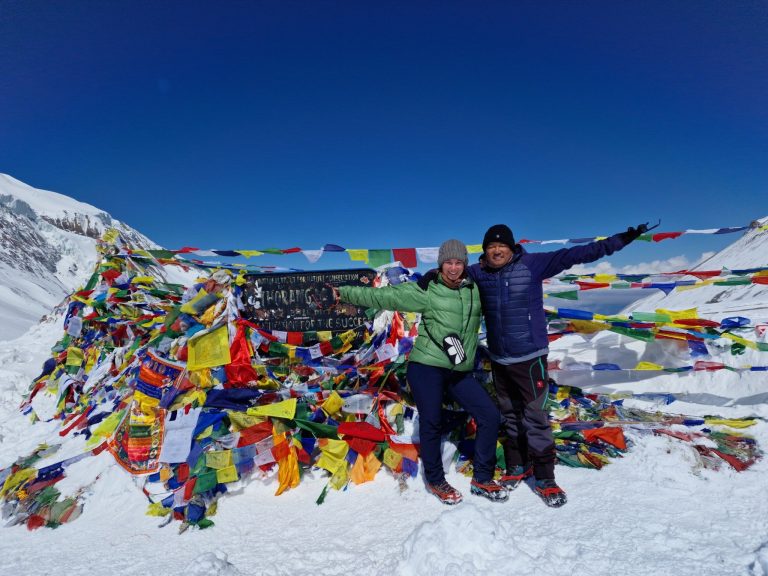
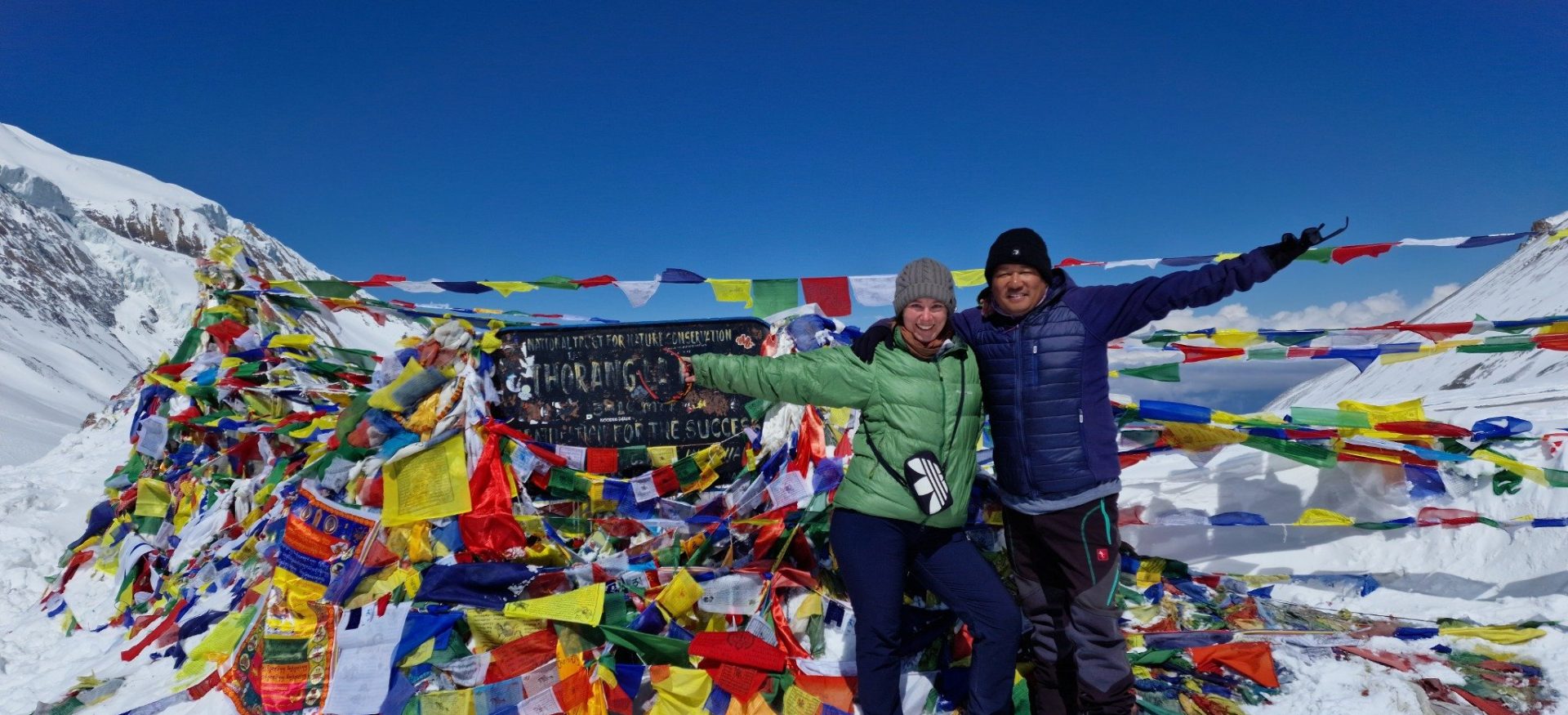
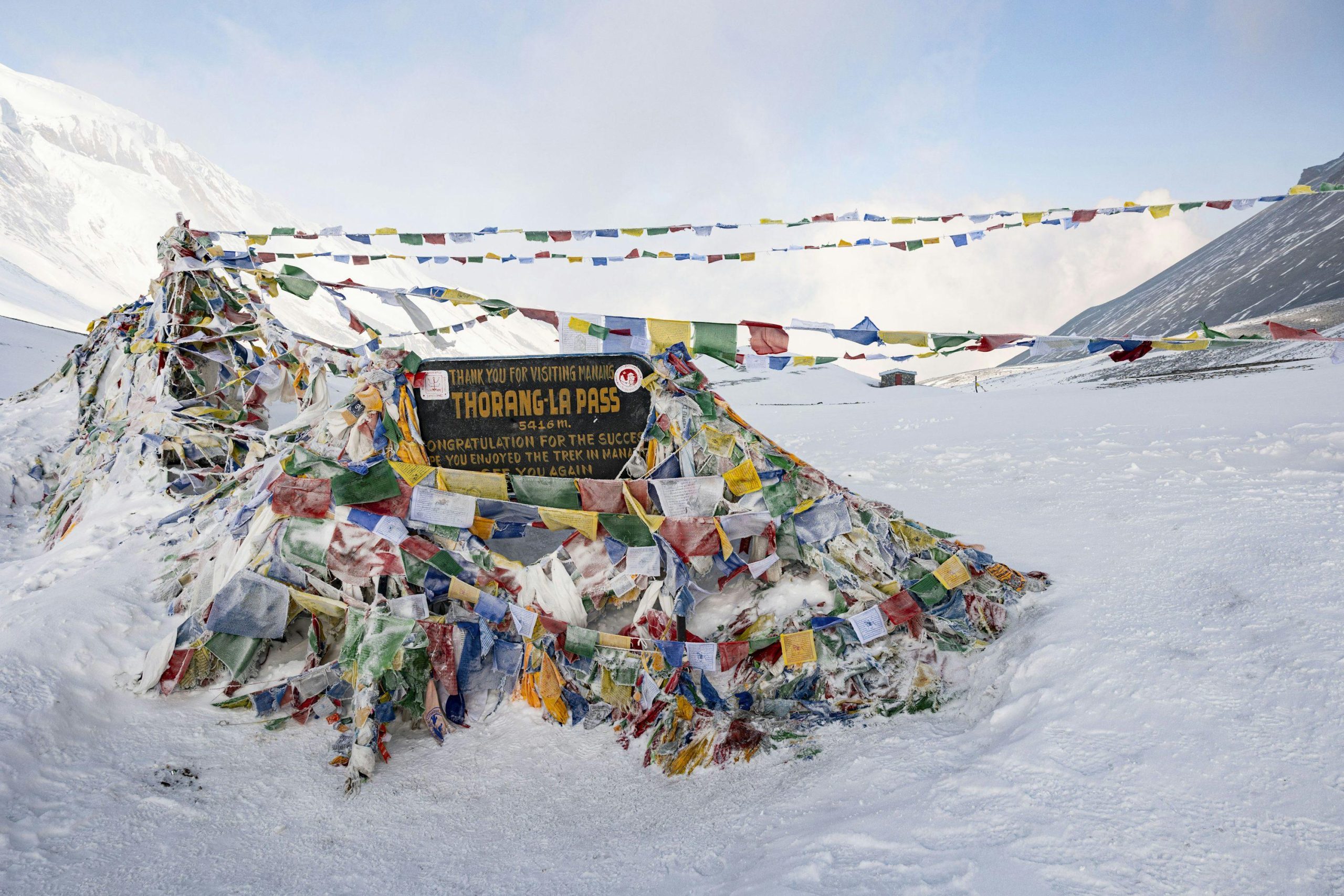
The top, 5,416m. Prayer flags, a sign and big views of the Annapurna and Mustang peaks. Most groups stay 10 to 15 minutes. It is too cold and high to stay longer.
The descent to Muktinath, 3 to 5 hours. About 1,600m down, steep the whole way. The first part can be icy, then it turns into loose gravel and rocky steps. This is the part that hurts your knees. Use your poles and take it slowly.
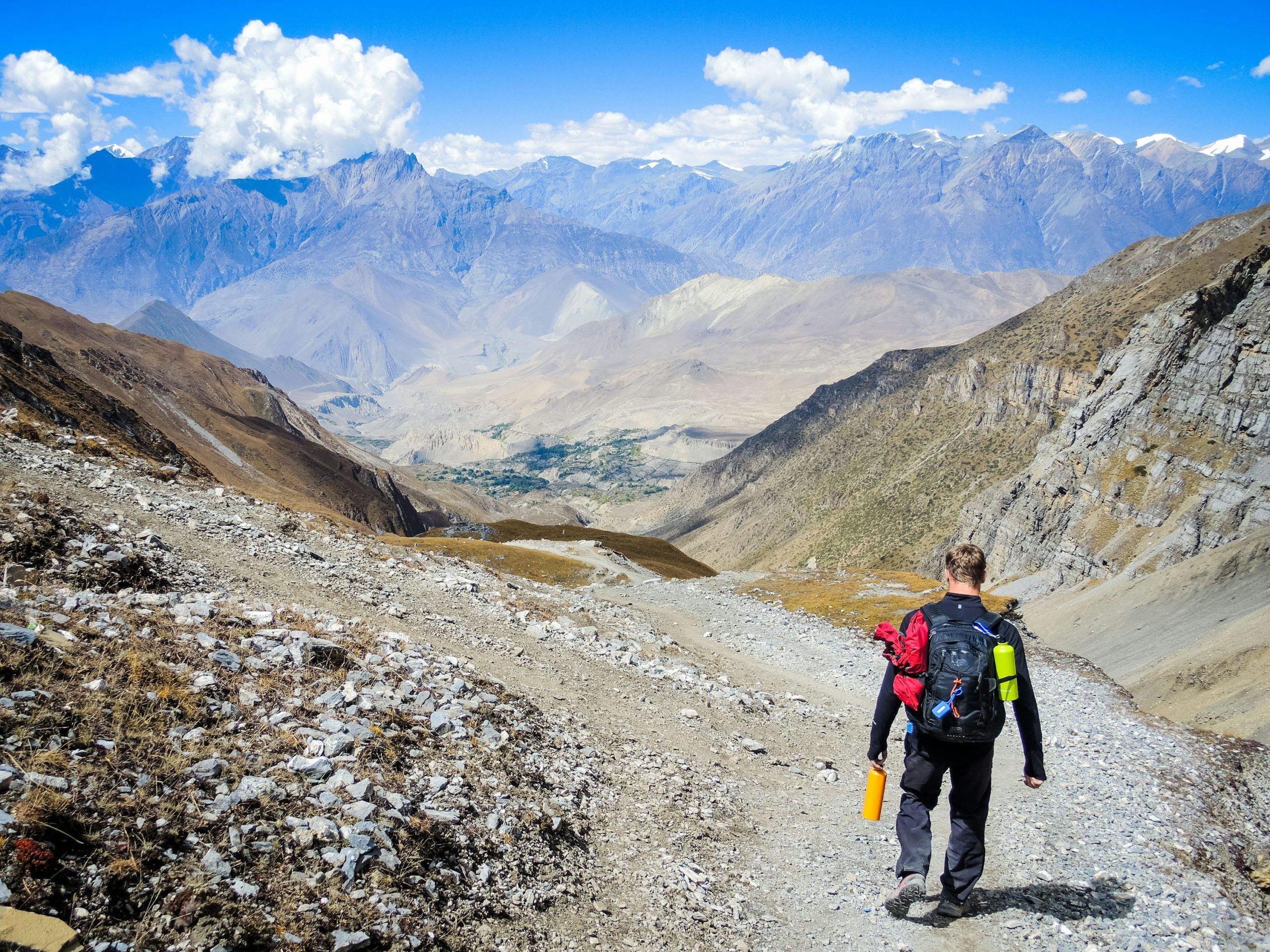
Muktinath. Hot food, a proper bed and the famous Muktinath temple. Many trekkers say it is the best night’s sleep of the trek.
How Hard Is Thorong La?
It is the hardest day of the Annapurna Circuit, but people of all ages cross it every season. Three things make it tough:
- Altitude. At 5,416m the air pressure is roughly half what it is at sea level, so every breath gives you much less oxygen. Everyone walks slowly.
- The long day. 8 to 10 hours or more, with a lot of climbing and then a lot of descending.
- Cold and wind. The early start is freezing, and strong wind usually picks up from late morning. That is why everyone starts early.
You do not need any climbing skills. In normal conditions it is a walk on a clear trail. After fresh snow your guide may suggest microspikes.
Thorong Phedi or High Camp?
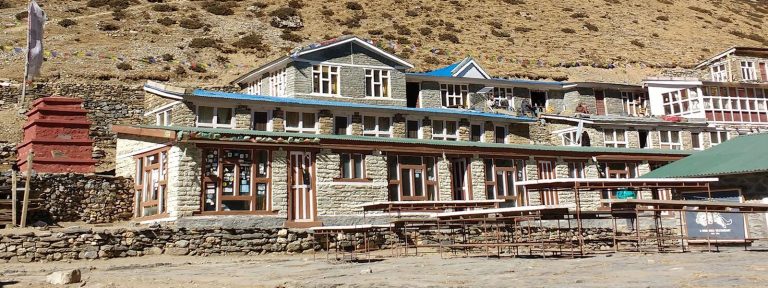
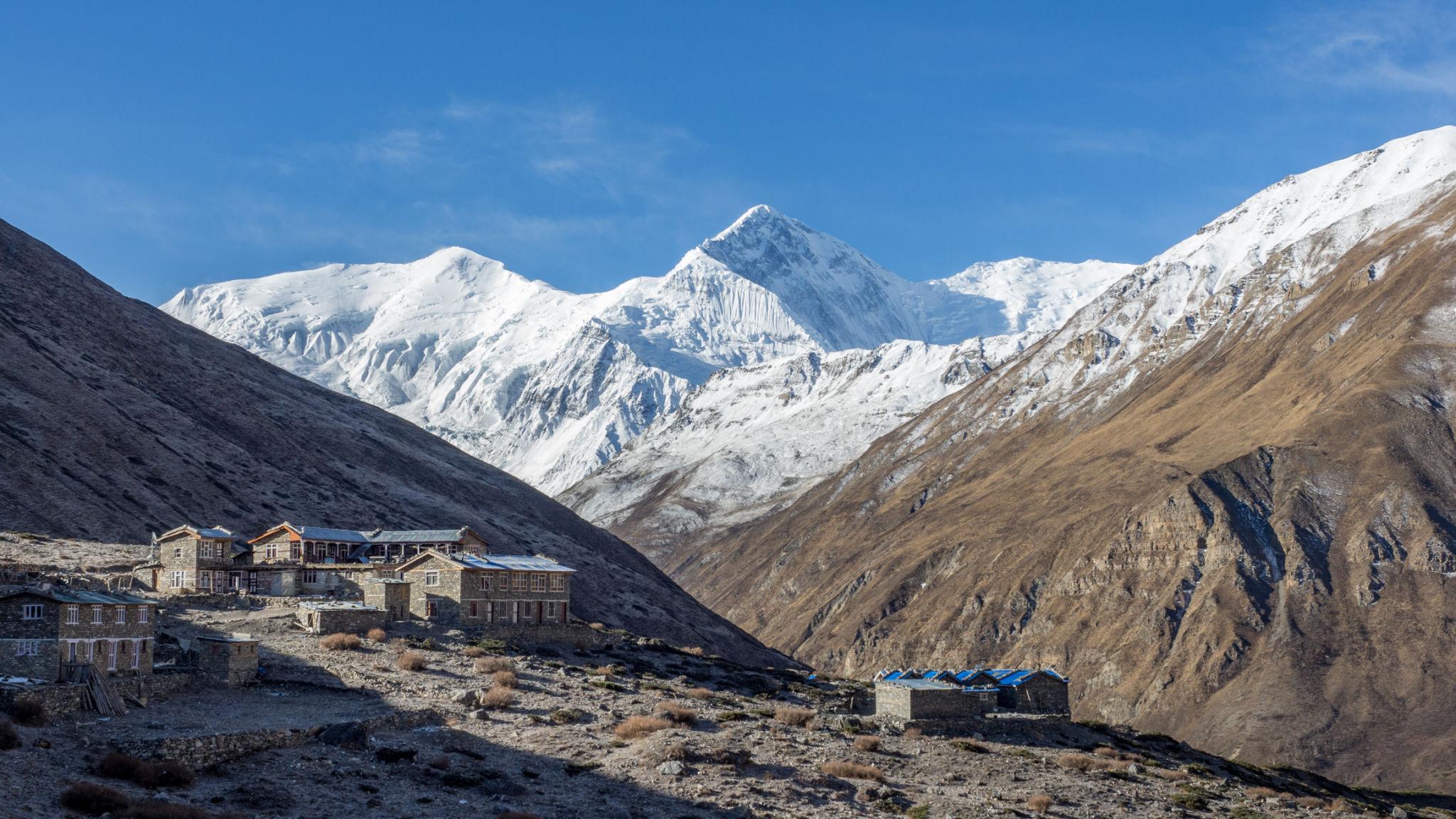
Some trekkers sleep at High Camp to cut about an hour off pass day. But you sleep 400m higher, and the lodges are more basic. Our Annapurna Circuit trek sleeps at Thorong Phedi, which keeps your highest sleeping altitude lower. Your guide sets the start time on the day. See our guide to Annapurna Circuit teahouses for what the lodges are like.
Best Time to Cross Thorong La
- October and November: the most reliable, with clear skies and stable weather. October is the busiest.
- March to May: good, though early spring can still have snow on the pass.
- December to February: possible in good weather, but heavy snow can close the pass for days. Only cross with a guide and spare days.
- June to August: monsoon cloud and rain lower down, with snow or rain possible on the pass.
Safety on Thorong La
- Acclimatise in Manang. Never skip the rest day.
- Know the signs of altitude sickness. A bad headache, vomiting, confusion or stumbling means stop and go down. Your guide carries an oximeter to check your oxygen level.
- Do not cross in bad weather. In October 2014, a sudden blizzard from a cyclone killed about 40 people in the area around the pass. Today guides watch the forecast closely and will wait a day rather than cross in a storm.
- Turn back if you need to. Going back down to Phedi is always an option, and a good guide will make that call with you.
- Do not rely on a helicopter. Weather and altitude limit rescue up here, which is one more reason not to push on when you feel unwell.
Read our guide to altitude sickness on Nepal treks.
What to Bring on Pass Day
- A down jacket, warm gloves with liners and a warm hat
- A headtorch with fresh batteries
- At least 2 litres of water, in an insulated bottle so it does not freeze
- Snacks you can eat on the move, like chocolate, nuts or energy bars
- Two trekking poles
- Sunglasses and sunscreen for when the sun hits the snow
- Microspikes if your guide says there is ice
Tips for Crossing Thorong La
- Pack your bag and lay out your clothes the night before.
- Pay your lodge bill the evening before.
- Sleep in your next day’s base layer, so you are not changing in the cold.
- Walk slowly and steadily from the start. Rushing early is how people struggle later.
- Eat and drink something at every stop, even if you do not feel like it.
- Save some energy for the descent.
Frequently Asked Questions
How high is Thorong La Pass?
Thorong La is 5,416m high.
How long does it take to cross Thorong La?
Usually 8 to 10 hours from Thorong Phedi to Muktinath: about 4 to 5 hours up and 3 to 5 hours down. It can take longer if you are slow or there is snow.
Is Thorong La dangerous?
The main risks are altitude sickness and sudden storms. Good acclimatisation, an early start, a guide and crossing only in good weather reduce them a lot, but no high pass is risk free. Know the signs of altitude sickness and turn back if they get worse.
Do you need crampons for Thorong La?
Usually not in October and November. After fresh snow, microspikes help, and your guide will tell you if you need them.
Can beginners cross Thorong La?
Yes, if they are fit, acclimatise properly and walk slowly. No climbing experience is needed.
Is there a tea shop on Thorong La?
In busy seasons a small tea shop is sometimes open on the way up, but it is not guaranteed. Always carry your own water and snacks.
Which is harder, Thorong La or Larkya La?
Both are long, high days. Larkya La on the Manaslu Circuit is a little lower at about 5,106m, but it is more remote. Read our Manaslu Circuit difficulty guide.