Upper Mustang Trek Cost: What You Actually Pay
The cost of an Upper Mustang trek depends on group size, itinerary length and what your package includes. MountainKick’s current package starts from $1,697 per person for a group of 2 to 3, covering the guide, porter, permits, teahouse and hotel accommodation, and the Pokhara to Jomsom flights both ways. Solo trekkers pay $1,987, and larger groups pay less per person, down to $1,480 for 8 to 12 people.
Under the current fee schedule, the Upper Mustang Restricted Area Permit is USD 50 per person per day, with no minimum stay. Beyond the package, the main thing to budget for separately is food on the trail, generally $30 to $50 per day, plus travel insurance, tips and personal spending.
Upper Mustang Trek Cost: Key Facts
- Package price: from $1,697/person (2 to 3 travelers), scaling to $1,480 (8 to 12 people)
- Trip length: 16 days
- Restricted Area Permit: $50 per person per day, no minimum, included in the package
- ACAP permit: NPR 3,000 for foreign nationals (roughly $20 to 25), included
- Guide and porter: included, licensed guide mandatory for this restricted area
- Pokhara to Jomsom: flight included both ways, jeep is a cheaper alternative
- Kathmandu to Pokhara: tourist bus included, private vehicle or flight available as an upgrade
- Food on the trail: $30 to $50 per person per day, not included
- Group minimum: abolished as of 22 March 2026
- Realistic total budget: roughly $2,000 to $2,900+ excluding international flights
- Important 2026 permit change
- How much does an Upper Mustang trek cost?
- Upper Mustang trek cost by group size
- What does an Upper Mustang trek cost in total?
- Upper Mustang Restricted Area Permit: what changed
- Permit cost calculator
- Does a 16-day trek mean I pay $800 for the permit?
- Can you trek Upper Mustang alone in 2026?
- ACAP permit
- Pokhara to Jomsom: flight or jeep
- Kathmandu to Pokhara: bus, private vehicle or flight
- Trek vs. jeep: which is cheaper?
- Accommodation
- Food and daily meal costs
- Guide and porter, and tipping
- Why Upper Mustang costs more than many Nepal treks
- Personal expenses
- How much cash should you carry?
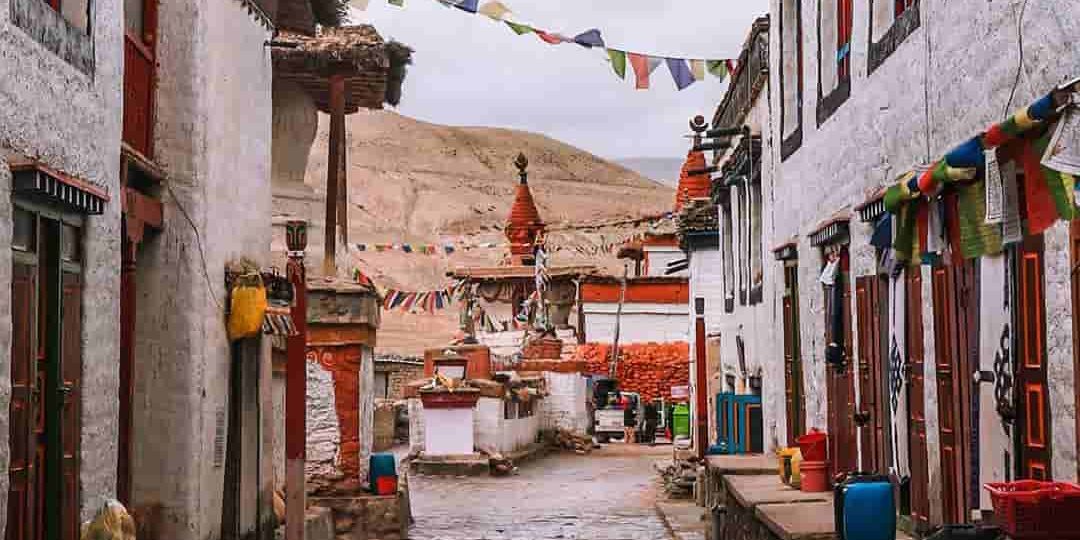
- Extra costs in Lo Manthang
- Travel insurance
- Flight delays and buffer days
- What’s included in a MountainKick package
- What you pay separately
- Budget checklist
- FAQs
Upper Mustang is one of the more expensive treks in Nepal to plan for, but the reason isn’t always clear from a single headline number. Between the government permit, the package price, transport choices, and daily spending on the trail, it helps to see the whole picture before you book.
This guide breaks down what MountainKick’s Upper Mustang Trek actually costs, what’s included in the package, what you’ll pay separately, and how the 2026 permit changes affect your total.
Important: The Upper Mustang Permit Cost Changed in 2026
If you’ve read other articles about Upper Mustang costs, you may have seen the Restricted Area Permit listed as $500 for the first 10 days plus $50 for each additional day. That was the rule until a Cabinet decision on November 18, 2025 replaced it with a flat USD 50 per person per day, with no minimum stay at all, by amending Schedule 12 of the Immigration Regulations. The Trekking Agencies’ Association of Nepal (TAAN) confirmed the change shortly after it was announced.
Some sites, including at least one Nepal government tourism page, still show the old $500 figure, so it’s worth checking the date on any source quoting that number rather than assuming government pages are automatically current. The rest of this guide uses the $50/day rate throughout.
How Much Does an Upper Mustang Trek Cost?
MountainKick’s Upper Mustang Trek is a 16-day package priced by group size. A group of 2 to 3 pays $1,697 per person. Solo trekkers pay $1,987, since the fixed costs of a guide and logistics get split across fewer people. Larger groups bring the per-person cost down further.
That price covers most of what you’d otherwise have to arrange piece by piece: permits, guide, porter, accommodation, and the flights to and from Jomsom. What it doesn’t cover is food on the trail and personal spending, which is where most of the day-to-day budgeting comes in. See our current Upper Mustang Trek page for the full itinerary and departure dates.
Upper Mustang Trek Cost by Group Size
| Group size | Price per person |
|---|---|
| Solo | $1,987 |
| 2–3 | $1,697 |
| 4–7 | $1,519 |
| 8–12 | $1,480 |
The difference comes mainly from guide, porter, transport and agency logistics being shared across more travelers, not from a different itinerary or service level.
What Does an Upper Mustang Trek Cost in Total?
For a MountainKick 16-day trek, a realistic budget is roughly $2,000 to $2,900+ per person, excluding international flights, depending mainly on group size, food, insurance, tips and personal spending.
| Expense | Approx. cost |
|---|---|
| MountainKick package | $1,480–$1,987 |
| Food on trek | $300–$500 |
| Travel insurance | Varies by provider and coverage |
| Nepal visa | $30–$50 |
| Guide and porter tips | See our guide to tipping in Nepal |
| Personal expenses (showers, wifi, charging, snacks) | $75–$150 |
Upper Mustang Restricted Area Permit: What Changed
The current rate is USD 50 per person, per day, with no minimum stay. This replaced the old system of a flat $500 for the first 10 days plus $50 for each additional day, changed by Cabinet decision in November 2025. The permit is arranged through a registered trekking agency and is already built into MountainKick’s package price, along with a licensed guide, mandatory for anyone entering Upper Mustang regardless of group size.
Separately, the group-size minimum that used to apply to restricted areas was scrapped in March 2026. Solo trekkers can now get the Upper Mustang permit on their own, though the guide requirement hasn’t changed.
Upper Mustang Restricted Area Permit Cost by Permit Duration
| Permit duration | Cost |
|---|---|
| 3 days | $150 |
| 5 days | $250 |
| 7 days | $350 |
| 10 days | $500 |
| 12 days | $600 |
| 14 days | $700 |
This is the permit cost for that many days spent inside the restricted zone. It isn’t automatically the same as your total trek length, as the next section explains.
Does a 16-Day Trek Mean I Pay $800 for the Permit?
Not necessarily. The $50 daily rate applies only to the days covered by the Restricted Area Permit, counted from Kagbeni. A 16-day Kathmandu-to-Kathmandu itinerary includes Kathmandu, Pokhara and travel outside the restricted zone, none of which count toward the permit. So the permit-day count is lower than 16, and this is already factored into MountainKick’s package price rather than something you calculate separately when booking.
Can You Trek Upper Mustang Alone in 2026?
Yes. The minimum group-size requirement for restricted-area permits was removed in March 2026. Solo doesn’t mean unguided, though. The licensed-guide requirement hasn’t changed. MountainKick’s current solo price is $1,987.
ACAP Permit
Upper Mustang also requires an Annapurna Conservation Area Permit, since the route runs through the Annapurna Conservation Area before reaching the restricted zone. MountainKick lists the foreign-national ACAP fee at NPR 3,000, roughly $20 to 25, and this is included in the package alongside the Restricted Area Permit.
TIMS card: included in the MountainKick package.
Pokhara to Jomsom: Flight or Jeep
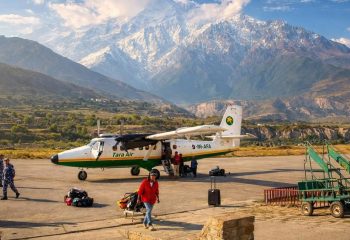
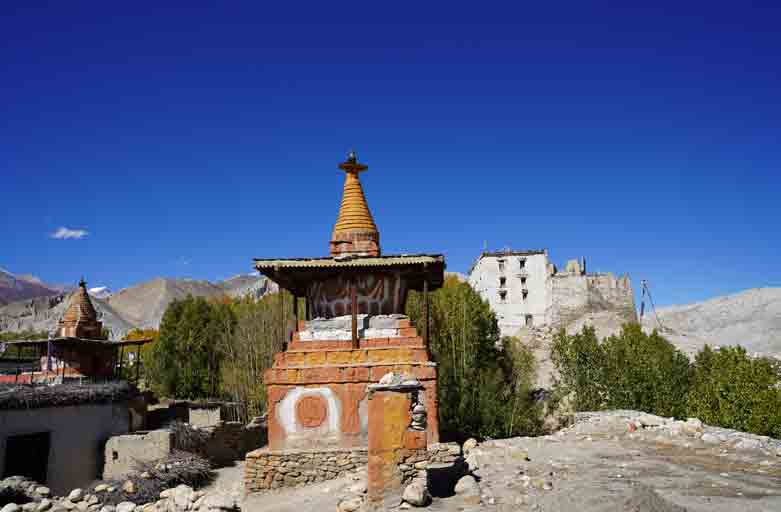
The standard route to the trailhead is a short flight from Pokhara to Jomsom, roughly 20 to 25 minutes and included both ways in the package. This is also the leg most exposed to weather delays, since flights only run in the morning before winds pick up.
A jeep is the budget alternative, taking 6 to 8 hours over rougher roads instead of the 20-minute flight. It’s worth asking about if you’d rather trade time for a lower cost, or want a backup plan in case flights are grounded.
Kathmandu to Pokhara: Bus, Private Vehicle or Flight
The included option is a tourist bus, roughly 6 to 7 hours each way along the Prithvi Highway. Two upgrades are available if you’d rather skip it:
- A private vehicle or jeep, roughly $160 to $180 per vehicle each way, faster and more flexible on departure times, worth it for couples or small groups splitting the cost
- A domestic flight, roughly 25 minutes, for trekkers who’d rather not spend a day on the road at all
Both are add-ons to the standard package rather than the default.
Trek vs. Jeep: Which Is Cheaper?
| Trek | Jeep | |
|---|---|---|
| Walking | Main activity | Limited |
| Duration | ~16 days | Can be much shorter |
| Jomsom access | Flight or jeep | Jeep |
| Guide | Required | Required |
| Restricted permit | Required | Required |
| Accommodation | Teahouses | Hotels/teahouses |
| Best for | Trekkers who want to walk | Travelers short on time |
A jeep tour isn’t automatically cheaper overall, since private vehicle costs can add up. What makes it cheaper in some itineraries is covering the route in fewer days, not a lower daily rate.
Accommodation
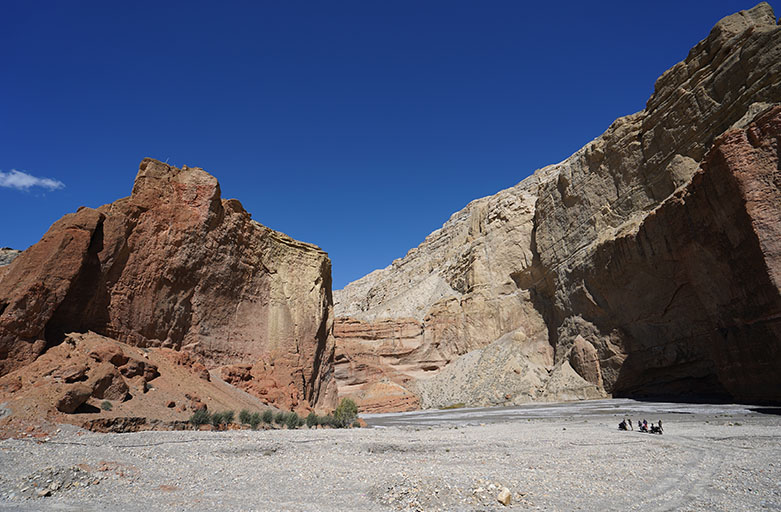
City nights are in 3-star hotels in Kathmandu and Pokhara, twin-sharing with breakfast included. On the trail, it’s family-run teahouses, also twin-sharing, with standards generally better between Kagbeni and Lo Manthang and more basic on the return leg through Dhamkar and Syangboche. A single supplement is available on request for anyone who wants their own room.
Food and Daily Meal Costs
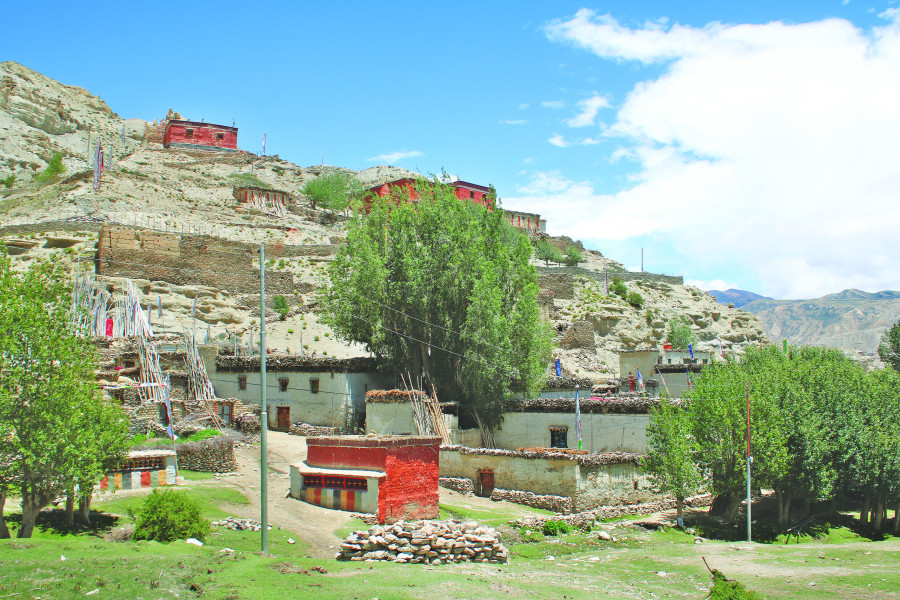
Meals on the trail are pay as you go, generally $30 to $50 per person per day. Teahouse menus cover dal bhat, noodle soups, momos, fried rice, eggs and porridge, with more Tibetan dishes like thukpa and tsampa appearing past Charang. Dal bhat is usually the best value and safest choice at altitude, since it’s cooked fresh and refillable. Meat is generally not recommended past Lo Manthang, since it arrives by mule and freshness can’t be guaranteed that far out.
Prices climb the farther north you go, since everything on the trail is carried in rather than trucked.
Guide and Porter, and Tipping
A licensed guide is included in the package and mandatory for this restricted area regardless of group size. A porter is also included, generally at a ratio of one porter per two trekkers with a 20kg load limit.
Guide and porter tips aren’t included in the package and are customary at the end of the trek. See our guide to tipping guides and porters in Nepal for suggested amounts.
Why Upper Mustang Costs More Than Many Nepal Treks
- The Restricted Area Permit itself, at $50 per day, is a cost most other Nepal treks simply don’t have
- The route requires a flight, or a long jeep ride, to reach the trailhead, rather than just a bus
- Fewer lodges and a smaller supply network mean higher costs for food and goods the farther north you travel
- The licensed guide requirement applies regardless of group size or experience level
- The remoteness adds administrative and logistical overhead that more accessible treks don’t carry
| Trek | Main cost driver |
|---|---|
| Upper Mustang | Restricted permit + remote logistics |
| Manaslu Circuit | Restricted permit + remote logistics |
| Everest Base Camp | Lukla flights + duration |
| Annapurna Circuit | Transport + duration |
| Annapurna Base Camp | Transport + accommodation |
Upper Mustang generally carries a higher permit and logistics burden because of its restricted-area rules and remote location.
Personal Expenses
Beyond food, budget for hot showers ($4 to $6), device charging ($3 to $5), wifi where available ($2 to $4), and bottled water ($2 to $3). These add up over 16 days, so it’s worth carrying more cash than the food budget alone suggests.
How Much Cash Should You Carry?
ATM access becomes very limited beyond Jomsom, so carry enough Nepali rupees before heading north. Cash covers meals, drinks, showers, charging, wifi, monastery and palace visits, and other personal spending. Carry small denomination notes, since change can be hard to come by in the more remote villages.
Extra Costs in Lo Manthang
Beyond the main package, you may want to budget separately for:
- Monastery and palace entrance fees, generally small and paid in cash on site
- Donations at religious sites
- Souvenirs and local handicrafts
Travel Insurance
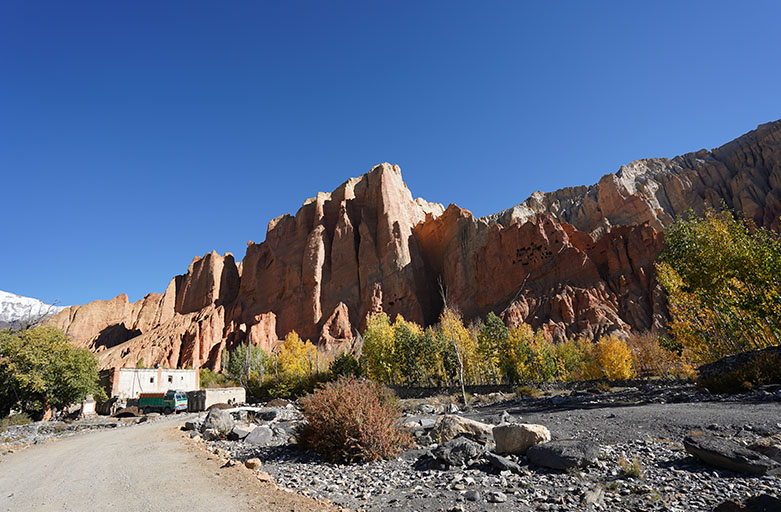
Travel insurance isn’t included and should cover emergency evacuation at the maximum altitude reached on your itinerary. MountainKick’s current Upper Mustang itinerary reaches about 4,100m at Dhi Pass, the trek’s highest point. Arranging this is your own responsibility before departure. Our guide to travel insurance for trekking in Nepal covers what a policy needs to include.
Flight Delays and Buffer Days
Pokhara to Jomsom is one of the more weather-sensitive routes in Nepal, since flights only operate in calm morning conditions. It’s worth budgeting one or two spare days in your schedule. If your flight is cancelled, you may need to cover an extra hotel night, extra meals, a rebooked flight, or, in some cases, an additional trekking day and permit day if your return is pushed back while you’re still inside the restricted zone. Travel insurance doesn’t automatically cover every delay, so check your specific policy rather than assuming it’s included.
What’s Included in a MountainKick Upper Mustang Package
- Airport transfers in Kathmandu
- Hotel in Kathmandu and Pokhara, twin-sharing with breakfast, 4 nights total
- Teahouse accommodation on trek, twin-sharing, 10 nights
- Licensed guide for the full trek
- Porter service
- Upper Mustang Restricted Area Permit
- ACAP permit
- TIMS card
- Flights Pokhara to Jomsom and return
- Tourist bus Kathmandu to Pokhara and return
- Farewell dinner in Kathmandu
- A MountainKick duffel bag, yours to keep
What You Pay Separately
- International flights to and from Kathmandu
- Nepal visa fee (15 days $30, 30 days $50, on arrival)
- Travel insurance, covering evacuation at the maximum altitude on your itinerary
- All meals on the trek, generally $30 to $50 per day
- Lunch and dinner in Kathmandu and Pokhara, except the farewell dinner
- Guide and porter tips
- Personal expenses: hot showers, wifi, charging, snacks
- Monastery and cultural-site fees in Lo Manthang
Anyone wondering whether a guide is strictly necessary for a trek like this can see our guide requirement rules for trekking in Nepal.
Budget Checklist
Before booking, budget for:
- MountainKick package
- Food
- Nepal visa
- Travel insurance
- Guide and porter tips
- Showers, charging, wifi
- Snacks and drinks
- Monastery and cultural-site fees
- Extra nights for flight delays
- International flights
Frequently Asked Questions
How much does the Upper Mustang Trek cost?
MountainKick’s package starts from $1,697 per person for a group of 2 to 3, scaling down to $1,480 for larger groups of 8 to 12. This covers permits, guide, porter, accommodation and the Pokhara to Jomsom flights. A realistic total including food, tips and personal expenses runs roughly $2,000 to $2,900+, excluding international flights.
How much is the Upper Mustang permit?
The Restricted Area Permit is $50 per person per day, with no minimum, counted from Kagbeni. A 10-day permit costs $500, a 14-day permit costs $700. This changed from the old $500-flat-plus-$50-per-extra-day system in November 2025.
Does a 16-day trek mean I pay $800 in permit fees?
No. The permit applies only to days spent inside the restricted zone, not the full Kathmandu-to-Kathmandu trip length.
Can I take a jeep instead of flying to Jomsom?
Yes. A jeep from Pokhara to Jomsom takes 6 to 8 hours compared to the 20-minute flight, and is a cheaper, if slower, alternative.
Can I upgrade the Kathmandu to Pokhara transport?
Yes. The package includes a tourist bus, but a private vehicle (roughly $160 to $180 per vehicle) or a domestic flight are both available as upgrades.
Do I need travel insurance?
Yes, and it should cover emergency evacuation at the maximum altitude reached on your itinerary, about 4,100m at Dhi Pass for MountainKick’s current route. This isn’t included in the package price.
Can I do this trek solo?
Yes. As of March 2026, the two-trekker minimum for restricted-area permits was removed, so solo trekkers can get the Upper Mustang permit on their own. A licensed guide is still mandatory.
Is food included in the package?
No. Meals on the trail are pay as you go, generally $30 to $50 per person per day.
How much cash should I carry?
Enough Nepali rupees for your whole time beyond Jomsom, since ATM access becomes very limited past that point. This covers food, showers, charging, wifi and any monastery fees in Lo Manthang.