Everest Base Camp Teahouse Guide: Rooms, Food, Showers & What to Expect
Everest Base Camp teahouses are simple twin rooms with a bed, pillow and blanket, a bathroom that’s often shared, and a warm communal dining room where you eat, charge devices and socialise. Facilities are generally better in Lukla, Phakding and Namche — sometimes with private bathrooms and hot showers — and get simpler above Tengboche, where toilets, showers and charging become more basic and cost more.
Rooms themselves are often inexpensive, and in some teahouses the room rate can be very low if you eat your meals there — the trade-off is that you’re generally expected to eat where you sleep. MountainKick also offers upgraded lodge options at several villages on the route, plus more comfortable lodges lower down, for trekkers who want extra comfort without giving up the teahouse experience entirely.
EBC Teahouses: Key Facts
- Room type: Twin rooms as standard, with a bed, pillow, sheet and blanket each
- Bathrooms: Sometimes private in lower villages, more often shared above Namche
- Toilets: Generally more basic with altitude — from flush toilets to manual-flush and squat toilets
- Hot showers: Usually available lower down, more limited and paid above Dingboche — typically USD 2 to 6
- Charging and WiFi: Usually paid, generally more expensive and less reliable with altitude
- Food: Dal bhat, noodle and pasta dishes, soups, momos and simple breakfasts — budget roughly USD 25 to 45 per day
- House custom: Eat where you sleep — room rates are often lower on that basis
- Upgrades: Better rooms available at most villages, more comfortable lodges lower down
Most people booking their first Everest Base Camp trek have some idea of what a “teahouse” is, without really knowing what one is like to actually sleep in. This guide covers exactly that — the rooms, the food, the bathrooms, the internet, what changes as you climb, and what your options are if you want a bit more comfort at certain points on the route.
None of this is meant to put you off. Teahouses are one of the best parts of the EBC experience — warm dining rooms, good food at altitude, and genuine Sherpa hospitality the whole way up. But knowing what to actually expect, rather than picturing a hotel, makes the trek considerably more comfortable in your head before you even leave home.
If you are still deciding whether EBC is the right trek for you, see our Everest Base Camp Trek for the full itinerary, inclusions, pricing and departure options.
What Is a Teahouse, Exactly?
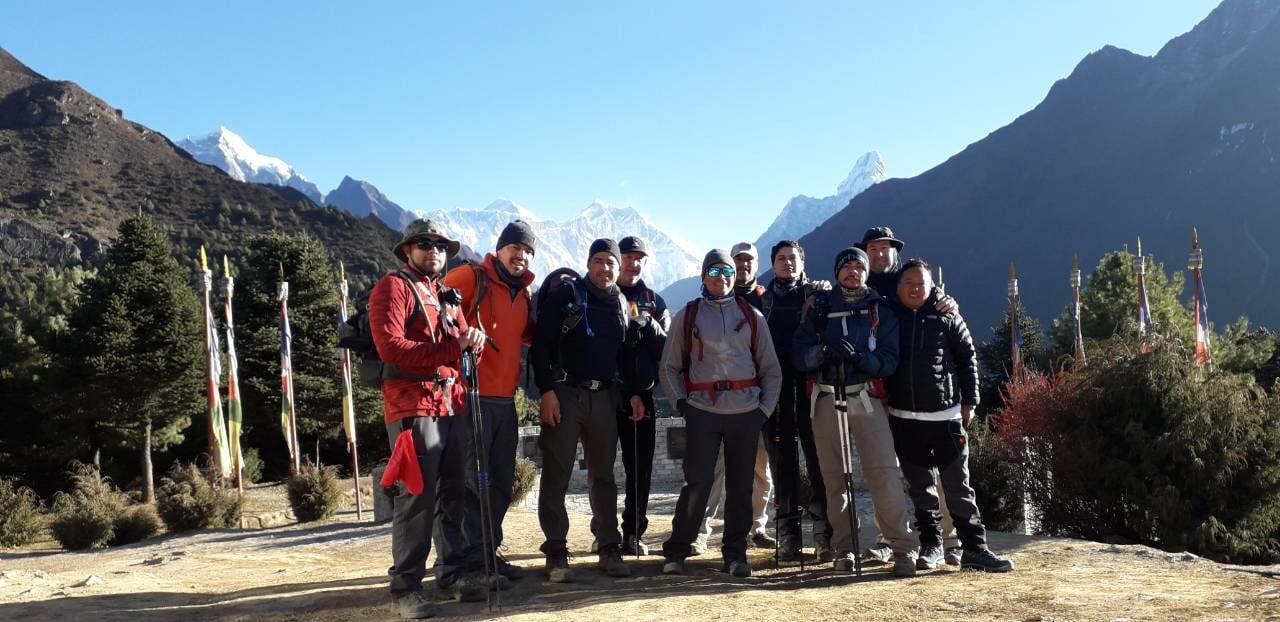
A teahouse is a small, family-run lodge along the trail — part guesthouse, part restaurant, part communal living room. Most trekkers on the standard EBC route sleep in teahouses, moving from Lukla up to Gorak Shep and back down again, with each day’s walk ending at the next village’s lodges.
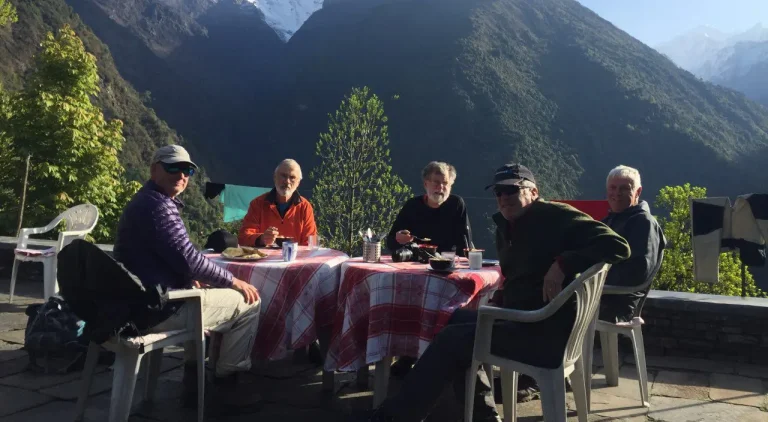
Every teahouse follows roughly the same layout: a row of simple guest rooms, and a large communal dining room with a stove in the middle — traditionally burning yak dung, sometimes gas or electric heating in the busier villages. The dining room is where you eat, charge your devices, dry your socks, and spend most of your evening. It’s usually the warmest room in the building.
If you’re picturing a hotel, recalibrate. If you’re picturing a tent, also recalibrate. It’s somewhere in between — simple, functional, and genuinely welcoming once you understand how it works.
Do You Need to Book Teahouses in Advance?
It depends on the season and how you are trekking. During quieter periods, independent trekkers can often find rooms by arriving in the village and asking at a lodge. In the busiest trekking periods, especially around October and early November, accommodation can become much tighter in popular villages such as Namche, Dingboche, Lobuche and Gorak Shep.
For a guided trek, your agency normally arranges accommodation as part of the trip. MountainKick reserves teahouse rooms for its guided groups, so you do not need to arrive in each village and search for a room yourself.
Rooms: What’s Actually in Them
Standard teahouse rooms are twin rooms — two single beds on either side of the room with a small table between them. Each bed comes with a mattress, a bed sheet, a pillow and a blanket or duvet. That’s about it. No heating, no rugs, and often fairly thin walls between rooms.
A few things worth knowing before you go:
- Bring your own sleeping bag. The blankets provided are a supplement, not a substitute. Rooms are not heated and get genuinely cold overnight, especially above 4,000m. Our Nepal trekking packing list covers the sleeping bag rating you’ll want by season.
- Bring a pillowcase if you plan to use the teahouse pillow. It’s a small thing that makes a real hygiene difference over two weeks.
- Walls can be thin. Earplugs are worth packing — footsteps, coughing, and the occasional early departure from another room can carry more than you’d expect.
- Rooms can fill up in peak season. In October and November especially, some trekkers end up sharing rooms or, in the busiest villages, sleeping in the dining room if beds run out. Booking ahead through your agency helps avoid this.
Food: What’s on the Menu, and the “Eat Where You Sleep” Custom
Teahouse menus are more varied than most first-time trekkers expect. Typical options include dal bhat, thukpa (noodle soup), momos, fried rice, pasta, pizza, soups, and simple breakfasts — porridge, eggs, Tibetan bread, pancakes, toast. Dal bhat is the standard recommendation: rice, lentil soup, a vegetable curry and pickle, often with free refills, and it’s genuinely one of the most filling and nutritious options on most menus.
Budget roughly USD 25 to 45 per day for food, generally rising with altitude since everything above the road has to come up by porter, mule or yak. A meal that costs USD 4 to 7 in Lukla or Namche can cost noticeably more by the time you reach Lobuche or Gorak Shep. Water follows the same pattern — a bottle that costs around USD 1 lower down can cost several times that near Base Camp, which is one good reason to carry a filter or purification tablets rather than buying bottled water the whole way.
There’s an unwritten custom worth knowing before you arrive: teahouses often charge relatively little for the room itself, and make more of their money on food. In many cases, you’re expected to eat your meals — dinner and breakfast at minimum — at the same teahouse you’re sleeping in, and eating elsewhere can mean a higher room rate. This isn’t a scam, it reflects how a lodge at altitude tends to cover its costs, and it’s a common pattern across Nepal’s main trekking regions.
A few practical notes on food safety and comfort: stick to hot, freshly cooked dishes rather than raw salads, which are often washed in tap water. Food storage becomes more challenging at higher elevations, so many trekkers prefer freshly cooked vegetarian meals such as dal bhat above Namche. Alcohol is available at most teahouses but worth avoiding at altitude — it dehydrates you and can mask or worsen symptoms of altitude sickness. See our altitude sickness guide for more on this.
Bathrooms, Toilets and Showers
Facilities generally get simpler the higher you climb, though individual lodges vary and this isn’t a strict rule at every teahouse.
Lower down (Lukla to Namche): Some teahouses have private, en-suite bathrooms with flush toilets, and hot showers are common — though even here, showers are sometimes charged separately rather than included in the room rate.
Mid-route (Tengboche to Dingboche): Bathrooms are more often shared, located down a corridor rather than attached to your room. Toilets often shift toward manual-flush — a squat toilet with a bucket of water beside it rather than a cistern. Hot showers are still sometimes available but usually cost extra, typically USD 2 to 6 depending on the village and how the water is heated.
Higher up (Lobuche, Gorak Shep): Expect more basic long-drop toilets, sometimes inside the building, sometimes in an outhouse. Hot showers become less reliable or unavailable at many lodges — the gas needed to heat water has to be carried up, which makes it expensive and often not offered at all.
A practical rule many experienced trekkers follow: shower in Namche or Dingboche if you want one, and skip it above Lobuche. Getting chilled after a hot shower at 5,000m, in an unheated room, is a worse trade than being a bit grubby for a couple of days. Always carry your own toilet paper — it’s sometimes available to buy at teahouses, but don’t rely on it.
Electricity, Charging and WiFi
Most teahouses now have some form of power — solar panels, small hydro systems, or a generator — but electricity generally becomes less reliable the higher you go. Charging a phone or power bank in the dining room typically costs somewhere between USD 2 and 6 per device, and the price tends to climb with altitude. Charging points are usually in the communal dining room rather than in individual rooms, and outlets can be in short supply on a busy night.
WiFi is available at most teahouses through paid cards, usually somewhere in the range of NPR 500 to 1,500 depending on the village. Namche generally has the most reliable connection on the whole route. Above Dingboche, WiFi tends to become slower, more expensive, and more likely to simply not work when you need it — treat it as a nice-to-have rather than something to rely on for calls or video.
A power bank charged before you leave Kathmandu is one of the more useful small items you can bring, if only to cut down how often you need to pay for charging on the trail.
Village by Village: What to Expect
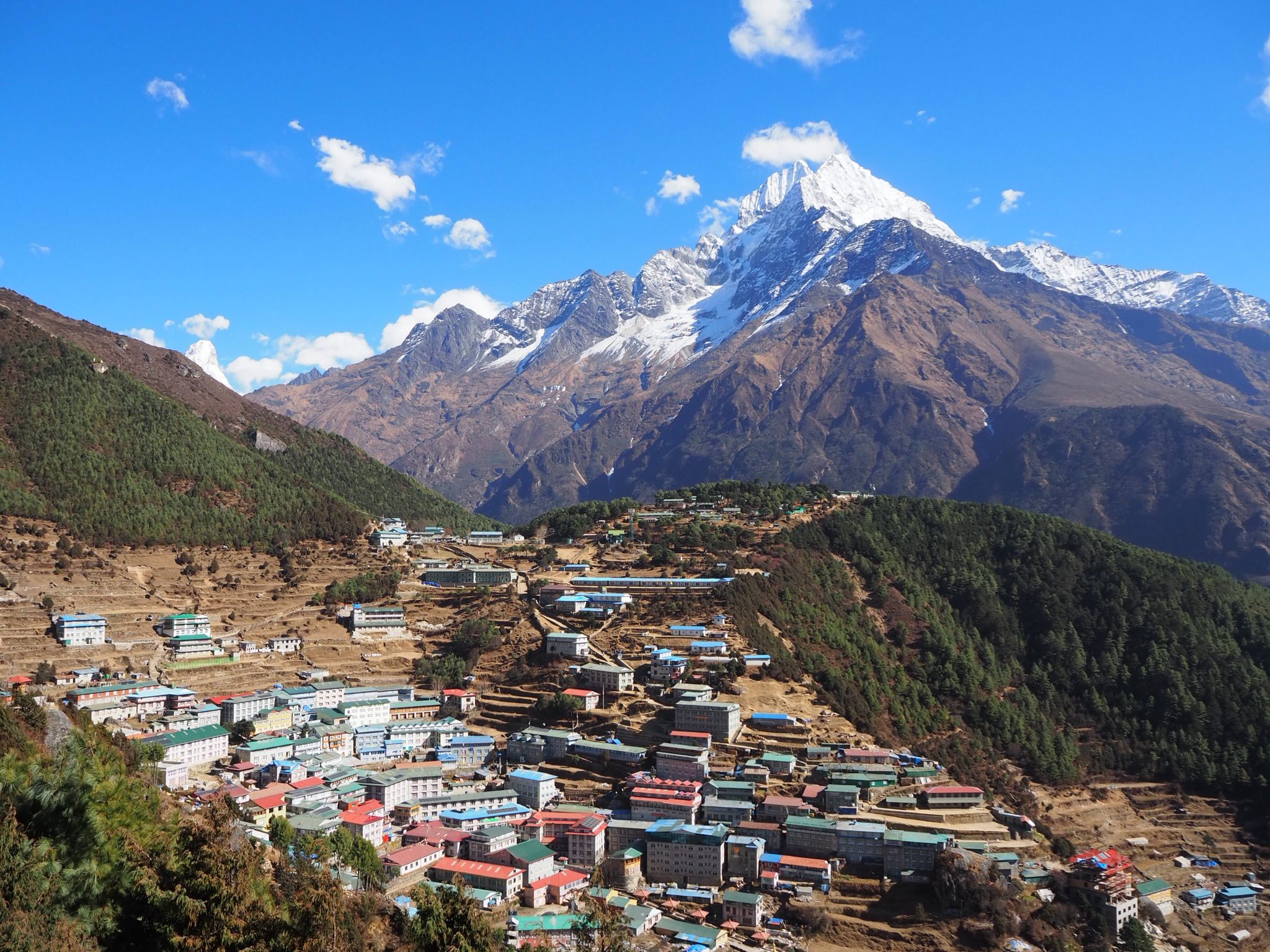
| Village | Altitude | Bathrooms | Hot showers | Notes |
|---|---|---|---|---|
| Lukla | 2,860m | Often private | Usually available | Best facilities on the route, with many trekkers staying here at the start or end |
| Phakding | 2,610m | Often private | Usually available | Riverside setting, comfortable first trekking night |
| Namche Bazaar | 3,440m | Mixed — some private | Usually available, sometimes paid | Largest village, best shops, cafes and WiFi on the trail |
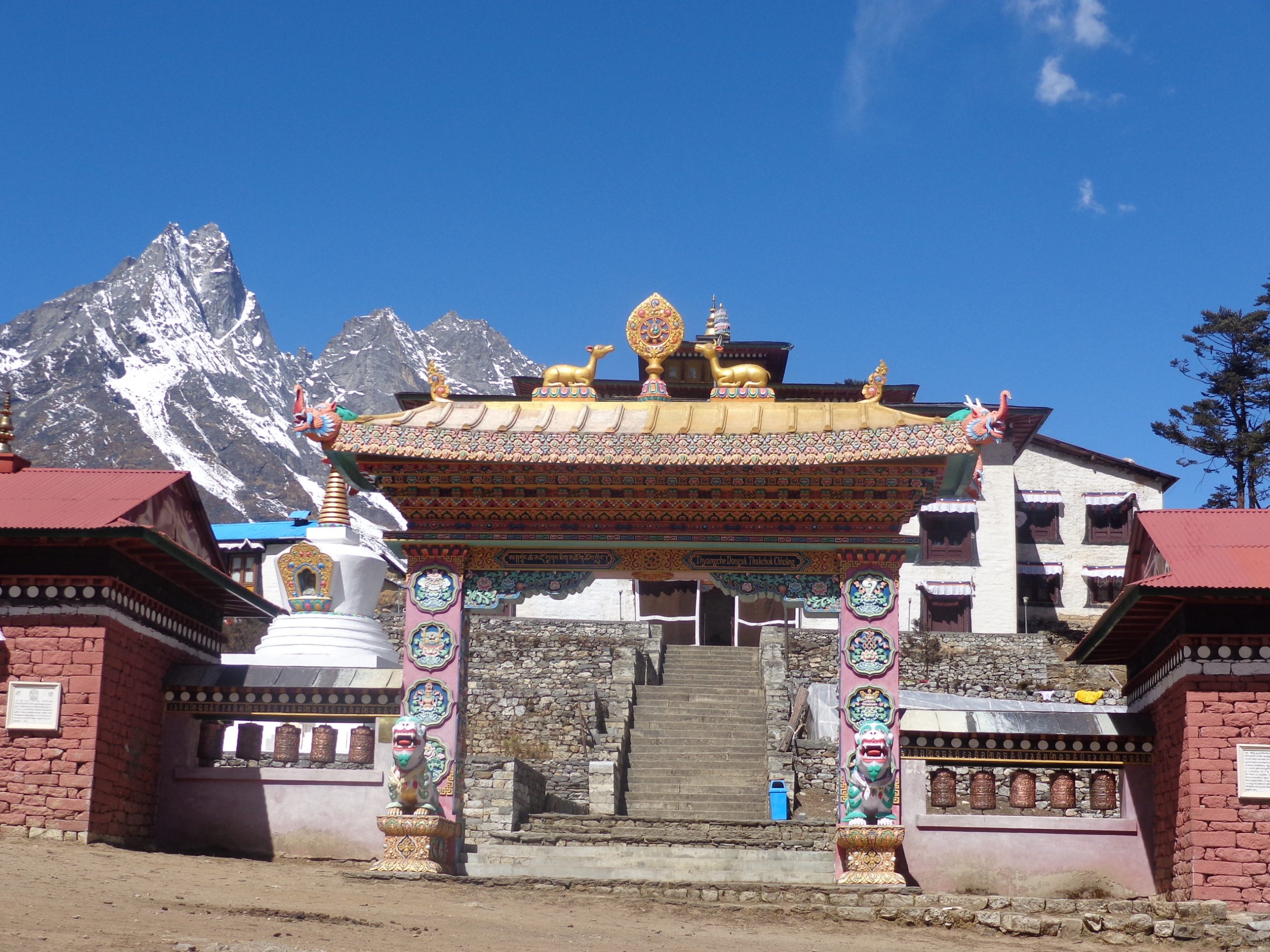
| Tengboche | 3,860m | Often shared | Limited, often paid | Simple rooms, but the monastery setting is worth it |
| Dingboche | 4,360m | Often shared | Paid where available | Acclimatisation stop, basic but functional lodges |
| Pheriche | 4,371m | Often shared | Limited | Alternative acclimatisation stop, home to the HRA rescue post |
| Lobuche | 4,940m | Shared | Rarely available | Basic toilets, cold rooms |
| Gorak Shep | 5,164m | Shared | Rarely available | Most basic facilities on the route, final night before EBC and Kala Patthar |
This table reflects general conditions across the route rather than any one specific lodge — individual teahouses vary, and facilities can change from season to season as buildings are upgraded or expanded.
Upgraded Teahouses on the MountainKick EBC Trek
Standard teahouse accommodation is included in every MountainKick EBC package, and it’s genuinely comfortable enough for the vast majority of trekkers — but for anyone who wants a noticeably better bed, a private bathroom more often, and a warmer room at the end of a long day, we can arrange an upgraded teahouse option at several points on the route.
| Village | Lodge | Nights |
|---|---|---|
| Lukla | Ganesh Himal Hotel | 1 |
| Phakding | Royal Sherpa Hotel | 1 |
| Namche Bazaar | Hotel Yak | 3 |
| Tengboche | Himalaya Hotel or Rivendell Lodge | 1 |
| Dingboche | Dingboche Resort | 2 |
| Pheriche | Pheriche Resort | 1 |
| Lobuche | Mother Earth Lodge | 1 |
| Gorak Shep | Himalaya Hotel | 1 |
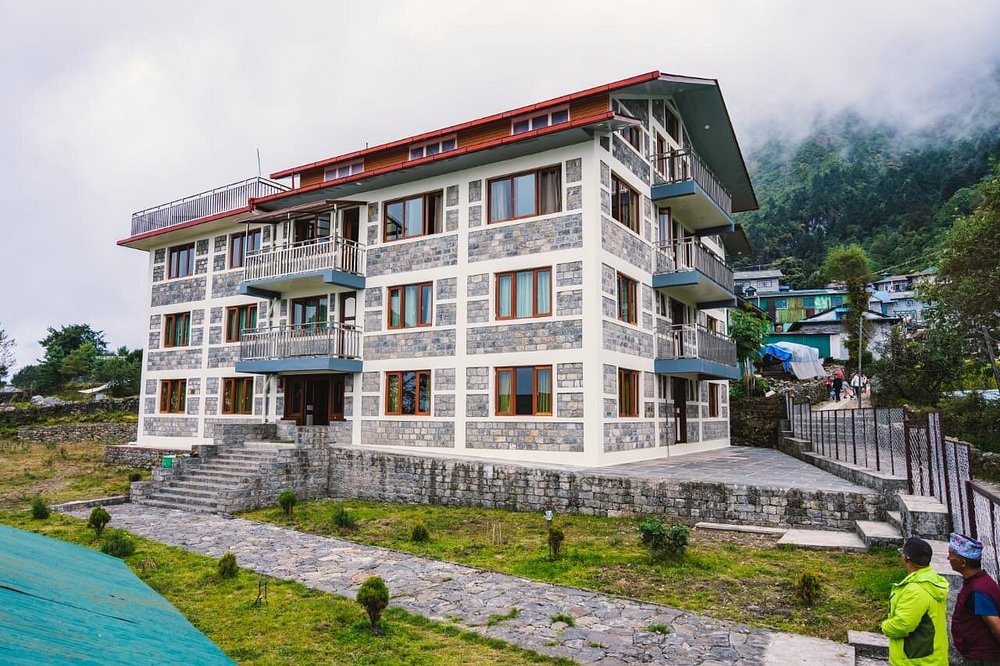
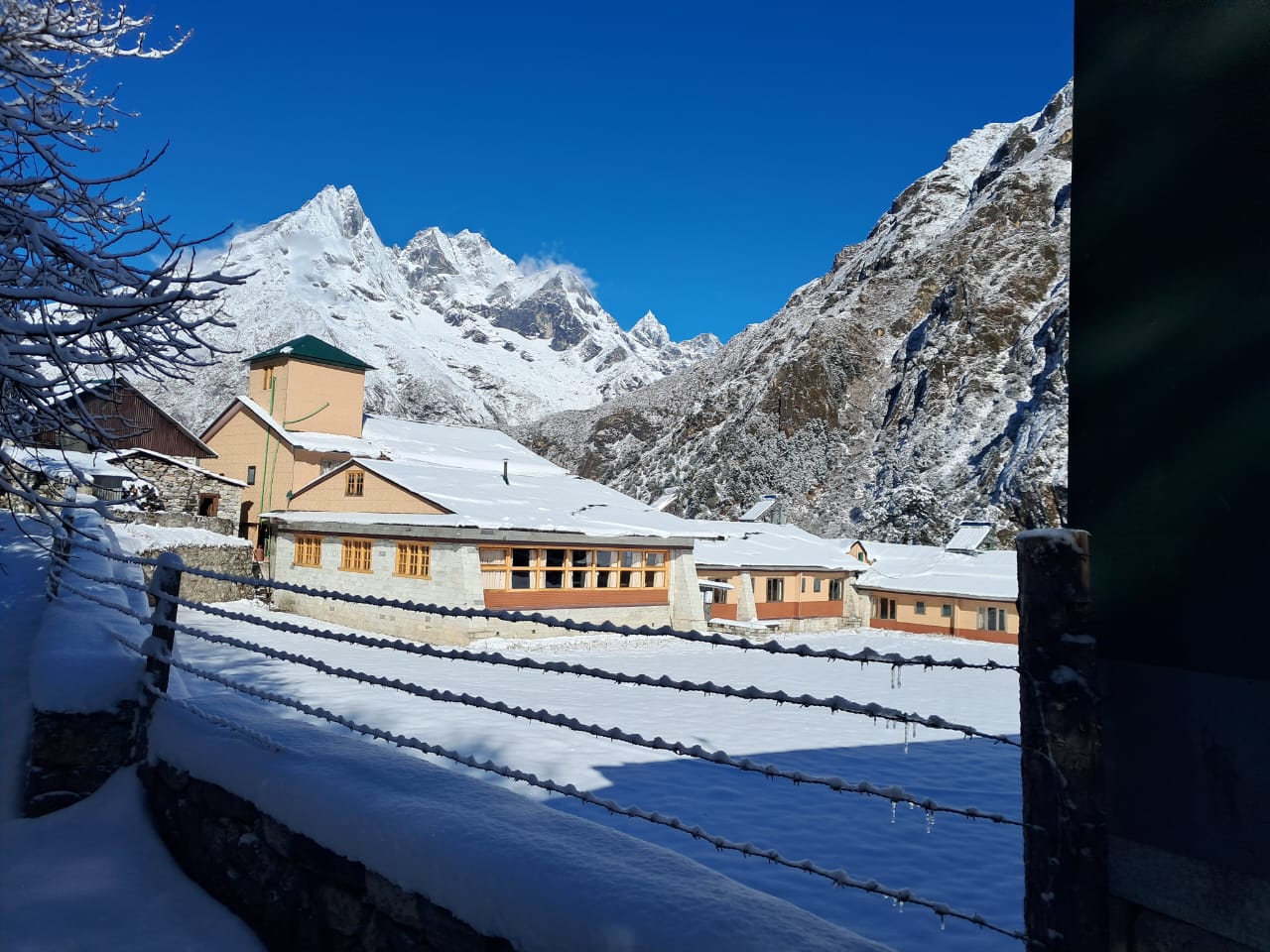
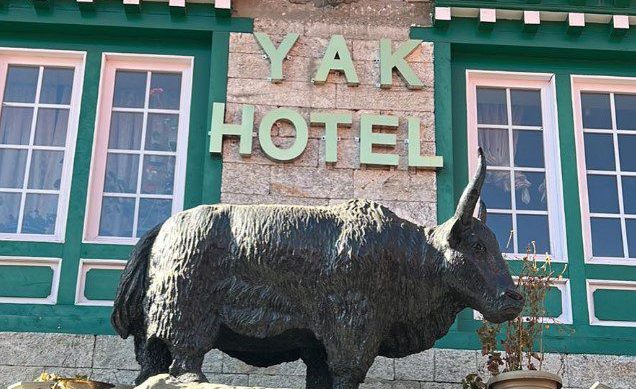
These lodges are still teahouses in character — you’re not swapping the mountain experience for a hotel corridor — but they typically offer more comfortable beds, better insulated rooms, and more reliable hot water and electricity than the most basic option in each village. Above Dingboche the upgrade narrows naturally, since the villages themselves have fewer buildings and less infrastructure to work with, but the difference is still noticeable compared to the most basic teahouse in Lobuche or Gorak Shep.
This upgrade can be added to any MountainKick EBC itinerary for an additional cost on top of the standard package. Get in touch with your dates and we’ll confirm current availability and pricing for the upgraded route.
More Comfortable Lodges in the Lower Khumbu
For trekkers who want a step up from an upgraded teahouse, a small number of more comfortable lodges operate in the lower Khumbu — generally around Lukla, Phakding, Monjo and Namche, with a handful further up in places like Deboche. These typically offer heated rooms, private en-suite bathrooms with more reliable hot water, proper bedding, and a wider food menu, often served in a dedicated dining space rather than a shared communal one.
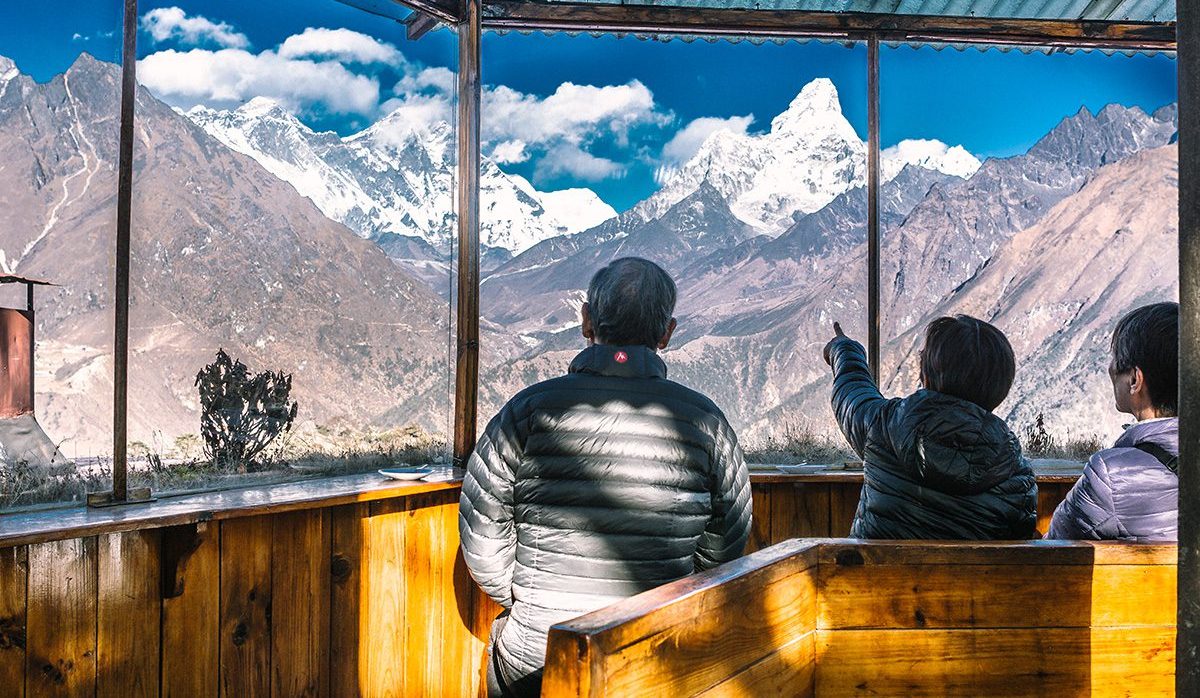
The trade-off is straightforward: this level of comfort generally exists where the infrastructure supports it — the lower villages, closer to the road and airstrip, where building materials and supplies are easier to bring in. Above Dingboche, even the best available lodge is still a simplified version of what you’d find lower down, since a heated en-suite room at 5,000m depends entirely on gas or fuel carried up by porter.
If a more comfortable start and finish to your trek matters to you, this is worth discussing with us directly — we can build a more comfortable lower-Khumbu stay into an otherwise standard MountainKick itinerary.
Practical Tips for a Better Night’s Sleep
- The hot water bottle trick. Fill a hard-sided water bottle with hot water before bed and place it inside your sleeping bag. It can keep you warm for several hours through the night.
- Layer up for bed, not just for walking. A warm hat and dry socks worn to sleep make a real difference above 4,000m, where room temperatures can drop below freezing overnight.
- Carry small NPR notes. Showers, charging and WiFi are almost always cash transactions, and change can be limited at remote teahouses. ATMs are limited beyond Namche, so it’s worth carrying enough cash for the higher part of the trek.
- Book ahead in peak season. October and November get busy enough that walk-in availability above Namche isn’t something to count on.
Teahouses on Other Treks in Nepal
Most of this guide applies on any teahouse trek in Nepal, but the lodges vary by region. Here’s what to expect elsewhere.
Gokyo Valley. The same Khumbu-style lodges as the EBC route up to Namche, then simpler and more spread out above Dole. Gokyo village has a good choice of lodges for its altitude. See our Gokyo Valley trek guide.
Annapurna region. Well-established lodges with long menus on the Annapurna Circuit, ABC and Poon Hill routes, and hot showers are common lower down. They get simpler near the Thorong La and at Annapurna Base Camp. See our Annapurna Circuit and Annapurna Base Camp cost guides.
Manaslu and Tsum Valley. More basic than Everest or Annapurna, with fewer lodges and smaller menus, especially near the Larkya La. In Tsum Valley, MountainKick groups spend two nights inside Mu Gompa, a working monastery. See our Manaslu and Tsum Valley cost guides.
Upper Mustang. Family-run Loba and Thakali lodges, generally good between Kagbeni and Lo Manthang and more basic on the return through Dhakmar and Syangboche. See our Upper Mustang trek guide.
Langtang. Smaller family-run lodges with a strong Tamang character. Road access was affected by the August 2026 floods, so check current conditions before you plan a Langtang trek.
Frequently Asked Questions
Do I need to bring my own sleeping bag if teahouses provide blankets?
Yes. The blankets or duvets provided are meant as an addition to your own sleeping bag, not a replacement for it. Rooms are unheated and can get genuinely cold overnight, particularly above 4,000m. See our Nepal trekking packing list for the sleeping bag rating we recommend by season.
Are showers included in the room price?
Usually not, though it varies by lodge. Most hot showers cost extra, typically USD 2 to 6 depending on the village and how the water is heated. The cost tends to rise with altitude, and showers become less reliable or unavailable at many lodges above Lobuche.
Why is my teahouse room so cheap?
Because teahouses often make more of their money from meals than from beds. Rooms are frequently priced low, sometimes very low, on the understanding that you eat your dinner and breakfast at the same lodge. If you eat elsewhere, the room rate can be higher.
Do I need to book teahouses in advance?
It depends on the season. In quieter periods, independent trekkers can often find rooms on arrival. In the busiest weeks, roughly October and early November, popular villages such as Namche, Dingboche, Lobuche and Gorak Shep can be tighter. On a guided trek, your agency normally handles this as part of the itinerary.
Is the food safe to eat on the EBC trek?
Hot, freshly cooked food is generally fine. Dal bhat, soups, noodle dishes and other cooked meals are the safest options. It’s worth avoiding raw salads and unpeeled fruit, which are often washed in tap water. Food storage becomes more challenging at higher elevations, so many trekkers prefer freshly cooked vegetarian meals the further they go.
Will I have WiFi and phone signal the whole way?
Not reliably. Paid WiFi is available at most teahouses, but connection quality drops noticeably above Dingboche. Treat it as occasional rather than something to plan around for calls or video, and consider a local SIM as a backup for basic messaging.
Can I upgrade my accommodation on the EBC trek?
Yes. MountainKick offers an upgraded teahouse option at most villages on the route, and more comfortable lodges are available in the lower Khumbu around Lukla, Phakding and Namche. Contact us with your dates to discuss current options and pricing.
Do teahouses get more basic the higher I climb?
Generally, yes. Lukla, Phakding and Namche tend to have the best facilities on the route, sometimes including private bathrooms and reliable hot water. Above Tengboche, rooms are typically simpler, bathrooms are more often shared, and showers, charging and WiFi tend to become more basic, more expensive and less predictable.
Planning your EBC trek?
Standard teahouse accommodation is included in every MountainKick EBC package. If you’d like to discuss an upgraded lodge option or a more comfortable stay in the lower Khumbu, get in touch with your dates and we’ll confirm what’s available.
WhatsApp: +977 985 118 2718
View EBC Trek Ask a QuestionFurther Reading
- Everest Base Camp Trek Cost 2026: The Complete Breakdown
- Nepal Trekking Packing List 2026
- Trekking Gear Rental in Kathmandu: What to Actually Rent and What to Skip
- Altitude Sickness on Nepal Treks: Symptoms, Prevention and What to Do
- Is Everest Base Camp Trek Hard? A Straight Answer From 20+ Years of Guiding
- How to Train for Everest Base Camp