How to Train for Everest Base Camp: A Realistic Preparation Guide
Quick Answer
You don’t need to be an elite athlete to trek to Everest Base Camp, but you do need good endurance and the ability to handle several long days at altitude. Start preparing 8 to 12 weeks before your trek with regular hiking, hill or stair work, and strength training. Training improves your fitness. It doesn’t prevent altitude sickness. That comes down to pacing and acclimatisation on the trail itself.
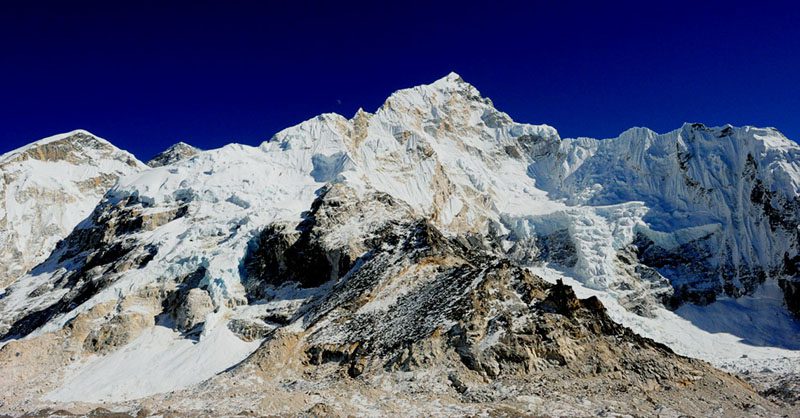
What the Route Actually Asks of You
Training advice means more when it’s tied to a real itinerary instead of generic numbers. Here’s what our 14-day Everest Base Camp route actually demands, day by day:
- Day 3, to Namche Bazaar: 830m of climbing in the final two hours. The first real test, and it comes early.
- Day 9, to Gorakshep and Base Camp: 7 to 8 hours out and back, with long sections over rocky, uneven terrain and moraine.
- Day 10, Kala Patthar: a 4am start, climbing in the dark and cold to 5,545m before breakfast.
- Day 12, to Lukla: 7 hours and 18 to 19km, the longest walking day of the trip. Most of the route is descending, but there is a final climb into Lukla on tired legs.
Notice what’s missing: nothing technical. No ropes, no exposure, no climbing skill. What tends to challenge trekkers most is sustained walking at altitude and the toll a week of long days can take on legs that weren’t ready for it.
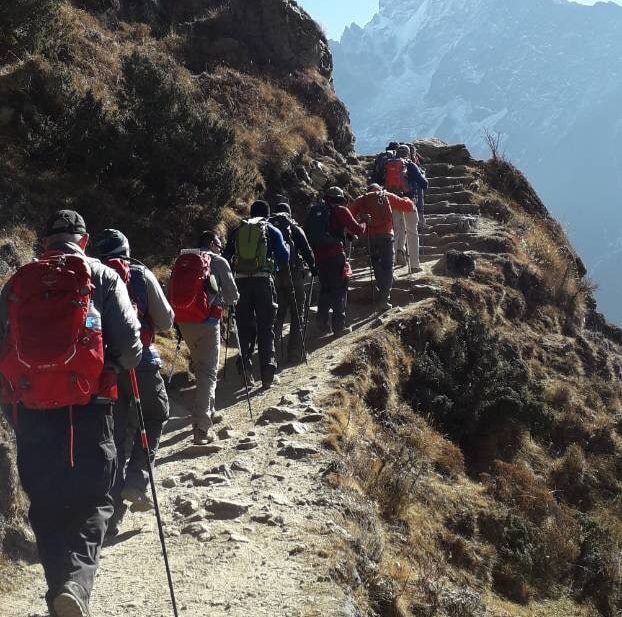
Are You Fit Enough to Start Training?
You don’t need to hit specific numbers before you begin. As a rough starting point, being able to climb several flights of stairs or walk uphill continuously for 45 to 60 minutes without frequent breaks is a useful sign of baseline fitness. Being comfortable walking 10 to 15km in a day is another good indicator, but you can build toward that if you’re not there yet. If you’re not there now, that’s fine. It just means your plan starts with base fitness rather than trek-specific training. See our Nepal trek difficulty guide for how EBC compares to other routes.
How Far Out Should You Start?
| Time before your trek | Focus |
|---|---|
| 12+ weeks | Build basic fitness |
| 8 to 12 weeks | Endurance and strength |
| 4 to 8 weeks | Longer hikes with elevation |
| 2 to 4 weeks | Trek-specific conditioning |
| Final week | Reduce training, recover |
The Training Plan
Weeks 1 to 4, base building. Three to four sessions a week of steady walking, hiking, cycling, or swimming. Start at 30 to 45 minutes and build toward 60 to 90. No pack yet, or a very light one.
Weeks 5 to 8, hills and pack weight. Add stairs or hill repeats twice a week. Start carrying a light daypack on hikes and build toward around 5 to 7kg. This is also when to add basic strength work, twice a week.
Weeks 9 to 11, trek simulation. Longer weekend hikes of 5 to 7 hours. If you can manage back-to-back hiking days, even a shorter Sunday after a longer Saturday, that’s the closest simulation of consecutive trekking days you’ll get before you fly.
Week 12, taper. Light walks, stretching, rest. You want to arrive in Kathmandu recovered, not exhausted from your own training.
If you only have 6 to 8 weeks, compress the middle phases rather than skipping the taper. If you’re already a regular hiker with experience above 3,000m, 6 to 8 weeks is workable.
How Hard Should Your Training Be?
You don’t need every workout to leave you exhausted. Most training should feel manageable enough that you can recover and train again the next day. The goal is to gradually increase time on your feet, elevation gain, and consecutive-day endurance, not to prove how hard you can push yourself. A long hike that leaves you unable to walk comfortably the next day isn’t productive EBC preparation.
What Training Can’t Fix
You can be the fittest person on the trail and still get altitude sickness. It’s not a fitness problem, it’s a physiological one, and it affects people regardless of how much they trained. Training keeps you from adding unnecessary fatigue on top of the altitude load, which matters, but it isn’t protection against altitude sickness itself.
The things that matter most are gradual acclimatisation, pacing, recognising symptoms early, and following your guide’s advice. Staying hydrated is also important while trekking at altitude. Our altitude sickness guide covers this in full.

Best Exercises for the Trail
Keep it simple rather than turning this into a gym encyclopedia:
- Squats, lunges, and step-ups for leg strength
- Calf raises, since they take the brunt of steep ascents and descents
- Core work: planks, dead bugs, for balance on uneven terrain
- Two sessions a week is enough alongside your hiking
Don’t Skip the Loaded Pack
A big share of the hikers who struggle trained hard but never once walked with weight on their back. Wear the actual daypack you’ll bring, loaded to roughly what you’ll carry on the trek, on some of your longer training hikes.
Worth clarifying: your daypack is not the same as your full luggage. Your porter carries the bulk of your gear in a duffel. What you carry yourself is water, a camera, a layer or two, snacks, usually around 5 to 7kg when fully loaded. Train for that weight, not for what you’re packing for the whole trip.

Train the Downhills, Not Just the Climbs
Most generic training plans focus on uphill effort because that’s what feels hard in the moment. But the descent from Kala Patthar, and the long downhill day into Lukla, are where knees actually give people trouble. Add downhill-specific work: slow eccentric squats, lunges, and deliberately walking down real hills during training, not just up them. Your knees don’t care that you’ve reached the highest point of the trek.
Break in your boots properly before you go. New boots on Day 2 of a 14-day trek is a bad way to start.
You Don’t Need Mountain Access to Train
If you live somewhere flat, you can still prepare well. Stairs, a stair machine, or a steep parking garage do the job. What matters is repeated elevation gain and time on your feet, not the specific terrain you train on.
Being extremely fit at sea level and being acclimatised to altitude are two different things. Fitness can be built at home. Acclimatisation has to happen through appropriate exposure to altitude during the trek.
If You’re Older or Less Active
You don’t need to be young or already fit to prepare well. The main adjustment is time: don’t compress three months of training into three weeks. Start walking regularly now, build duration gradually, and give yourself the fuller end of the 8 to 12 week range rather than the shorter one.
If you have any ongoing health concerns, it’s worth discussing high-altitude trekking with a doctor before you commit to a training plan.
The Final Two Weeks
- Finish your last really long training hike about 7 to 10 days before departure rather than pushing hard right up to the trip
- Break in your boots fully if you haven’t already
- Organise your gear early using our EBC packing list so nothing’s a last-minute scramble
- Confirm your travel insurance is arranged well before departure, not the night before you fly
- Keep training light: short walks, stretching, sleep
- Arrive in Kathmandu rested, not depleted
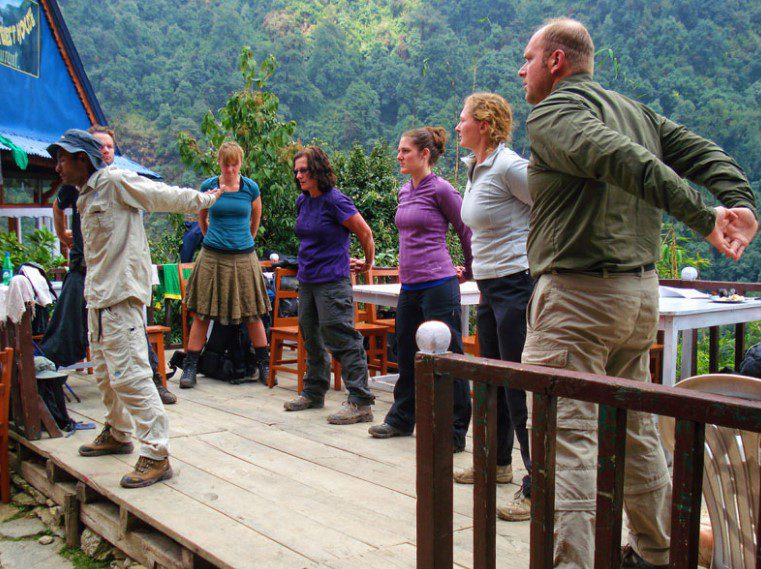
Training Checklist
Before you leave home, can you:
- Walk 4 to 6 hours comfortably
- Hike uphill for extended periods
- Walk two days in a row without your legs giving up
- Walk comfortably in the boots you’re bringing
- Carry your daypack without difficulty
- Recover reasonably well overnight
- Handle stairs or hills without excessive fatigue
If you can tick most of these, you’re in good shape to start the trek. For the route itself, see our Everest Base Camp Trek page.

Frequently Asked Questions
How many weeks should I train before Everest Base Camp?
8 to 12 weeks is the range most people need. If you’re already a regular hiker, 6 to 8 weeks can work. If you’re starting from a fairly sedentary baseline, lean toward the full 12 weeks.
Do I need to run, or can I just walk?
Running can help build cardiovascular fitness, but it isn’t necessary. Walking, hiking, cycling, swimming, and stair work can all build useful endurance for the trek.
How much weight should I carry in training?
Build from a light pack, around 3kg, toward 5 to 7kg over the course of your training. That matches what you’ll carry in your own daypack, since your porter carries the rest.
Can training prevent altitude sickness?
No. Altitude sickness isn’t a fitness problem, and being fit doesn’t make you immune to it. Training helps by preventing added fatigue, but real protection comes from the acclimatisation schedule and paying attention to early symptoms.
Can I prepare for Everest Base Camp if I don’t hike regularly?
Yes. Start with regular walking and gradually increase duration, hills, and elevation. You don’t need years of hiking experience, but you should give yourself enough time to build endurance rather than trying to get fit in the final few weeks.
Do I need to train at altitude before Everest Base Camp?
No. Training at altitude isn’t necessary for most trekkers. Physical conditioning and acclimatisation are different things. You can build your fitness at home; acclimatisation happens progressively during the trek.