Lukla Flight Delays: What Actually Happens and How to Handle It
Lukla flight delays are common enough that every Everest Base Camp trekker should plan for them. Weather, visibility, cloud, and wind can stop flights with little notice. October and April are generally good periods for flying, while winter, November, and late spring can bring more disruption. The safest approach is simple: never book an international connection on the same day as your Lukla flight, and build at least one to two buffer days into your Kathmandu schedule.
When delays run long, your main options are to wait for the next available flight, arrange a helicopter flight at your own cost, or use the Manthali route when flights are operating from Ramechhap. MountainKick manages the logistics and rebooking process for our trekkers.
Lukla Flight Delays: Key Facts
- Main cause: Morning valley fog, cloud, and wind, most often affecting November through February
- Generally favourable months: October and April, though individual flights can still be affected
- More variable periods: November, late May, and the winter months from December to February
- How long delays can last: From a few hours to several days when weather stays unsuitable for flying
- Helicopter option: Roughly USD 500 to 700 per person Lukla to Kathmandu when available, prices vary with demand
- Manthali alternative: Avoids the Kathmandu valley departure problem, though a very early road transfer is required
- Buffer days recommended: At least one to two spare days rather than a tight international connection
- Never do this: Book an international connection on the same day as your Lukla flight
Lukla flight delays are the thing trekkers worry about most before an EBC trip, and they are also the least well-explained. Travel forums are full of horror stories: days stranded waiting for the weather to clear, missed international connections, hundreds of dollars spent on last-minute helicopters. Most of those stories are real. What they usually leave out is that delays are manageable if you plan for them properly.
Why Lukla Flights Get Delayed
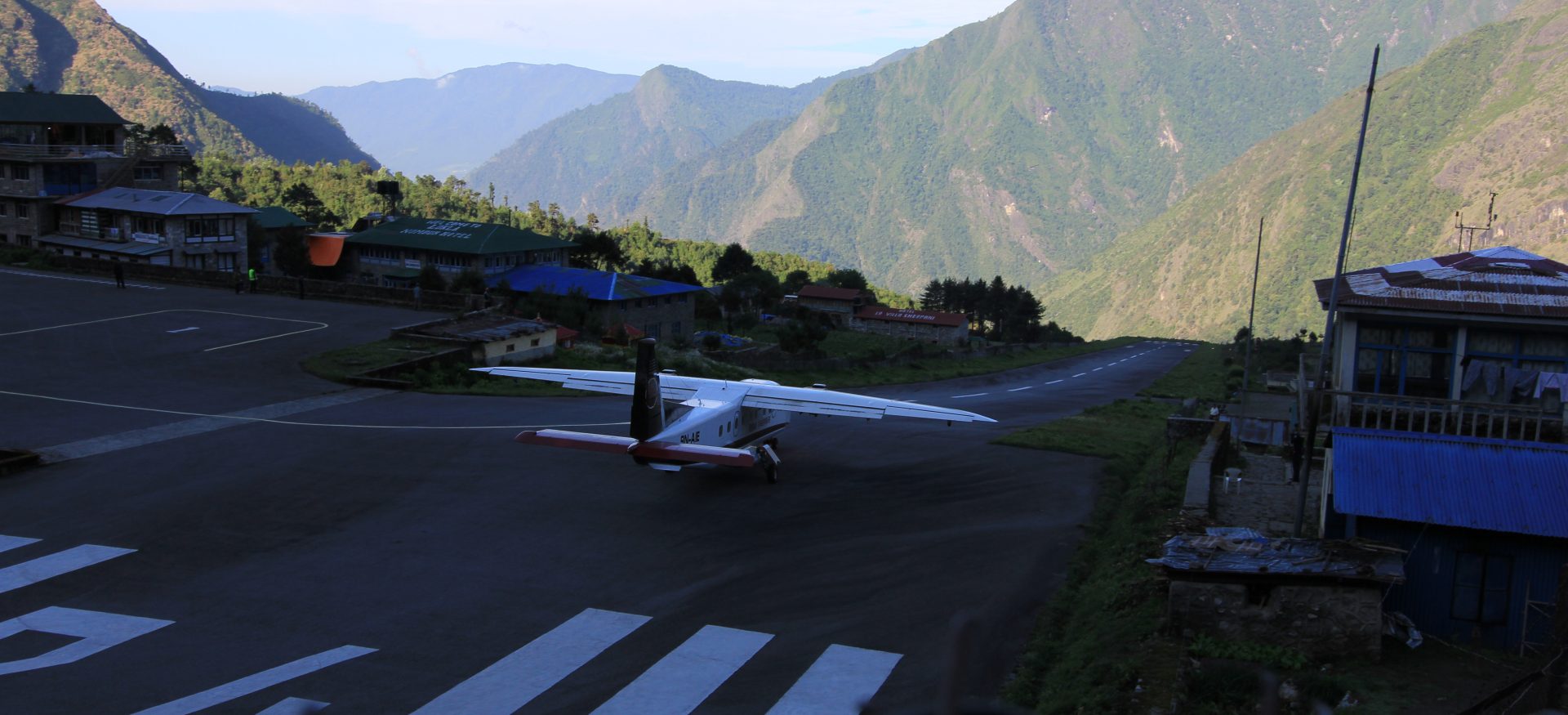
Tenzing-Hillary Airport sits at about 2,860m on a steep ridge above the Dudh Koshi valley. Its runway is 527 metres long with a significant gradient, and the airport is designed for small short takeoff and landing aircraft. Operations are highly dependent on visibility, weather, and the limited operating window. CAAN’s aviation information confirms the challenging terrain and weather conditions that affect Lukla operations.
Several conditions cause delays regularly:
- Morning fog, the most frequent culprit, especially November through January. Valley fog builds overnight and usually clears by mid-morning, so early flights can be pushed or cancelled if fog holds past the workable window.
- Low cloud and rain, more common in spring and pre-monsoon months. Flights run in early morning to get ahead of afternoon cloud, but when cloud arrives early the backlog can build quickly.
- Crosswind, the Lukla approach has strict wind limits for the small aircraft used on this route. A clear morning with strong gusting winds can still be a grounded morning at Lukla.
- Departure airport weather, if Tribhuvan International or Manthali has poor visibility or unsuitable weather, departures can be delayed even when conditions at Lukla are good.
Which Months Carry More Delay Risk
| Month | Typical Conditions | Main Issue |
|---|---|---|
| October | Generally favourable | Post-monsoon weather, though delays can still occur |
| November | More variable | Morning fog can disrupt flights |
| December to February | More weather disruption | Fog, cloud, and winter conditions |
| March | Variable | Spring weather can change quickly |
| April | Generally favourable | Weather can still affect individual flights |
| Early May | Variable | Increasing pre-monsoon cloud |
| Late May | Increasing disruption | Weather becomes less predictable before monsoon |
If you are trekking in October or April, conditions are generally more favourable for flying, though individual flights can still be delayed. If you are travelling in November or late May, budget at least one to two buffer days before any onward international flight from Kathmandu.
What Actually Happens When Your Flight Gets Cancelled
You finish the trek, arrive in Lukla the evening before your outbound flight, and wake up to fog sitting low in the valley. Your flight is cancelled. Other flights may also be affected, creating a backlog of passengers waiting for the next available seats.
When a flight is cancelled, your trekking agency works with the airline to move your booking to the next available flight. That could be later the same day if weather clears or the following day if conditions remain unsuitable. During an extended weather hold, several days of disruption are possible. Lukla has teahouse accommodation and food, basic but functional.
Your Options When a Delay Runs Long
1. Wait it out
The right call for a short hold when you have buffer time in your schedule. No additional cost, your agency handles the rebooking, and Lukla is not an unpleasant place to spend an extra day.
2. Helicopter flight
When fixed wing flights are disrupted, a helicopter may sometimes be available as an alternative, depending on weather, visibility, and aircraft availability. A shared helicopter flight from Lukla to Kathmandu can cost roughly USD 500 to 700 per person, but prices vary with demand and operating conditions. Your agency can help arrange the flight when one is available. If you have travel insurance that explicitly covers helicopter rescue and evacuation in Nepal, check whether this kind of flight is reimbursable under your policy.
3. Flying via Manthali
The preventive option used by more experienced EBC trekkers in higher-risk months. Manthali Airport in Ramechhap avoids the Kathmandu valley departure problem, although flights can still be affected by weather at Manthali or Lukla. The trade-off is a road transfer from Kathmandu that often requires a very early morning departure. Read our full Lukla flight via Ramechhap guide for the complete details.
How MountainKick Manages the Situation
At MountainKick, every Everest Base Camp trek includes in-country logistics management throughout. When a weather hold happens, our guide coordinates with the airline at the Lukla end, your accommodation for the extra night is confirmed, and our Kathmandu operations team monitors the rebooking queue. For November departures, we can use Manthali when it is the better option for the flight schedule and weather conditions. If a helicopter is the right call and one is available, we arrange it through our regular operator relationships.

How to Check Lukla Flight Status
Flight schedules and operational status can change throughout the day. CAAN provides a flight status service, while your airline or trekking agency can give you the most relevant information for your specific booking. CAAN also publishes current aviation information and airport updates.
Frequently Asked Questions
How often do Lukla flights actually get cancelled?
Delays are most common when visibility, cloud, rain, or wind prevents safe operations. October and April are generally among the better months for flying, while winter and late spring can bring more weather-related disruption. November can also see morning fog that affects flight schedules. Because conditions can change quickly, it is better to plan for possible delays than rely on a specific percentage or number of cancelled flights.
Can I fly to Lukla from somewhere other than Kathmandu?
Yes, Manthali Airport in Ramechhap runs flights to Lukla during peak trekking months. Its main advantage is avoiding the Kathmandu valley departure problem, although flights can still be affected by weather at Manthali or Lukla. The trade-off is a long and very early road transfer from Kathmandu. Ask your agency about this option if you are travelling in November or after mid-May.
Does travel insurance cover Lukla flight delays?
It depends on your policy. Some travel insurance policies provide benefits for weather-related travel delays, while helicopter rescue or evacuation is usually covered only when the policy specifically includes it and the circumstances meet its terms. Check the policy wording for both trip delay and helicopter rescue in Nepal at altitude. Read our Nepal trekking insurance guide for what to look for.
What should I do if my Lukla flight is cancelled and I have an international connection the same day?
Contact your international airline immediately. Explain that your Lukla flight was cancelled and keep any cancellation or weather documentation provided by the airline. Whether your international flight can be changed without a fee depends on your airline, ticket conditions, and the circumstances. If your connection is too close, speak with your trekking agency about the available transport options from Lukla. This is also the clearest illustration of why you should never book an international connection on the same day as a Lukla flight.
How long can delays realistically last?
Delays can last from several hours to multiple days when weather remains unsuitable for flying. There is no reliable maximum because conditions can change quickly and several days of disrupted flights can create a backlog. This is why we recommend keeping at least one to two spare days in your schedule rather than booking a tight international connection after the trek.
What is the Manthali option and should I use it?
Manthali Airport operates as an alternative departure point for Lukla flights. Its main advantage is avoiding the Kathmandu valley departure conditions, although flights can still be affected by weather at Manthali or Lukla. The trade-off is a long and very early road transfer from Kathmandu. It can be particularly useful when Kathmandu weather is causing repeated flight disruption.
Comparing agencies for an EBC trip?
Ask each one directly: what happens when our return Lukla flight is cancelled and we have an international connection in two days? The quality of the answer tells you more about how the rest of the trip will go than any itinerary detail.
View EBC Trek Ask a QuestionFurther Reading
- Lukla Flight via Ramechhap 2026: The Complete Guide
- Travel Insurance for Nepal: What Your Policy Must Cover
- Everest Base Camp Trek Cost 2026: The Complete Breakdown
- EBC vs Gokyo: Which Trek Is Right for You?
- Altitude Sickness on Nepal Treks: Symptoms, Prevention and What to Do
- Done EBC? Here is What to Trek Next in Nepal