Private vs Group Trek in Nepal: Cost, Pace and Which to Choose
On a private trek, your guide and porter look after only you and the people you booked with. You set the pace and can adjust the plan along the way. A group trek shares the guide, porters and transport between more people, so each person pays less.
With MountainKick, the price per person drops as your group grows. On Everest Base Camp, a solo traveller pays $1,440, 2 to 3 people pay $1,160 each, and groups of 4 to 9 pay $1,020 each. Solo travellers can also join a fixed departure on our main trips. Either way, you always trek with a licensed guide.
- Private trek: just you and your own party, at your pace and on your dates
- Group trek: shared guide, porters and transport, at a lower cost per person
- Typical saving: about 25 to 50% per person going from solo to a group of 4 to 9, depending on the trek
- Fixed departures: run on MountainKick’s main trips, and solo travellers can join
- Guide: a licensed guide on every trek, private or group
- Porters: usually one porter for every two trekkers
- Single rooms: available for an extra charge
- Best for private: couples, families, slower walkers, photographers
- Best for group: budget travellers and people who enjoy company
Last updated: October 2026
Most trekking companies in Nepal price treks by group size. The reason is simple: a lot of the cost is fixed. A guide costs the same whether they lead one person or six. A jeep to the trailhead costs the same with two people or five. The more people share those costs, the less each person pays.
This guide explains what changes between a private trek and a group trek, what it really does to the price, and how to decide which suits you.
What Is a Private Trek?
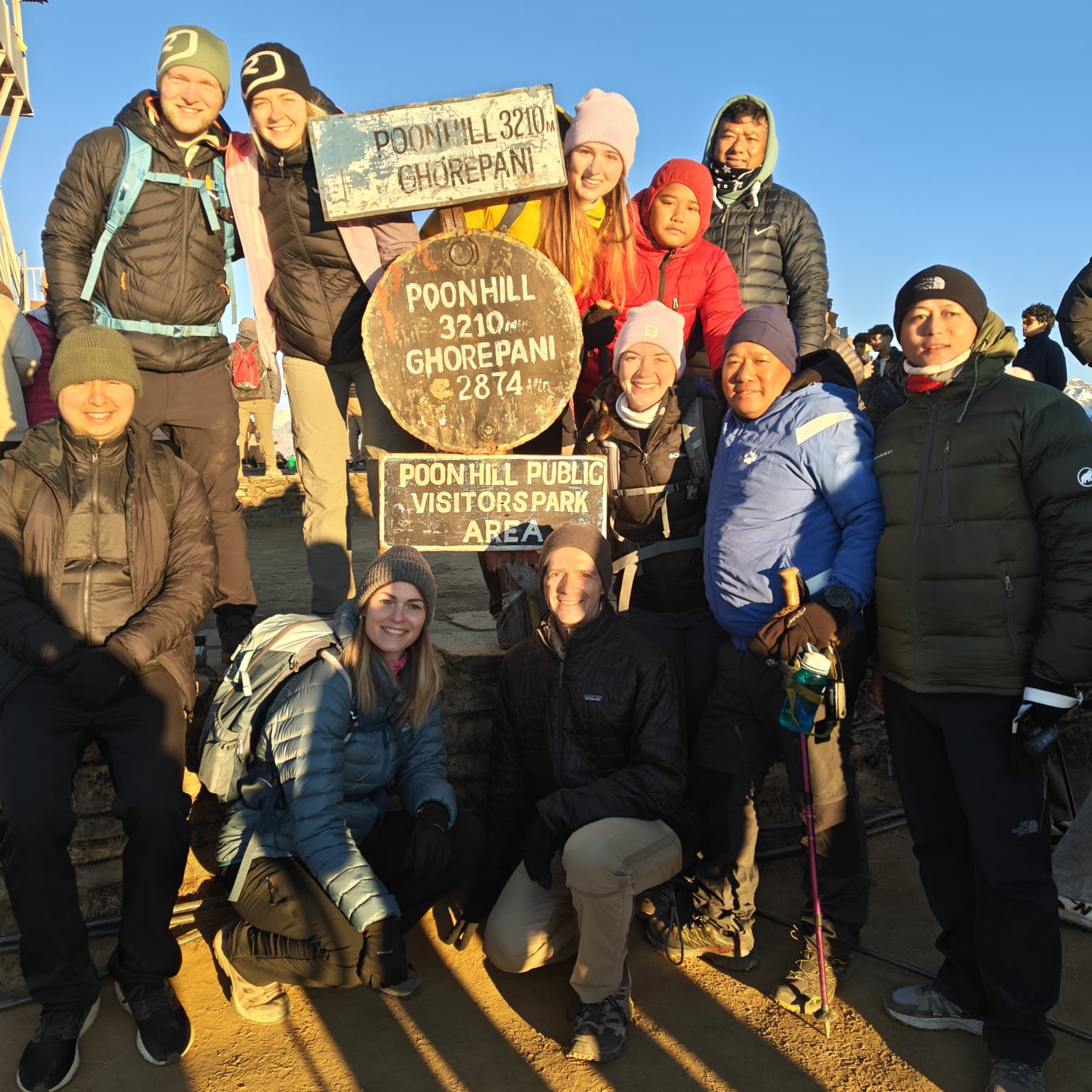
A private trek is booked just for you and your own party, whether that’s you alone, a couple, family or friends. Nobody else joins. Your guide works only for your group.
- Your pace. Walk slower, stop for photos, or take longer breaks without holding anyone up.
- Your dates. You start when you want, not on a fixed departure.
- Flexibility on the trail. If someone needs an extra rest day, the guide can usually adjust the plan, as long as it’s safe and the teahouses and flights allow it.
- More attention. Your guide can focus on how each of you is coping with the altitude.
What Is a Group Trek?
A group trek shares the guide, porters and transport between more trekkers. It can be a group you put together yourself, like friends or family, or a fixed departure that you join. MountainKick runs fixed departures on its main trips, so solo travellers can share a trek with others on set dates.
- A lower price per person
- Company on the trail, which many people enjoy, especially on longer treks
- A shared pace. The group moves together, so it helps if everyone has similar fitness.
- Set dates if you join a fixed departure
How Much Does a Group Save? Real MountainKick Prices
These are MountainKick’s current prices per person for each group size:
| Trek | Solo | 2 to 3 people | 4 to 9 people |
|---|---|---|---|
| Ghorepani Poon Hill | $870 | $550 | $440 |
| Langtang Valley | $745 | $510 | $425 |
| Mardi Himal | $945 | $615 | $520 |
| Annapurna Base Camp | $1,280 | $820 | $760 |
| Annapurna Circuit | $1,260 | $770 | $643 (4 to 7) |
| Gokyo Valley | $1,415 | $1,130 | $1,010 |
| Everest Base Camp | $1,440 | $1,160 | $1,020 |
| Everest Three Passes | $1,685 | $1,360 | $1,280 |
Prices change, so check the trip page for the current rate for your dates.
The biggest drop is from solo to two people. On Poon Hill, a second person cuts the price from $870 to $550 each. On the Everest treks the drop is smaller, because flights and permits are paid per person whatever the group size.
Why a Solo Trek Costs More
A solo traveller pays for things a group would split:
- The guide. Their wages, food and lodging on the trail cost the same for one trekker or six.
- The porter. One porter usually carries for two trekkers. A solo traveller has a porter to themselves.
- Transport. A private jeep or car to the trailhead costs the same, however many seats are full.
Some costs don’t get cheaper in a group, because they’re paid per person: permits, Lukla or Jomsom flight tickets, and your own meals.
Rooms: teahouse rooms are usually twin share. If you want a room to yourself, a single room supplement applies for an extra charge. Single rooms can also be hard to find on busy trails in peak season.
Private or Group: Which Should You Choose?
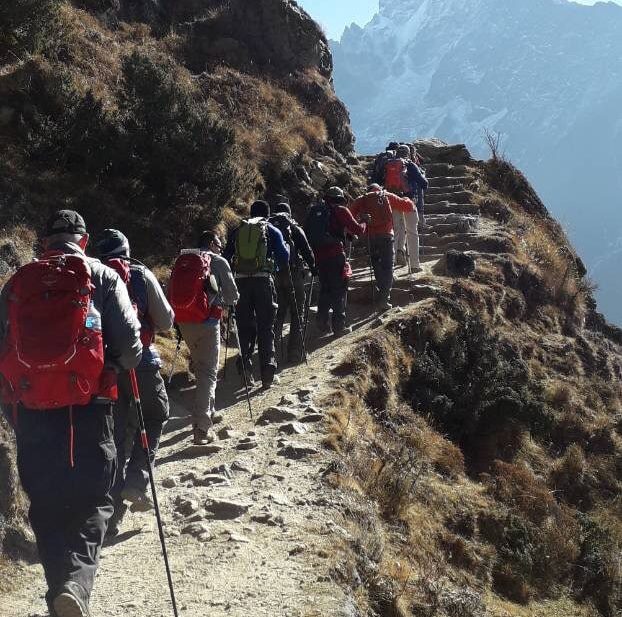
Choose a private trek if:
- You’re a couple or family and want to go at your own pace
- Someone in your party is a slower walker, older, or new to altitude
- You want to take your time over photos
- You need specific dates
- You’d like room to adjust the plan if someone needs an extra rest day
Choose a group trek if:
- Keeping the cost down matters most
- You’re travelling with friends and can fill a group of four or more
- You enjoy meeting people and want company on the trail
- Your group has similar fitness
- A fixed departure date suits your plans
Travelling solo? You can join a fixed departure on one of our main trips, book a private trek at the solo rate, or bring a friend. Even one more person makes a big difference to the price. If you’re a woman travelling alone, our solo female trekking guide covers what to expect.
Is a Guide Required Either Way?
Yes. Under Nepal’s current rules, a licensed guide is required on the main trekking routes, whether you trek privately or in a group. The only difference is whether that guide is shared. See our guide to whether you need a guide to trek in Nepal.
Frequently Asked Questions
Is a private trek in Nepal worth the extra cost?
For couples, families and anyone who wants their own pace, it usually is. You get the guide’s full attention, flexible pacing and your own dates. If cost matters most, a group of four or more brings the price per person down a lot.
How much cheaper is a group trek in Nepal?
With MountainKick, going from solo to a group of 4 to 9 cuts the price per person by roughly 25 to 50%, depending on the trek. The saving is bigger on lower treks like Poon Hill and smaller on Everest treks, where flights are paid per person.
Can I join a group trek as a solo traveller?
Yes. MountainKick runs fixed departures on its main trips, and solo travellers can join them on set dates. You can also book a private trek at the solo rate if you want your own dates.
Is there a single room supplement on Nepal treks?
Teahouse rooms are usually twin share. If you want a room to yourself, MountainKick can arrange one for an extra charge, although single rooms can be hard to find on busy trails in peak season.
Do solo trekkers get their own porter?
Usually, yes. Porters typically carry for two trekkers, so a solo traveller has one to themselves. That’s one of the reasons the solo price is higher.
What is the best group size for trekking in Nepal?
Small groups of about 2 to 6 people work well. You share the costs, but the group is still small enough to move at a comfortable pace and find rooms easily in peak season.
Does a private trek follow a different itinerary?
Usually not. It follows the same route and itinerary, with more freedom to adjust the pace or add a rest day if needed.
Tell us your group size and dates
We’ll show you the exact price for your group, or the next fixed departure you can join. WhatsApp: +977 985 118 2718.
Ask for a Quote → Browse Nepal Treks →