Everest Base Camp vs Kilimanjaro: Which Is Harder and Which Should You Choose?
Kilimanjaro has the harder single day. Everest Base Camp asks more of you over a longer time. Kilimanjaro’s summit night is a climb of about 1,200m in the dark to 5,895m. Everest Base Camp is lower, at 5,364m at Base Camp and 5,545m at Kala Patthar, but it takes about two weeks and you sleep higher, at about 5,164m at Gorak Shep.
We asked trekkers who have done both. The two who compared difficulty both found Kilimanjaro harder, mainly because of the summit push. The third described Kilimanjaro as a true summit and EBC as a longer journey through Himalayan villages and mountains.
- Highest point: EBC 5,545m (Kala Patthar), Kilimanjaro 5,895m (Uhuru Peak)
- Highest night’s sleep: EBC about 5,164m, Kilimanjaro about 4,600m to 4,700m
- Final climb from highest camp: EBC about 380m, Kilimanjaro about 1,200m
- Trip length: EBC 14 days from Kathmandu, Kilimanjaro 5 to 9 days on the mountain
- Where you sleep: EBC teahouses, Kilimanjaro mostly tents
- Technical climbing: not needed on either
Last updated: November 2026
Everest Base Camp and Kilimanjaro are two of the best known high altitude treks in the world. Both take you above 5,000m, but they feel very different.
Kilimanjaro is higher, and its summit night is the toughest day on either trek. Everest Base Camp is lower, but it takes longer and keeps you at high altitude for more nights, walking through Sherpa villages the whole way.
We’re a Nepal-based trekking company and have guided the Everest Base Camp trek since 2016. We don’t run Kilimanjaro. So the EBC side of this guide comes from our own guides and trekkers, and the Kilimanjaro side comes from published park fees and route information from Kilimanjaro operators. We also asked trekkers who have done both.
Everest Base Camp vs Kilimanjaro at a Glance
| Everest Base Camp | Kilimanjaro | |
|---|---|---|
| Highest point | 5,364m at Base Camp, 5,545m at Kala Patthar | 5,895m at Uhuru Peak |
| Country | Nepal | Tanzania |
| Trip length | 14 days from Kathmandu, about 12 walking days | 5 to 9 days on the mountain, depending on route |
| Where you sleep | Teahouses (lodges) | Tents on most routes, huts on Marangu |
| Hardest day | The long walk to Base Camp, then the early Kala Patthar climb the next morning | Summit night and the long descent |
| Guided package | $990 to $1,440 (our 14-day trek, by group size) | about $2,500 to $3,500 for a mid-range 7-day climb |
| Is it a summit? | No, you reach the foot of Everest | Yes, the highest point in Africa |
Altitude Compared
| Everest Base Camp | Kilimanjaro | |
|---|---|---|
| Highest point reached | 5,545m (Kala Patthar) | 5,895m (Uhuru Peak) |
| Highest night’s sleep | about 5,164m (Gorak Shep) | about 4,600m to 4,700m (high camp, varies by route) |
| Final climb from highest camp | about 380m to Kala Patthar | about 1,200m to the summit |
These are approximate figures, and Kilimanjaro’s high camp depends on the route. But they show the key difference most people miss. On EBC you sleep higher. On Kilimanjaro you make a much bigger final climb. For every stop on the Nepal side, see the altitude along the Everest Base Camp route.
Which Is Harder, EBC or Kilimanjaro?
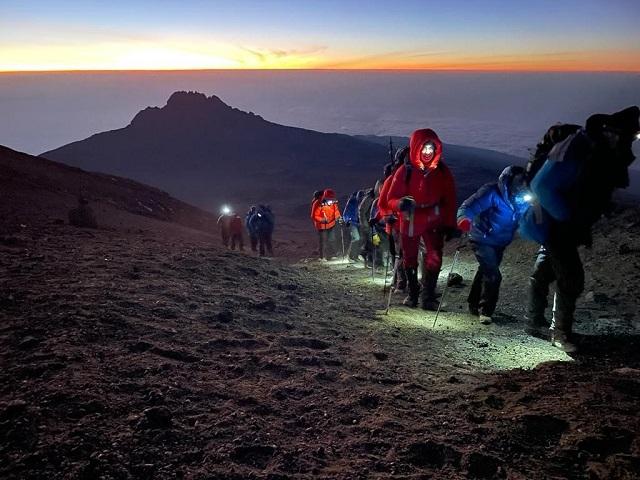
It depends on what you find hard. Kilimanjaro’s summit night is the hardest day on either trek. On most routes you leave high camp around midnight, climb about 1,200m in the dark and cold, reach the top around sunrise, then walk a long way down the same day.
EBC has no day like that. It’s hard because it goes on. You walk 5 to 8 hours most days for about 12 days and spend several nights above 4,000m. On our itinerary you walk from Lobuche to Gorak Shep and on to Base Camp on Day 9, then climb Kala Patthar early the next morning before heading down. Those two days are tiring because of the thin air, not the trail. For more, read how difficult the Everest Base Camp trek is.
Is EBC or Kilimanjaro Harder on Your Body?
They test different things.
EBC tests endurance and recovery. You walk day after day, sleep at altitude for several nights in a row, and sleep is often poor above 4,500m. People who are fit but recover slowly can find the second week hard.
Kilimanjaro tests how you cope with one big effort. You climb about 1,200m at night, often on loose ground, after little sleep, then descend a long way. People who handle long days well can still struggle with that single push.
Being fit helps on both, but it doesn’t make either one easy, and it doesn’t protect you from altitude sickness.
Altitude Sickness on Both Treks
Neither trek is free from altitude sickness. Kilimanjaro’s shorter routes go up fast, which gives your body little time to adjust, so longer routes generally have much better summit rates. EBC goes up more slowly, with acclimatisation days in Namche and Dingboche on our itinerary, but it takes you to higher sleeping altitudes for longer. The CDC’s guidance on high altitude travel notes that some Nepal trekking itineraries, especially to Everest Base Camp, push the limits of many people’s ability to acclimatise.
More days help, but they’re no guarantee. Fitness and past experience can’t reliably predict how your body will react on a given trip. Read more about altitude sickness on Nepal treks.
What If You Don’t Reach the Top?
On EBC, Base Camp and Kala Patthar are separate goals on separate days. Some people reach Base Camp and skip Kala Patthar the next morning because they’re tired or feeling the altitude. Some turn back lower down, usually because of altitude symptoms.
On Kilimanjaro, getting to high camp doesn’t mean you’ll reach Uhuru Peak. Summit attempts are stopped because of altitude symptoms, exhaustion or weather. Some climbers turn around at Stella Point or Gilman’s Point on the crater rim, below the summit.
How Many Days Do You Need?
EBC: our trek is 14 days from Kathmandu, with about 12 walking days. Add a spare day or two in case Lukla flights are delayed, plus your international flights. See our 14-day Everest Base Camp itinerary.
Kilimanjaro: usually 5 to 9 days on the mountain depending on the route, with 7 to 9 days giving more time to acclimatise. Add time for arrival, departure and international flights.
If your holiday is short, Kilimanjaro is easier to fit in. EBC needs more time away from home.
Where You Sleep
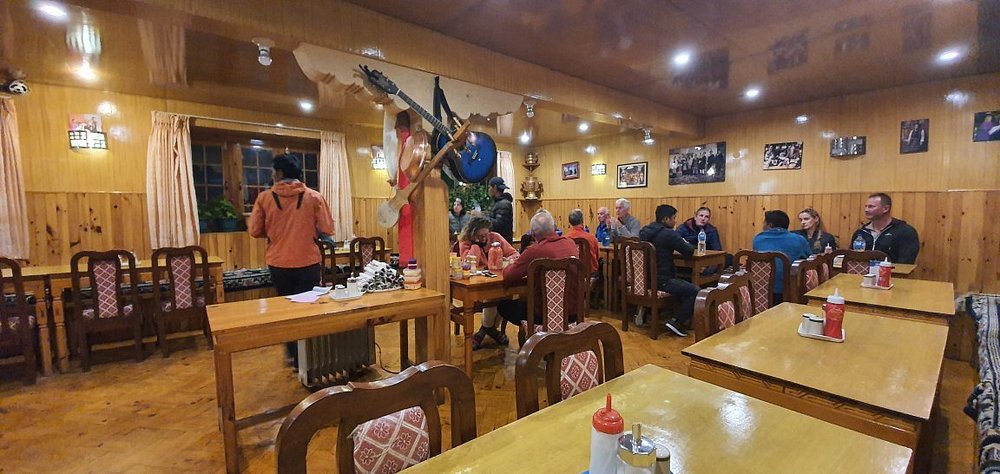
On EBC you sleep in teahouses every night. These are simple lodges with a bed, blankets, a warm dining room and food from a menu. Rooms get colder and more basic higher up, but you’re always indoors.
On Kilimanjaro most routes are camping. The crew carries and pitches the tents and cooks your meals. The Marangu route uses huts.
If you don’t enjoy camping, EBC will feel much more comfortable.
Scenery and Culture
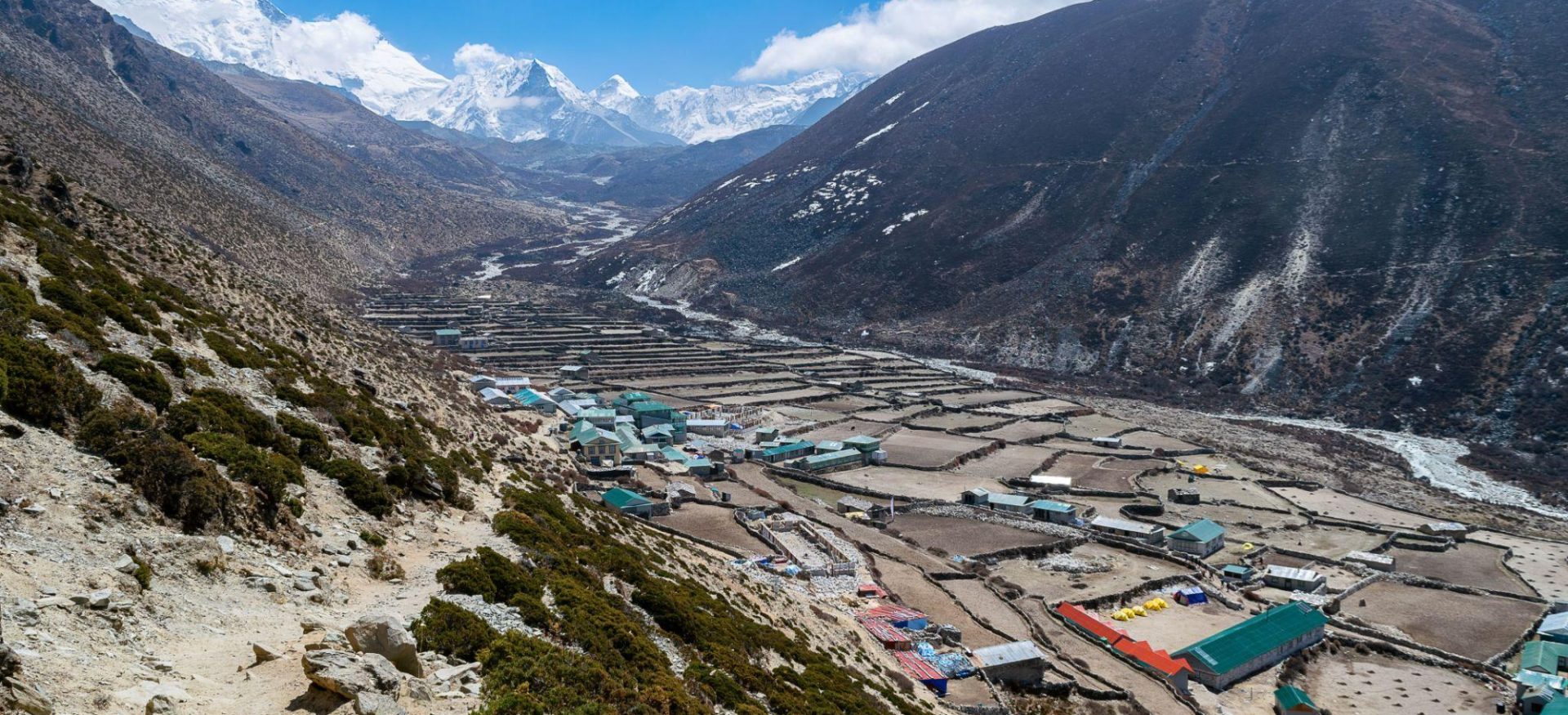
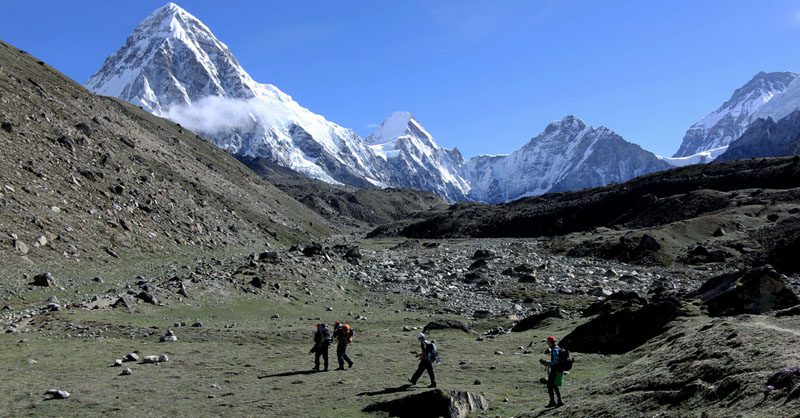
On EBC you walk through Sherpa villages like Namche Bazaar and Pangboche, past Tengboche monastery, prayer flags and mani walls. Ama Dablam, Lhotse, Nuptse and Everest are around you for days.
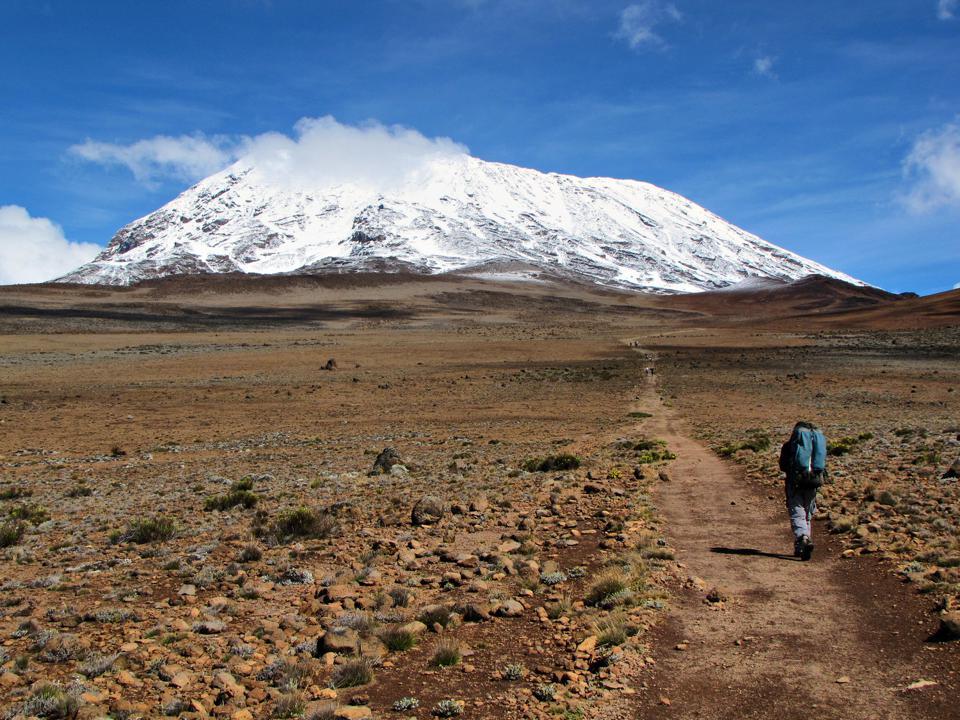
Kilimanjaro changes fast as you climb, from rainforest to moorland to alpine desert to the snowy crater. It’s beautiful, but there are no permanent villages on the mountain routes.
At EBC you stand at the foot of the giants. On Kilimanjaro you stand on top of one mountain and look out over the plains.
Kilimanjaro vs Everest Base Camp Cost
Compare like with like: a guided package against a guided package.
EBC: our 14-day guided package is $990 to $1,440 per person depending on group size. It includes return Lukla flights, permits, guide, porters, teahouse rooms and a Kathmandu hotel. Meals on the trail aren’t included. With meals, visa, insurance and tips, most of our trekkers spend about $1,700 to $2,400 in total before international flights. See our full Everest Base Camp trek cost breakdown.
Kilimanjaro: guided packages usually include meals on the mountain, so the package price starts higher. The biggest fixed cost is the national park fees, which every operator must charge. Kilimanjaro operators list the conservation fee at $70 per person per day and camping at $50 per night, so park fees alone usually come to around $800 to $1,000 for a 7-day climb. A mid-range 7-day guided climb usually costs about $2,500 to $3,500, plus tips and flights.
So EBC is usually cheaper, even after you add your own meals.
Best Time to Go
EBC: March to May and September to November. October and November often have the clearest skies, and spring brings rhododendrons lower down, but weather varies year to year. Winter is cold, and the monsoon months of June to August bring cloud and rain.
Kilimanjaro: the drier months, usually January to early March and June to October. The long rains usually fall around April and May.
What Trekkers Who Did Both Told Us
We asked trekkers who have completed both Everest Base Camp and Kilimanjaro how they compared.
| Trekker | Kilimanjaro route | Which felt harder | What stood out |
|---|---|---|---|
| Sarah, UK | Not given | Kilimanjaro | EBC had better scenery and beautiful villages |
| Phil, USA | Lemosho | Not compared | Kilimanjaro is a true summit, EBC a longer journey through villages and mountains |
| Olga, Germany | Not given | Kilimanjaro, slightly | The feeling of reaching a summit after climbing through the night |
Sarah, from the UK, found Kilimanjaro more difficult and less enjoyable. For her, EBC had the better scenery, with beautiful villages along the way.
Phil, from the USA, climbed Kilimanjaro on the Lemosho route and also completed EBC. He sees Kilimanjaro as a true summit experience, and EBC as a longer journey through Himalayan villages and mountain landscapes.
Olga, from Germany, did both in 2026 and found Kilimanjaro slightly harder. What stood out most was the feeling of reaching a summit after climbing through the night.
Which Should You Choose?
- Choose Everest Base Camp if you have more time, want villages and culture along the way, prefer lodges to tents, and want to see the world’s highest mountains up close.
- Choose Kilimanjaro if your time is short, you want to stand on a real summit, and you don’t mind camping and one very hard night.
To get ready for either, see how to train for Everest Base Camp.
Can You Do Both Everest Base Camp and Kilimanjaro?
Yes, and many people do. They’re separate trips on different continents, so most people do them a year or more apart. If you plan them close together, give yourself proper recovery time after the first one.
There’s no right order. Some people like EBC first because the slower pace shows them how they handle altitude. Others start with Kilimanjaro because it’s shorter. Either way, doing one doesn’t guarantee the second will be easier. Your body can react differently to altitude on each trip, so treat the second trek with the same care as the first.
FAQs: Everest Base Camp vs Kilimanjaro
Is Kilimanjaro harder than Everest Base Camp?
Kilimanjaro has the harder single day because of summit night. EBC is longer and you sleep higher, so some people find it more tiring overall. The two trekkers we asked who compared difficulty both found Kilimanjaro harder.
Which is higher, Kilimanjaro or Everest Base Camp?
Kilimanjaro, at 5,895m. Everest Base Camp is at 5,364m, and Kala Patthar on the EBC trek is 5,545m. But you sleep higher on EBC, at about 5,164m at Gorak Shep.
Is Everest Base Camp or Kilimanjaro cheaper?
EBC is usually cheaper, mainly because Kilimanjaro’s national park fees are high.
Do you need climbing experience for either?
No. Neither needs ropes or technical climbing. You need good fitness and enough days to acclimatise.
Can beginners do EBC or Kilimanjaro?
Yes, if they’re fit and don’t rush. Choose a longer route on Kilimanjaro, and don’t skip the acclimatisation days on EBC. Remember that fitness doesn’t protect you from altitude sickness.
Which should I do first, EBC or Kilimanjaro?
Either order works. Some prefer EBC first to learn how they handle altitude at a slower pace. Doing one first doesn’t guarantee the other will be easier.
If you’re leaning towards the Himalaya, see our Everest Base Camp trek with MountainKick for dates and prices.