EBC Trek in March: Weather, Snow, Crowds and What to Expect
March is a good month for the Everest Base Camp trek if you don’t mind the cold. It’s the start of spring season. Skies are often clear, the trails are generally less busy than in April, and the days warm up as the month goes on. The trade-off is cold nights higher up, and some snow is possible above 4,500m, especially in early March.
Our 14-day Everest Base Camp Trek costs USD 1,020 per person for groups of 4 to 9, USD 1,160 for 2 to 3 people and USD 1,440 for a solo trekker.
- Weather: often clear, can be windy, cloud builds from late morning later in the month
- Namche daytime: around 6°C to 10°C
- Gorak Shep and EBC at night: around -15°C to -10°C, colder on clear nights in early March
- Snow on the trail: possible above 4,500m, more likely in early March
- Crowds: generally less busy than peak spring, rising later in the month
- Rhododendrons: starting to bloom low down by late March
- Expeditions: Base Camp is much quieter than in April
- Sleeping bag: comfort rating around -15°C
- Booking: we recommend 2 to 3 months ahead
- Lukla flights: may run from Ramechhap in spring, so confirm your airport
Last updated: October 2026
March is when the Khumbu wakes up after winter. Trekkers start to come back, the days get longer and the sun has real warmth in it again.
It’s still cold up high, though, especially at the start of the month. Here’s what March is really like on the trail and how to plan for it. If you’re still choosing a month, see our month by month guide to trekking in Nepal.
March Weather on the EBC Trek
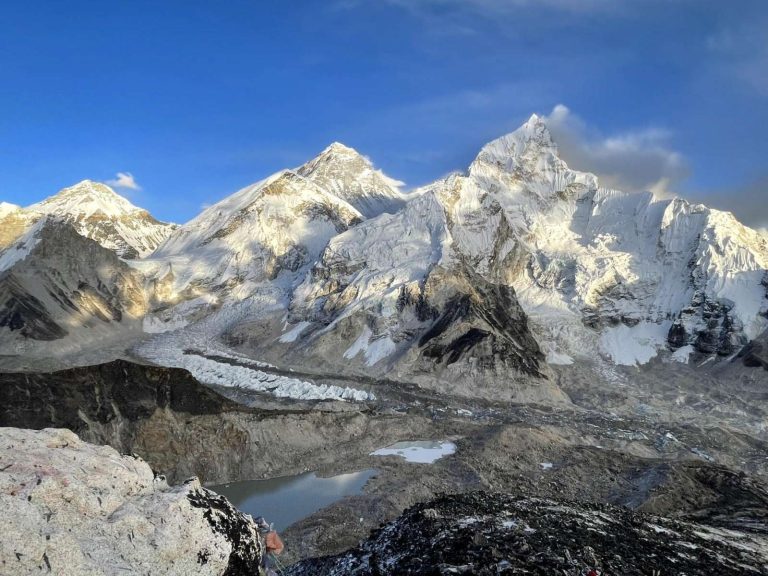
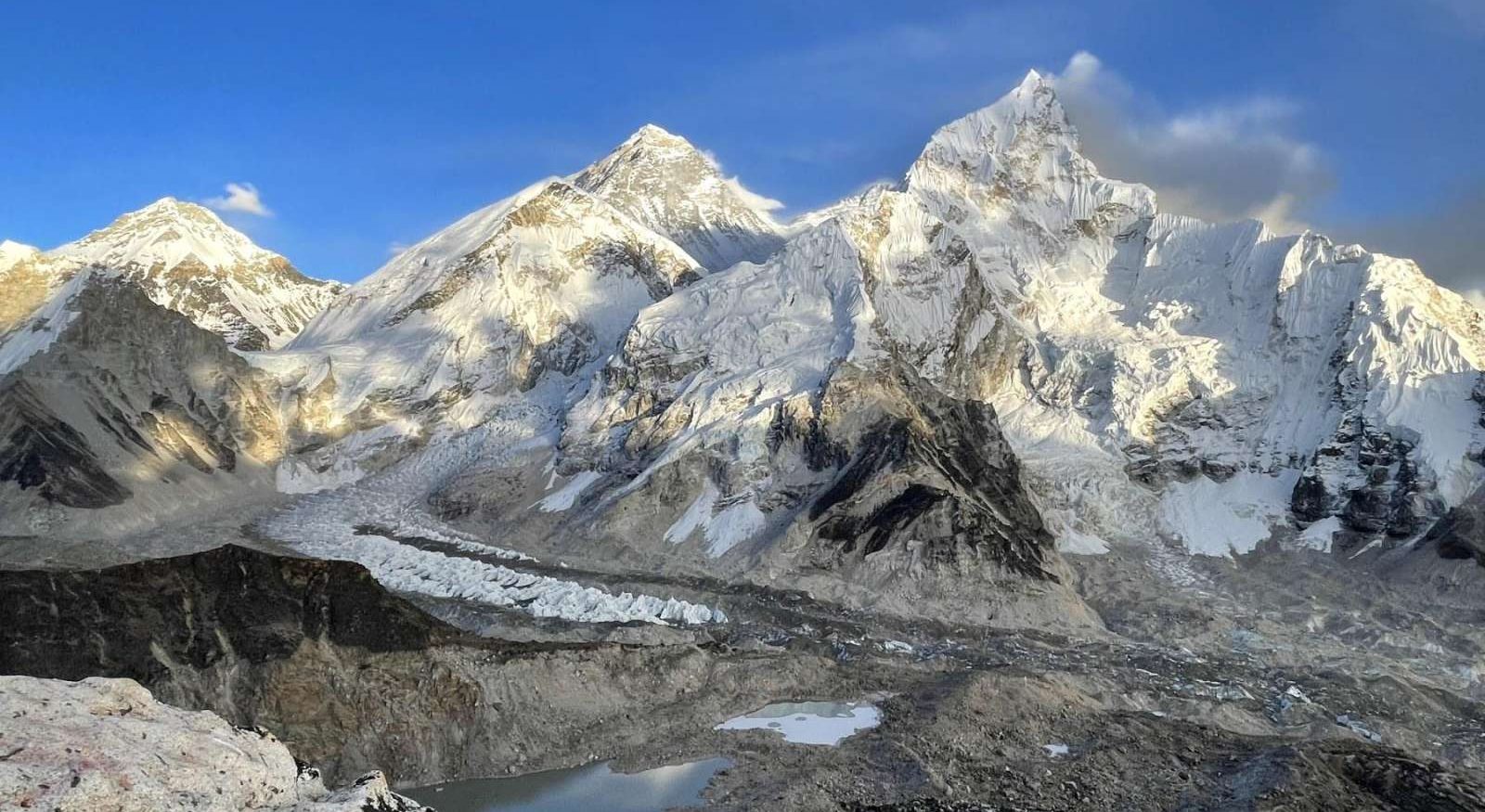
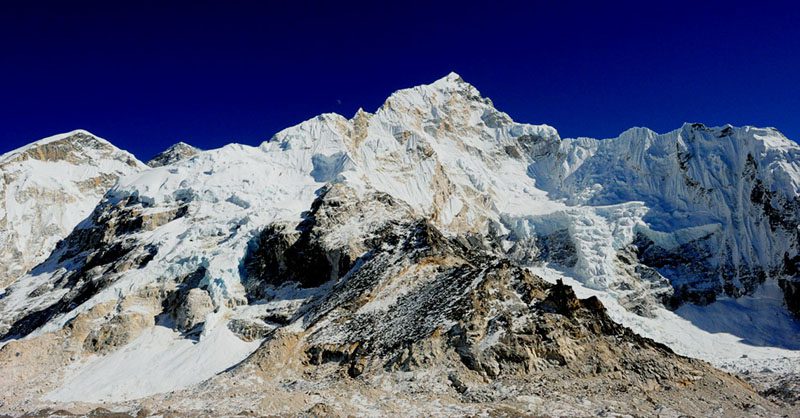
March is the start of the dry spring season. Mornings are usually clear and the air is sharp, so the views can be excellent. It can be windy higher up. Later in the month, cloud starts to build from late morning, as it does in April.
These are rough conditions you may meet, not measured averages. There’s very little long term weather data at these heights, and every year is different.
| Location | Altitude | Daytime | Night |
|---|---|---|---|
| Namche Bazaar | 3,440m | 6°C to 10°C | -5°C to 0°C |
| Dingboche | 4,360m | 2°C to 6°C | -10°C to -5°C |
| Lobuche | 4,940m | -2°C to 3°C | -13°C to -8°C |
| Gorak Shep and EBC | 5,164m to 5,364m | -4°C to 2°C | -15°C to -10°C, colder on clear nights in early March |
Early March is at the colder end, and it warms up through the month. In the sun it feels much warmer than these numbers. Once the sun drops, it gets cold fast.

Early March vs Late March
| Early March (1 to 15) | Late March (16 onward) | |
|---|---|---|
| Night temperatures | Very cold up high | A little milder |
| Snow above 4,500m | More likely | Less likely, still possible |
| Crowds | Quieter | Busier as spring season starts |
| Rhododendrons | Not yet | Starting to bloom low down |
| Base Camp | Very quiet | Expedition teams starting to arrive |
If you want quiet trails and can handle real cold, early March works well. If you’d rather have milder nights and the first flowers, go in the second half.
Snow and Trail Conditions
Snow is more likely above Dingboche in March than later in spring. Most years the trail is clear and well trodden. A fresh fall can make the stretch from Lobuche to Gorak Shep slippery, and Kala Patthar can be icy early in the morning.
Conditions depend on recent snowfall. You won’t always need microspikes. Your guide will check the trail and tell you. Heavy snow can sometimes hold you for a day, so a spare day in your plan helps.

Crowds and Booking
March is generally less busy than peak spring in April, and numbers rise later in the month. Early March trails can feel quiet, especially above Namche.
We recommend booking 2 to 3 months ahead, a bit more for late March. When you book with us, we reserve teahouses for each night of your trek.
Expedition Season at Everest Base Camp
In March, Base Camp is usually much quieter than in the main climbing season. Expedition teams start to arrive and work on the climbing route begins, but the timing changes each year. The route through the Khumbu Icefall is often prepared during March and early April.
If you want to see Base Camp full of expedition tents, April is usually the better month. See our guide to the EBC trek in April.

EBC Trek Cost in March
March doesn’t change the price. Our 14-day Everest Base Camp Trek costs:
| Group size | Price per person |
|---|---|
| 1 traveller | USD 1,440 |
| 2 to 3 travellers | USD 1,160 |
| 4 to 9 travellers | USD 1,020 |
We also run group departures in March 2027, starting on 3, 13 and 23 March, at USD 1,160 per person. The price includes Lukla flights, the Ramechhap transfer when flights run from there, permits, guide, porter and teahouse rooms. See our EBC trek cost guide for what to budget on top.
Lukla Flights in March
In some recent spring seasons, many Lukla flights ran from Manthali Airport in Ramechhap instead of Kathmandu. When that happens, there’s a pickup from your hotel in the middle of the night and a 4 to 5 hour drive before the short flight. The transfer is included in your package. The arrangement can change each season, so we confirm your airport and pickup time before the trek. See our guide to Lukla flights via Ramechhap.

Morning flights are usually the most reliable, but wind and cloud can still hold planes. Build in at least one spare day before your flight home. See our Lukla flight delays guide.
What to Pack for March
March needs more warmth than April or May.
- A sleeping bag with a comfort rating of around -15°C. That’s usually a bag sold as “-20°C”. A good rental is fine.
- A proper down jacket for evenings and the Kala Patthar morning
- Thermal base layers, top and bottom
- A fleece or light insulated jacket for walking
- A windproof and waterproof shell
- A warm hat, liner gloves and insulated mittens
- Good sunglasses and sunscreen, because the sun is strong even when it’s cold
- Microspikes only if your guide advises
For the full checklist, see our EBC packing list.
Festivals in March
Holi, the festival of colours, falls on 22 March 2027 in Kathmandu. If your trek starts or ends around then, you can join in before or after the mountains. Celebrations differ between the hills and the Terai, so check the local date for your trip. Wear clothes you don’t mind ruining.
Frequently Asked Questions
Is March a good month for Everest Base Camp?
Yes, if you’re ready for the cold. Views are often clear, the trails are generally less busy than in April, and it gets warmer through the month.
How cold is Everest Base Camp in March?
Very cold at night. At Gorak Shep, plan for around -15°C to -10°C, and colder on clear nights in early March. Daytime in the sun is around -4°C to 2°C up high. These are rough figures, not a forecast.
Is there snow on the EBC trail in March?
Sometimes, above about 4,500m. It’s more likely in early March. You won’t always need microspikes. Your guide will check the trail and tell you.
Is March or April better for EBC?
It depends what you want. April is warmer, with rhododendrons in full bloom and expedition camps at Base Camp, but it’s much busier. March is colder and quieter, with sharp views. See our guide to the EBC trek in April.
Is EBC crowded in March?
Not usually. It’s generally less busy than peak spring, and numbers rise towards the end of the month.
Will I see Everest climbers in March?
Maybe a few. Teams start to arrive and route work begins, but the timing changes each year. For a full expedition camp, go in April.
How much does the EBC trek cost in March?
The same as the rest of the year. USD 1,020 per person for 4 to 9 people, USD 1,160 for 2 to 3 and USD 1,440 solo. Group departures in March 2027 are USD 1,160 per person.
What sleeping bag do I need for EBC in March?
One with a comfort rating of around -15°C. That’s usually a bag sold as “-20°C”. You can rent a good one in Kathmandu.
Do Lukla flights leave from Kathmandu in March?
Sometimes. In some recent spring seasons, many flights ran from Ramechhap. We confirm your airport and pickup time before your trek.
How far ahead should I book a March trek?
We recommend 2 to 3 months ahead, and a bit more for late March.