Nepal Trekking Packing List: What You Actually Need
For most Nepal treks you need a 50 to 65L main duffel, a 20 to 25L day pack, a good down jacket, waterproof shell, broken-in trekking boots, moisture-wicking base layers, and the right permit documents. Keep your duffel to 10 to 15kg and your day pack to 5 to 7kg. Everything else is optional.
MountainKick provides a duffel bag, sun hat, and t-shirt in all guided packages. Sleeping bags and down jackets can be rented through us in Kathmandu.
Nepal Trekking Packing: Key Facts
- Main duffel: 10 to 15kg per person
- Day pack weight on trail: 5 to 7kg ideal
- Porter and duffel standard: MountainKick assigns one porter per two trekkers, with a combined maximum of 30kg for the pair
- Gear available in Kathmandu: Yes. Thamel has everything, buy or rent on arrival
- Rental available through MountainKick: Sleeping bags, down jackets, trekking poles
- MountainKick provides: Duffel bag, sun hat, t-shirt included in all packages
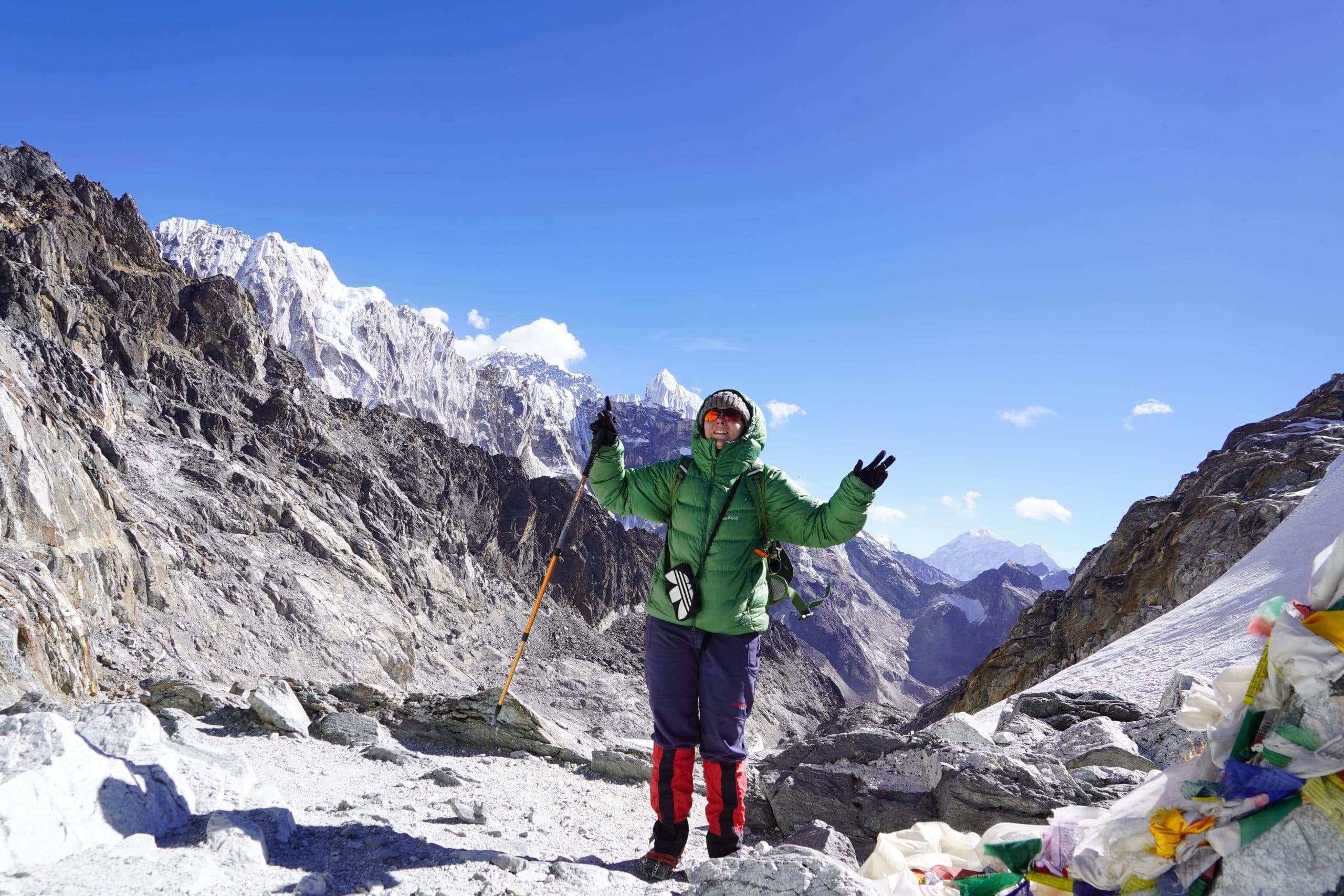
Most trekkers spend more time researching gear than they spend actually trekking. Then they land in Kathmandu with a 22kg bag and realise half of it is going into hotel storage for two weeks.
Nepal trekking is not mountaineering. You are walking between teahouses on established trails, sleeping in lodges, and eating hot food every night. Packing wrong has real consequences though. Too heavy and your knees pay for every descent. Too light and a cold night at 4,200m becomes genuinely uncomfortable.
This guide is based on years of running guided treks across the Everest, Annapurna, and Langtang regions. It covers what you actually need, what to leave at home, and how the list changes depending on which trek you are doing.
Clothing: The Layering System
Nepal trekking weather changes fast. You leave a teahouse at 7am in sub-zero cold, hit direct sun by 9am, walk into cloud by noon, and drop into wind by 3pm. The answer is not one jacket. It is a system of three layers you can add and remove as conditions change.
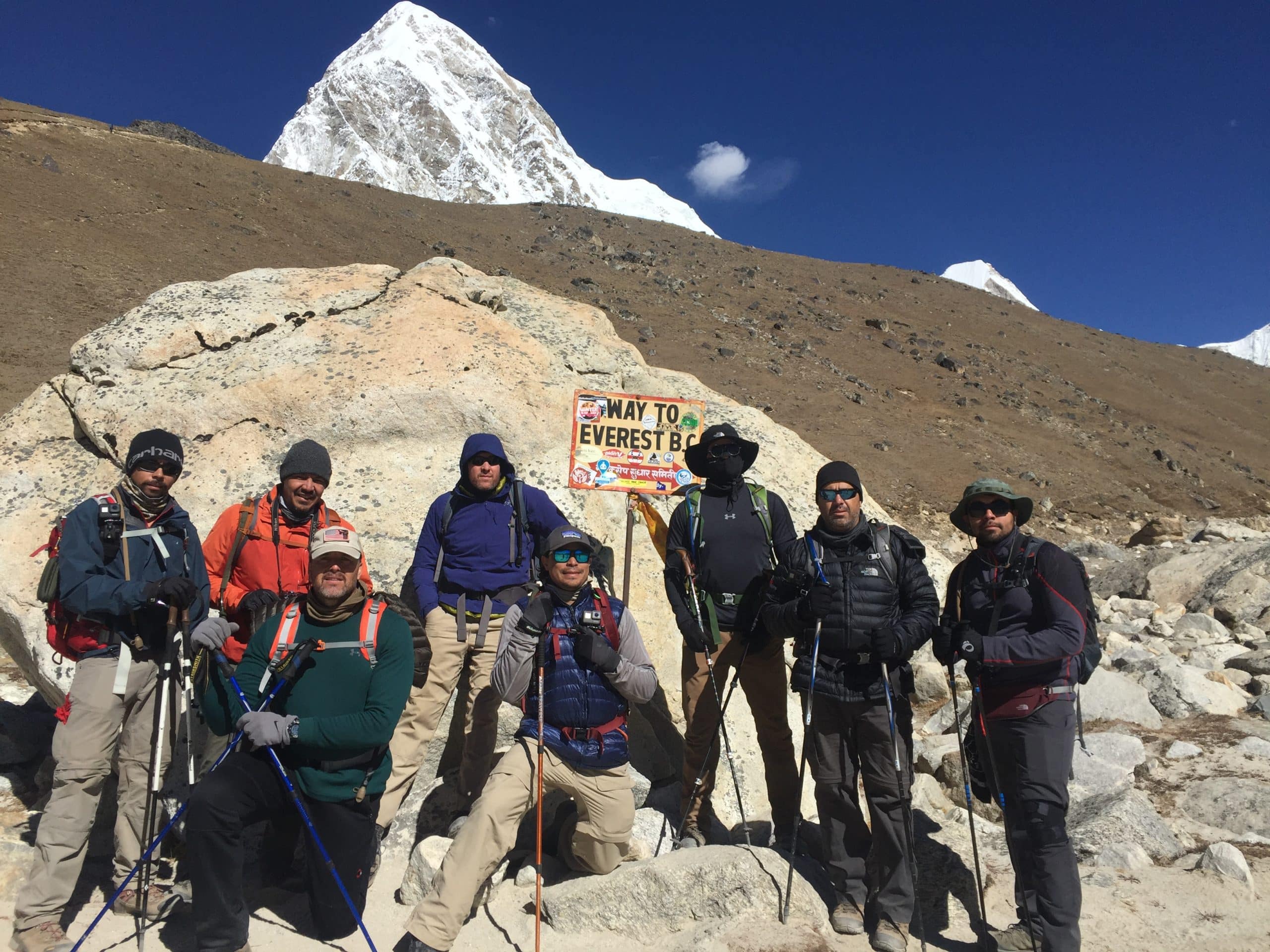
Base Layer (worn against your skin)
- 2 to 3 moisture-wicking trekking shirts (merino wool or synthetic, no cotton)
- 2 pairs of trekking trousers or zip-off pants
- 2 to 3 thermal base layer tops (lightweight, for cold mornings and sleeping)
- 1 pair thermal bottoms (essential above 3,500m)
- 4 to 5 pairs of trekking socks (merino wool preferred, such as Darn Tough or Smartwool)
- 4 to 5 pairs of moisture-wicking underwear
Mid Layer (insulation)
- 1 fleece jacket (250-weight, the workhorse layer you will wear constantly)
- 1 down jacket or synthetic insulated jacket (600-fill or higher for high altitude)
- 1 light softshell jacket (optional but useful for windy afternoons)
Outer Layer (wind and waterproofing)
- 1 waterproof hardshell jacket (Gore-Tex or equivalent, non-negotiable for EBC and high Annapurna)
- 1 pair waterproof trekking trousers or shell pants (especially for EBC and high passes)
Extremities
- 1 warm hat (fleece or wool, ears covered)
- 1 sun hat or cap (direct Himalayan sun is strong even in October)
- 1 balaclava or neck gaiter (for high passes and early morning starts)
- 1 pair liner gloves
- 1 pair warm waterproof gloves or mittens
- 1 pair gaiters (optional for EBC, useful in early winter snow)
Footwear
- Trekking boots. Waterproof, ankle support, broken in before arrival. This is the most critical item on this list.
- Camp shoes or sandals. Lightweight flip-flops or Crocs for teahouse evenings
- Trekking poles. Non-negotiable for EBC or any route with significant descent. Two poles.
- Microspikes. Only needed for winter trekking (December to February) or high passes in early spring
Backpack and Duffel
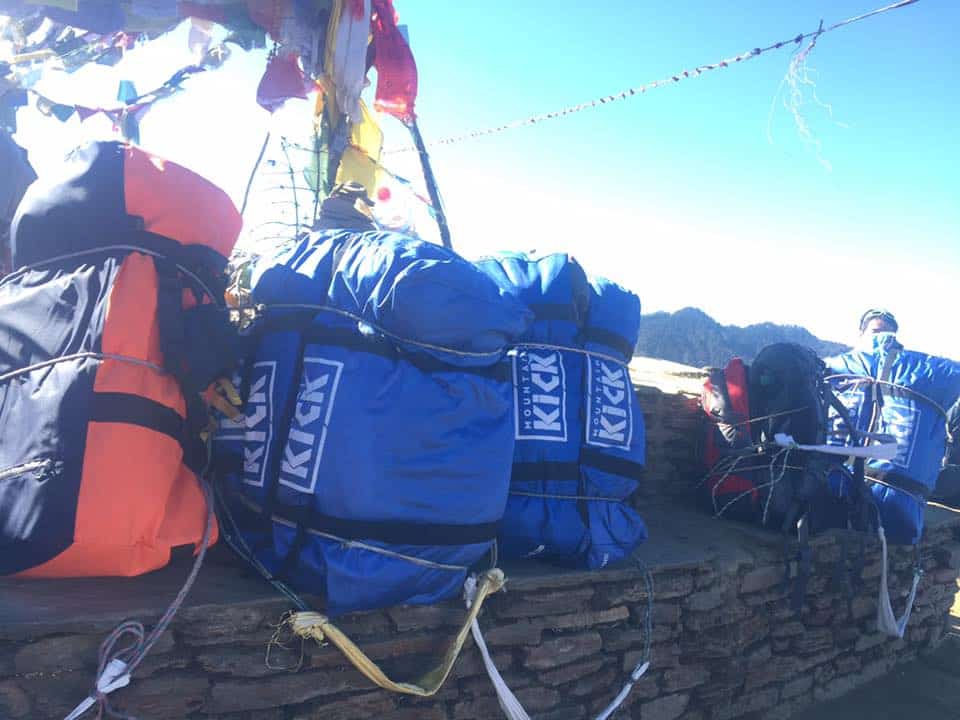
- Main duffel bag (50 to 65L). This goes to the porter. Must be a duffel, not a rigid suitcase. Needs a lockable zip. MountainKick provides one in all guided packages.
- Day pack (20 to 25L). Stays on your back every day. Should have a hip belt and a hydration sleeve.
- Pack rain cover. For your day pack. Most good packs include one.
- Dry bags or heavy-duty zip-lock bags. To waterproof electronics, documents, and sleeping bag inside your duffel.
Sleeping
- Sleeping bag. Rated to at least -10°C for EBC and high Annapurna routes. -5°C works for lower routes like Poon Hill and Langtang. Teahouses provide blankets but they are not reliable above 4,000m.
- Sleeping bag liner. Adds 3 to 5°C of warmth and keeps your bag clean. Worth carrying on longer treks.
- Inflatable pillow. Teahouse pillows vary. Small, light, and genuinely improves sleep quality.
- Earplugs. Teahouse walls are thin and fellow trekkers start moving at 5am.
Documents and Money
- Passport (original, required at permit checkpoints)
- Passport photos (4 to 6 copies, needed for permits)
- Nepal visa documentation
- Travel insurance documents (printed and digital, policy must cover helicopter evacuation to 6,000m)
- Emergency contact card (laminated, keep in day pack)
- Cash in Nepali rupees (NPR). ATMs exist in Kathmandu and Pokhara but access becomes very limited on the trail
- Small USD bills (for visa on arrival and emergencies)
- Trekking permits, arranged by MountainKick for all guided packages
Permits are checked at multiple points on every route. Your guide carries copies but you should have your passport accessible in your day pack at all times on trail. See the full breakdown in our Nepal Trekking Permits 2026 guide.
Health and Medical
- Diamox (acetazolamide), consult your doctor before travel. Standard prevention for altitude sickness on EBC and high passes.
- Ibuprofen and paracetamol
- Oral rehydration salts (ORS packets)
- Water purification tablets or SteriPen
- Compeed blister plasters
- Moleskin or athletic tape for hot spots
- Antiseptic wipes and small wound kit
- Diarrhea medication (Imodium) and antibiotics if prescribed
- Throat lozenges, dust on the lower Everest trail is a known irritant
- Personal prescription medications with enough supply plus a 5-day buffer
- Hand sanitizer
- Lip balm with SPF (lips crack fast at altitude)
Altitude sickness is the most common reason trekkers do not complete their route. Read our full altitude sickness guide for Nepal trekking before you go. Knowing the symptoms and when to descend matters more than any item in your medical kit.
Toiletries and Personal Care
- Sunscreen SPF 50 or higher (reapply every 2 hours above 3,500m)
- Sunglasses with UV400 protection (glacier or wraparound style for high altitude)
- Biodegradable soap and shampoo
- Small microfibre travel towel
- Toothbrush and toothpaste (travel size)
- Toilet paper and a small lighter (for burning used paper in designated areas)
- Wet wipes, shower substitute on days without hot water
- Women: menstrual cup or enough supply for the full trek duration plus extra
- Nail scissors and tweezers
Electronics
- Phone, your most-used device on trail for maps, photos, and communication
- Portable power bank (20,000 mAh minimum, charging at teahouses costs NPR 100 to 300 per device and is unreliable above 4,000m)
- Universal travel adapter
- Headlamp with spare batteries (mandatory, power cuts are common and teahouses go dark early)
- Downloaded offline maps (Maps.me or Gaia GPS with Nepal trekking routes)
- Camera (optional, modern phones are sufficient but a dedicated camera is better for low light at altitude)
- Earphones
Nepal Trekking Packing Checklist 2026
Tick each item as you pack. Use the Print button to save a copy for your bag check before departure. Items marked RENT can be rented through MountainKick in Kathmandu.
Clothing
Footwear
Bags and Organisation
Sleeping
Documents and Money
Health and Medical
Electronics
Toiletries
Winter Add-ons (December to February)
What You Do Not Need to Bring
This section matters as much as the list above. Unnecessary weight is the thing guides watch trekkers struggle with most.
- A hardshell rolling suitcase. There is no surface in the Khumbu Valley that a wheeled suitcase rolls on. Soft duffels only.
- Full-size toiletry bottles. 100ml travel sizes are more than enough. You are washing your hair every 3 to 4 days if that.
- Multiple pairs of jeans. Jeans are heavy, dry slowly, and chafe on long walking days. One pair of casual trousers for Kathmandu is enough. Everything else should be trekking-specific.
- A laptop. Leave it at the hotel in Kathmandu. A phone does everything you need on trail.
- Hair dryers or straighteners. Teahouse power supply cannot reliably support them anyway.
- Expensive jewellery or valuables. No secure storage on trail. Leave anything you cannot afford to lose in Kathmandu.
- Every piece of technical gear you own. Pick the best items for the conditions and leave the rest. More kit means more weight means more misery on descents.
Packing Tips from Our Guides
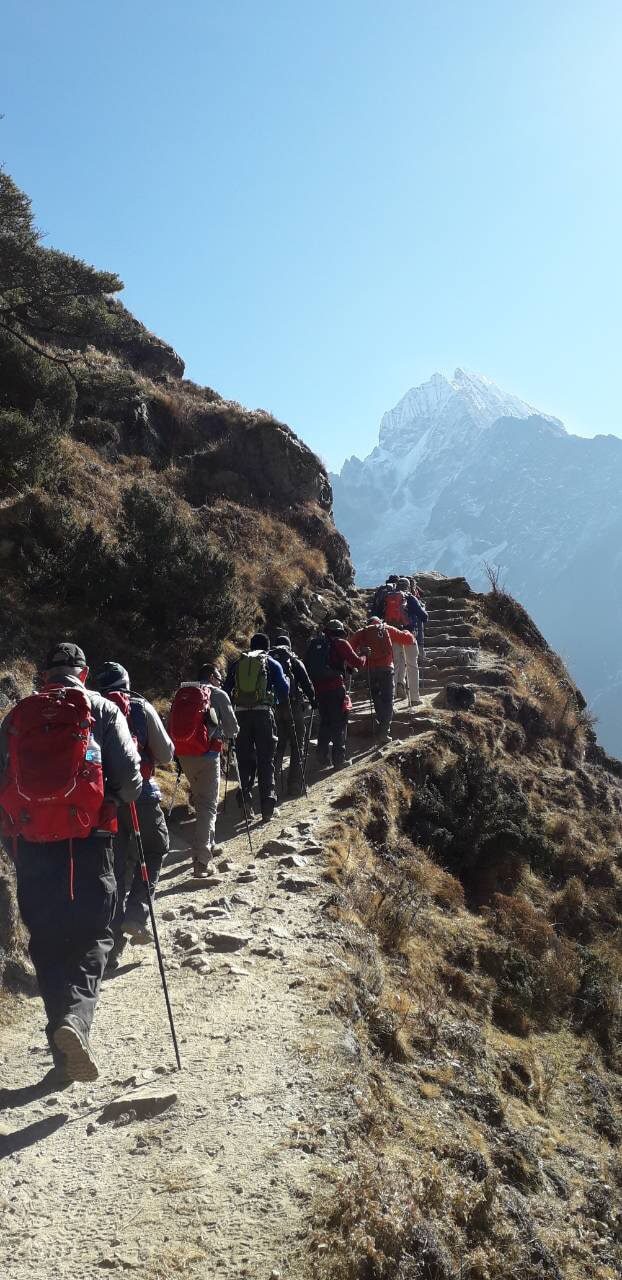
- Your day pack weight determines your enjoyment more than your main bag weight. Trekkers obsess over what the porter carries but then stuff their day pack with 12kg of cameras, water, snacks, and spare clothing. Target 5 to 7kg in the day pack and the trek becomes physically enjoyable rather than just achievable.
- Bring two of anything that cannot be replaced on trail. Two headlamps. Two copies of insurance documents. Two trekking pole tips. Teahouses do not sell trekking gear above Namche or Besisahar.
- Pack your layers in order of use. The items you need first when the temperature drops in the afternoon should be at the top of your day pack. Stopping on a ridgeline at 4,500m to dig through your bag for a fleece is miserable for everyone.
- Test your sleeping bag at home before you go. Get into it on your living room floor in the gear you plan to wear inside it. If you are cold at room temperature you will be genuinely cold at 3,800m in a teahouse with concrete walls.
- Merino wool base layers are not a luxury item. They stay wearable for 2 to 3 days between washes. Synthetic layers do not. For a 14-day trek, merino shirts are a comfort requirement for everyone in your teahouse room.
- Gear in Kathmandu is better than most people expect. Thamel has genuine North Face, Mammut, and Arc’teryx alongside high-quality local brands. If you forget something or your boots fail, the solution is a 20-minute walk in Kathmandu. Budget NPR 5,000 to 15,000 for any last-minute kit.
- The porter weight limit is a welfare standard, not a suggestion. MountainKick assigns one porter per two trekkers, with a combined 30kg limit, because exceeding it causes long-term injury to porters who carry these loads for their livelihood. Pack within your share of that limit.
Packing Adjustments by Trek
Everest Base Camp Trek
EBC reaches 5,364m. Cold, altitude, and dust are the specific challenges.
- Sleeping bag: Must be rated to -15°C if trekking in November or later. -10°C is the minimum for October.
- Down jacket: Expedition-weight (700-fill or higher). Teahouses above Dingboche are cold at night even in sleeping bags.
- Dust protection: A buff or face gaiter for the Phakding to Tengboche section. The trail is shared with yak trains and dust is significant.
- Trekking poles: Non-negotiable. The descent from Gorak Shep to Pheriche covers 700m of altitude loss in one afternoon.
- Water capacity: 2 to 3 litres total. Carry a SteriPen to treat stream water where available.
- Extra cash: Prices roughly double above 3,500m on the EBC route. Budget significantly more per day above Namche.
See the full Everest Base Camp Trek details and pricing, our EBC cost breakdown, and our guide to training for Everest Base Camp.
Annapurna Region (ABC, Circuit, Mardi Himal)
Annapurna routes are generally warmer and wetter than the Khumbu.
- Sleeping bag: -5°C to -10°C is sufficient for most Annapurna routes except the Circuit in November and beyond.
- Waterproofing matters more here than on EBC. The Annapurna region gets more precipitation even in dry season. Waterproof everything in your duffel.
- Lighter layers work for ABC and Mardi Himal in spring. March and April in the Annapurna region are warm in the valleys and cold only above 3,500m.
- Leech socks. If trekking ABC in late September, worth having for the lower Modi Khola valley sections.
Short Treks: Poon Hill, Langtang, Day Hikes
- No expedition-weight down jacket needed. A good fleece and synthetic mid-layer is enough for Poon Hill and Langtang Valley below 3,800m.
- Sleeping bag can be lighter: 0°C comfort rating is sufficient for Poon Hill in season. Langtang needs -5°C.
- Fewer trekking days means fewer clothing changes needed. Drop to 2 trekking shirts and 3 pairs of socks for 5 to 7 day routes.
- Medical kit can be lighter. Diamox is less critical for Poon Hill (max 3,210m). Still bring blister kit, ORS, and basic pain relief.
Frequently Asked Questions
Can I buy or rent trekking gear in Kathmandu?
Yes. Thamel in Kathmandu has an extensive gear market. You can buy genuine branded gear or rent high-quality items for much less. If checked luggage fees are high, it is cheaper to rent your sleeping bag, down jacket, and poles in Kathmandu than to check them. Budget NPR 800 to 2,500 per item for a 2-week rental. Stick to shops recommended by your operator, counterfeit branded gear is common in Thamel.
What is the porter weight limit on Nepal treks?
MountainKick assigns one porter per two trekkers, with a recommended 10 to 15kg per person in your main duffel and a combined maximum of 30kg for the pair. This is a welfare standard, not a suggestion. Exceeding it causes long-term injury to porters who carry these loads for their livelihood. Plan your packing so your share stays within this limit.
Do I need to bring a sleeping bag or can I use teahouse blankets?
Bring your own sleeping bag. Teahouse blankets vary significantly in cleanliness and above 4,000m they are not warm enough on their own for the coldest nights. A sleeping bag rated to -10°C is mandatory for EBC and high-altitude routes in autumn and winter.
What should I pack in my day pack versus my duffel?
Your day pack stays on your back every day. It should contain: down jacket, waterproof shell, water, snacks, headlamp, first aid essentials, passport, insurance documents, and a base layer change. Your duffel goes to the porter and carries: sleeping bag, main clothing supply, toiletries, and anything you only need at the end of each day.
What documents do I need to carry on trek?
Your original passport is required at permit checkpoints. Your guide carries your trekking permit but you should have a copy. Keep travel insurance documents in a waterproof zip-lock bag inside your day pack. Laminate an emergency contact card with your insurance policy number, blood type, and the MountainKick emergency contact number and keep it in a separate pocket.
Is trekking gear from Kathmandu good quality?
Quality ranges from excellent to very poor. Branded gear from established shops in Thamel is generally reliable. The risk is counterfeit items sold as branded gear, down jackets claiming 700-fill that contain minimal down, or jackets that are not actually waterproof. Stick to shops recommended by your operator or rent rather than buy locally if unsure.
Planning a Nepal trek?
All MountainKick guided packages include a duffel bag, porter service (one porter per two trekkers, 10 to 15kg per person), and a licensed guide who has carried this kit on these routes for years. Permits are arranged and included. You focus on packing right, we handle the logistics.
Browse All Treks Ask a QuestionFurther Reading
- Altitude Sickness on Nepal Treks: Symptoms, Prevention and What to Do
- Travel Insurance for Nepal: What Your Policy Must Cover
- Nepal Trekking Permits 2026: Costs, Rules and What’s Changed
- Everest Base Camp Trek Cost 2026: The Complete Breakdown
- Annapurna Base Camp Trek Cost 2026: The Complete Breakdown
- Solo Female Trekking Nepal: Safety, Guides and What to Expect
- Lukla Flight Delays: What Actually Happens and How to Handle It