

Jomsom Muktinath Trek
●●●●● 4.9 · 60+ TripAdvisor reviewsTrek from Nepal's most famous sunrise viewpoint through the Kali Gandaki gorge to Muktinath, a pilgrimage site sacred to both Hindus and Buddhists
On The Trail
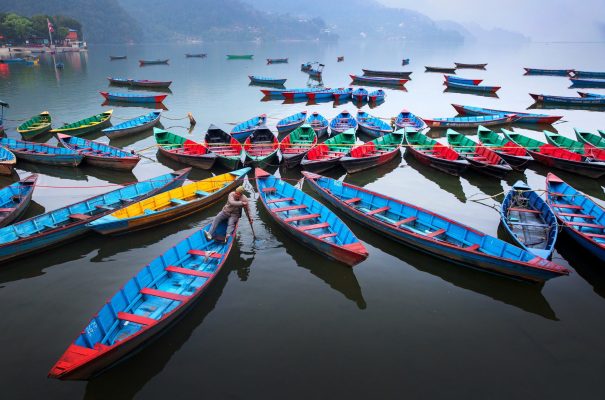
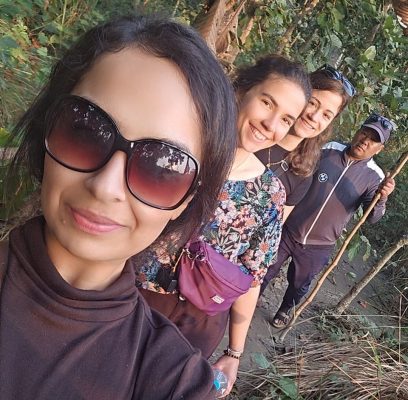
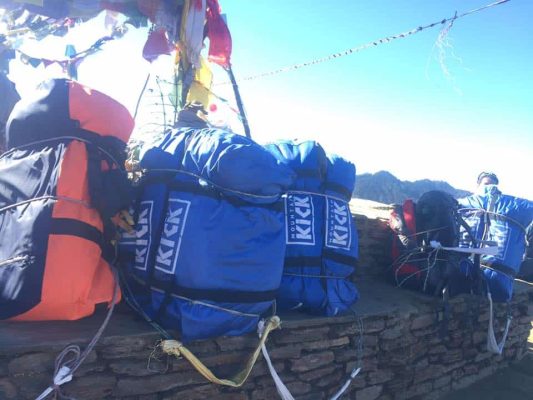
What It Really Looks Like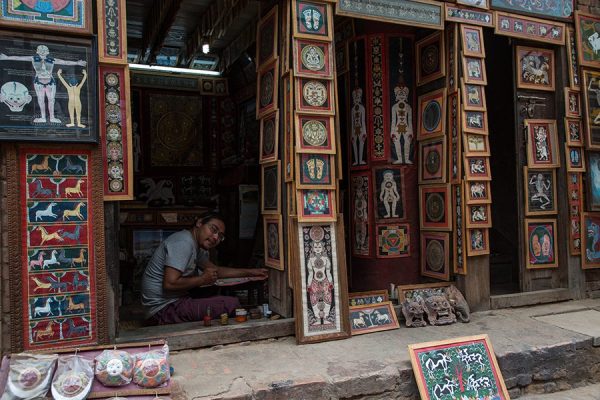
Jomsom Muktinath Trek: What to Expect
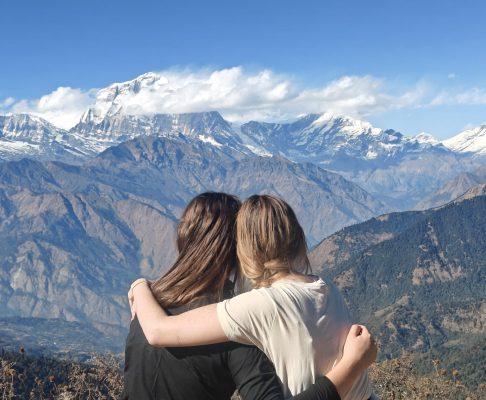
Nepal's most famous viewpoint at 3,210m. Dhaulagiri, Annapurna, Nilgiri, and Machhapuchhre lit by first light
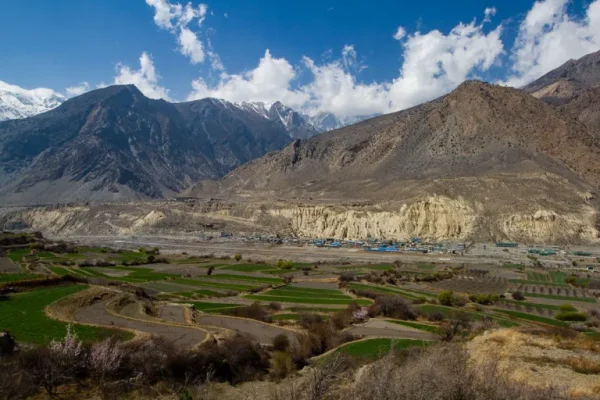
108 water spouts and an eternal natural gas flame at 3,710m. Sacred to both Hindus and Buddhists for centuries
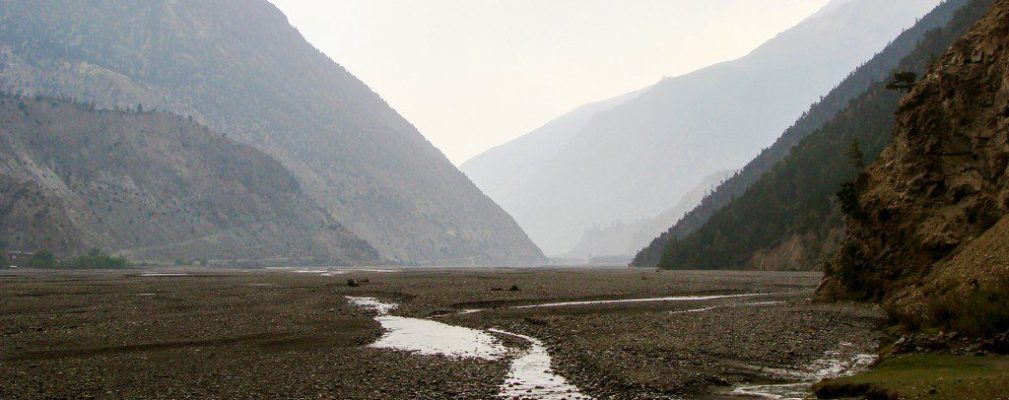
Natural thermal pools on the Kali Gandaki riverbank. The best rest stop between Poon Hill and the upper valley
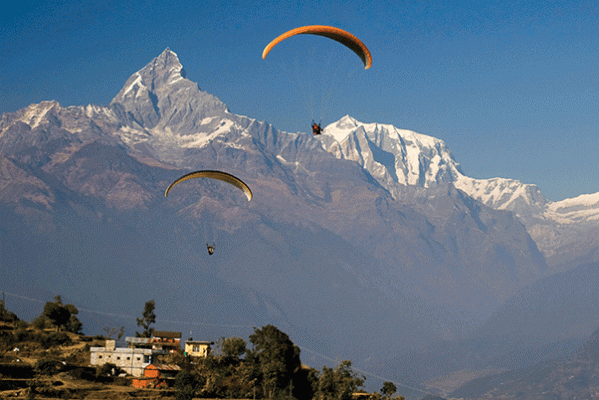
20-minute scenic flight between Annapurna and Dhaulagiri instead of two days on the road back to Pokhara
This 14-day trek combines two of Nepal’s most distinct landscapes in one route. The first half follows the classic Poon Hill approach from Nayapul through rhododendron forest to Ghorepani, with the pre-dawn Poon Hill sunrise on Day 5. The second half descends through the Kali Gandaki gorge between Dhaulagiri and Annapurna, passing Thakali villages, natural hot springs at Tatopani, and the medieval settlement of Kagbeni before climbing to Muktinath at 3,710m. The trek ends with a 20-minute flight from Jomsom back to Pokhara.
The hardest day is Day 4, the 1,320m stone-step climb from Tikhedhunga to Ghorepani. From Day 5 onward the route descends gradually through the gorge with daily walking averaging 5 to 6 hours. The cultural shift from Gurung villages in the lower forests to Thakali settlements in the upper valley is one of the most interesting aspects of this route. No technical terrain. Prior trekking experience is beneficial but not required for fit trekkers.
Trail highlights:
- Poon Hill sunrise at 3,210m with Dhaulagiri, Annapurna, Nilgiri, and Machhapuchhre
- Tatopani hot springs on the Kali Gandaki riverbank between the gorge and upper valley sections
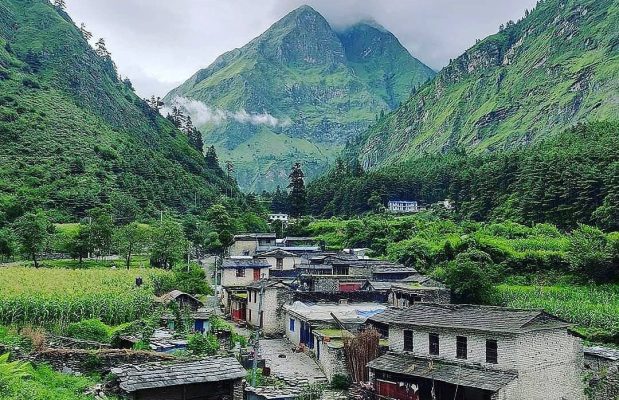
- Thakali villages of Ghasa and Tukuche with traditional stone architecture and Buddhist monasteries
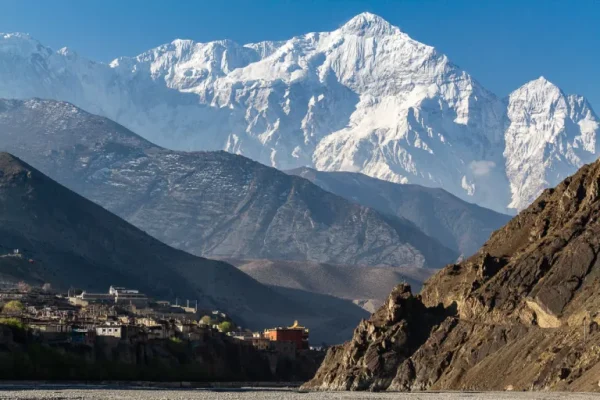
- Kagbeni: medieval mud-brick village on the boundary of restricted Upper Mustang
- Muktinath at 3,710m: 108 water spouts and an eternal natural gas flame sacred to Hindus and Buddhists
- The Jomsom to Pokhara flight passing between Annapurna and Dhaulagiri at close range
For a comparison with similar routes read our Annapurna region guide.
Day-by-Day Itinerary
Arrival in Kathmandu
Your guide meets you at arrivals and transfers you to the hotel in Thamel. That evening we hold a pre-trip briefing covering the full route, kit check, and permit paperwork. Bring your passport. If you need last-minute gear, Thamel shops open from 8am and stock everything from trekking poles to sleeping bags.

Drive to Pokhara
The tourist bus departs at 7am from Sorakhutte near Thamel. The 200km drive along the Prithvi Highway takes 7 to 8 hours. Arrive in Pokhara by late afternoon with the evening free at Phewa Lake. Tomorrow the trek starts with a short drive to Nayapul.

Drive to Nayapul, Trek to Tikhedhunga
A private vehicle takes you 42km to Nayapul in about an hour. ACAP and TIMS permits are checked at Birethanti, 30 minutes in. The trail follows the Bhurungdi Khola river before climbing to Tikhedhunga. A gentle first day with one short steep section near the end.

Trek to Ghorepani
The hardest day on the trek. The trail drops to cross the Bhurungdi Khola then climbs over 3,000 stone steps to Ulleri before continuing through dense rhododendron and oak forest via Banthanti to Ghorepani. Start early, set a steady pace, and use poles. Set an alarm for tomorrow.
Poon Hill Sunrise, Trek to Tatopani
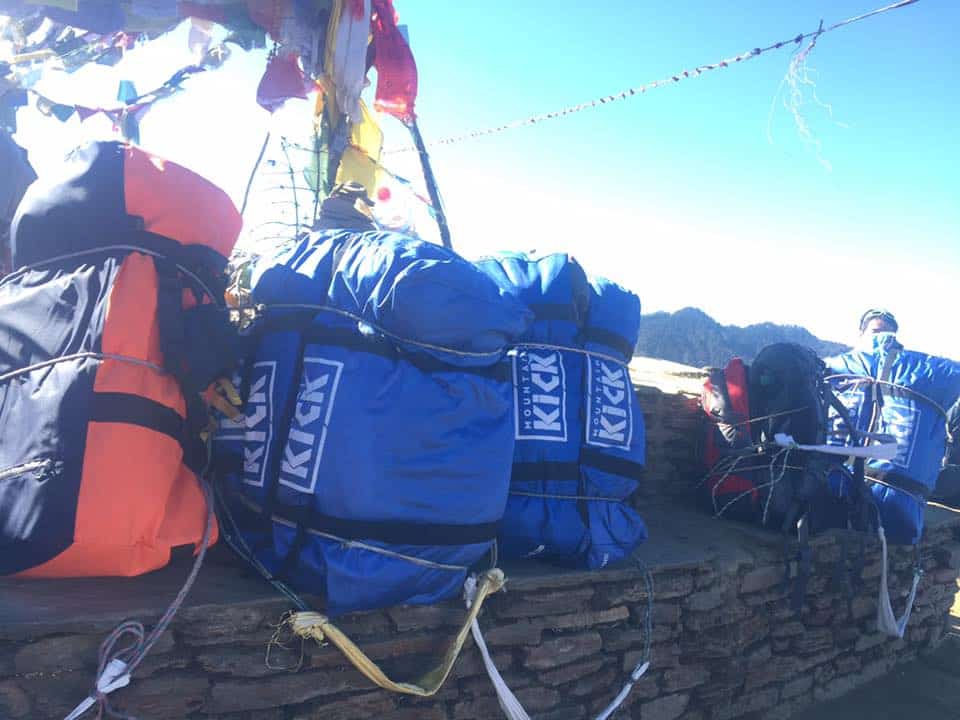
Alarm at 4:30am for the 45-minute climb to Poon Hill at 3,210m. Dhaulagiri, Annapurna South, Nilgiri, and Machhapuchhre fill the horizon as first light hits the ridges. Back to Ghorepani for breakfast then a long descent through rhododendron forest and terraced farmland to Tatopani. The name means hot water in Nepali. Soak in the riverside springs before dinner.

Trek to Ghasa
The gorge begins today. The trail follows the Kali Gandaki north past Dana village and the Rupse Chhahara waterfall before entering the narrowest section of the canyon. Rock walls close in on both sides and the river roars below. Ghasa is a Thakali village at the base of the gorge where vegetation gives way to more arid terrain.
Trek to Tukuche
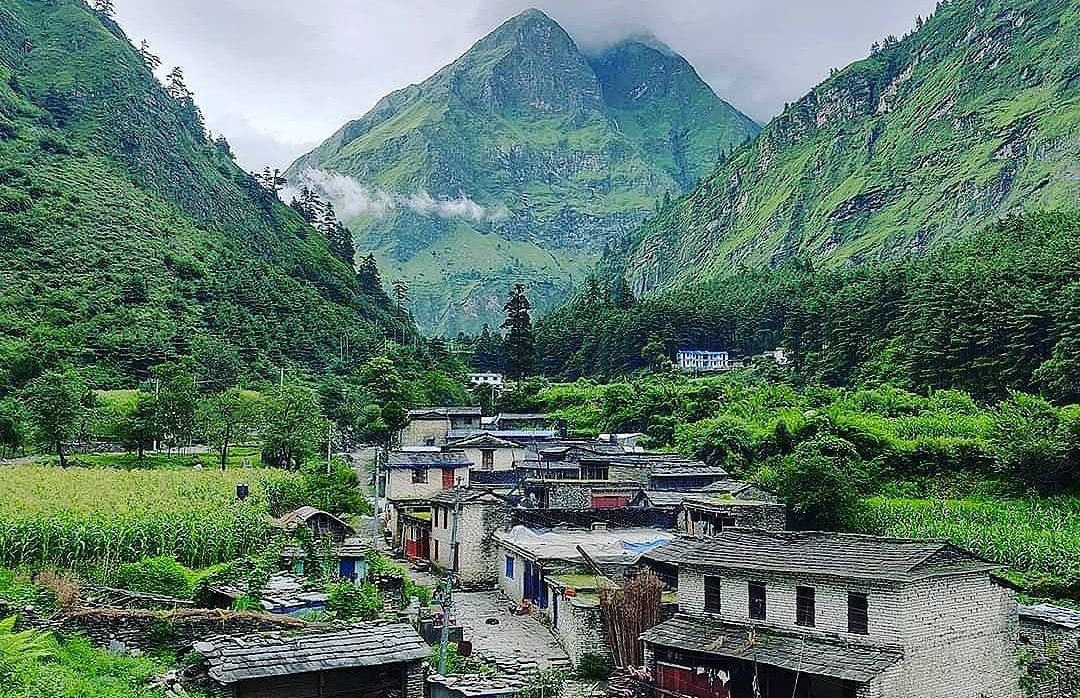
The landscape opens as the gorge widens into the upper Mustang valley. Dhaulagiri (8,167m) and Annapurna dominate the skyline on either side. Pass through Lete and Kalopani with close views of Dhaulagiri’s south face before reaching Tukuche, a former salt trading hub with four monasteries, a 15th-century gompa, and apple orchards. Afternoon winds pick up reliably from here northward.
Trek to Kagbeni
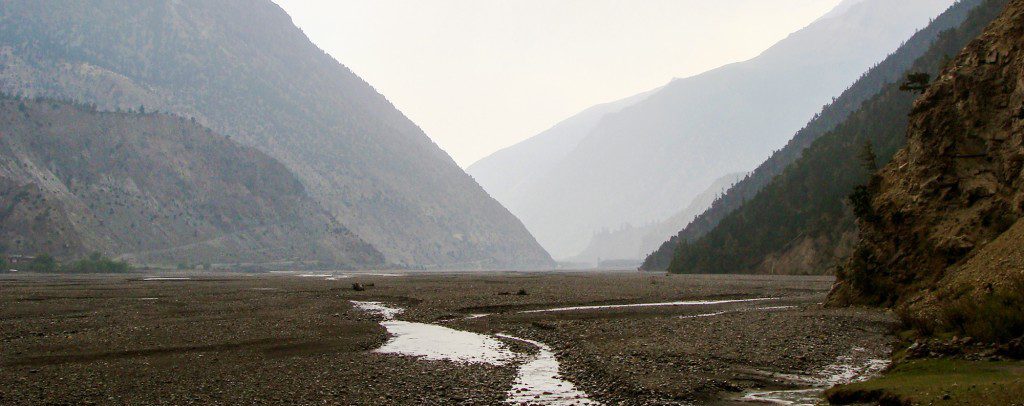
Pass through Marpha, Nepal’s apple capital with whitewashed Thakali houses and locally made apple brandy, then through Jomsom, district headquarters of Mustang. The landscape shifts to the barren Mustang plateau north of Jomsom. Strong afternoon winds funnel through the valley above Jomsom. Kagbeni is a medieval mud-brick village on the border of restricted Upper Mustang with a red monastery dating to the 15th century.

Trek to Muktinath
The trail leaves the Kali Gandaki and climbs east through Jharkot, a Tibetan-style fortress village with an ancient monastery, before the final ascent to Muktinath. The temple complex has 108 water spouts carved as bull heads, an eternal natural gas flame, and a Buddhist monastery. Pilgrims from across South Asia bathe in the freezing water year-round as an act of devotion.

Trek back to Jomsom
Explore Muktinath temple at dawn before the pilgrims arrive then begin the descent back to Jomsom. Start before 9am to avoid the afternoon valley winds. The return is mostly downhill and much faster than the climb. Your last night on trail before tomorrow’s flight. Jomsom has good teahouses, shops, and a well-stocked bakery.
Fly Jomsom to Pokhara
The 20-minute flight passes between Annapurna and Dhaulagiri at close range. Flights depart early before valley winds build and are weather-dependent. Occasional cancellations happen with a jeep ride as the alternative. Check into your lakeside hotel by mid-morning. The rest of the day is yours after 9 days on trail.

Leisure Day in Pokhara
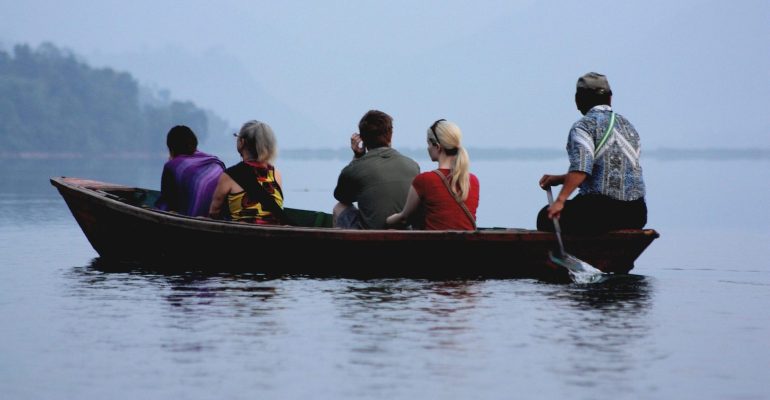
A full free day in Pokhara. Phewa Lake boating, the International Mountain Museum, paragliding over the valley, or simply rest at a lakeside cafe with Annapurna on the horizon. Pokhara rewards a slow day. This is your last evening in Nepal’s most relaxed city before the long drive back to Kathmandu tomorrow.

Drive to Kathmandu, Farewell Dinner
Tourist bus back along the Prithvi Highway, 200km in 7 to 8 hours. Arrive by early evening. That night your guide takes you to a local restaurant for a farewell dinner of dal bhat, momos, and traditional Nepali dishes. A good moment to reflect on Poon Hill, the Kali Gandaki gorge, and the Muktinath pilgrimage.

Final Departure.
Breakfast at the hotel then a private transfer to the airport timed to your flight. If you have time before departure, Boudhanath is 20 minutes by taxi and worth a final morning visit.

3D Route Map
Includes & Excludes
-
Airport transfers in Kathmandu Private vehicle, arrival and departure
-
3-star hotel in Kathmandu 2 nights, twin-sharing, breakfast included
-
3-star hotel in Pokhara 3 nights, twin-sharing, breakfast included
-
Teahouse accommodation on trek 8 nights, twin-sharing throughout
-
Tourist bus KTM to Pokhara return Both directions
-
Private vehicle Pokhara to Nayapul Trek start
-
Jomsom to Pokhara flight 20-min scenic flight
-
Tourist bus Pokhara to Kathmandu Return journey Day 16
-
Government-licensed trekking guide NTB-certified, English speaking, full trek
-
Porter service 1 porter per 2 trekkers, 20kg load limit
-
All staff costs Salary, insurance, equipment, food and accommodation
-
Annapurna Conservation Area Permit (ACAP) Required entry permit for the Annapurna region
-
TIMS card Trekkers' Information Management System
-
Oximeter and first aid kit Carried by guide throughout the trek
-
Farewell dinner in Kathmandu Traditional Nepali meal with your guide
-
Duffel bag Yours to keep as a souvenir
-
International flights To and from Kathmandu
-
Nepal visa fee 15 days $30 / 30 days $50 / 90 days $125, available on arrival
-
Travel insurance Mandatory. Must cover helicopter evacuation to at least 4,000m
-
All meals on trek Budget $25 to $35 per day. Teahouses serve breakfast, lunch and dinner
-
Lunch and dinner in Kathmandu and Pokhara Except the farewell dinner
-
Personal trekking gear Sleeping bag, trekking poles. Rentable in Kathmandu or Pokhara
-
Hot showers, Wi-Fi, battery charging Small charge at teahouses, typically $2 to $5 each
-
Guide and porter tips Customary. Roughly 10-15% of the trip price
-
Jomsom flight cancellation Jeep alternative
-
Personal expenses Snacks, bottled water, laundry, souvenirs
Enhance Your Trek
We Handle the Details
FreeWhere You'll Sleep & What You'll Eat
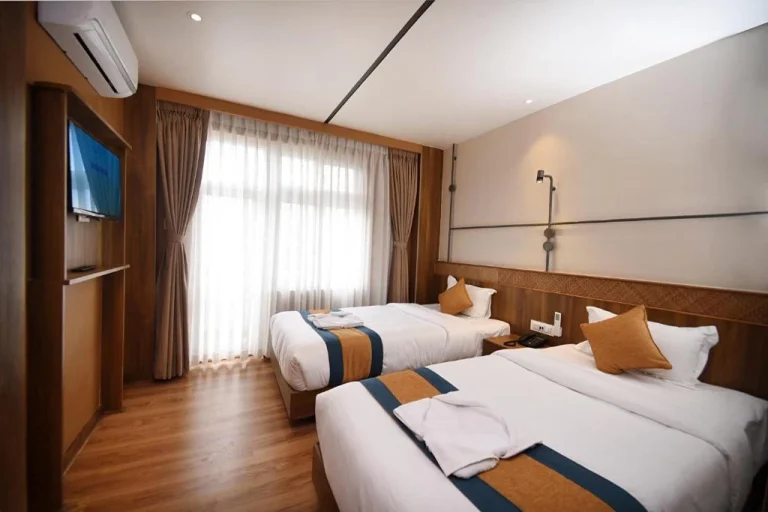
Three tiers on this trek. Kathmandu and Pokhara are 3-star hotels with private bathrooms and breakfast included. From Tikhedhunga to Ghasa, teahouses are well-established with twin rooms, shared bathrooms, and solar hot showers at extra cost. Tatopani has natural hot springs a short walk from the village. Above Ghasa from Tukuche through Kagbeni and Jomsom, teahouses are good with some attached bathrooms. Muktinath is the most basic stop with cold unheated rooms and no reliable electricity. Sleeping bag rated to 0°C essential throughout.
Kathmandu and Pokhara: 3-star hotel, private bathroom, breakfast included
Tikhedhunga to Ghasa: established teahouses, shared bathroom, solar hot shower at extra cost
Tatopani: natural hot springs on the Kali Gandaki riverbank, short walk from teahouses
Tukuche, Kagbeni and Jomsom: good teahouses, some attached bathrooms, reliable dining
Muktinath: basic unheated rooms, shared bathrooms, cold nights, bring all your layers to bed
Sleeping bag rated to 0°C recommended throughout
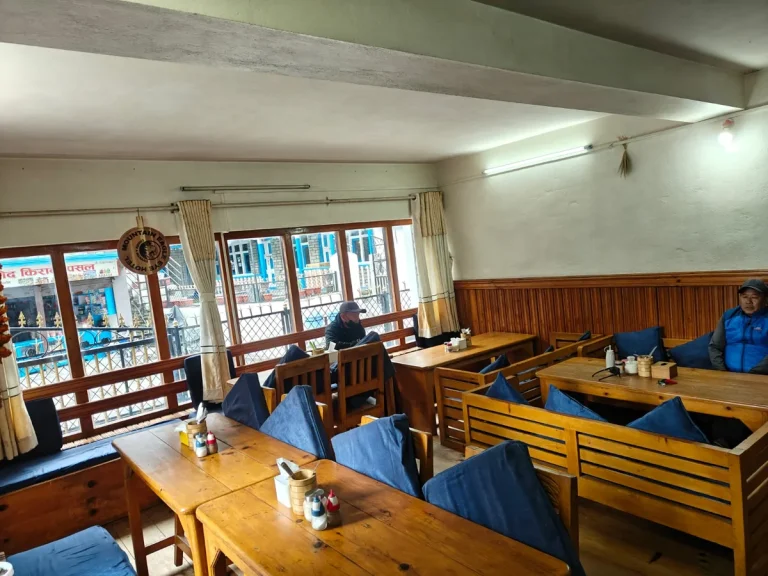
Teahouse menus are consistent from Tikhedhunga to Muktinath: dal bhat, garlic soup, noodle soup, fried rice, eggs, pancakes, and ginger tea. Dal bhat is the safest and most nutritious option at every stop, cooked fresh to order. From Ghasa northward expect Thakali cuisine, widely regarded as the best teahouse food in Nepal. In Tukuche and Marpha try the apple products: cider, brandy, and apple pie made from local orchards. Do not eat meat above Ghasa where freshness cannot be guaranteed. Budget $25 to $35 per day for three meals and drinks on trail.
| Meals on trail | $25 to $35 / day |
| Hot shower | $2 to $5 |
| Wi-Fi (where available) | $2 to $3 |
| Battery charging per device | $2 to $3 |
| Bottled water | $1 to $2 |
What Our Trekkers Say
“I’m already planning for the trip AGAIN and you would know which company I’d choose AGAIN…”
Finally, I had the opportunity to meander across the splendor of the Himalayas. My first concern after researching everything there was to know about Nepal was my safety and my child’s welfare. But upon our arrival at the airport, I found out that Kathmandu is one of the meanest places…
“MountainKick is haven for trekkers and one cannot afford to miss it if you are interested in trekking in Nepal.”
To whoever reading this and wondering about the legitimacy of this company, they are for real. The team is genuinely dedicated to making your trekking memorable and rewarding. Such is the professionalism of the company that they went steps further to assist us that included the tracking down of the…
“We liked the concern of this company for its staffs and the environmental awareness and it has.”
There was always a response from Jagat as we had so many things to ask. We had insisted on having a Nepali guide instead of a westerner because we had to make sure the money we spend actually goes to Nepali people. We chose this company because we had heard…
“We had the trip of our lifetime”
We had the trip of our lifetime thanks to the warm hospitality bestowed upon us and the beauty of such amazing country. From well-organized trips, exotic locations, cultural sightseeing to the thrill of safari, “soft” trekking to Poon Hill, everything was memorable. Our trekking guide was Shiva, apparently named after…
Frequently Asked Questions
How difficult is the Jomsom Muktinath Trek?
This trek is rated Challenging (Level 3 on our scale). The hardest day is Day 4 — the 1,320m stone-step climb from Tikhedhunga to Ghorepani. Day 5 is a long descent from Poon Hill all the way to Tatopani. From Day 6 onward the route follows the Kali Gandaki valley north with daily walking averaging 5 to 6 hours on well-marked trails. The maximum altitude is 3,710m at Muktinath, well below where serious altitude sickness becomes a major concern. No prior trekking experience is required but good cardiovascular fitness is important. See our full trek difficulty guide for context.
What makes this trek different from the standard Poon Hill Trek?
The Poon Hill Trek ends at Ghandruk or Syauli Bazaar after the sunrise and takes 9 days. This trek continues north through the Kali Gandaki gorge between Dhaulagiri and Annapurna, past Thakali villages, natural hot springs at Tatopani, the medieval settlement of Kagbeni, and ends at Muktinath at 3,710m before flying back from Jomsom. You get the Poon Hill sunrise plus 6 more days of completely different terrain, culture, and landscape through one of the deepest gorges on earth.
What is the best time to do this trek?
Spring (March to May) and autumn (September to November) are the two reliable windows. Autumn brings clear skies and best mountain visibility after the monsoon. Spring is warmer with rhododendrons in bloom on the Ghorepani section. Avoid winter (December to February) when Muktinath gets snow and Jomsom flights are frequently cancelled. Avoid monsoon (June to August) when the gorge section between Tatopani and Ghasa receives heavy rainfall with landslide risk and leeches active on the lower sections.
Can altitude sickness be a problem on this trek?
Altitude sickness is unlikely at the maximum elevation of 3,710m but some trekkers arriving from sea level experience mild headaches, fatigue, or disrupted sleep above 2,500m. Stay well-hydrated, maintain a steady pace, and avoid rushing the climb to Ghorepani on Day 4. Your guide carries an oximeter. Muktinath at 3,710m is the highest point and most trekkers feel fine there with the gradual ascent the itinerary provides. Read our full altitude sickness guide for a detailed breakdown.
What is Muktinath and why is it significant?
Muktinath is a sacred pilgrimage site at 3,710m in the Mustang district, significant to both Hindus and Buddhists. The temple complex includes 108 water spouts carved as bull heads from which spring water flows year-round, an eternal natural gas flame that burns on water considered sacred to both religions, and a Buddhist monastery. Hindus regard it as one of the 108 Divya Desams dedicated to Lord Vishnu. Thousands of pilgrims from Nepal and India visit every year to bathe in the freezing water as an act of purification.
What are the Kali Gandaki valley winds like?
The Kali Gandaki is famous for its powerful afternoon winds. From Jomsom northward the winds pick up reliably after midday and walking into them is genuinely difficult. Your guide starts early every day from Day 8 onward to reach each stop before the worst winds arrive. On the descent from Muktinath to Jomsom on Day 10 you walk with the wind at your back which makes life considerably easier. This is one of the practical reasons an experienced guide makes a real difference on this route.
What permits do I need and are they included?
Two permits are required: the Annapurna Conservation Area Permit (ACAP) and the TIMS card. Both are included in the MountainKick package price. We handle all paperwork before you leave Kathmandu. Permits are checked at Birethanti near Nayapul and at several checkpoints through the valley including Jomsom. Carry your originals at all times. For full 2026 permit details read our Nepal trekking permits guide.
What is the Jomsom to Pokhara flight like and what if it is cancelled?
The 20-minute flight passes between Annapurna and Dhaulagiri at close range and is one of the most scenic mountain flights in Nepal. Flights depart early morning before the valley winds build and are weather-dependent. Cancellations happen, with a jeep ride of 4 to 5 hours as the alternative. Travel insurance is essential for this reason. We build enough flexibility into the itinerary including the Pokhara leisure day to absorb a one-day delay without affecting your international departure.
What food is available and is it safe?
Teahouse menus from Tikhedhunga to Muktinath serve dal bhat, garlic soup, noodle soup, fried rice, eggs, pancakes, and ginger tea. Dal bhat is always the safest option, cooked fresh to order. From Ghasa northward expect Thakali cuisine, widely regarded as the best teahouse food in Nepal. In Tukuche and Marpha try the apple products including cider, brandy, and apple pie. Do not eat meat above Ghasa where freshness cannot be guaranteed. Budget $25 to $35 per day for three meals and drinks on trail.
What should I budget beyond the package price?
Budget for: international flights, Nepal visa (15-day $30 / 30-day $50 / 90-day $125), travel insurance, all meals on trek ($25 to $35 per day), hot showers and Wi-Fi ($2 to $5 each), guide and porter tips (10 to 15% of trip cost). Withdraw all cash before leaving Pokhara as there are no ATMs on trail. Most trekkers spend an additional $350 to $450 on top of the $980 package price.
What travel insurance do I need?
Your policy must cover emergency helicopter evacuation to at least 4,000m. A helicopter evacuation from the Muktinath area without insurance can cost $2,000 to $3,500. Make sure your policy also covers trip cancellation, medical treatment, and flight delays — Jomsom flight cancellations are the most common disruption on this route. Carry a printed copy of your policy and emergency contact number throughout the trek. Read our travel insurance guide for what to look for.
Will I get to communicate with the outer world?
There is internet and telephone connection in all of our stops for the day throughout the journey. You will be able to call back home or post your pictures on Facebook every day.
What travel documents do I need?
As soon as you land into Kathmandu, we take care of all your travel documents required during your trip. You just need to bring your passport and a copy of your travel insurance. Tourist fees and permits to enter certain areas will be arranged for by Mountain Kick.
Which is best time of the year to travel?
Most of the trekking routes are open throughout the year but September through to December and March to May are the best months to travel.
What are the modes of transportation for travel mentioned in the itinerary?
Rides for sightseeing and reaching destinations within city limits are done in a private vehicle like a car, a jeep or a microbus. Most of the long distance travel is done in luxurious tourist buses hired exclusively by the company. In some journeys, you may also need to take a public bus but as you will travel in a group with our guides and support staff, you need not worry about your safety or comfort.
How much money do I need to carry during the trip?
Around $50 will be enough to buy you lunch and dinner in Kathmandu. During your travel, you can get by with around $25 a day. But it depends on how much you want to spend. Due to the exchange rate and predominantly rural economy of Nepal, things are pretty cheap in Nepal.
Can I use my credit cards?
Almost all international credit cards are accepted in Nepal. However, not all places, especially during your travel, accept them. There may be a fee involved in processing your card.
Are tips for my guides and porters expected? How much?
Our staff do not expect you to tip them. Generally, travellers tip them if they are satisfied with the service as a means of gratitude. Even when travellers tip the guides and porters, there is no fixed rate. However, if you like to tip them, follow customs of your own country for tipping (which, as we have learned, is 10 to 15 percent of total cost for most western countries).
Where will I get a visa to come to Nepal?
You can obtain a visa at your home country through Nepal’s embassy or consular office. But you can easily get a visa upon arrival at Tribhuvan International Airport in Kathmandu. You just need two passport-size photographs. A tourist visa with multiple entry for 30 days costs $40 while the same for 90 days costs $100.
How do I book a tour?
Click Book Now to enter your details and we shall contact you. You can contact us directly for any further information or to prepare a customized itinerary for you. For payment information, see our Terms and Conditions.
Departure Dates & Pricing
No upcoming fixed departures are scheduled at the moment. Contact us to arrange a private departure on dates that suit you.
Your dates, your group, your way
Same route and guides, just your group. Tell us when you'd like to go and how many of you there are, and we'll send you a day by day plan with a price.
- Nothing to pay now
- Plan and price by email
- Confirm with a 20% deposit
"*" indicates required fields
Rather chat? Message us on WhatsApp
-
1
20% deposit: due on booking Secures your place on the departure. The deposit is non-refundable. We also need a copy of your passport.
-
2
80% balance: due on arrival Pay the rest in Kathmandu before the trip starts. Bank transfer, cash, or card (4% card fee).
| Cancel before you arrive | Deposit not refunded, nothing more to pay |
| Cancel after the pre-trip meeting | No refund |
| Date or name change | USD 200 per person |
| MountainKick cancels trip | Full refund or reschedule |
Weather delays and extra days cost extra, so travel insurance is required. We give you documents for any claim.
Read the full terms and conditionsPacking List
Footwear
ⓘ Do not bring new boots. Break them in on at least 3 to 4 long walks before you fly.
Clothing
ⓘ You need layers, not volume. The same fleece that keeps you warm at dinner is what you wear up Poon Hill at 4:30am.
Head and Hands
ⓘ The 4:30am Poon Hill climb and cold evenings at Muktinath are the coldest moments on this trek. Pack these in your daypack the night before Day 5.
Gear
ⓘ Your porter carries the duffel. Your daypack is for daily essentials only. Keep it under 5kg
Health and First Aid
ⓘ Your guide carries a full kit and oximeter. Your personal kit covers the everyday issues. Blisters and knee pain are the most common problems on this trek
Toiletries
ⓘ Keep it minimal. Facilities improve significantly at Tukuche and Jomsom. Hot showers available at most teahouses up to Kagbeni
Documents and Money
ⓘ No ATMs past Pokhara. Carry all cash from Pokhara in small denominations. Prices increase above Ghasa as supplies are jeep-carried into the valley
Trekking in Winter (Dec to Feb)
Trekking in Monsoon (Jun to Aug)
⚠ Monsoon is not recommended for this trek. The gorge section between Tatopani and Ghasa receives heavy rainfall with landslide risk, trails are slippery throughout, and leeches are active on the lower sections from Nayapul to Tikhedhunga.
Leave at home
-
Jeans or cotton clothing Takes days to dry and has zero insulation when wet.
-
Full-size towel Heavy and bulky. Microfiber only.
-
Laptop No need and the weight is punishing on steep trails.
-
Excessive snacks from home Dal bhat and teahouse food is cheap and abundant.
-
Valuables and jewellery Leave at the hotel in Kathmandu.
-
Umbrella Awkward in the narrow gorge section and useless in strong Kali Gandaki valley winds above Jomsom
Sleeping bags and down jackets can be rented in Pokhara before the trek. Trekking poles are best purchased in Thamel or Pokhara. We connect you with trusted shops at the pre-trip briefing. A duffel bag is provided to every trekker as part of the package
Jomsom Muktinath Trek
Talk to Kumar and the team before you commit. Ask about gear, fitness, altitude or a private group.
Tales from the Himalayas
 Travel
 Best Time to Trek Langtang Valley: Month by Month
Langtang is close to Kathmandu and good for much of the year, but the season changes everything from the views…
 Annapurna Region
 Thorong La Pass: A Guide to the Big Day on the Annapurna Circuit
Thorong La at 5,416m is the highest point of the Annapurna Circuit. Here’s what crossing day is really like, from…
 Everest Region
 Annapurna Circuit Teahouses: What the Rooms Are Really Like
Teahouses on the Annapurna Circuit range from comfortable lodges in Manang to bare rooms at Thorong Phedi. Here’s what to…