Mardi Himal Trek Difficulty: How Hard Is It Really?
The Mardi Himal trek is challenging but non-technical. Most days are 4 to 6 hours of steep walking. The hardest day is the early push from High Camp to the Mardi Himal Base Camp viewpoint at about 4,500m and back down, often 8 to 9 hours or more. The main challenges are steep climbs, long descents and altitude. Fit first-timers can do it with good preparation and a sensible pace.
- Our grade: Challenging, Level 3 on our difficulty scale
- Highest point: Mardi Himal Base Camp viewpoint, about 4,500m
- Highest night: High Camp, about 3,580m
- Hardest day: High Camp to Base Camp and down to Badal Danda, often 8 to 9 hours or more
- Technical skills: none needed in normal conditions
- Best for: fit trekkers, including well-prepared first-timers
- Last updated: October 2026
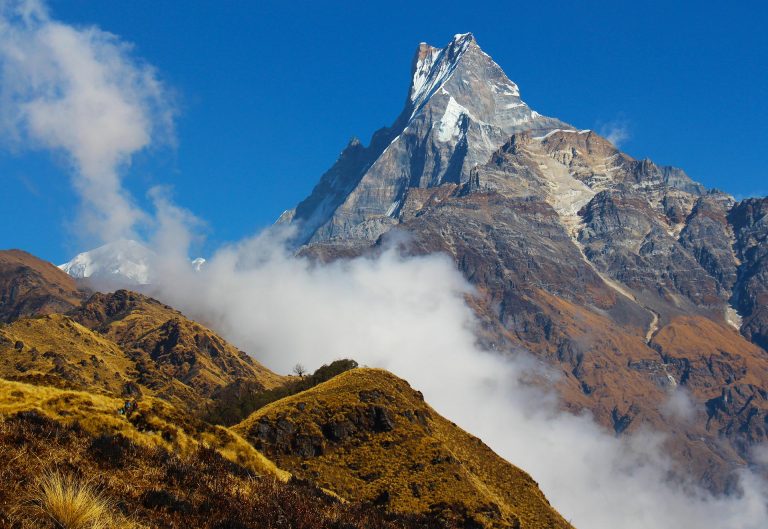
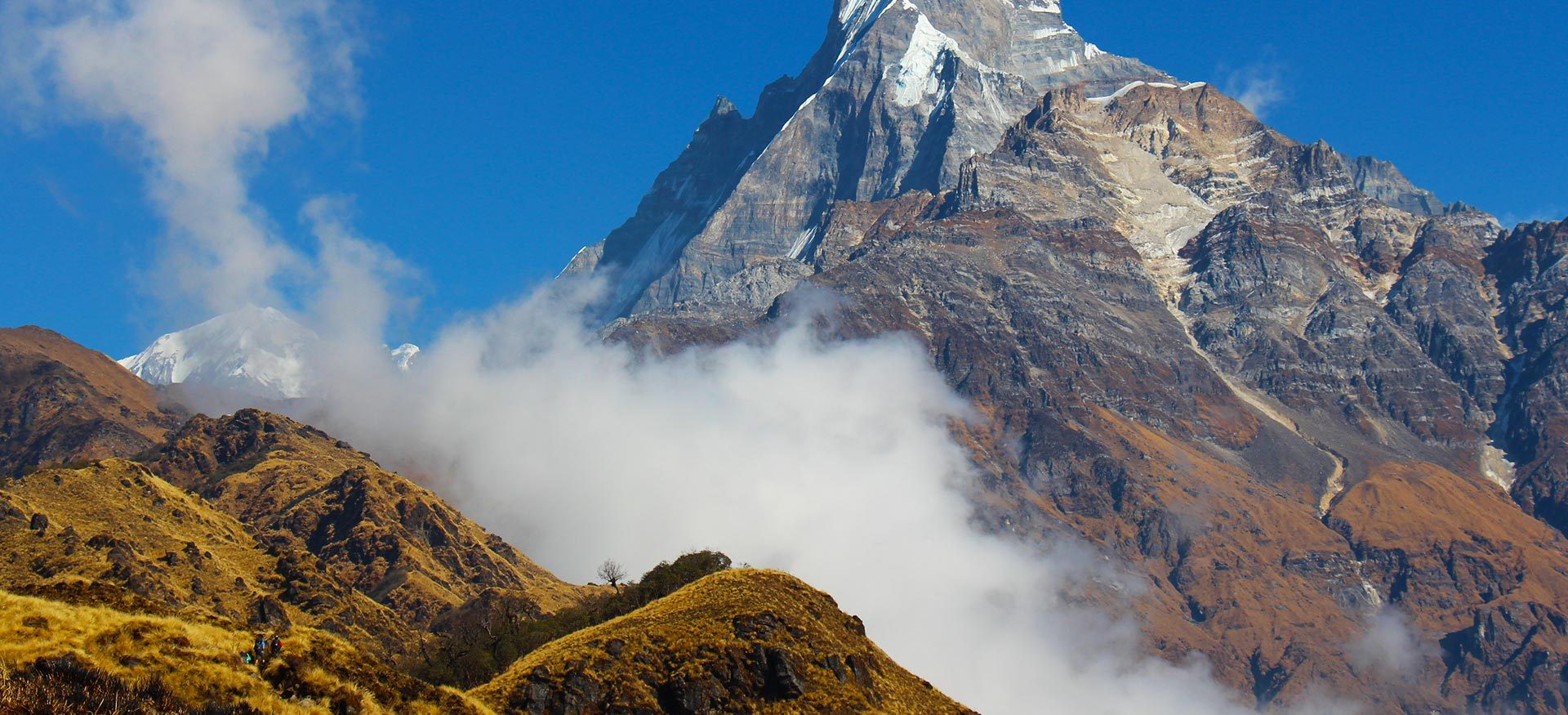
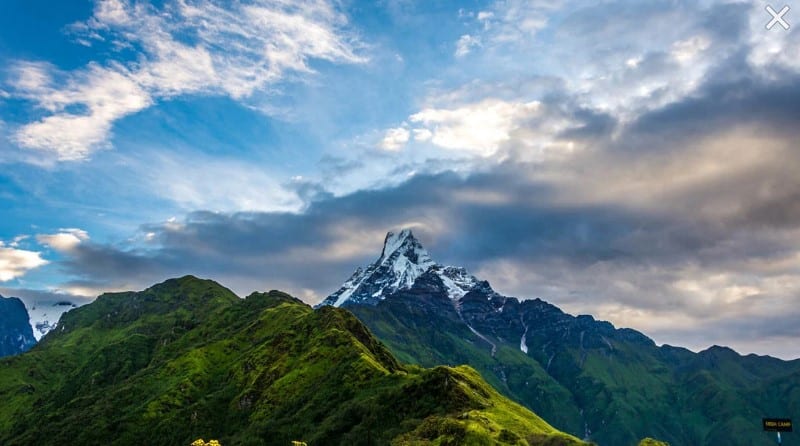
Mardi Himal is short, quiet and spectacular, and it’s often sold as an easy trek. It isn’t. The trail climbs fast through forest, then follows a ridge up to a viewpoint at about 4,500m under Machhapuchhre.
Here’s an honest look at how hard each part is and who it suits. For the full itinerary, see our Mardi Himal Base Camp Trek, and for route and cost details, our Mardi Himal trek guide.
How Hard Is the Mardi Himal Trek?
We grade Mardi Himal as Challenging, Level 3 on our difficulty scale. It’s harder than Poon Hill. There’s no climbing and no ropes. The challenge comes from three things: how steep the trail is, the long descents, and one big day at altitude. See our Nepal trek difficulty guide for how our grades work.
What Makes Mardi Himal Hard
- Steep height gain. You climb from about 2,100m to 3,580m in two days, mostly on steep forest trail.
- The Base Camp day. An early start, about 920m of climbing to 4,500m, then a long way back down, all in one day.
- Long descents. About 1,300m down on each of two days, which is hard on the knees.
- Exposed ridge sections. Lower down, the trail is mostly wide forest path. Above Low Camp it follows a ridge, and some sections are narrow with steep drops. They’re fine in good weather with care, but they need more attention in fog, wind or rain.
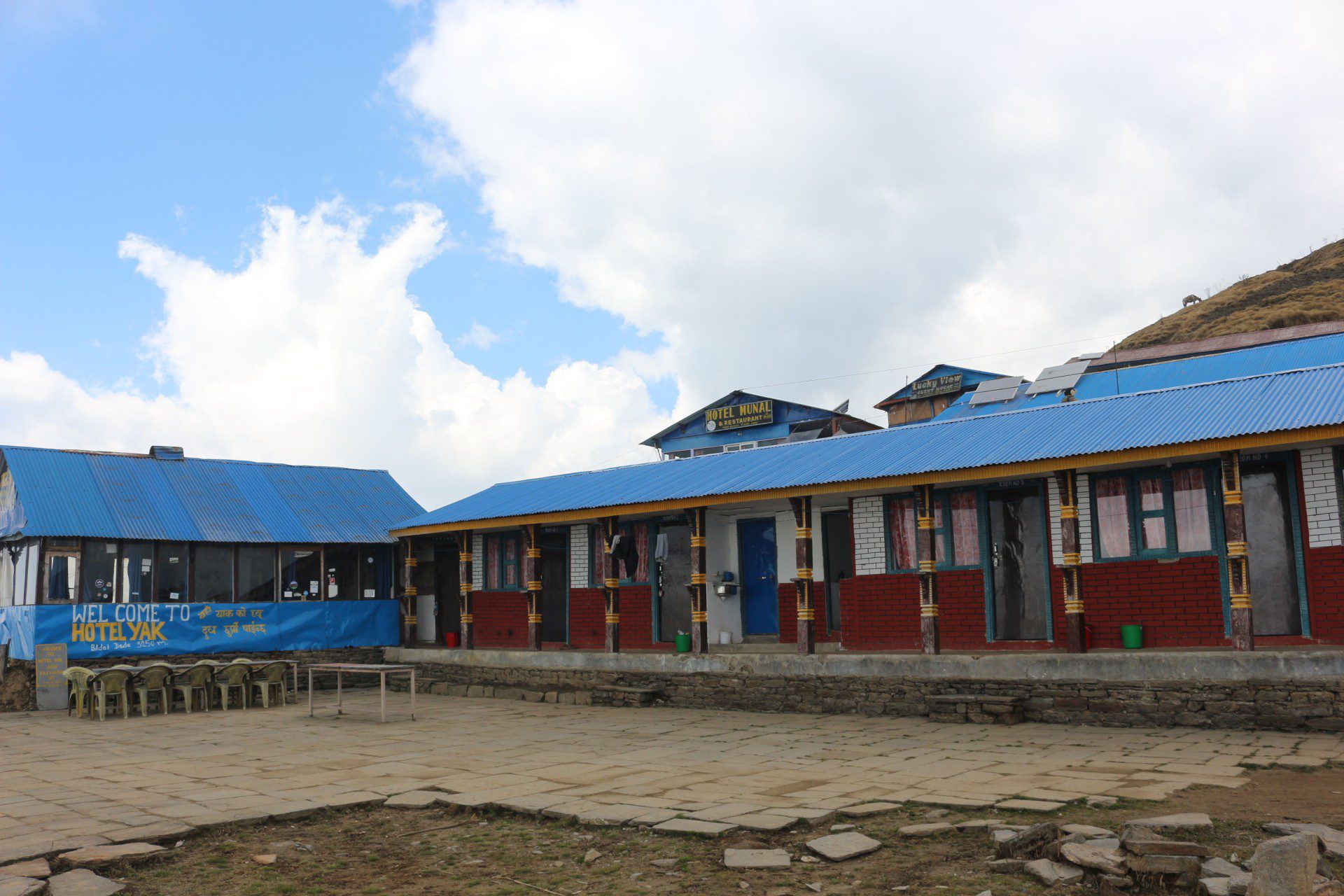
- Basic lodges higher up. High Camp and Badal Danda are simple, and nights are cold.
How Hard Each Day Feels
The trekking days on our Mardi Himal Base Camp Trek. Times are approximate.
| Day | Route | Time | Height change | How it feels |
|---|---|---|---|---|
| 3 | Kande to Pittam Deurali | 3 to 4 hrs | about +330m | Gentle start through villages |
| 4 | Pittam Deurali to Low Camp | 5 to 6 hrs | about +885m | Long, steep climb through forest |
| 5 | Low Camp to High Camp | 4 to 5 hrs | about +595m | Shorter, steep, onto the ridge |
| 6 | High Camp to Base Camp, back to Badal Danda | 8 to 9 hrs or more | about +920m / -1,290m | The hardest day by far |
| 7 | Badal Danda to Pothana | about 6 hrs | about -1,320m | Long descent, hard on the knees |
The Base Camp Day
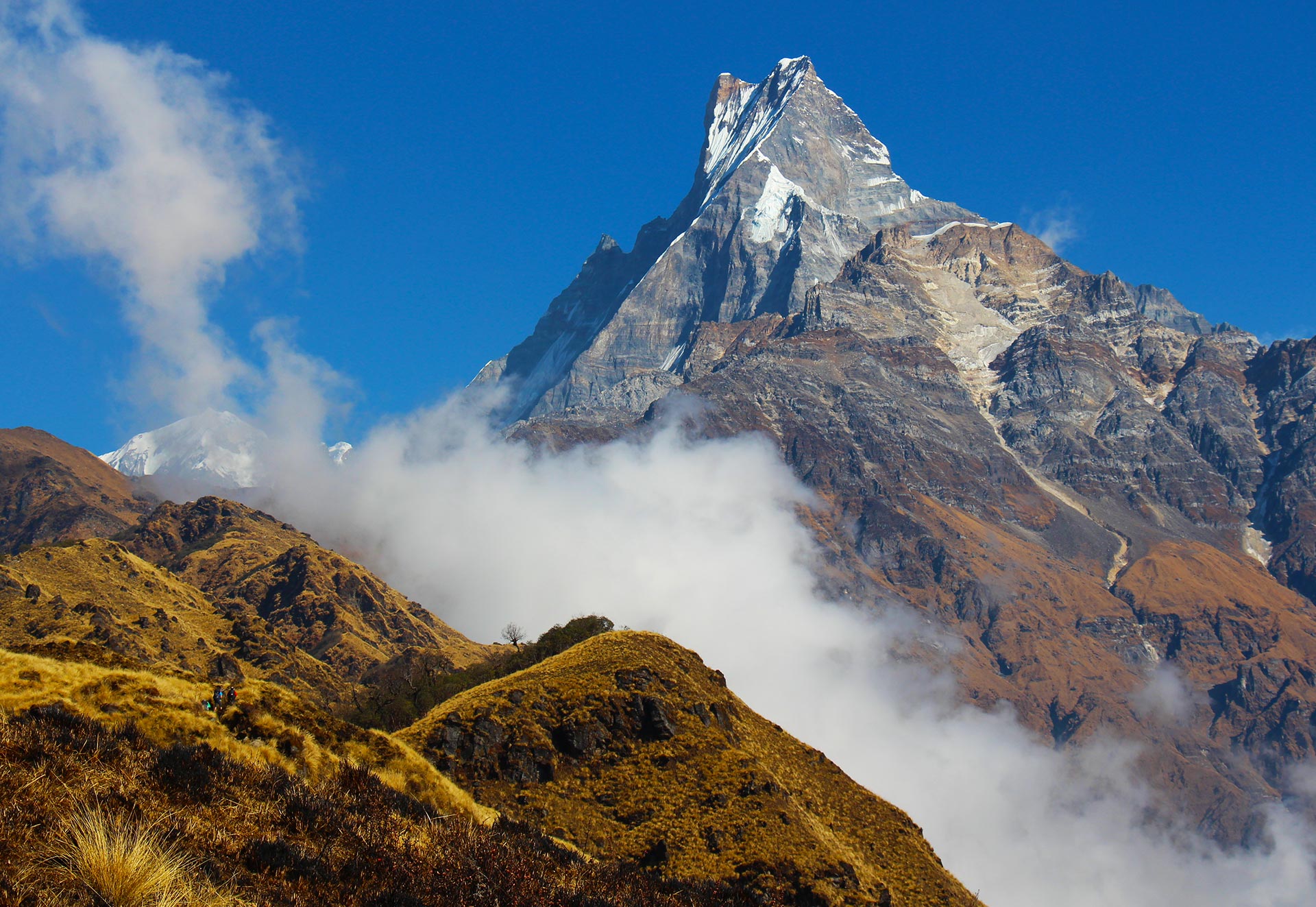
This is the day people remember. You leave High Camp at around 4am with headlamps and climb steadily up the ridge. On a clear morning, Machhapuchhre, Mardi Himal and Annapurna South are right in front of you. The usual Base Camp viewpoint is at about 4,500m.
It’s about 920m up, then about 1,290m down past High Camp to Badal Danda. Depending on conditions, your pace and how far you go, the day often takes 8 to 9 hours or more.
Your guide decides how far the group goes based on the weather, the trail and how everyone is feeling. If conditions turn or you’re struggling, turning back before Base Camp is the right call.
Altitude and Acclimatisation
At around 4,500m, altitude sickness is a real possibility. Some people get headaches or sleep badly above 3,000m, while others feel fine.
Our itinerary sleeps at High Camp (3,580m) before the Base Camp day, so you go up to 4,500m and come back down to sleep lower. Your guide carries a pulse oximeter and checks it alongside how you look and feel. The reading is one useful check, not the only one.
Tell your guide straight away if you have a headache, nausea, dizziness or unusual weakness, especially if it’s getting worse. If symptoms worsen, you don’t go higher. See our altitude sickness guide.
Mardi Himal Compared with Other Treks
| Trek | Highest point | How it compares |
|---|---|---|
| Ghorepani Poon Hill | 3,210m | Easier and lower, with long stone staircases |
| Mardi Himal | about 4,500m | Short and steep, with one very demanding day |
| Annapurna Base Camp | 4,130m | Lower, but more days of walking overall |
| Annapurna Circuit | 5,416m | Much longer, with a high pass |
Mardi and ABC are both demanding in different ways. Mardi packs most of its difficulty into a few steep days and the Base Camp push. ABC is less steep day to day but has more total walking. See Poon Hill vs Mardi Himal vs ABC.
Can Beginners Do the Mardi Himal Trek?
Fit first-timers can, with good preparation. You need to be able to walk uphill for 5 to 6 hours a day, several days in a row. Fitness doesn’t protect you from altitude, though. Go at a sensible pace, and be ready to turn back if the weather or your body says so.
If you’re new to hiking or worried about steep descents or altitude, Ghorepani Poon Hill is a gentler first trek. See our best treks in Nepal for beginners.
How to Train for Mardi Himal
Start 6 to 8 weeks before your trek:
- Walk or hike 2 to 3 times a week, building up to 4 to 5 hours with a 3 to 5kg daypack.
- Use stairs or hills, both up and down. Downhill training protects your knees on Days 6 and 7.
- Add leg strength work like squats, lunges and step-ups.
- Wear your trekking boots on training walks so they’re broken in.
Bring trekking poles. They make a big difference on the steep descents.
Difficulty by Season
These are typical conditions. Weather on the ridge can change quickly in any month.
- October and November: usually the easiest conditions, with a drier trail and clearer views.
- March and April: usually good, but afternoons can be cloudy and lower trails muddy.
- December to February: possible, but very cold higher up. Snow or ice can make the Base Camp day harder or unsafe.
- June to August: the monsoon. Slippery trail, leeches and frequent cloud on the ridge. Not recommended.
Snow and ice can also appear outside winter after storms, so your guide checks conditions each day.
How to Make Mardi Himal Easier
- Train with downhill walking, not just uphill.
- Use trekking poles.
- Keep your daypack light. Our porters carry your main bag.
- Go steady on Day 4. It’s a long climb, and saving energy helps on the Base Camp day.
- Eat a proper dinner and rest well at High Camp.
- Be willing to turn back early on the Base Camp day if needed.
Frequently Asked Questions
How hard is the Mardi Himal trek?
It’s challenging but non-technical. Most days are 4 to 6 hours of steep walking, and the Base Camp day often takes 8 to 9 hours or more.
Is Mardi Himal harder than Poon Hill?
Yes. It goes much higher, about 4,500m against 3,210m, and the climbs and descents are steeper.
Is Mardi Himal harder than Annapurna Base Camp?
They’re hard in different ways. Mardi is shorter but steeper, with one very demanding day. ABC has more total walking.
Can beginners do the Mardi Himal trek?
Fit first-timers can, with good preparation and a sensible pace. Be ready to turn back if the weather or your body requires it.
What is the hardest part of the Mardi Himal trek?
The Base Camp day: an early start, about 920m up to around 4,500m, then a long descent to Badal Danda.
Is the Mardi Himal ridge dangerous?
Some sections are narrow with steep drops. They’re fine in good weather with care. In fog, wind or rain, your guide may slow down or change the plan.
Do I need trekking poles for Mardi Himal?
They’re strongly recommended. The descents are steep and long.