
Everest Base Camp with Island Peak
●●●●● 4.9 · 60+ TripAdvisor reviewsTrek to Everest Base Camp, stand on Kala Patthar at sunrise, then summit Island Peak at 6,189m — three objectives in one 20-day Khumbu expedition.
Friends paying separately still get the group price.
On The Trail
What It Really Looks Like
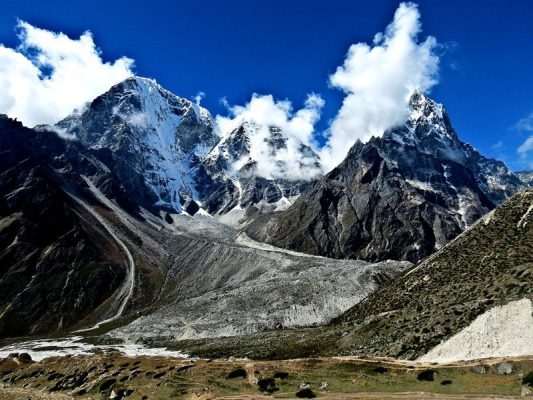
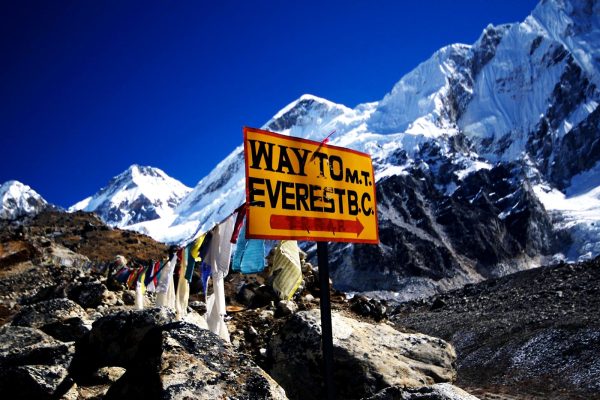
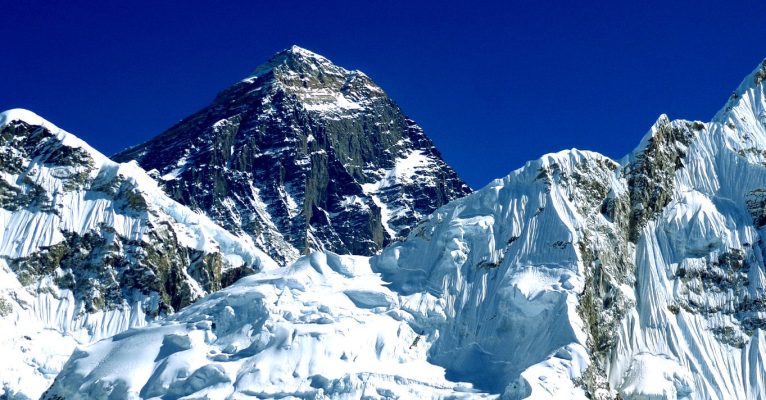
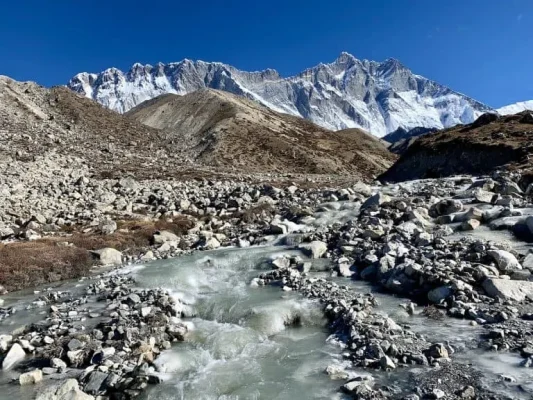
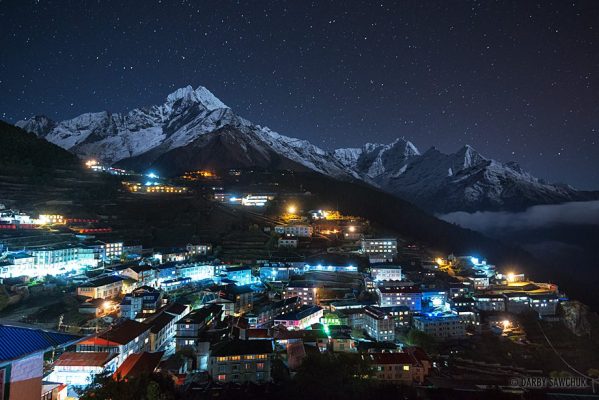
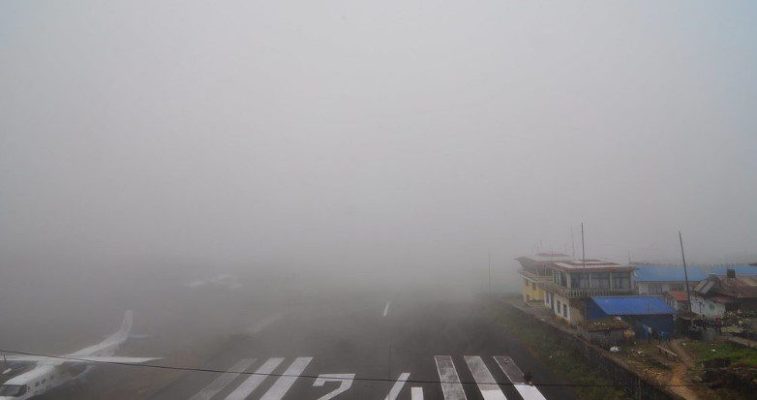
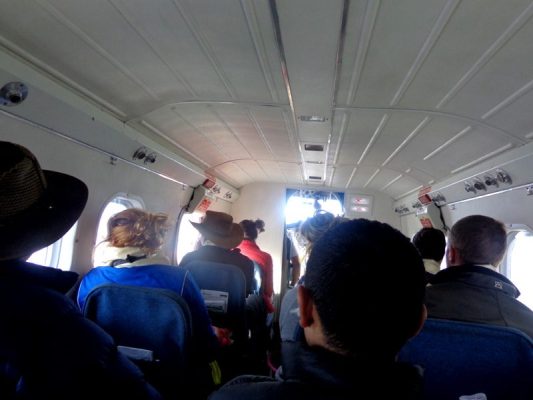
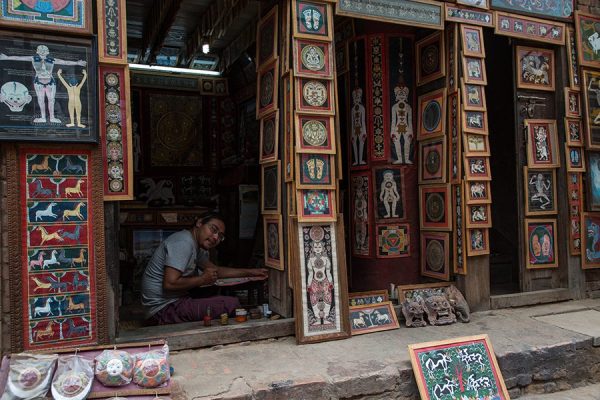
Everest Base Camp with Island Peak: What to Expect
Everest Base Camp, Kala Patthar at sunrise, and Island Peak summit in one 20-day expedition
Technical mountaineering with a dedicated climbing Sherpa on the rope from 2 AM to the top
Licensed trekking guide for the approach, dedicated climbing Sherpa for the summit attempt
Two weeks above 3,400m before summit day gives you the strongest possible platform for Island Peak
This expedition combines three separate Khumbu objectives into a single 20-day route: Everest Base Camp at 5,364m, Kala Patthar at 5,545m for the best elevated view of Everest at sunrise, and the summit of Island Peak (Imja Tse) at 6,189m. Most people choose one or two. This itinerary does all three.
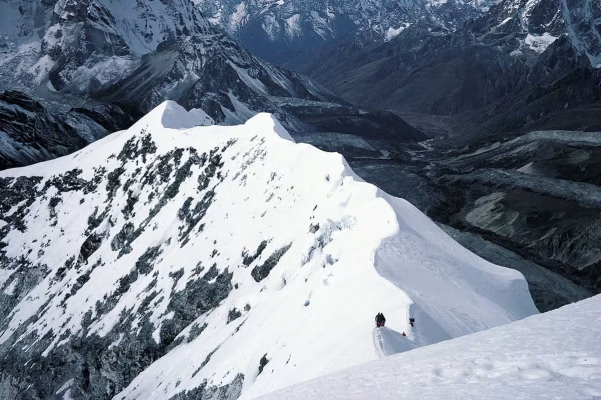
The route follows the classic EBC approach through Namche, Tengboche, Dingboche, Lobuche, and Gorakshep, with three structured acclimatisation days. After Kala Patthar, instead of descending to Lukla, you turn east into the Imja Valley toward Chhukung and Island Peak Base Camp at 5,087m. By the time you arrive at base camp on Day 12, you have spent nearly two weeks above 3,400m. That acclimatisation profile is a significant advantage over operators who run Island Peak as a standalone 10 to 12 day trip. A full technical training session runs at base camp on Day 12 before the summit attempt. Summit day starts at 2:00 AM: steep scree approach, glacier travel, fixed rope sections on jumar, crevasse crossings on ladders, and a near-vertical 100m headwall before the exposed summit ridge.
No prior mountaineering experience is required. Solid multi-day trekking fitness and the resolve for a long pre-dawn summit push are what matter. If EBC is the only goal, the 14-day EBC Trek is the right booking. If Island Peak is the only goal, the focused 16-day Island Peak expedition is more efficient. This trip is for those who want both.
Teahouse meals during the trek are on your own account. Base camp meals and Kathmandu hotel breakfasts are included. Every group is led by a licensed Sherpa guide from the Khumbu. No outsourcing, no contractors.
Day-by-Day Itinerary
Arrive in Kathmandu
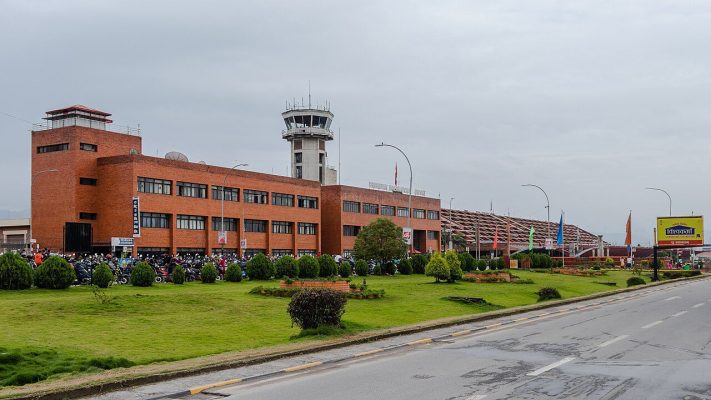
A MountainKick representative meets you at Tribhuvan International Airport and transfers you to your hotel. That evening your climbing guide runs a full pre-expedition briefing covering all three objectives, the 20-day route, gear check, permits, and Lukla flight logistics.

Fly to Lukla, Trek to Phakding
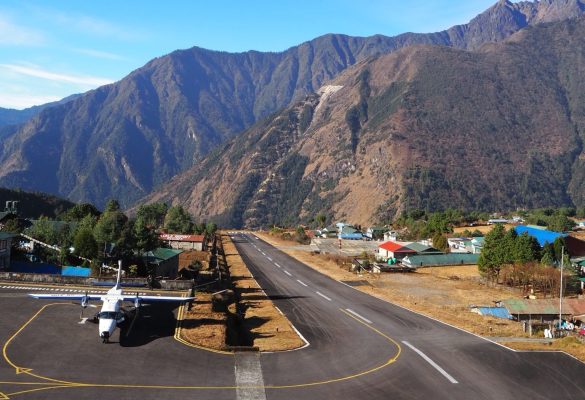
Early morning flight to Lukla’s Tenzing-Hillary Airport. Porters organise loads while you begin the trail down alongside the Dudh Koshi River through pine forest and Sherpa settlements to Phakding. Easy first day by design. During peak season (Mar–May, Oct–Nov) flights depart from Ramechhap, requiring a 2:30 AM hotel departure.

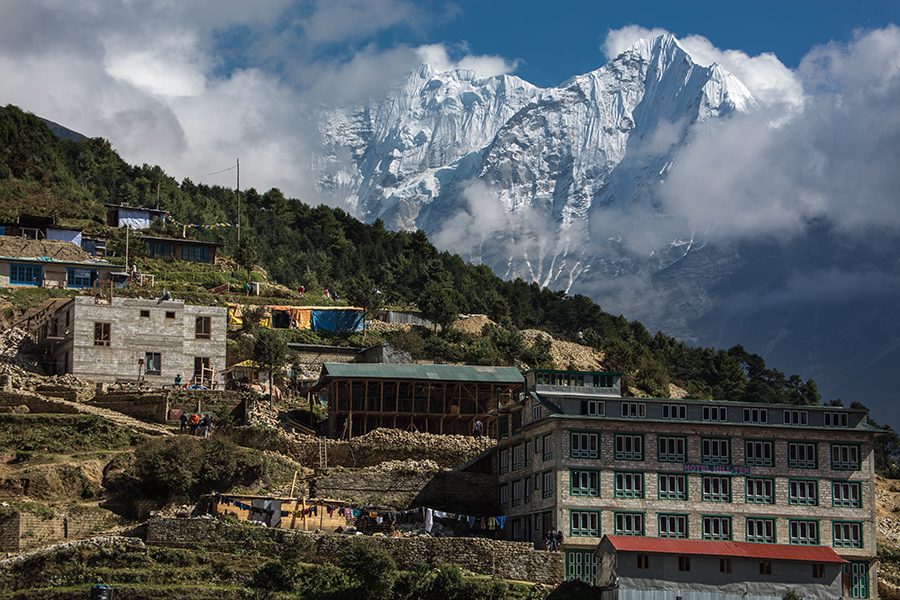
Trek to Namche Bazaar
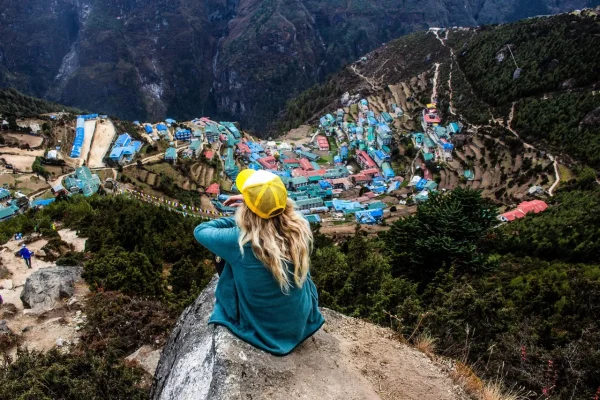
The trail follows the Dudh Koshi River, crossing the Hillary Suspension Bridge before entering Sagarmatha National Park at Monjo. The final two hours are a steep sustained climb into Namche. On a clear day you catch your first view of Everest above the ridge before reaching town.
Acclimatisation Day in Namche
First acclimatisation day using the climb high, sleep low principle. We hike to the Everest View Hotel at 3,880m with clear sight lines to Everest, Lhotse, and Ama Dablam, then return to Namche to sleep lower. Time to visit the Sherpa Culture Museum or browse the Saturday market.

Trek to Tengboche
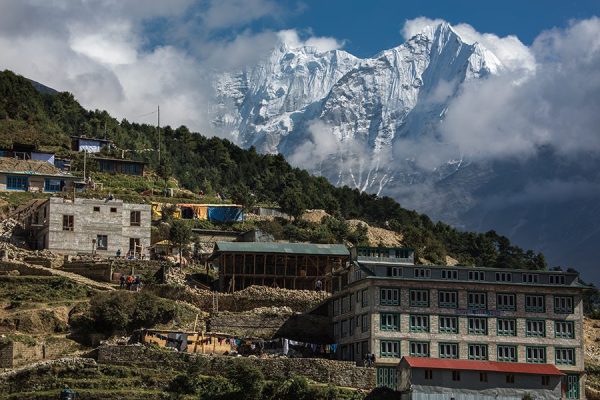
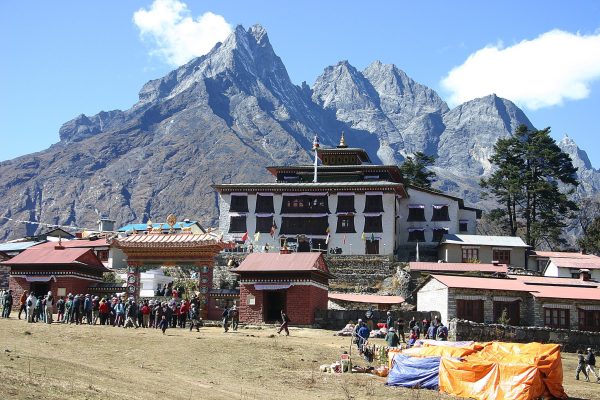
The trail drops to the Dudh Koshi River at Phunki Tenga then climbs through rhododendron forest to Tengboche Monastery, founded in 1916 and the spiritual centre of the Khumbu. Everest, Ama Dablam, Nuptse, and Lhotse fill the ridge. Evening prayers are worth attending.

Trek to Dingboche
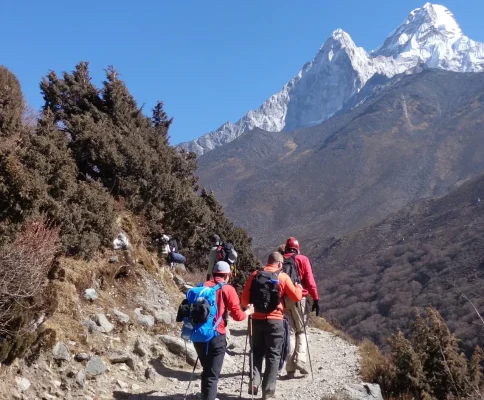
The trail passes through Pangboche, home to the oldest monastery in the Khumbu, then climbs into the open Imja Valley above the tree line. Island Peak appears on the horizon for the first time from Dingboche — rising distinctly from the surrounding glaciers exactly as Eric Shipton described in 1953.

Acclimatisation Day in Dingboche
Second acclimatisation day. We hike to Nangkartshang Peak above Dingboche for panoramic views of Makalu, Lhotse, Cholatse, and Ama Dablam, then return to sleep low. The last full rest day before the push to Lobuche and EBC begins.

Trek to Lobuche
The trail climbs to the Thukla Pass at 4,830m, where stone cairns mark climbers lost on Everest and surrounding peaks. From here the route crosses glacial moraine to Lobuche at the foot of the Khumbu Glacier. The landscape is sparse, rocky, and increasingly dramatic.

Trek to EBC via Gorakshep
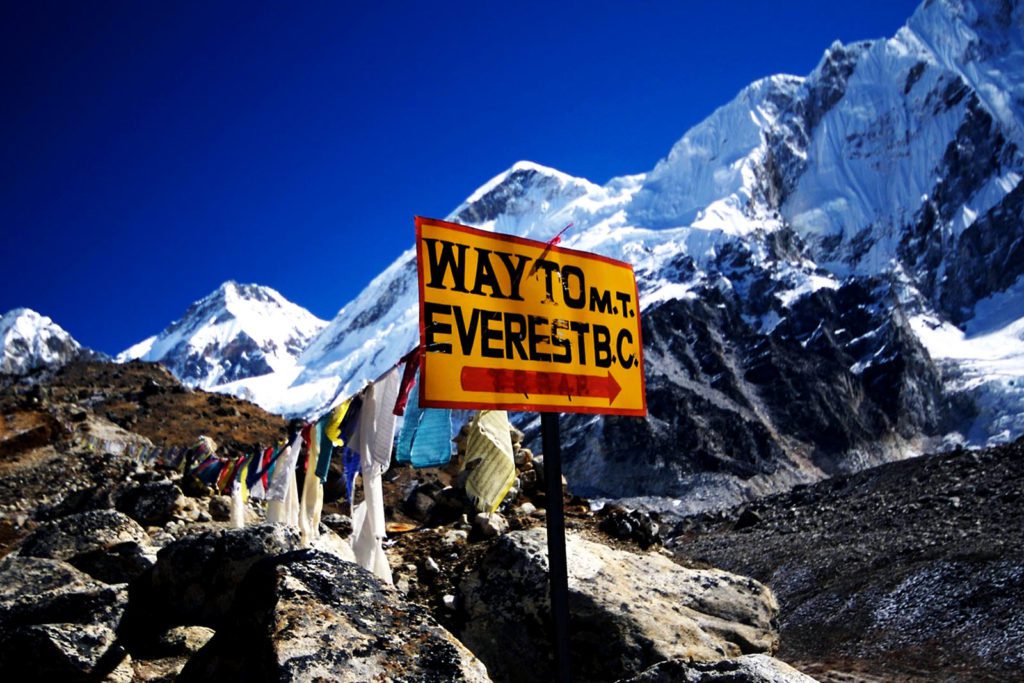
The trail follows the lateral moraine of the Khumbu Glacier to Gorakshep at 5,164m on a frozen lakebed. After lunch continue to Everest Base Camp at 5,364m, the foot of the Khumbu Icefall where every Everest summit attempt begins. Return to Gorakshep before dark.
Summit Kala Patthar, Descend to Pheriche
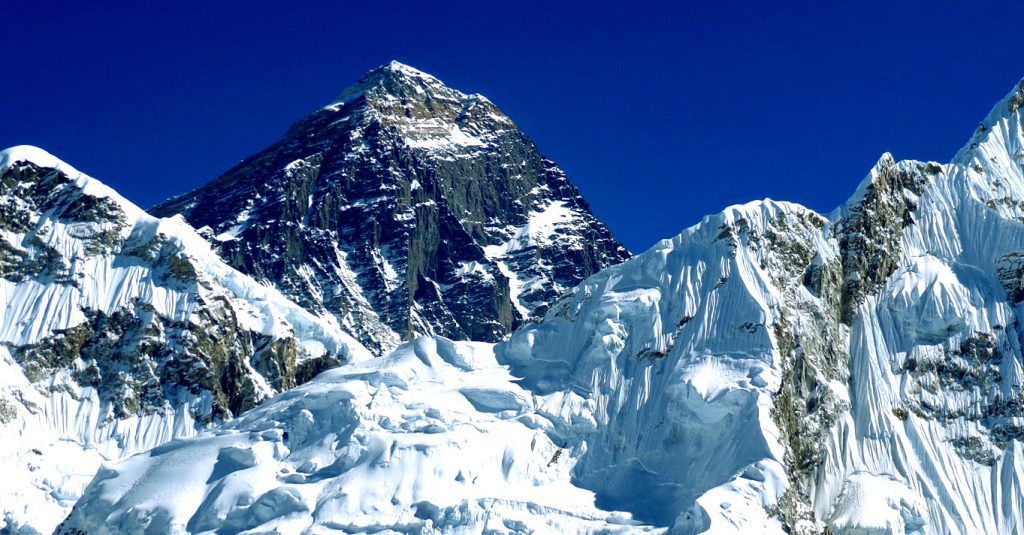
4:00 AM start for Kala Patthar at 5,545m, the highest point on the EBC section and the best elevated view of Everest’s southwest face at sunrise. Return to Gorakshep for breakfast then descend via Lobuche to Pheriche, dropping over 1,100m through the afternoon.
Trek to Chhukung
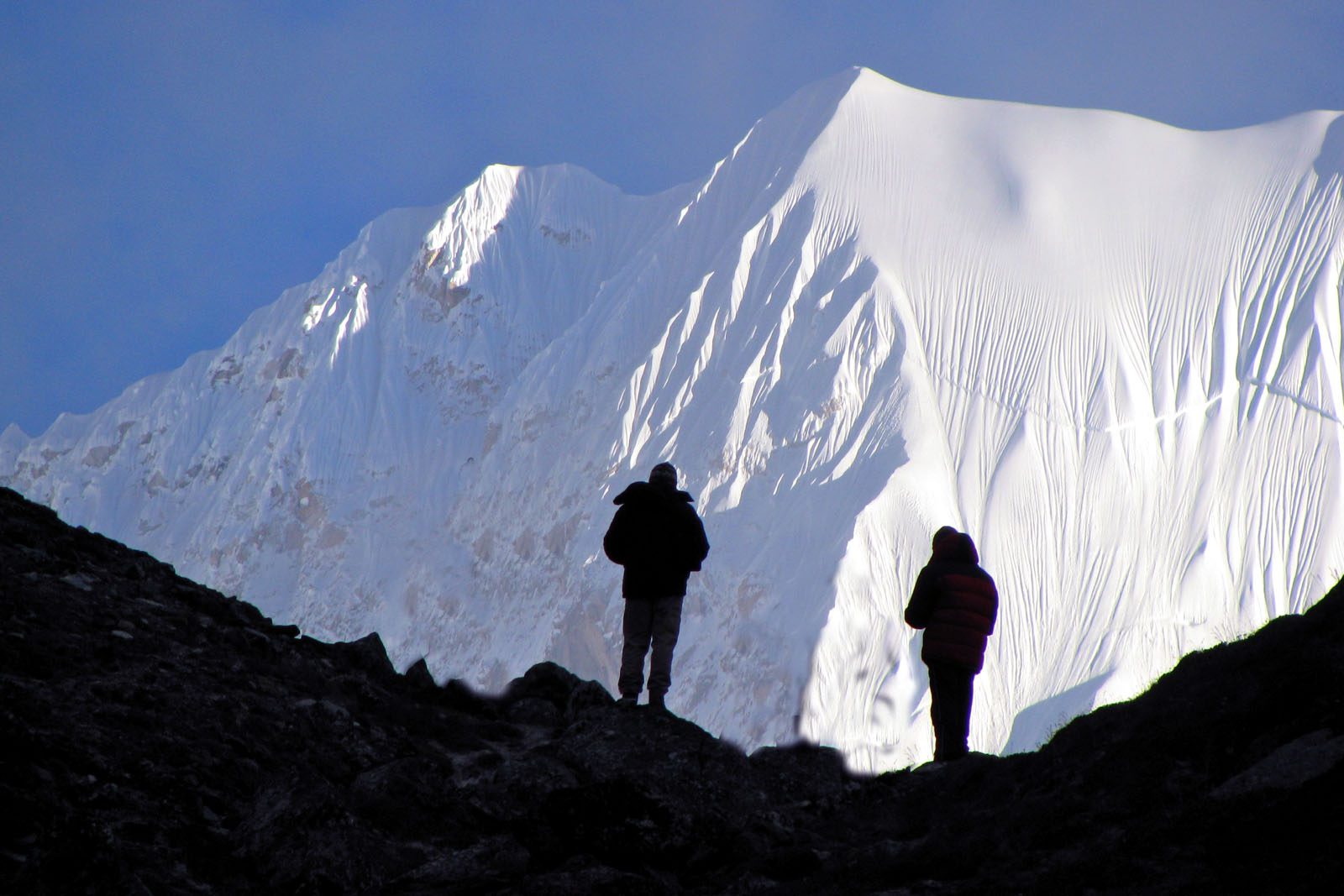
You turn east into the Imja Valley, leaving the EBC corridor behind. The trail passes back through Dingboche and climbs into the upper valley toward Chhukung, a high-altitude amphitheatre ringed by Lhotse, Nuptse, Baruntse, Ama Dablam, and Island Peak directly ahead. This is your staging ground for the summit.

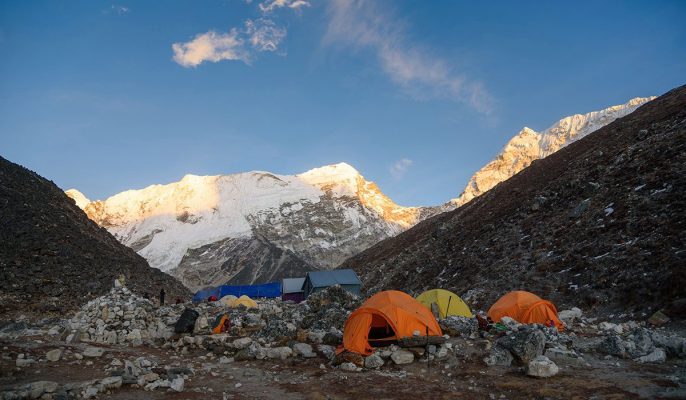
Trek to Island Peak Base Camp, Technical Training
The approach follows the Imja Glacier moraine through ice-polished boulders and seracs. Island Peak rises directly ahead as you climb. On arrival your climbing guide runs the full technical training session: crampon technique, ice axe arrest position, ascending and descending fixed ropes on jumar, and crevasse rescue. Early dinner, early bed. Alarm goes off at 1:30 AM.

Summit Island Peak, Descend to Chhukung
The alarm goes off at 1:30 AM. You leave base camp between 2:00 and 3:00 AM. The route crosses glacier moraine, ascends steep snow slopes on fixed ropes, navigates a crevasse crossing near the summit via a ladder system, and finishes with a steep headwall requiring front-pointing with crampons. The summit ridge is exposed and extraordinary. You descend to Chukhung for the night.
Summit start: 2:00-3:00 AM | Round trip from base camp: 6km | Duration: 8-10 hours | Difficulty: Very Challenging (technical mountaineering)
Technical requirements: Crampons, ice axe, climbing harness, fixed rope sections with jumar, ladder crevasse crossing, steep snow and ice headwall, Alpine PD+ grade
Summit views: Everest (8,849m), Lhotse (8,516m), Makalu (8,485m), Ama Dablam (6,812m), Baruntse (7,129m)

Rest Day in Chhukung (Buffer Day)
Recovery after the summit. This day also serves as a buffer if weather delayed the attempt on Day 13. Optional short hikes for those with energy. Sort gear, rest well, and let the altitude do the recovery work before the long descent begins tomorrow.

Trek to Tengboche
The long descent begins. Retrace the Imja Valley through Pangboche and drop back through rhododendron forest to Tengboche. After nearly two weeks above 4,000m the return to richer air is immediate. Your legs will feel the summit. Take it steady and let the descent do the work.

Trek to Namche Bazaar
The descent routes through Khumjung, a classic Sherpa village with views back toward the peaks you have just climbed. Drop into Namche for the final night in the Khumbu. The perspective has changed since you last walked this path — you have been to EBC, Kala Patthar, and the summit of Island Peak since then.

Trek to Lukla
Final day on trail. Descend steeply from Namche through Monjo, past the Sagarmatha National Park checkpoint, through Phakding and back to Lukla. Familiar ground that moves quickly. Celebration dinner with your guide and crew in Lukla tonight.

Fly to Kathmandu (Buffer Day 1)
Morning flight back to Kathmandu, weather-dependent. MountainKick handles any rebooking at no extra cost. First of two built-in buffer days for Lukla delays. If the flight operates as scheduled, the afternoon is yours for Kathmandu sightseeing or rest.

Leisure Day and Farewell Dinner (Buffer Day 2)
Free day in Kathmandu. Visit Pashupatinath, Boudhanath, or the Durbar Squares, or simply recover. This is also the backup buffer if the Day 18 flight was delayed. That evening your MountainKick guides join you for a traditional Nepali farewell dinner.

Final Departure
Transfer to Tribhuvan International Airport. Hotel checkout at 12:00 PM. Luggage storage available if your flight departs later. Your NMA Island Peak summit certificate is handed over before departure if not already collected.

3D Route Map
Includes & Excludes
-
Airport and hotel transfers Both directions, private vehicle
-
Hotel in Kathmandu, 2 nights 3-star, twin-sharing, breakfast included
-
Teahouse accommodation, 15 nights Twin-sharing throughout
-
Expedition tents at base camp, 1 night Professional setup with dining tent, toilet tent, and cook
-
All meals at base camp Breakfast, lunch, and dinner for the two base camp days
-
Farewell dinner in Kathmandu Traditional Nepali meal on return night
-
Kathmandu to Lukla return flights Includes Ramechhap ground transfers in peak season
-
Trekking guide Government-licensed, full time from arrival to departure
-
Dedicated climbing Sherpa One certified climbing Sherpa for the full summit attempt
-
Assistant climbing Sherpa Added for groups of 4 or more
-
Porter service One porter per two trekkers, 20kg load limit strictly enforced
-
Sagarmatha National Park permit Arranged by MountainKick
-
TIMS card Trekkers' Information Management System card
-
Khumbu Pasang Lhamu permit Required for all Khumbu trekkers since 2023
-
Island Peak climbing permit Official NMA permit, arranged and paid by MountainKick
-
Group technical climbing equipment Fixed ropes, ice screws, snow anchors, group safety hardware
-
Mountaineering training at base camp Crampons, ice axe, jumar, fixed ropes, and crevasse rescue
-
NMA summit certificate Issued on successful summit, collected by MountainKick
-
Duffel bag Yours to keep
-
All government taxes and fees Nothing hidden
-
All teahouse meals during trek Budget $25 to $35 per day. Ordered directly from teahouse menus.
-
Meals in Kathmandu Except farewell dinner on Day 19
-
International flights To and from Kathmandu
-
Nepal visa 30-day on arrival $50 USD, bring cash and two passport photos
-
Personal climbing equipment Mountaineering boots, crampons, ice axe, harness, helmet — all rentable in Kathmandu
-
Travel insurance Must cover mountaineering to 6,200m and helicopter evacuation
-
Personal expenses Hot showers, WiFi, soft drinks, alcohol, laundry
-
Hot showers, WiFi, soft drinks, alcohol, laundry Customary but not mandatory, 10–15% of trip cost is the general range
-
Helicopter rescue costs Must be covered by your travel insurance before departure
-
Supplemental oxygen Available at base camp for emergencies only
-
Extra Kathmandu nights If Lukla delays extend beyond the two built-in buffer days
Enhance Your Trek
We Handle the Details
FreeWhere You'll Sleep & What You'll Eat
In Kathmandu you stay at a 3-star hotel in Thamel on a twin-sharing basis with breakfast included. Single supplement available on request. Upgrades to 4 or 5-star properties can be arranged.
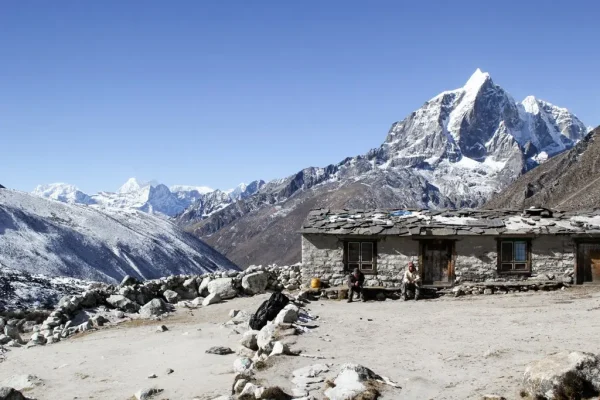
On the trek you stay in teahouses for 15 nights. Rooms are simple — a bed, blankets, and a window. Shared bathrooms at most stops. Hot showers available at Lukla, Namche, Tengboche, and Dingboche at an extra charge of $3 to $5. Above Lobuche facilities reduce significantly. Gorakshep teahouses are the most basic on the route — cold nights, thin walls, limited hot water. Chhukung teahouses are functional and comfortable for a high-altitude settlement.
At Island Peak Base Camp you sleep in expedition tents on twin-sharing basis for one night. A dedicated cook prepares all meals in a dining tent. Toilet tent on site. No electricity or charging at base camp — keep your power bank in your sleeping bag overnight.
Single rooms are limited above Namche during peak season. Book ahead through your guide.
Teahouse meals during the trek are on your own account, ordered from menus and paid directly. Base camp meals (Days 12 and 13) and Kathmandu hotel breakfasts are included. The farewell dinner in Kathmandu is also included.
Dal bhat is the best option at every stop — filling, reliable, free refills. Pasta, noodles, eggs, and soup are available everywhere below Lobuche. Above that, menus simplify and portions shrink. Avoid meat above Namche. Budget $25 to $35 per day for three trail meals. If you want full meal inclusion throughout, this can be added as an upgrade.
| Breakfast | $6–10 |
| Lunch | $8–12 |
| Dinner | $8–12 |
| Hot shower | $3–5 |
| WiFi where available | $2–5 per day |
| Hot drinks | $2–4 each |
| Bottled water | $2–3 above Namche |
| Charging devices | $2–5 per device |
What Our Trekkers Say
“EBC and Island Peak with MountainKick”
The four of us did the EBC and Island Peak trip together and had a great experience. Hari was our trekking guide and looked after us really well throughout. Tenzing joined for the Island Peak climb itself and was experienced and reassuring the whole way up. It was a demanding…
“Amazing EBC and Island Peak experience”
My friend and I had an incredible time doing EBC and Island Peak with MountainKick. Kishor took great care of us on the trekking portion, and Tenzing was fantastic once we got to the climb. We never felt rushed and always felt well looked after. Island Peak was easily the…
Frequently Asked Questions
Who is this expedition designed for?
Experienced trekkers ready to go beyond the trail and onto a real mountain. You do not need a mountaineering background — technical training happens at Island Peak Base Camp on Day 12. What you need is solid multi-day trekking fitness, genuine comfort with sustained altitude, and the resolve for a hard summit day that starts at 2:00 AM. If EBC alone is the goal, the 14-day EBC Trek is the better fit. If Island Peak alone is the goal, the focused 16-day Island Peak expedition is more efficient. This trip is for those who want both.
What makes this different from the standalone Island Peak trip?
The standalone 16-day Island Peak expedition takes a direct Chhukung route with every day optimised for the summit. This 20-day expedition adds Everest Base Camp and Kala Patthar, and gives you nearly two weeks at altitude before the summit attempt. That acclimatisation advantage is significant. By summit day on this itinerary, your body has adapted to high altitude far more thoroughly than on a compressed standalone climbing trip.
Do I need prior climbing experience?
No. Island Peak is graded Alpine PD+ and is achievable for fit trekkers with no mountaineering background. Your climbing guide runs a full technical training session at base camp on Day 12 covering crampon technique, ice axe arrest position, ascending and descending fixed ropes with a jumar, and crevasse crossing on a ladder system. What you bring to base camp is fitness and determination. Your guide provides the technical instruction.
How difficult is summit day compared to EBC and Kala Patthar?
EBC and Kala Patthar are strenuous trekking. Island Peak is a different category entirely: technical mountaineering starting at 2:00 AM, running 8 to 10 hours round trip from base camp. The route involves steep scree in the dark, glacier travel roped up with a jumar on fixed lines, crevasse crossings on ladders, and a near-vertical 100m headwall requiring front-pointing with crampons. Most participants describe it as the hardest single day of their lives. By Day 13 of this itinerary you are as well-prepared as the route allows. See our full difficulty guide.
Are meals included?
Base camp meals and Kathmandu hotel breakfasts are included. Teahouse meals during the 15 trekking days are on your own account, ordered directly from menus and paid on the trail. The farewell dinner in Kathmandu is included. If you want full meal inclusion for the teahouse section, this can be added as an upgrade — ask us before booking. Budget $25 to $35 per day for three trail meals.
What personal climbing gear do I need?
Group equipment (fixed ropes, ice screws, anchors) is provided. Personal technical gear (mountaineering boots, 12-point crampons, ice axe, harness, helmet, jumar, carabiners) is not included but all items are available to rent in Kathmandu for approximately $100 to $150 for the full set. Mountaineering boots are the most critical item — rigid-soled, crampon-compatible, insulated to -20°C minimum. If your shoe size is 12 or above, bring your own as larger sizes are not available to rent in Nepal. MountainKick connects you with trusted rental shops at the pre-expedition briefing.
What happens if weather prevents the summit attempt?
Safety is non-negotiable. If conditions are unsafe on summit day your climbing guide postpones the attempt. Day 14 in Chhukung is built into the itinerary specifically as a buffer for this scenario. Summit decisions are made by the climbing guide based on wind speed, visibility, temperature, and route conditions. Turning back is always the right call and your guide makes it without hesitation.
How is acclimatisation structured?
Three structured acclimatisation events are built in. Day 4 in Namche: hike to 3,880m, sleep at 3,440m. Day 7 in Dingboche: hike to 5,083m, sleep at 4,410m. Day 12 at Island Peak Base Camp: full rest and training day at 5,087m before the summit. By summit day you have spent nearly two weeks progressively above 3,400m. This is the most thorough acclimatisation profile available for Island Peak climbing.
How is altitude sickness managed?
Your climbing guide carries supplemental oxygen, a Gamow bag, and a pulse oximeter at all times above Namche. Oxygen saturation is monitored daily. Three acclimatisation days and a carefully paced elevation profile reduce risk significantly. Drink 3 to 4 litres of water daily, avoid alcohol above 3,000m, and tell your guide immediately if you develop a persistent headache, nausea, or dizziness. Descending 300 to 500m usually clears symptoms fast. Talk to your doctor about Diamox before you leave. Read our altitude sickness guide for a full breakdown.
What about the Lukla flights?
Round-trip Lukla flights are included. During peak seasons (March to May and October to November) flights operate from Manthali Airport in Ramechhap, a 5 to 6 hour drive from Kathmandu requiring a 2:30 AM hotel departure. MountainKick arranges all transport and handles weather rebooking at no extra cost. Two buffer days are built into Days 18 and 19. Schedule your international departure at least 2 days after Day 20. More detail in our Ramechhap flight guide.
What permits do I need?
Three permits are required and all are arranged by MountainKick: the Sagarmatha National Park Entry Permit, the Khumbu Pasang Lhamu Rural Municipality Permit, and the Island Peak Climbing Permit issued by the Nepal Mountaineering Association. The NMA permit is the key document for the summit and what your certificate is issued against. Bring your passport and four passport-sized photos — climbing permits require more documentation than standard trekking permits.
How many people are in a group?
MountainKick runs small groups of up to 10 participants per departure. Most groups range from 2 to 6 people. Private departures are available on any date — contact us to arrange.
What travel insurance do I need?
Mandatory. Your policy must specifically cover high-altitude mountaineering to at least 6,200m and emergency helicopter evacuation. Standard travel insurance and most trekking policies exclude climbing above 6,000m. Check the altitude coverage ceiling in your policy documents before leaving home. Helicopter rescue services require insurance pre-authorisation before dispatch. Insurance cannot be purchased in Nepal. Helicopter evacuation from the Khumbu costs $3,000 to $6,000.
When is the best time for this expedition?
Spring (March to May) and autumn (September to November). October and November give the most stable weather, clearest skies, and best conditions on the Island Peak headwall. March and April are warmer with rhododendrons in bloom on the approach and Everest expedition teams active in the Khumbu. Avoid monsoon (June to August) — the headwall becomes a serious mixed climbing problem, trails are hazardous, and Lukla flights get delayed frequently.
What should I budget for personal expenses?
Budget $25 to $35 per day for three teahouse meals across 15 trail days. Hot showers cost $3 to $5, WiFi $2 to $5 where available, charging $2 to $5 per device. The last reliable ATM is in Namche Bazaar. Carry enough rupees from Kathmandu to cover the full expedition. Card payments are not accepted at teahouses. Total personal spending for 18 days on trail and at base camp runs approximately $400 to $600 depending on habits.
Departure Dates & Pricing
No upcoming fixed departures are scheduled at the moment. Contact us to arrange a private departure on dates that suit you.
Your dates, your group, your way
Same route and guides, just your group. Tell us when you'd like to go and how many of you there are, and we'll send you a day by day plan with a price.
- Nothing to pay now
- Plan and price by email
- Confirm with a 20% deposit
"*" indicates required fields
Rather chat? Message us on WhatsApp
-
1
20% deposit: due on booking Secures your place on the departure. The deposit is non-refundable. We also need a copy of your passport.
-
2
80% balance: due on arrival Pay the rest in Kathmandu before the trip starts. Bank transfer, cash, or card (4% card fee).
| Cancel before you arrive | Deposit not refunded, nothing more to pay |
| Cancel after the pre-trip meeting | No refund |
| Date or name change | USD 200 per person |
| MountainKick cancels trip | Full refund or reschedule |
Weather delays and extra days cost extra, so travel insurance is required. We give you documents for any claim.
Read the full terms and conditionsPacking List
Footwear
ⓘ Two separate boot systems are required. Trekking boots for Days 2 to 9. Mountaineering boots from crampon point on summit day. Both must be broken in before you arrive. Do not attempt to summit in trekking boots.
Clothing and Layers
ⓘ Temperature at base camp drops below -20°C overnight. An expedition-weight down parka is required, not a standard trekking down jacket. The layering system is non-negotiable at this altitude.
Head, Hands and Neck
ⓘ Wind chill at the headwall can reach -30°C before dawn. Expedition mittens are not optional. Glacier goggles are separate from sunglasses and required for white-out conditions.
Technical Climbing Gear
ⓘ Group equipment (fixed ropes, ice screws, snow anchors) is provided by MountainKick. All personal technical gear below must be sourced by you. Rental in Kathmandu costs approximately $100 to $150 for the full set. Inspect all rental gear carefully before accepting it.
Gear and Equipment
ⓘ Your porter carries the duffel to base camp. Yaks or additional porter carry duffel from Chhukung to base camp. Keep your daypack under 6kg for summit day — you are carrying technical gear on top of the usual kit.
Health and Hydration
ⓘ Your climbing guide carries supplemental oxygen, a Gamow bag, and a pulse oximeter. This is your personal kit for day-to-day needs. Talk to your doctor about Diamox before you leave. We do not provide or recommend it ourselves.
Toiletries
ⓘ No showers at base camp. Wet wipes are your hygiene solution for two nights on the glacier. Quick-dry fabrics only across 16 days.
Documents and Money
ⓘ All meals are included so daily cash needs are minimal. ATMs in Lukla, Namche, and Khumjung. No ATMs beyond Namche on this route. Budget $10 to $20 per day for personal extras only.
Trekking in Winter (Dec to Feb)
Trekking in Monsoon (Jun to Aug)
⚠ Monsoon is not recommended for this expedition. The Island Peak headwall becomes a serious mixed climbing problem, EBC trails above 4,000m are hazardous, and Lukla flights get delayed frequently. Spring and autumn are the only reliable seasons.
Leave at home
-
Jeans and cotton clothing Cotton stays wet and causes dangerous chilling above 5,000m
-
Trekking boots above crampon point You need two boot systems. Attempting the headwall in trekking boots is dangerous.
-
Standard -10°C sleeping bag Base camp drops below -20°C. Minimum -20°C rated bag required.
-
Standard trekking down jacket only Not enough for base camp nights. An expedition parka is required.
-
Laptop No need and the weight is punishing on summit day
-
Valuables and jewellery Leave at the hotel in Kathmandu
Crampons, ice axe, harness, helmet, jumar, glacier goggles, mountaineering boots, sleeping bags, and down parkas can all be rented in Kathmandu or Chhukung. A full personal technical climbing kit rents for approximately $100 to $150 for the expedition. If your shoe size is 12 or above, bring your own mountaineering boots as larger sizes are not available to rent in Nepal. MountainKick connects you with trusted shops at the pre-expedition briefing. A duffel bag is provided to every climber as part of the package.
Everest Base Camp with Island Peak
Talk to Kumar and the team before you commit. Ask about gear, fitness, altitude or a private group.


Tales from the Himalayas
 Travel
Best Time to Trek Langtang Valley: Month by Month
Langtang is close to Kathmandu and good for much of the year, but the season changes everything from the views…
 Annapurna Region
Thorong La Pass: A Guide to the Big Day on the Annapurna Circuit
Thorong La at 5,416m is the highest point of the Annapurna Circuit. Here’s what crossing day is really like, from…
 Everest Region
Annapurna Circuit Teahouses: What the Rooms Are Really Like
Teahouses on the Annapurna Circuit range from comfortable lodges in Manang to bare rooms at Thorong Phedi. Here’s what to…