Lumbini – A visitors Guide to the Birthplace of Buddha
Lumbini is the birthplace of Siddhartha Gautama, the Buddha. It’s in the Terai plains of southern Nepal, about 22km from Bhairahawa and close to the Indian border. It’s one of the four main Buddhist pilgrimage sites and a UNESCO World Heritage Site.
The Sacred Garden is generally open from around 6am to 6pm, although hours can vary. Foreign visitors currently pay NPR 700. Most people fly from Kathmandu to Bhairahawa in about 30 minutes, then drive the last 22km. Plan at least half a day, and a full day if you want to explore the Monastic Zone properly.
- Location: Rupandehi district, southern Nepal, about 22km from Bhairahawa
- Elevation: about 150m
- UNESCO: World Heritage Site since 1997
- Entry fee: NPR 700 for foreign visitors, NPR 400 for SAARC nationals
- Opening hours: generally around 6am to 6pm
- Nearest airport: Gautam Buddha International Airport, Bhairahawa
- From Kathmandu: about 30 minutes by air, or 8 to 10 hours by road
- From Pokhara: about 6 to 7 hours by road
- Best time: October to March
Last updated: October 2026
Lumbini is where Siddhartha Gautama, who became the Buddha, was born. It’s the only one of Buddhism’s four great pilgrimage sites in Nepal, and UNESCO listed it as a World Heritage Site in 1997. Pilgrims come from Sri Lanka, Thailand, Myanmar, Japan, Korea and Tibet, and more and more from Western countries too.
It feels nothing like the Himalaya. Lumbini sits in the flat, warm Terai, and that contrast is part of why it’s worth adding to a Nepal trip. MountainKick includes a guided day at Lumbini on both the Nepal Cultural Safari Tour and the Nepal Highlights Tour.
Where Is Lumbini?
Lumbini is in Rupandehi district, in Lumbini Province in southern Nepal. It’s about 22km west of Bhairahawa (Siddharthanagar) and around 25km from the Sunauli border crossing with India. It sits at about 150m above sea level, in the subtropical Terai plains.
The Story of Lumbini
According to Buddhist tradition, Queen Maya Devi was travelling from Kapilavastu to her parents’ home in Devadaha when she stopped to rest in the Lumbini garden. There she gave birth to Siddhartha, holding the branch of a sal tree.
Buddhist tradition places the birth in the 6th century BC. UNESCO’s World Heritage listing gives 623 BC, and other historical chronologies use different dates.
In 249 BC, the Mauryan Emperor Ashoka came here on pilgrimage and put up a stone pillar. Its inscription, in Brahmi script, records that the Buddha Shakyamuni was born here and that the village’s tax was reduced to one eighth. The pillar was rediscovered in 1896 by Khadga Shamsher Rana and the archaeologist Alois Anton Führer. The inscription is the key historical evidence identifying Lumbini as the Buddha’s birthplace.
Excavations in the Maya Devi Temple complex in the 1990s uncovered the Marker Stone and the remains of earlier structures linked to the birthplace. The stone is preserved inside the temple today.
What to See at Lumbini
Maya Devi Temple
This is the heart of Lumbini. The white temple protects the ruins of earlier temples and stupas built on the site over more than 2,000 years, along with the Marker Stone. You take your shoes off before entering, dress respectfully and leave food and drinks outside. Photography isn’t allowed inside.
Next to the temple is the Puskarini pond, where Maya Devi is believed to have bathed before giving birth.
Ashoka Pillar
The sandstone pillar stands beside the Maya Devi Temple behind a small fence hung with prayer flags. Its inscription is one of the oldest written records in Nepal.
The Monastic Zone
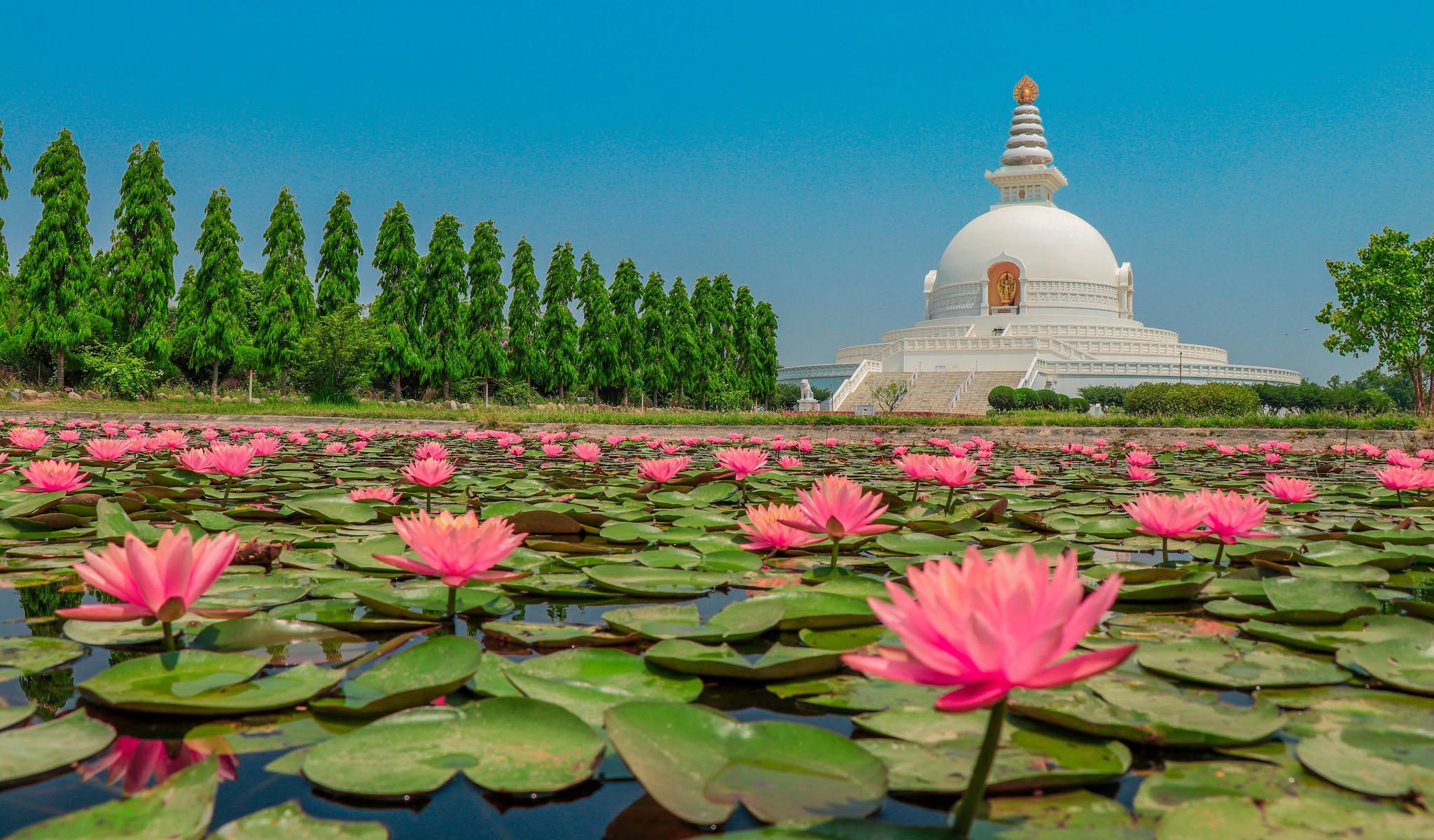
North of the Sacred Garden, a long central canal divides the Monastic Zone into two parts. Theravada monasteries are on the east side, and Mahayana and Vajrayana monasteries are on the west. Buddhist communities from many countries have built monasteries here, each in its own national style. The Myanmar Golden Temple, the German, Chinese, Thai and Korean monasteries, and the World Peace Pagoda are among the most striking.
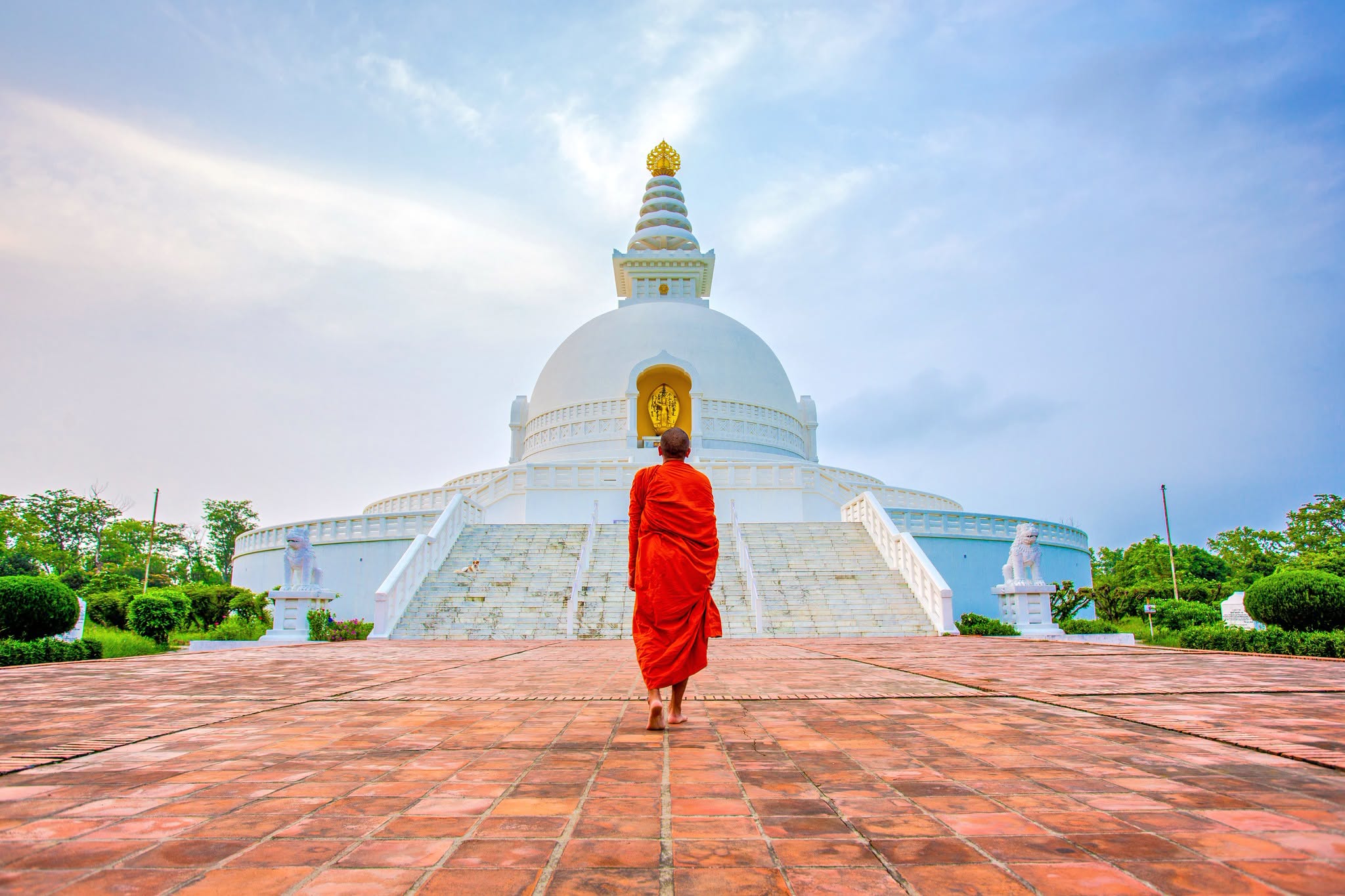
Eternal Peace Flame
The flame near the canal has burned since 1986 as a symbol of world peace.
Lumbini Museum
The museum is in the Cultural Zone at the north end of the site and holds finds from the Lumbini excavations. Check locally whether it’s open before planning around it, because it has been listed as closed.
Getting Around Lumbini
The Sacred Garden is easy to explore on foot, but the Monastic Zone covers a much bigger area. Bicycles and cycle rickshaws are the practical way to get between the monasteries, especially in the heat. You can walk along the canal if you have time, but allow two to three hours or more to see the main monasteries.
How to Get to Lumbini
From Kathmandu: The easiest way is a domestic flight to Bhairahawa, which takes about 30 minutes. From there it’s about 22km, or 30 to 40 minutes by taxi or private vehicle. By road, Kathmandu to Bhairahawa takes about 8 to 10 hours.
From Pokhara: Allow about 6 to 7 hours by private vehicle along the Siddhartha Highway, depending on the road and traffic. It’s longer by bus.
From Chitwan: Allow around 4 to 5 hours by road, depending on where you start. That makes Pokhara, Lumbini and Chitwan an easy loop if you want culture and wildlife. See our Chitwan National Park safari.
Buses from Kathmandu and Pokhara usually go to Bhairahawa rather than to Lumbini itself, so plan a taxi or local bus for the last stretch.
Opening Hours and Entry Fee
- Opening hours: The Sacred Garden is generally open from around 6am to 6pm, but hours can vary by season and facility. Check locally before you visit.
- Entry fee: NPR 700 for foreign visitors and NPR 400 for SAARC nationals, with lower rates for Indian and Nepali visitors. This is the Lumbini Development and Conservation Fee, paid at the entrance.
- Shoes: Take your shoes off to enter the Maya Devi Temple area.
- Dress: Cover your shoulders and knees.
- Photography: Allowed in the garden and the Monastic Zone, but not inside the Maya Devi Temple.
- Cash: Bring Nepali rupees. ATMs are easier to find in Bhairahawa than at the site.
Best Time to Visit Lumbini
- Best overall: October to March
- Best weather: October to November, and February to March
- Winter fog: December and January mornings can be foggy, which can delay flights into Bhairahawa
- Hot season: April and May often go above 35°C
- Monsoon: June to September brings heavy rain and humidity, but green gardens and fewer visitors
The biggest day of the year is Buddha Jayanti (Buddha Purnima), the full moon in April or May. Large numbers of pilgrims come to mark the Buddha’s birth, enlightenment and death. It’s busy, but special.
How Long to Spend and Where to Stay
Half a day covers the Maya Devi Temple, the Ashoka Pillar and a few monasteries. A full day lets you see the Monastic Zone at a relaxed pace. Early morning and late afternoon are the best times, when it’s cooler and quieter.
Lumbini takes a long time to reach, so most visitors stay at least one night. There are hotels and guesthouses around Lumbini Bazaar, and Bhairahawa has a wider choice. Staying in Lumbini itself is more convenient, because you don’t have to travel back after sightseeing.
Visiting Lumbini on a Nepal Tour
Lumbini works best as part of a wider Nepal trip. Our Nepal Cultural Safari Tour (8 days, from USD 820) and Nepal Highlights Tour (14 days, from USD 1,345) both include a guided day at Lumbini, with the Maya Devi Temple, the Ashoka Pillar and the Monastic Zone.
The 8-day tour suits a short trip, combining Kathmandu’s heritage sites, Pokhara’s mountain views and a safari in Chitwan National Park. The 14-day tour gives you a slower, fuller look at Nepal. Both use a private vehicle with an English-speaking guide, and include hotel accommodation and entry fees.
Frequently Asked Questions
Where is Lumbini?
Lumbini is in Rupandehi district in southern Nepal, about 22km from Bhairahawa and near the Indian border. The nearest airport is Gautam Buddha International Airport in Bhairahawa.
Was Buddha born in Nepal?
Yes. Siddhartha Gautama was born in Lumbini, in present-day Nepal. The Ashoka Pillar inscription from 249 BC records the site as his birthplace, and UNESCO lists Lumbini as the birthplace of the Buddha.
What are Lumbini’s opening hours?
The Sacred Garden is generally open from around 6am to 6pm, but hours can vary, so check locally before you visit.
How much is the Lumbini entry fee?
Foreign visitors pay NPR 700, and SAARC nationals pay NPR 400. Indian and Nepali visitors pay less.
What is the elevation of Lumbini?
About 150m above sea level. Lumbini is in the low Terai plains, so altitude isn’t a concern.
How far is Lumbini from Pokhara?
Allow about 6 to 7 hours by private vehicle along the Siddhartha Highway, depending on the road and traffic.
How do I get from Kathmandu to Lumbini?
Fly to Bhairahawa in about 30 minutes, then drive about 22km to Lumbini. By road, the trip takes about 8 to 10 hours.
How much time do I need in Lumbini?
Half a day for the main sites, or a full day to explore the Monastic Zone. Most visitors stay one night.
What is the best time to visit Lumbini?
October to March. Buddha Jayanti, the full moon in April or May, is the most important festival day.
Want to add Lumbini to your Nepal trip?
Our Nepal Cultural Safari Tour and Nepal Highlights Tour both include a guided day at Lumbini. Or tell us your dates and we’ll suggest the best way to fit it in.
Cultural Safari Tour → Highlights Tour → Ask a Question →