Everest Base Camp Food Prices: What to Eat & What It Costs
Food on the Everest Base Camp trek is usually paid directly at the teahouse. A realistic 2026 food budget is around USD 25 to 45 per person per day for breakfast, lunch and dinner. Prices rise as you climb because food and other supplies become harder and more expensive to transport.
Dal bhat is usually the best value meal and is available throughout the main route. Expect simple choices such as noodles, fried rice, pasta, momos, soup, eggs and porridge, with fewer options at the highest villages.
Everest Base Camp Food: Key Facts
- Daily food budget: USD 25 to 45 per person
- Best value meal: Dal bhat, available on the whole main route
- Price trend: Rises steadily with altitude — highest around Gorak Shep
- Menu variety: Wide lower down (pizza, pasta), narrower and simpler higher up
- Vegetarian options: Widely available and often the more practical choice at altitude
- MountainKick package: Meals on the trekking route are not included — pay directly at the teahouse
- Full trek food budget: Roughly USD 250 to 540 for 10 to 12 days on the trail
- How much does food cost?
- Food prices at a glance
- Why food gets more expensive higher up
- What food is available
- What to eat at higher altitude
- Prices by section of the route
- Budgeting for the whole trek
- Is food included in the package?
- Vegetarian food
- Should you bring food from Kathmandu?
- Drinking water
- What to avoid
- Altitude and appetite
- Tips for saving money
- FAQs
Food is one of the easiest parts of the Everest Base Camp trek to misunderstand. You are walking through remote mountain villages, but you are not surviving on packets of noodles and energy bars.
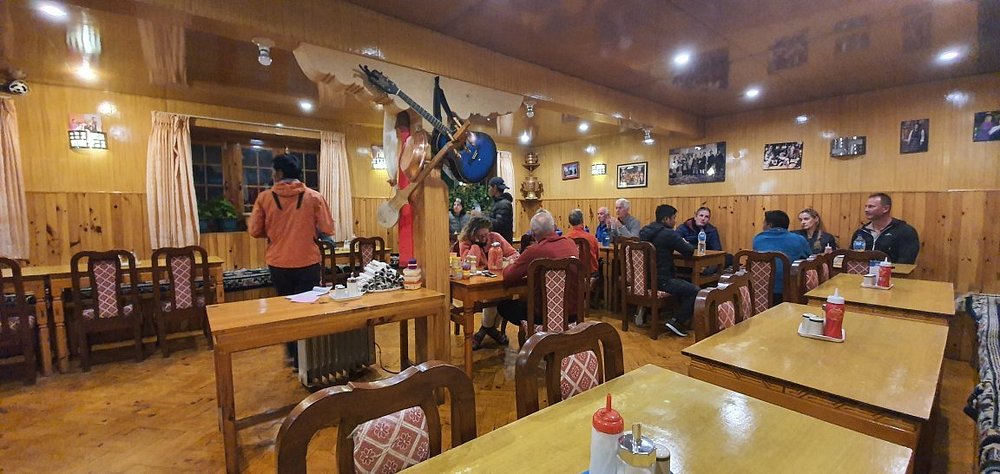
The main Everest Base Camp route has teahouses and lodges serving hot meals every day. Menus are surprisingly varied at lower elevations. As you climb higher, the selection becomes smaller and prices increase. Our Everest Base Camp Teahouse Guide covers the rooms, bathrooms and general teahouse experience — this article focuses specifically on the food and what it costs.
This guide explains what you can actually expect to eat on the trail, how much common meals cost, why prices increase with altitude and how much money to budget for food.

How Much Does Food Cost on the Everest Base Camp Trek?
For a normal Everest Base Camp trek, budget around USD 25 to 45 per person per day for food and basic drinks on the trail. Your actual spending depends on what you order, how many hot drinks you have and how much you eat at higher elevations.
MountainKick’s current EBC package does not include meals on the trekking route. You order directly from the teahouse menu and pay for what you eat. We use this approach because appetite can change considerably at altitude and trekkers may not want the same meals every day.
For a detailed breakdown of the total trekking budget, including permits, transport, insurance and other expenses, see our Everest Base Camp Trek Cost 2026 guide.
Everest Base Camp Food Prices at a Glance
The following are useful 2026 planning ranges rather than fixed prices. Every teahouse sets its own menu and prices can change during the season. The higher you go, the more you should expect to pay.
| Food or drink | Typical price | What to expect |
|---|---|---|
| Dal bhat | NPR 700–1,400 | Rice, lentils, vegetables and curry. Usually the best value meal. |
| Momos | NPR 500–1,000 | Steamed or fried dumplings. Vegetable options are common. |
| Noodles | NPR 450–900 | Simple noodle dishes with vegetable, egg or other options. |
| Pasta | NPR 600–1,100 | Available at many teahouses, especially lower on the route. |
| Pizza | NPR 700–1,400 | Available in many lodges but becomes more basic at higher altitude. |
| Fried rice | NPR 500–900 | A common filling lunch or dinner option. |
| Soup | NPR 300–700 | Garlic, vegetable, tomato and noodle soups are common. |
| Breakfast | NPR 500–1,000 | Eggs, toast, porridge, pancakes, Tibetan bread and tea or coffee. |
| Black tea | NPR 100–300 | One of the cheaper ways to warm up during the day. |
| Coffee | NPR 200–450 | Prices vary significantly by village and type of coffee. |
| Hot chocolate | NPR 250–500 | Popular in colder evenings, especially higher up. |
| Bottled water | NPR 150–350+ per litre | Usually gets more expensive as you gain altitude. |


These ranges are for planning rather than a promise of what every individual teahouse will charge. MountainKick’s current EBC trips use a broader daily food budget of around USD 25 to 45, which is a more useful figure when planning your total spending.
Why Does Food Get More Expensive Higher on the Trail?
The simple answer is transport.
There are no roads connecting every village on the upper EBC route. Food, drinks, cooking gas and other supplies have to reach remote settlements by a combination of road transport, porters, pack animals and other local supply systems. That cost eventually appears on the menu.
A cup of tea that feels expensive in Namche can seem surprisingly cheap compared with what you pay near Gorak Shep. The same applies to bottled water, soft drinks, snacks and meals.
This is one reason we recommend carrying a reusable bottle and using a reliable water purification method rather than buying bottled water for every litre of the trek.
What Food Is Available on the Everest Base Camp Trek?
You will find much more variety than many first-time trekkers expect.
Dal Bhat
Dal bhat is the staple meal of the trek. It normally comes with rice, lentil soup, vegetables and curry. Depending on the teahouse, you may also get pickles, papad or other side dishes.

It is filling, familiar and generally one of the best choices when you need a proper meal after several hours of walking. Many teahouses offer additional rice and dal refills.
If you ask most guides what to order after a long trekking day, dal bhat will be high on the list.
Momo
Momo are Nepalese dumplings and one of the most popular snacks and meals on the trail. Vegetable momos are widely available. Some teahouses also offer cheese or meat varieties.

Steamed momo are usually the lighter choice. Fried momos are heavier but can be satisfying after a long day.
Noodles and Fried Rice
Fried noodles and fried rice are common throughout the main route. You will usually see vegetable and egg versions, with other options depending on the teahouse.
They are useful when you want something different from dal bhat but still want a simple hot meal.
Pasta and Pizza
Yes, pizza and pasta are available on the Everest Base Camp trail. Lower down the route, menus can be surprisingly extensive.
Do not expect Italian restaurant quality at 5,000 metres. Higher up, pizza may be simpler and the selection of ingredients can be limited. It is better to think of these meals as a welcome change from dal bhat rather than a restaurant experience.
Soup
Soup becomes particularly appealing as the temperature drops. Garlic soup, vegetable soup, tomato soup and noodle soup are common choices.
A hot bowl of soup can also be easier to eat when your appetite is reduced at altitude.
Breakfast
Breakfast menus usually include some combination of eggs, toast, porridge, pancakes, Tibetan bread, potatoes, cereal, tea and coffee.
A simple breakfast with eggs, toast and tea or coffee is enough for many trekkers. If you have a long walking day ahead, porridge or another carbohydrate-rich option can also be useful.
What Should You Eat at Higher Altitude?
At altitude, the best meal is often the one you can actually finish.
Your appetite may change as you climb. Some trekkers continue eating normally while others find large meals difficult. Hot, familiar and relatively simple food tends to work well.

- Dal bhat for a filling main meal
- Soup when you want something lighter
- Porridge or eggs for breakfast
- Noodles or fried rice for variety
- Potatoes and other simple carbohydrates
- Tea, ginger tea or hot lemon for a warm drink
Vegetarian meals are generally the easiest option to rely on throughout the route. Food storage becomes more challenging at higher elevations, so many trekkers prefer freshly cooked vegetarian meals above Namche.
If you have a specific dietary requirement, tell your guide before the trek. Teahouses can often accommodate common requests, but choices become more limited higher on the trail.
Food Prices by Section of the EBC Route
You do not need to memorise individual menu prices for every village. The main thing to understand is how the cost changes as you climb.
| Section | What to expect | Food budget |
|---|---|---|
| Lukla and Phakding | Large menus and relatively good availability | Lower end of the daily range |
| Namche | Lots of choice including cafes, bakeries and teahouses | Moderate |
| Tengboche and Dingboche | Prices begin to rise and menus become simpler | Moderate to high |
| Lobuche | Fewer choices and noticeably higher prices | High |
| Gorak Shep | Very basic facilities and some of the highest food prices | Highest |
There is no single fixed price for a meal at each village. Two teahouses in the same settlement can have different menus and prices, so use the table as a planning guide rather than a fixed menu.
How Much Should You Budget for Food for the Whole EBC Trek?
For a typical 10 to 12 days of eating on the trail, a practical food budget is around USD 250 to 540 per person.
The lower end is realistic for trekkers who mainly eat simple meals and limit expensive drinks and snacks. The higher end gives you more room for coffee, hot chocolate, snacks, larger meals and higher prices near Gorak Shep.
You should also keep some extra cash available because food is not the only personal expense on the trail. Hot showers, WiFi, charging, snacks and drinks can add up.
For the full breakdown of the trek budget, including these additional expenses, read our Everest Base Camp Trek Cost 2026 guide.
Is Food Included on a MountainKick EBC Trek?
Food on the trekking route is not included in the standard MountainKick EBC package.
You order your meals directly from the teahouse menu and pay for what you eat. This gives you flexibility and means you are not paying for meals you may not want when your appetite changes at altitude.
MountainKick’s current EBC package is a 14-day itinerary with teahouse accommodation along the trail. You can see the current route, inclusions and package price on our Everest Base Camp Trek page.
Can You Get Vegetarian Food on the EBC Trek?
Yes. Vegetarian food is widely available on the main Everest Base Camp route.
Dal bhat, vegetable noodles, fried rice, pasta, momos, soup, potatoes and eggs are common choices. Vegetarian meals are also a practical option at higher elevations where food storage becomes more difficult.
If you are vegan or have a serious food allergy, explain your requirements clearly to your guide and each teahouse. Do not assume that every kitchen can guarantee complete separation of ingredients.
Should You Bring Food From Kathmandu?
You do not need to carry your main meals from Kathmandu. Teahouses provide the bulk of the food you need throughout the trek.
It can still be useful to bring a few personal snacks. Chocolate, energy bars, nuts, dried fruit and other familiar snacks are easy to carry and useful on long walking days.
Do not fill your backpack with food for the entire trek. You will already be carrying enough personal gear and the trail has regular teahouses where you can eat.
What About Drinking Water?
Water is another regular expense on the EBC trek. Bottled water becomes increasingly expensive as you climb, so buying several bottles every day can add considerably to your budget.
A better option is to carry a reusable bottle or hydration system and use a reliable purification method. Your guide can help you understand the water options available at each stop.
Our Everest Base Camp Teahouse Guide also covers water, bathrooms, showers, charging and WiFi in more detail.
What Food Should You Avoid on the EBC Trek?
There is no single list of foods that every trekker must avoid. The bigger issue is freshness, food handling and how your stomach reacts at altitude.
- Be cautious with meat at higher elevations where storage is more difficult.
- Avoid food that looks like it has been sitting out for a long time.
- Be careful with unfamiliar foods if your stomach is already unsettled.
- Do not suddenly eat huge heavy meals after several days of low appetite.
- Choose freshly cooked food when possible.
If you develop persistent vomiting, severe diarrhea or other significant symptoms during the trek, tell your guide rather than trying to push through the problem.
Does Altitude Affect Your Appetite?
It can. Some trekkers notice that they are less interested in food as they climb, especially around the higher villages.
This is one reason simple meals are so useful. You may not feel like eating a large plate of food, but a bowl of soup, porridge, dal bhat or noodles may still be manageable.
Staying hydrated and eating regularly are important parts of managing the demands of a high-altitude trek. For more on the physical side of the trek, read our Everest Base Camp Training Guide and Altitude Sickness on Nepal Treks guide.
Tips for Saving Money on Food
- Eat dal bhat regularly. It is filling and usually offers excellent value.
- Limit bottled drinks. Water and soft drinks become expensive higher up.
- Use a reusable bottle. Purification is usually cheaper than buying bottled water every day.
- Do not order every expensive item on the menu. Pizza, desserts, coffee and packaged snacks can quickly increase your daily spending.
- Carry some snacks from Kathmandu. Familiar energy bars and nuts can be cheaper than buying every snack on the trail.
- Keep extra cash. Your spending can vary depending on appetite and how many drinks or snacks you buy.
What Is the Best Food on the Everest Base Camp Trek?
If we had to choose only a few meals for a normal EBC trek, dal bhat would be at the top of the list. It is filling, familiar and available almost everywhere.
After that, momos, noodle dishes, fried rice and soup are good options when you want some variety. Breakfast with eggs, toast or porridge works well before a long walking day.
And sometimes the best food on the trek is simply whatever arrives hot after six hours on the trail.
Frequently Asked Questions
How much does food cost per day on the Everest Base Camp trek?
A realistic budget is around USD 25 to 45 per person per day for breakfast, lunch and dinner. Your spending can be higher if you buy lots of drinks, snacks, coffee or desserts.
How much does dal bhat cost on the Everest Base Camp trek?
Dal bhat typically costs around NPR 700 to 1,400 depending on the teahouse and elevation. Prices are generally higher in the upper villages near Gorak Shep.
Is food included in the Everest Base Camp trek package?
On MountainKick’s standard EBC package, meals on the trekking route are not included. You order directly from the teahouse menu and pay for what you eat. This lets you choose your meals based on your appetite each day.
Is vegetarian food available on the EBC trek?
Yes. Vegetarian meals are widely available along the main EBC route. Dal bhat, vegetable noodles, fried rice, pasta, momos, soup and potatoes are common choices.
Can I eat meat on the Everest Base Camp trek?
Meat may be available on menus, particularly lower on the route. However, many trekkers prefer freshly cooked vegetarian food at higher elevations because food storage becomes more challenging. Your guide can advise you based on the teahouse and current conditions.
Is pizza available on the Everest Base Camp trek?
Yes. Pizza is available at many teahouses and lodges, especially at lower and middle elevations. Higher up the route the preparation and ingredients can be more basic.
Do I need to carry food for the entire trek?
No. Teahouses provide breakfast, lunch and dinner throughout the main EBC route. Carrying a few personal snacks is useful, but there is no need to carry your entire food supply from Kathmandu.
Does food get more expensive near Everest Base Camp?
Yes. Food generally becomes more expensive as you climb because supplies have to travel farther into remote mountain areas. Gorak Shep has some of the highest prices on the standard EBC route.
How much cash should I carry for food on the EBC trek?
For food alone, a budget of around USD 250 to 540 for roughly 10 to 12 days on the trail is reasonable. Carry extra for drinks, snacks, WiFi, charging and other personal expenses.
Planning your Everest Base Camp trek?
Food is only one part of planning an EBC trek — you also need to think about altitude, acclimatisation, accommodation, permits, flights and the weather. MountainKick’s guides manage the practical details on the trail while you choose your meals directly from the teahouse menus.
WhatsApp: +977 985 118 2718
View EBC Trek Ask a Question