Do You Need Trekking Boots for Nepal?
No, you do not automatically need heavy trekking boots for every trek in Nepal. For shorter and lower treks such as Poon Hill and parts of Mardi Himal, good hiking shoes or trail runners can work well in dry conditions. For higher treks such as Everest Base Camp, Annapurna Circuit and Manaslu, we generally recommend well-fitted trekking boots, especially when there is snow, cold weather or rough terrain.
The most important thing is not the brand or price of your footwear. It is whether it fits well, has good grip and is suitable for the trek and season. Whatever you choose, wear it before your trek. Starting a multi-day trek in brand-new footwear is one of the easiest ways to end up with painful blisters.
- Poon Hill: hiking shoes or trail runners can be enough in good conditions
- Mardi Himal: hiking shoes or light boots depending on season
- Langtang Valley: proper hiking shoes or trekking boots recommended
- Annapurna Base Camp: hiking shoes can work for experienced trekkers, boots recommended for others
- Everest Base Camp: proper trekking boots generally recommended
- Annapurna Circuit: depends heavily on Thorong La conditions and season
- Manaslu Circuit: supportive trekking boots recommended
- Do You Actually Need Trekking Boots in Nepal?
- Trekking Boots vs Hiking Shoes vs Trail Runners
- What Footwear Should You Use for Different Nepal Treks?
- When Are Trekking Boots the Better Choice?
- When Can Hiking Shoes or Trail Runners Work?
- The Most Important Thing: Fit
- What About Rain and Snow?
- Do Not Forget to Break In Your Boots
- What MountainKick Recommends
- FAQs
Do You Actually Need Trekking Boots in Nepal?
Not always.
Nepal has thousands of kilometres of trekking trails and the conditions vary a lot. A nine-day Poon Hill trek is very different from crossing Thorong La at 5,416 metres. A dry autumn day on a lower trail is also very different from walking through snow in early spring.
That is why there is no single footwear choice that works for every Nepal trek.
For a lower altitude trek with mostly dry trails, lightweight hiking shoes or trail runners may be perfectly comfortable. For higher routes with rougher ground, colder temperatures or snow, a supportive trekking boot is usually the better choice.
Trekking Boots vs Hiking Shoes vs Trail Runners
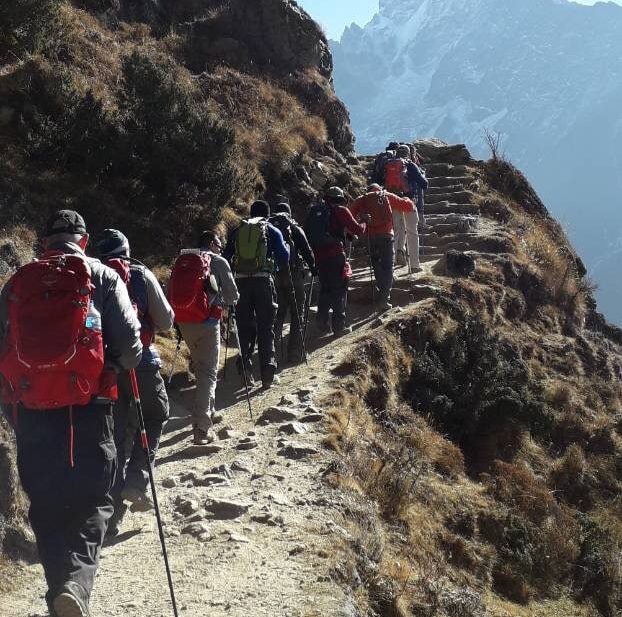
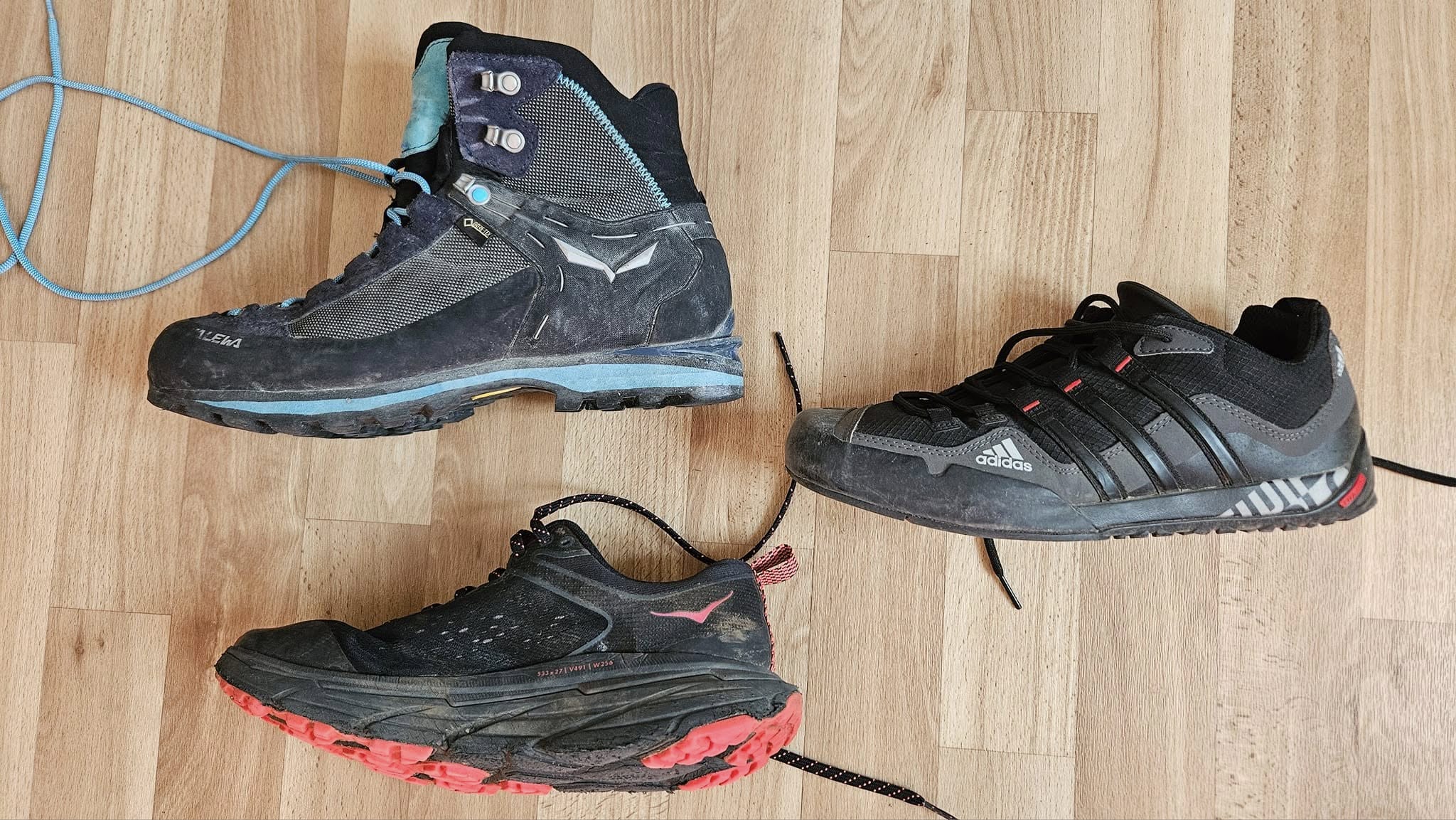
All three can work in Nepal. The right choice depends on where you are going.
| Footwear | Best suited for | Main advantage |
|---|---|---|
| Trekking boots | Higher and longer treks, rough terrain, cold or snowy conditions | Protection, grip and support |
| Hiking shoes | Shorter and moderate treks in normal conditions | Lighter than boots while still offering good grip |
| Trail runners | Dry, lower altitude routes and experienced hikers | Lightweight and comfortable for long walking days |
There is also a lot of personal preference involved. Some experienced trekkers prefer trail runners because they are lighter. Others prefer boots because they feel more protected on uneven ground. Recent trekking discussions show both approaches being used successfully on routes such as Annapurna Circuit and ABC.
What Footwear Should You Use for Different Nepal Treks?
Ghorepani Poon Hill
You do not need heavy trekking boots for Poon Hill in normal conditions.
A good pair of hiking shoes or trail runners with decent grip can be enough. The trail has plenty of stone steps and some steep sections, so footwear should still be comfortable and stable.
If you are trekking during wet weather or are more comfortable with ankle support, lightweight hiking boots are also a good choice.
Mardi Himal
Mardi Himal is another trek where lighter footwear can work well in good conditions.
For the lower sections, hiking shoes or trail runners are often enough for experienced hikers. As you go higher the trail becomes rougher and conditions can change quickly. A pair of supportive hiking boots is a sensible choice if you are trekking in colder or wetter conditions.
Langtang Valley
For Langtang, we generally recommend proper hiking shoes or trekking boots rather than casual walking shoes.
The trail includes rocky sections, stone steps and uneven ground. Conditions can also become colder as you gain altitude.
You do not need mountaineering boots. A comfortable, broken-in hiking boot with good grip is more than enough for most trekkers.
Annapurna Base Camp
For ABC, a good pair of hiking shoes can work for experienced trekkers in dry conditions. However, we normally recommend supportive trekking boots for first-time trekkers or anyone travelling during colder or wetter periods.
The route includes many stone steps and uneven sections. Wet stone can also become slippery.
You do not need technical climbing boots for the Annapurna Base Camp trek.
Everest Base Camp
For Everest Base Camp, we would normally choose a proper trekking boot.
The route is long and includes rocky trails, uneven stone steps and colder conditions as you gain altitude. Snow and ice can also become a factor depending on the season.
Trail runners are possible for experienced trekkers who know exactly what they are comfortable wearing, but they are not our first recommendation for most people doing EBC for the first time.
Annapurna Circuit
The Annapurna Circuit needs more thought because the conditions change significantly during the trek.
You can walk through warmer lower valleys and then reach the Thorong La at 5,416 metres. Snow and ice around the pass can change the footwear decision completely.
For a normal full circuit trek, we recommend good trekking boots. If you are travelling during a period when the pass has significant snow, your footwear needs to be suitable for those conditions rather than simply being comfortable in Kathmandu or Pokhara.
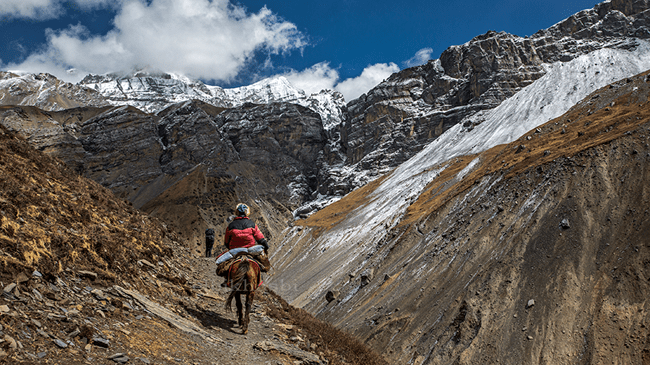
Manaslu Circuit
For Manaslu, we recommend trekking boots.
The route is longer and more remote, with rough sections and a high mountain pass at Larkya La. Conditions can change quickly at higher elevations.
A lightweight but supportive waterproof boot is a better choice than ordinary walking shoes for most trekkers.
When Are Trekking Boots the Better Choice?
Boots make more sense when:
- You are trekking at higher altitude
- Your route crosses a high mountain pass
- Snow or ice is possible
- You are travelling in colder or wetter conditions
- You are carrying a heavier backpack
- You prefer more ankle and foot protection
- You are not used to walking on uneven mountain trails
Boots also provide more protection from rocks, mud and wet conditions. But more protection does not automatically mean a better trek. Heavy boots can also make your feet tired if you are not used to them.
When Can Hiking Shoes or Trail Runners Work?
Lighter footwear can be a good choice when:
- You are doing a shorter or lower altitude trek
- The weather is expected to be dry
- You already hike comfortably in trail shoes
- You are carrying a light pack
- You prefer lightweight footwear
- You are confident walking on uneven ground without extra ankle support
Some experienced trekkers use trail runners on major Nepal routes as well. The important point is that their choice is based on experience and conditions rather than the idea that trail runners are automatically suitable for everyone.
The Most Important Thing: Fit
A well-fitted pair of hiking shoes is more useful than an expensive pair of boots that does not fit your feet.
Your toes should have enough room to move. Your heel should stay secure without excessive movement. You should also be comfortable walking downhill because that is when poorly fitted footwear often becomes a problem.
Do not buy a pair of boots shortly before flying to Nepal and wear them for the first time on the trail.
Walk in them at home first. Take longer walks. Try them with the socks you plan to use during the trek. If something rubs after a short walk at home, it will probably become a bigger problem after several hours on a mountain trail.
What About Rain and Snow?
Weather can change the footwear decision.
A lightweight trail shoe can be comfortable on a dry trail but much less useful when the trail becomes wet and muddy. At higher elevations, rain can turn into snow and shaded sections can remain icy.
If you are trekking during a period when snow is likely, choose footwear for the conditions you may actually encounter rather than simply choosing the lightest option.
For high passes and significant snow, additional equipment such as microspikes may sometimes be useful. Whether you need them depends on the route, season and current trail conditions.
Do Not Forget to Break In Your Boots
This is one of the simplest pieces of advice we give trekkers.
Do not start your Nepal trek in brand-new boots.
Wear them before your trip and make sure you can walk comfortably in them for several hours. New boots can cause hot spots and blisters before you have a chance to get used to them.
The same applies to hiking shoes and trail runners. New footwear is still new footwear. Make sure it works for your feet before you depend on it for a multi-day trek.
What MountainKick Recommends
We do not tell every trekker to buy the biggest or heaviest trekking boot available.
For shorter treks such as Poon Hill, a good pair of hiking shoes can be enough in normal conditions.
For ABC, Langtang and Mardi Himal, we prefer comfortable hiking shoes or supportive trekking boots depending on the trekker, season and conditions.
For EBC, Annapurna Circuit and Manaslu, we generally recommend a proper broken-in trekking boot because of the higher altitude, longer walking days and more demanding conditions.
The goal is simple: choose footwear that fits you well and matches the trek you are actually doing.
FAQs
Can I trek in Nepal without trekking boots?
Yes. You can use hiking shoes or trail runners on some Nepal treks, particularly shorter and lower altitude routes in good conditions. For high altitude routes, snowy conditions and high passes, trekking boots are generally the better choice.
Can I wear trail runners for Everest Base Camp?
Experienced trekkers do use trail runners on EBC, but we generally recommend proper trekking boots for first-time trekkers. The route is long and conditions can be cold, rocky and icy depending on the season.
Do I need hiking boots for Poon Hill?
No. You do not need heavy trekking boots for Poon Hill in normal conditions. Good hiking shoes or trail runners with decent grip can work well.
Do I need waterproof trekking boots in Nepal?
Waterproof footwear can be useful during wet weather and on higher routes where snow is possible. It is less important on a dry, lower altitude trek. Choose based on your route and season rather than assuming every trek requires the same footwear.
Should trekking boots be broken in before Nepal?
Yes. Always break in your boots before the trek. Walk in them regularly and make sure they remain comfortable after several hours of walking. Do not make your first long walk in Nepal.
Do I need expensive trekking boots for Nepal?
No. Price does not guarantee that a boot will suit your feet. Fit, grip, comfort and suitability for your trek are more important than buying the most expensive pair.