Annapurna Base Camp Teahouses: What the Rooms Are Really Like
Teahouses on the Annapurna Base Camp trek are simple, family-run lodges. Most rooms are basic twins with shared bathrooms. Lodges are generally more comfortable in the lower villages and get smaller and more basic above Sinuwa. At Base Camp, nights are very cold, and lodges can be busy in peak season.
- Rooms: usually twin share, no heating
- Bathrooms: mostly shared, some attached rooms in the lower villages
- Extras: hot showers, charging and WiFi usually cost extra
- Most basic stops: Deurali, Machhapuchhre Base Camp and Annapurna Base Camp
- Busiest months: October to November and March to April
- Last updated: October 2026
The Annapurna Base Camp trek is a teahouse trek. Every night you sleep in a lodge run by a local family, and you eat in its dining room by the stove.
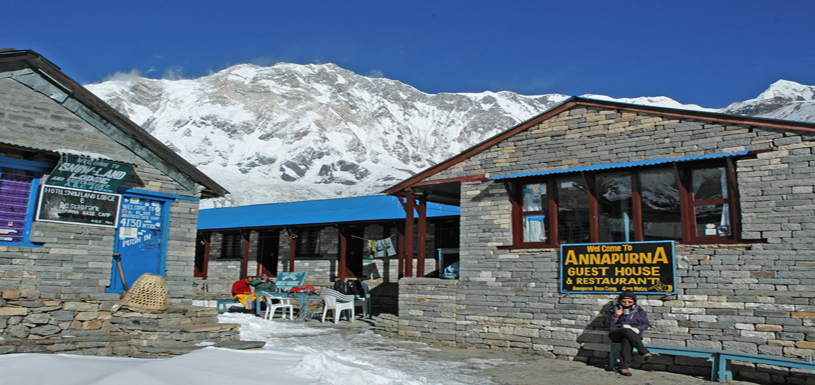
These lodges are simple, and they change as you climb. Here’s what the rooms, bathrooms and showers are really like, from the busy villages near Poon Hill to the small cluster of lodges at Base Camp. On our Annapurna Base Camp Trek, your teahouse rooms are included, and meals on the trail are paid as you go.
What Is a Teahouse?
A teahouse is a small guesthouse on a trekking trail. Most on the ABC route are run by Gurung families from the villages along the way.
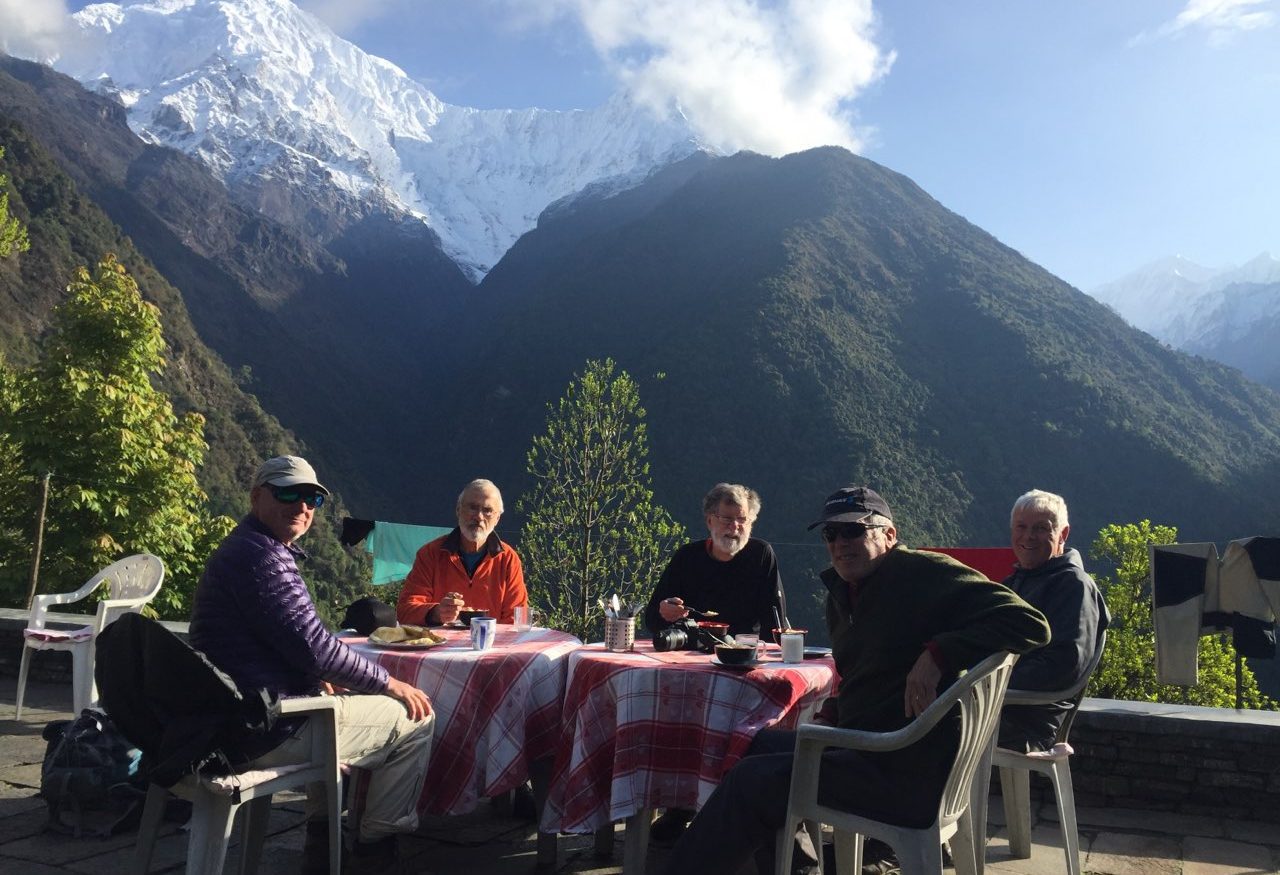
You get a room to sleep in and a shared dining room to eat in. The dining room is usually the warmest place in the lodge, so that’s where trekkers spend the evening.
What the Rooms Are Like
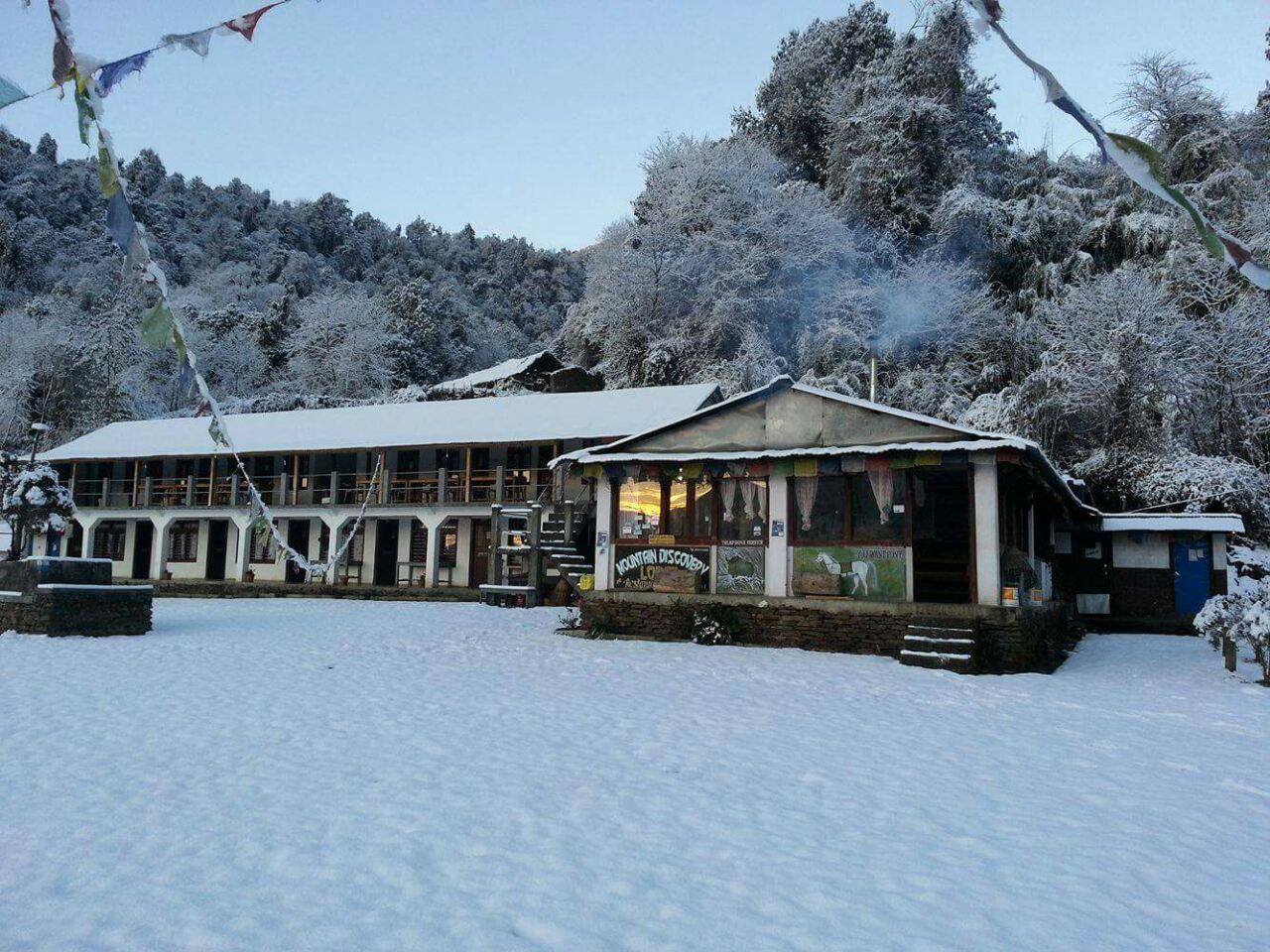
- Beds: usually two single beds with a foam mattress, pillow and blanket
- Walls: often thin plywood, so earplugs help
- Heating: rooms aren’t heated, and nights get colder the higher you go
- Storage: a hook or small shelf at most
- Light: often one bulb, sometimes solar and dim
Twin rooms are the most common, but layouts vary from lodge to lodge. Some higher lodges also have rooms with three or four beds. When it’s busy, you may be asked to share one of these. A single room supplement is available, but single rooms can be hard to get at busy stops.
Bathrooms and Hot Showers
Most lodges have shared bathrooms. In the lower villages, you’ll often find sit-down toilets, and some lodges in places like Ghorepani have rooms with attached bathrooms, sometimes at extra cost. Higher up, bathrooms are shared and more basic, and squat toilets are more common.
Many lodges offer hot showers, usually for around USD 3 to 5. They’re heated by gas or solar, so how hot they get depends on the lodge and the weather. You’re more likely to find a decent shower in the lower villages. Above Sinuwa, showers are less dependable, and near Base Camp it may just be a bucket of warm water. Many trekkers skip showers higher up and use wet wipes instead.
Carry your own toilet paper. Lodges can run out.
Charging, WiFi and Phone Signal
Most lodges charge your devices for a fee, usually around USD 2 to 3 per device, often in the dining room. A power bank helps, especially higher up.
Many lodges have WiFi, usually for around USD 1 to 3, but not every lodge does. Where it exists, it’s often slow, and it depends on the lodge, the network and the weather. Phone signal is patchy on parts of the trail. See our guide to WiFi and internet on Nepal trekking trails.
Prices are approximate and can change by lodge and season.
The Eat Where You Sleep Rule
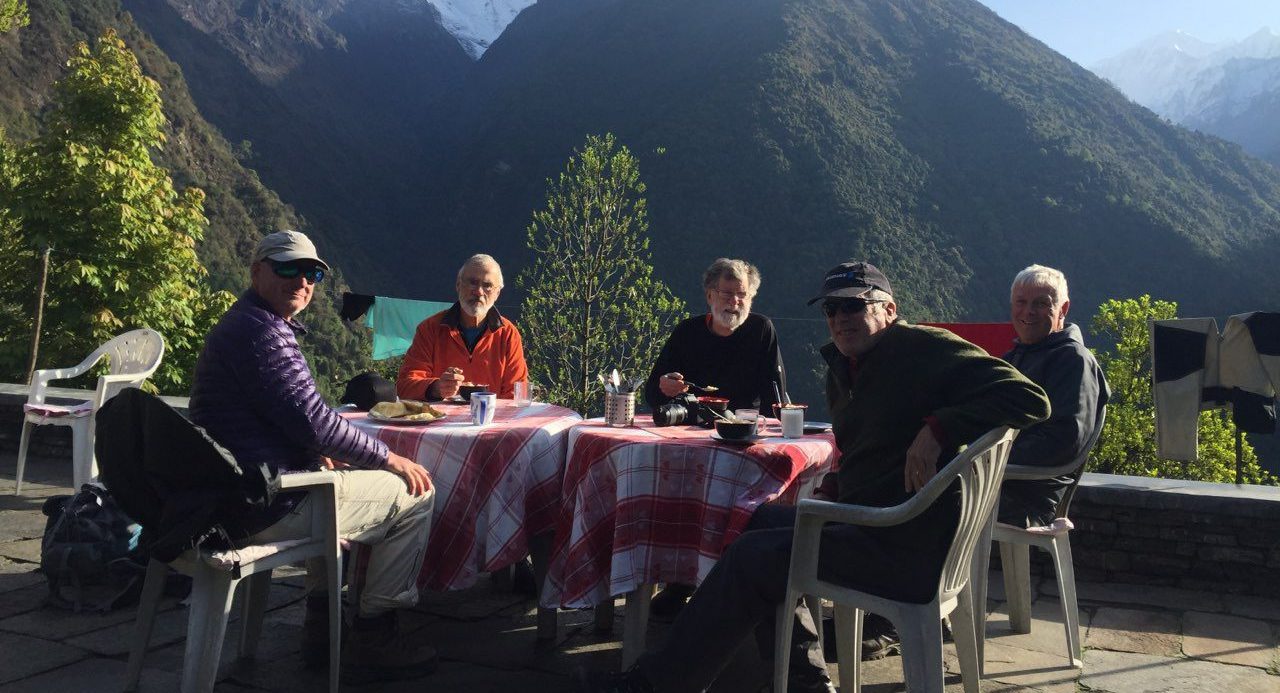
Teahouses earn most of their money from food, not rooms. So you’re expected to eat dinner and breakfast in the lodge where you sleep. Some lodges charge more for the room if you eat elsewhere.
The lodge cooks your food, but our team takes your order and serves it to you. Many of these guesthouses are run by just a few family members, so this keeps meals on time. You pay for what you order as you go.
For menu prices village by village, see our Annapurna Base Camp food prices guide.
What About Meat?
Machhapuchhre is sacred to the local Gurung community, and the Annapurna Sanctuary has long been treated as a sacred place. In the past, villagers didn’t allow meat or eggs into the sanctuary. Today, some lodges above Chhomrong do serve meat.
Food has to be carried up to the higher lodges, and storage and handling vary. So higher up, we suggest sticking to freshly cooked vegetarian meals like dal bhat, and following your lodge’s and guide’s advice.
ABC Teahouses Village by Village
Here’s how the lodges change on the way up. ★ marks overnight stops on our Annapurna Base Camp Trek.
Ulleri (about 1,960m) ★
A large village on the stone staircase above Tikhedhunga. Comfortable lodges with views down the valley.
Ghorepani (about 2,880m) ★

The biggest village on the route and the base for Poon Hill sunrise. It has the most choice and some of the better lodges, including rooms with attached bathrooms. It can be busy in peak season.
Tadapani (about 2,630m) ★
A smaller stop in the forest, with simpler lodges and good mountain views on a clear morning.
Chhomrong (about 2,170m) ★
The last big village before the sanctuary, spread down a steep hillside. Lodges are well run, and it’s a good place to shower, charge and stock up before going higher.
Sinuwa (about 2,360m)
A small village across the river from Chhomrong, with a few lodges. From here on, lodges get smaller and simpler.
Bamboo (about 2,310m)
A handful of lodges in the forest by the river. It can get crowded in peak season.
Dovan (about 2,600m) ★ on the way down
A few quiet, simple lodges in the forest. We stay here on the descent.
Himalaya (about 2,920m) ★
A small cluster of lodges. Rooms are basic, and space is limited when it’s busy.
Deurali (about 3,230m)
A few basic lodges below the sanctuary. This is where your guide checks conditions on the avalanche-prone stretch to Machhapuchhre Base Camp.
Machhapuchhre Base Camp (about 3,700m)
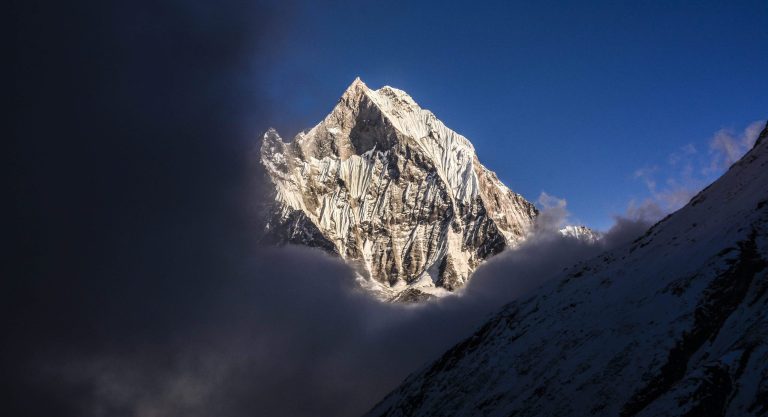
A few lodges with big views of Machhapuchhre. Rooms are basic and cold, and some groups stay here instead of Base Camp.

Annapurna Base Camp (4,130m) ★
A small group of lodges at the foot of Annapurna’s south face. Rooms are basic and very cold at night. In busy periods you may be asked to share a larger room. The sunrise makes up for it.
How Busy Do ABC Teahouses Get?
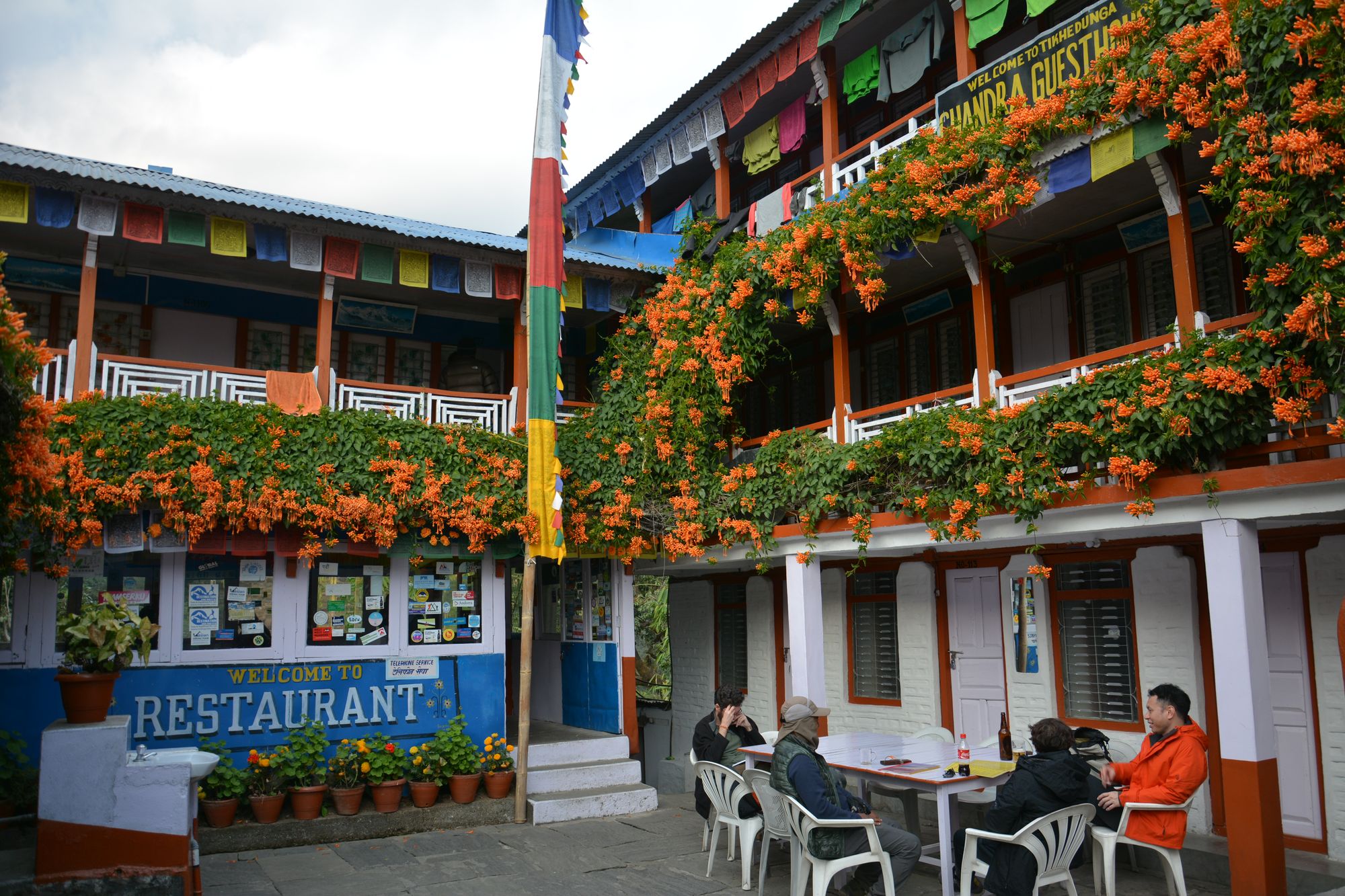
There are fewer lodges above Chhomrong, so space is tighter there. The busiest months are October to November and March to April, and May can be busy too. Even then, how hard it is to get a room depends on the stop, the day and the size of your group.
We take care of everything on the trail. Our team books and sorts out your rooms at each stop, so you never have to look for a bed.
A note on winter: from December to April there can be avalanche risk on the section between Deurali and Machhapuchhre Base Camp. Conditions can make it unsafe to go higher, so your guide checks the trail each day before moving on. See the best time for the Annapurna Base Camp trek.
What to Bring for Teahouse Nights
- A warm sleeping bag. We suggest one rated to about minus 10°C. Lodge blankets vary, and a liner adds extra warmth.
- A down jacket for evenings and early mornings
- A warm hat and thermal layers to sleep in
- A power bank and a headlamp
- Toilet paper, wet wipes and hand sanitiser
- Earplugs
- Cash in Nepali rupees. There are no ATMs after Pokhara.
For the full list, see our Nepal trekking packing list.
Tips for a Better Night
- Charge everything in Chhomrong if you can.
- Put tomorrow’s clothes in your sleeping bag so they’re warm in the morning.
- Fill your water bottle with hot water at night and keep it in your sleeping bag.
- Spend the evening in the dining room. It’s usually the warmest place.
- Carry small notes. Lodges often can’t change large ones.
Treks in this guide


Frequently Asked Questions
What are teahouses like on the Annapurna Base Camp trek?
Simple, family-run lodges with mostly twin rooms and shared bathrooms. They get more basic as you go higher.
Do ABC teahouses have hot showers?
Many do, for a small extra charge. How hot they are depends on the lodge and weather, and they’re less dependable above Sinuwa.
Are there attached bathrooms?
Some lodges in the lower villages, like Ghorepani, have them. Higher up, bathrooms are shared.
Is there WiFi on the ABC trek?
Many lodges have it for a small fee, but not all, and it’s often slow higher up.
How cold is it at Base Camp at night?
Very cold. Rooms aren’t heated, so bring a warm sleeping bag and a liner.
Can I eat meat on the ABC trek?
Some lodges serve it. Higher up, we suggest freshly cooked vegetarian meals.
Do I need to book teahouses in advance?
Not on our trek. We arrange your rooms at every stop. Space is tighter above Chhomrong in peak season, which is one reason it helps to have it handled for you.
Are teahouse rooms included in a MountainKick trek?
Yes. Rooms on the trail are included. Meals on the trail are paid as you go, and our team orders and serves them for you.