

Bardiya Jungle Safari
Bardiya Jungle Safari: Tiger Tracking, Canoe on the Karnali and Tharu Culture Bardiya National Park is Nepal’s largest national park in the Terai lowlands, covering 968 square kilometres of pristine sal forest, grassland, and river habitat in the far west of the country. It receives a fraction of Chitwan’s visitor numbers, which means the wildlife […]
Bardiya Jungle Safari: What to Expect
Bardiya Jungle Safari: Tiger Tracking, Canoe on the Karnali and Tharu Culture
Bardiya National Park is Nepal’s largest national park in the Terai lowlands, covering 968 square kilometres of pristine sal forest, grassland, and river habitat in the far west of the country. It receives a fraction of Chitwan’s visitor numbers, which means the wildlife encounters here feel genuinely wild. Bardiya is widely considered the best place in Nepal to see a Royal Bengal tiger in its natural habitat.
This 4-day trip from Kathmandu combines the park’s four core safari experiences: a full-day jeep safari deep into the forest, a guided jungle walk on foot, a canoe trip on the Karnali River with Gangetic dolphin spotting, and early morning birdwatching in one of South Asia’s most biodiverse habitats. The trip also includes an evening Tharu cultural show. You fly from Kathmandu to Nepalgunj, then travel by vehicle to Thakurdwara, the gateway village to the park.
HIGHLIGHTS
- Full-day jeep safari into Bardiya National Park searching for Royal Bengal tigers, greater one-horned rhinos, wild Asian elephants, and leopards
- Guided jungle walk through sal forest and tall elephant grass with two licensed nature guides tracking fresh animal signs
- Canoe trip on the Karnali River with opportunities to spot Gangetic river dolphins, gharial crocodiles, and water birds
- Early morning birdwatching in a park with over 500 recorded bird species
- Evening Tharu cultural show featuring traditional folk dances and music
- Flight from Kathmandu to Nepalgunj for a quick and comfortable approach to western Nepal
Day-by-Day Itinerary
Fly Kathmandu to Nepalgunj, Drive to Bardiya
Fly from Kathmandu to Nepalgunj (approximately 1 hour). From Nepalgunj airport, a private vehicle transfers you to Thakurdwara on the edge of Bardiya National Park. The drive takes around 3 hours through the western Terai plains.
Arrive at the jungle lodge in the early afternoon. Check in, have lunch, and attend a briefing on park activities, wildlife safety, and what to expect over the next three days.
In the evening, attend a Tharu cultural show at the lodge. The Tharu are the indigenous people of the western Terai and their folk dances and music offer a genuine window into a culture that has lived alongside this forest for generations.
Full-Day Jeep Safari
Depart early morning for a full-day jeep safari into Bardiya National Park. The 4WD vehicle takes you deep into areas of the park that are inaccessible on foot, covering sal forest, open grassland, and riverine habitat. Your licensed guide watches for fresh tracks, pugmarks, and other signs throughout the day.
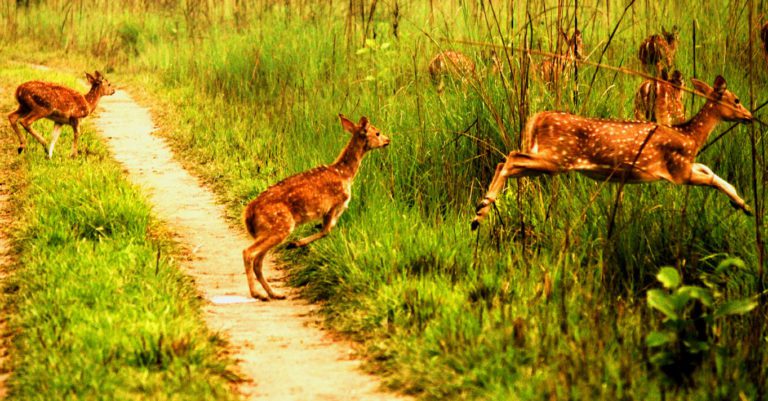
Bardiya’s relatively low tourist density means you are unlikely to share the forest with other vehicles. Target species include the Royal Bengal tiger, greater one-horned rhinoceros, wild Asian elephant, leopard, swamp deer, and blackbuck. The park also holds large populations of spotted deer and wild boar.
Stop for a picnic lunch in the forest before heading to a riverside watchtower in the afternoon. Return to the lodge for dinner.
Jungle Walk and Karnali River Canoe
Start the morning with a guided 3-hour jungle walk on foot. Walking through Bardiya’s sal forest and elephant grass is a different experience from a jeep safari. You move slowly, follow fresh signs, and cover ground that vehicles cannot reach. Two licensed nature guides accompany the group.
After the walk, return to the lodge for brunch.
In the afternoon, board a dugout canoe on the Karnali River. The Karnali is one of the last remaining habitats of the endangered Gangetic river dolphin, and sightings are common. You may also spot gharial crocodiles basking on the sandbanks, mugger crocodiles in the shallows, and a variety of water birds including storks, kingfishers, and cormorants.
Birdwatching and Return to Kathmandu
Wake early for an optional 2-hour birdwatching session. Bardiya is home to over 500 bird species including the Bengal florican, sarus crane, great hornbill, lesser florican, and a wide range of migratory waterfowl. The riverine forest edges and grassland borders are especially productive in the early morning.
After breakfast, transfer by vehicle back to Nepalgunj airport. Fly to Kathmandu, arriving in the early afternoon.
What Our Trekkers Say
“A fantastic wildlife experience”
We chose Bardiya because we wanted something quieter than Chitwan, and it was a great decision. Over several days exploring the park we were lucky enough to see rhinos, deer, monkeys, and plenty of birds -- the jungle felt wild and peaceful at the same time. MountainKick organized everything very…
“A real adventure in the jungle”
As a group of three, we had a wonderful time in Bardiya. The safari felt much more remote than we expected, and we enjoyed both the jeep and walking experiences -- seeing wildlife in its natural environment was unforgettable. The MountainKick team were friendly and helpful throughout the trip.
“Amazing wildlife and a peaceful place”
We visited Bardiya after a trekking trip in the mountains and it was the perfect contrast. The park was beautiful and we really enjoyed the slower pace -- our guide was very knowledgeable about the animals and helped us spot things we'd have completely missed ourselves. A great experience with…
“One of our favourite parts of Nepal”
Our family of four loved the Bardiya safari. We saw rhinos, crocodiles, monkeys, and an incredible number of birds, and the children were fascinated by everything. We also enjoyed meeting local people and learning about life around the park -- MountainKick handled the arrangements very smoothly and made it a…
Frequently Asked Questions
What is the best time to visit Bardiya National Park?
October, November, March, and April are the most reliable months. Post-monsoon vegetation is lower after October, making wildlife easier to spot. March and April bring warm days and the animals start moving toward water sources, which increases sighting opportunities. The monsoon season (June to August) brings heavy rainfall and park closures. Avoid December and January if you are sensitive to cold, as mornings in the western Terai can be quite cool.
Is Bardiya better than Chitwan for wildlife?
For tiger sightings, yes. Bardiya has a lower density of tourists and vehicles, which means the wildlife is less habituated and encounters feel more natural. The park’s forest and grassland mix is well-suited to tiger movement, and sightings are more frequent here per visitor than at Chitwan. For rhinoceros sightings, Chitwan has the higher population. If your priority is tigers, Bardiya is the right choice.
Will I see Gangetic river dolphins?
Sightings on the Karnali River canoe are common, particularly between October and February when water levels are lower and visibility is better. The Gangetic river dolphin is a freshwater species and one of the world’s most endangered dolphins. The Karnali is one of its last remaining strongholds in Nepal.
How do I get to Bardiya?
This trip includes return flights from Kathmandu to Nepalgunj (approximately 1 hour), followed by a 3-hour drive to Thakurdwara. Flying is the practical way to reach western Nepal. The overland route from Kathmandu takes 12 to 16 hours each way.
Is this tour suitable for families with children?
Yes. All activities take place on flat terrain. The jeep safari, canoe ride, and Tharu cultural show work well for families. Children under 5 are not recommended for jungle walks in the park. Let us know the ages of any children when you enquire so we can tailor the activities accordingly.
Is this a good standalone trip or only an add-on to a trek?
Both. Bardiya works well as a standalone wildlife trip, particularly for travellers who want a genuine off-the-beaten-path Nepal experience without a trek. It also pairs well as an extension to any of our Himalayan treks, adding a completely different landscape and activity type to the itinerary.
Can I extend my stay in Bardiya?
Yes. We can arrange additional nights and include extra activities such as community village walks, additional jeep safaris, or longer river trips. Let us know when you enquire and we will include options in your quote.
What should I wear?
Lightweight, neutral-coloured clothing in khaki, olive, or brown is recommended. Avoid bright colours and white in the park. Closed-toe walking shoes with good grip are required for the jungle walk. Bring a warm layer for early mornings between October and March, and a hat and sunscreen for the river canoe in warmer months.
Is Mountainkick Treks a registered company?
Yes. Mountainkick Treks is a government-registered trekking and tour operator in Nepal, and a member of TAAN (Trekking Agencies Association of Nepal) and NTB (Nepal Tourism Board).
Is travel insurance required?
Yes. Travel insurance is compulsory for all park activities including walking safaris. Your policy should cover medical evacuation and emergency repatriation. Medical facilities in Thakurdwara are very basic; the nearest hospital is in Nepalgunj.
Departure Dates & Pricing
No upcoming fixed departures are scheduled at the moment. Contact us to arrange a private departure on dates that suit you.
-
1
20% Deposit — Due on booking Secures your place on the departure. Refundable within cancellation window.
-
2
80% Balance — Due on arrival Pay the remainder in Kathmandu before the trip begins. Bank transfer, card, or cash accepted.
-
3
Bhutan & Tibet — Full payment 20 days prior Full balance required at least 20 days before departure for Bhutan and Tibet tours.
| 30+ days before departure | Deposit forfeited, balance refunded in full |
| 15–29 days before departure | 50% of total trip cost charged |
| Under 15 days | No refund |
| MountainKick cancels trip | Full refund or reschedule |
We give you the power to choose the departure date that suits your group best. A private trip is a perfect solution if you can’t find a published departure date that you and your companions agree on. You can set up a private departure for most of the trips we offer.
| Travellers | Price Per Person (USD) |
|---|---|
| 1 | $710 |
| 2-3 | $650 |
| 4-9 | $610 |
Ready to go? Request your preferred dates or message us directly on WhatsApp — we'll confirm availability within a few hours.
We never force our customers to follow our set itinerary. You can customize your itinerary exactly the way you want. Please share with us your ideas.
"*" indicates required fields
Bardiya Jungle Safari
Kumar and the team have guided this route for over a decade. Ask anything — gear, fitness, altitude, private groups — before you commit.
Tales from the Himalayas
Fresh stories and expert insights from our mountain adventures
Best Treks in Nepal for Beginners: How to Choose Your First Trek
You don't need experience to trek in Nepal, but you do need the right first trek. Here's how to choose one by fitness, altitude and time, with our real prices and routes.
Poon Hill vs Mardi Himal vs Annapurna Base Camp: Which Annapurna Trek Should You Choose?
Three of the most popular treks from Pokhara, but they ask very different things of you. Here's how Poon Hill, Mardi Himal and ABC compare on days, altitude, cost and views.

Annapurna Region, Everest Region, Essentials
Everest Base Camp vs Annapurna Base Camp: Which Trek Should You Choose?
Both take about two weeks, but they suit very different trekkers. Here's how to decide.